

 Home
Home Chiang Mai(




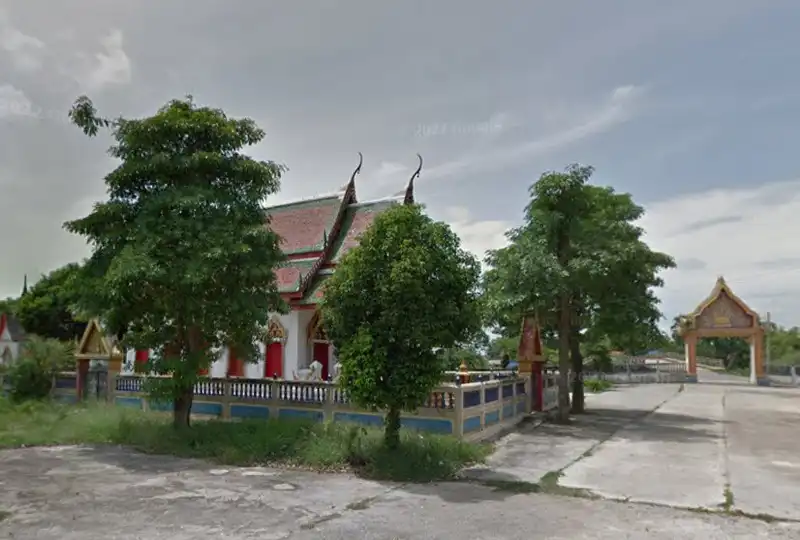
Wat Nang Chi
Rating: 2.6/5 (44 votes)
 Search By
  Map
Map 
 Have Map
  No Map
Phranakhon Si Ayutthaya attractions
Attractions in Thailand
Open Days: Daily
Opening Hours: 08.00 – 17.00 (generally)
Wat Nang Chi is located in Moo 9, Ban Pak Rong, Ban Hip Subdistrict, Uthai District, Phra Nakhon Si Ayutthaya Province. The temple belongs to the Mahanikaya order. Geographically, it sits on low-lying land along the Uthai Canal on the southern side, which gives the overall environment a calm, waterside community feel. As a result, the atmosphere here reflects a typical Central Thailand community temple: quiet, simple, and strongly connected to local daily rhythms. Visitors usually come with the intention to make merit, pay respect to the Buddha, and find a peaceful pause in a religious space that local residents actually use in everyday life, rather than a temple that exists only as a photo-stop or a tourist landmark.
The canal-side character of Wat Nang Chi creates a different experience from city temples or major historical sites that can be crowded. When the surrounding area is made up of community homes and canal landscapes, visitors often sense how local life naturally slows down. The sound of wind, occasional boats or waterside activity (depending on the time of day), and the shaded feel of a waterplain environment all help turn entering the temple into a moment of “deceleration.” This brings visitors back to the core of temple visiting in Thailand: calmness and sincere intention, rather than following an accelerated checklist of attractions.
In Thai culture, a temple is more than a place for religious ceremonies. It is a shared community center that provides a common anchor for belief, relationships, and mutual support during important moments in life. Seasonal merit-making festivals, kathin ceremonies, pha pa offerings, and Buddhist holy-day visits, as well as family rites during life transitions, all reinforce how deeply temples are woven into everyday life. This is especially visible in community temples near people’s homes, because residents can join activities, help care for the grounds, and continue traditions without needing long travel. Wat Nang Chi therefore clearly reflects the role of a genuine “spiritual center for Ban Pak Rong community” in a practical, lived way.
The history of Wat Nang Chi is a key element that gives the temple a stronger sense of time depth than a typical community temple. One set of information states that Wat Nang Chi has existed as a temple since 2220 BE, while another source records the founding year as 2200 BE. Differences like this can occur due to records being compiled in different periods or based on different types of evidence. However, regardless of which year is taken as the primary reference, the shared point is that Wat Nang Chi is an old temple in the area and has long served as a faith-based center alongside the community. In the wider context of Ayutthaya—an area historically shaped by canal settlements and waterways—the presence of an old temple along the Uthai Canal also reflects how communities grew and how belief systems continued through generations.
Many temples in Thailand began through local faith and collective community effort, especially in areas where people needed a religious space close to home. In the case of Wat Nang Chi, information indicates that land was donated for the temple’s construction. This reflects a common community pattern: providing land so that the community can have a shared spiritual center. Temples did not emerge only from state administration; they also grew from local cooperation and the intention of donors and residents who wanted a place of moral and spiritual support for both present and future generations. When a temple continues to function over time, it becomes a storehouse of shared memory, including merit-making events, ceremonies, stories passed down by elders, and bonds reinforced through real everyday use.
Another culturally distinctive element of Wat Nang Chi is the presence of the “San Nang Chi” (Nang Chi Shrine), which is respected by local residents in the surrounding area. In Thai community contexts, shrines often serve as places of emotional grounding and as markers of local narratives—whether connected to benefactors, protective spirits tied to the land, or the shared identity of the community. For visitors, paying respect at the Nang Chi Shrine should be done with calmness and respect: dress modestly, avoid loud behavior, do not disturb others, and engage with the space in an appropriate and considerate manner. The essence of shrine respect in local Thai culture is moderation and genuine respect for how local people feel about the place.
The presence of the Nang Chi Shrine within the temple space also illustrates how “formal Buddhism” and “local belief” can coexist in real community life without necessarily being in conflict. In many parts of Central Thailand, it is common to see Buddhist temple spaces existing alongside local belief sites, each serving as a different form of emotional support. People come to the temple to make merit, pay respect, and pray, while the local belief space strengthens connections to community stories and shared memory. This adds cultural depth to visiting Wat Nang Chi, beyond a simple “stop to pay respect,” because visitors can observe living belief as practiced by real people in a real place.
Wat Nang Chi also plays an important educational role, as Wat Nang Chi School (primary level) is located at the temple. The structure of “temple–school–community” is a classic Thai social pattern that supports cultural learning through everyday exposure. Children do not only learn academic subjects; they also learn manners in religious spaces, participate in volunteer activities, and understand the meaning of community merit-making. When a school is located within or near a temple, younger generations are less likely to be disconnected from the religious and cultural center of the community, and the temple continues to function as a long-term anchor of community identity.
For visitors planning to come to Wat Nang Chi, mornings are often best for those who want the quietest atmosphere, because the air is more comfortable and there are fewer people. Praying and chanting during a quieter period can help focus the mind, set intentions, and gain genuine rest. Afternoons are suitable for travelers passing through Uthai District or the Ban Hip area who want to make merit before heading back, while still enjoying a calm, unhurried mood. If a ceremony or temple activity is taking place on a given day, visitors should observe where rituals are being conducted, avoid crossing in front of participants, keep noise low, and refrain from actions that might disrupt formal monastic proceedings.
As with any community temple, visitors should respect that this is a living local space. Dress modestly, avoid clothing that is too short or tight, and do not wear sleeveless tops or very short skirts/shorts in ways that are inappropriate for a religious site. If taking photos, do so discreetly, avoid flash when it may disturb others, and respect the privacy of local residents or worshippers who may not want to appear in photographs. Offerings and donations can be made according to personal faith, but it is best to focus on sincere intention and moderation, because the spirit of a community temple emphasizes mutual support rather than the monetary value of donated items.
In terms of temple administration under the Sangha system, Wat Nang Chi has an abbot who oversees temple operations and coordinates with the community. Published information identifies the current abbot as Phra Athikan Chala Kalyanrato. Knowing the name of the temple’s leadership helps readers who may want to contact the temple regarding ceremonies, merit-making events, or community activities. However, for events that require a confirmed date and time, checking the temple’s latest notice or contacting the temple directly is recommended to ensure accuracy based on current community schedules.
From a broader Ayutthaya travel perspective, Wat Nang Chi works well in an “Ayutthaya beyond the historic island” itinerary that focuses on calmness and authentic community life. Visitors can begin by making merit at Wat Nang Chi, take time to observe the canal-side atmosphere and the nearby community environment, then continue on to major temples or historical zones in the city area, such as Wat Yai Chai Mongkhon, Wat Phanan Choeng Worawihan, or the Ayutthaya Historical Park area. Starting the day at a community temple often helps the mind become more settled before moving into busier attractions, and it gives travel a deeper dimension beyond check-ins, because it shows Ayutthaya through the lens of local life that still moves alongside faith every day.
Getting There Wat Nang Chi is located in Moo 9, Ban Pak Rong, Ban Hip Subdistrict, Uthai District, Phra Nakhon Si Ayutthaya Province. The most convenient way to visit is by private car or hired local transport. In a navigation app, search using “Wat Nang Chi Ban Pak Rong Ban Hip Uthai Ayutthaya” or use “Wat Nang Chi” together with “Ban Hip Subdistrict” to pin a closer match. From Bangkok, travelers generally take Highway 32 (Asia Road) toward Ayutthaya, then connect into Uthai District and Ban Hip Subdistrict by following navigation guidance. The final stretch is on local community roads, so drive carefully, slow down through residential areas, and allow extra time in the morning and late afternoon to reduce the impact of heavier traffic on main routes.
In summary, Wat Nang Chi is a canal-side community temple with strong local-historical and cultural value in Ayutthaya. Its significance is not only about large-scale architecture, but about being a long-standing faith space rooted in community life. The presence of the Nang Chi Shrine, respected by local residents, and the educational role of Wat Nang Chi School make the temple meaningful as a true “spiritual and community-life center.” If you are looking for a peaceful place to make merit in Uthai District—simple, calm, and connected to living local rhythms—Wat Nang Chi is a fitting option for a meaningful pause and a restorative moment within a single trip.
| Place Summary | A Mahanikaya community temple located in Moo 9, Ban Pak Rong, Ban Hip Subdistrict, Uthai District, Phra Nakhon Si Ayutthaya, on low-lying land along the Uthai Canal. |
| Key Highlights | Quiet canal-side community atmosphere; “San Nang Chi” (Nang Chi Shrine) respected by local residents; primary school located at the temple; suitable for merit-making and observing authentic local life. |
| Location | Moo 9, Ban Pak Rong, Ban Hip Subdistrict, Uthai District, Phra Nakhon Si Ayutthaya Province |
| Address | Moo 9, Ban Pak Rong, Ban Hip Subdistrict, Uthai District, Phra Nakhon Si Ayutthaya (Uthai Canal Area) |
| Affiliation | Mahanikaya |
| Brief History | Information records the temple as established around 2220 BE, while another source states 2200 BE. Land was donated for its construction, and the Nang Chi Shrine is respected by local residents. |
| Abbot (Latest) | Phra Athikan Chala Kalyanrato |
| Nearby Attractions (Approx. Distance) | 1) Wat Yai Chai Mongkhon – 17 km 2) Wat Phanan Choeng Worawihan – 16 km 3) Phra Thinang Pheniat (Elephant Kraal) – 19 km 4) Ayutthaya Historical Park (Wat Phra Si Sanphet / Wihan Phra Mongkhon Bophit Area) – 23 km 5) Bang Pa-In Royal Palace – 21 km |
| Nearby Restaurants (Approx. Distance + Phone) | 1) Suan Lung Daeng – 10 km – 063-662-9222 2) Ayothaya Cafe – 15 km – 091-496-8888 3) no café just coffee – 14 km – 064-629-7992 4) NAYA Cafe – 13 km – 094-252-6462 5) Ruen Thai Kung Pao – 12 km – 089-764-5119 |
| Nearby Accommodations (Approx. Distance + Phone) | 1) Kantary Hotel Ayutthaya – 16 km – 035-337-177 2) Classic Kameo Hotel Ayutthaya – 18 km – 035-212-535 3) Krungsri River Hotel – 20 km – 035-244-333 4) Centara Ayutthaya – 18 km – 035-243-555 5) sala ayutthaya – 24 km – 035-242-588 |
Frequently Asked Questions (FAQ)
Q: Where is Wat Nang Chi located?
A: It is located in Moo 9, Ban Pak Rong, Ban Hip Subdistrict, Uthai District, Phra Nakhon Si Ayutthaya Province.
Q: What are the open days and opening hours of Wat Nang Chi?
A: It is generally open daily from 08.00 – 17.00.
Q: What is Wat Nang Chi known for?
A: It is known for its calm canal-side community atmosphere, the Nang Chi Shrine respected by local residents, and the primary school located at the temple.
Q: When was Wat Nang Chi established?
A: One record states it has existed as a temple since 2220 BE, while another source states 2200 BE, reflecting that it is an old temple in the area.
Q: What should I wear when visiting Wat Nang Chi?
A: Dress modestly, avoid revealing clothing, and behave respectfully as this is an active religious site.
Q: What is the easiest way to get to Wat Nang Chi?
A: The easiest way is by private car or hired local transport. Use a navigation app and search “Wat Nang Chi Ban Pak Rong Ban Hip Uthai Ayutthaya” and follow directions into Ban Hip Subdistrict.
 Wat Nang Chi Map
 Category:
  Group:
  Tag: ●Wat Nang Chi●wat nang chi ●wat nang chi ayutthaya ●wat nang chi uthai district ●ban hip ayutthaya ●ban pak rong ●uthai canal temple ●canal side temple ayutthaya ●community temple ayutthaya ●merit making in ayutthaya ●ayutthaya off the island temples Last Update: 1 MonthAgo
Comment
 Nearby Attractions
| Keyword (Advance) |
 Facebook Fanpage
 Region
 Art, Culture and Heritage
 Historical Sites and Monuments(
 Landmarks and Memorials(
 Royal Palace(
 Art, Craft Centres, Tradition(
 Museums(
 Educational Places
 Museum for Study(
 Educational Gardens, Farm(
 Training Center(
 University
 Church(
 Mosque(
 Other religious and spiritural sites(
 Research and Development
 Royal Project(
 Suburban Living
 Village, Community(
 Local Market(
 Floating Market(
 Nature and Wildlife
 Dam, Reservoir, Lake(
 River, Canal(
 Islands(
 Other natural attractions(
 Entertainment and Agricultural
 Animal camps and shows(
 Farm, Parks, Gardens and Ecotourism(
 Travel Articles, Recipes
 Travel Review, Food Review(
 Copyright 2012,