
lovethailand home >Central Travel Attractions >Phranakhon Si Ayutthaya Travel Attractions >Uthai >Ban Hip > Wat Ban Hip
TL;DR: Wat Ban Hip is located at 64 Moo 1, Ban Hip Subdistrict, Uthai District, Phra Nakhon Si Ayutthaya Province, open Daily, hours 08.00 – 17.00 (generally).
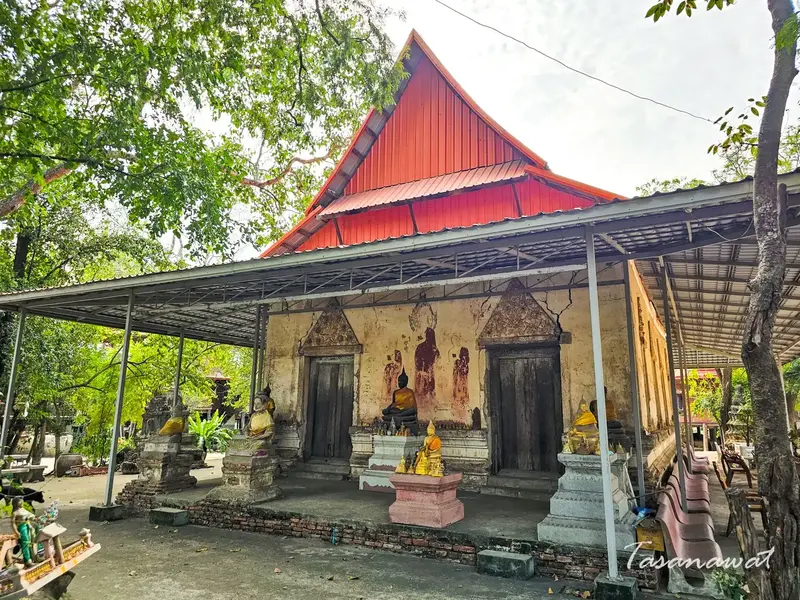
Wat Ban Hip
Open Days: Daily
Opening Hours: 08.00 – 17.00 (generally)
Wat Ban Hip is located at 64 Moo 1, Ban Hip Subdistrict, Uthai District, Phra Nakhon Si Ayutthaya Province. It belongs to the Mahanikaya order and covers an area of 14 rai and 55 square wah. The temple stands on slightly elevated ground, surrounded by local residential homes and canal-lined landscapes. This setting gives Wat Ban Hip a distinctly community-based character. Rather than being an isolated landmark or a purely tourist-oriented site, it functions as a living religious space that local residents in Ban Hip and nearby areas visit as part of everyday life. Visitors therefore tend to experience the calm atmosphere of a Central Thailand village temple, see real community rhythms shaped by faith, and better understand what a “community temple” means as an ongoing spiritual center for local people.
What makes Wat Ban Hip stand out as an experience is its simplicity. It does not push you to rush in for photos and move on. Instead, it invites you to slow down and absorb the quiet presence of the surrounding community and the peaceful tone of the temple grounds. Because it sits among homes and near canals, the pace here feels very different from Ayutthaya’s main tourist areas on the historic island, which can be busy throughout the day. At Wat Ban Hip, visitors often see people making merit in an unhurried way—stopping by to offer alms or pay respect with genuine intention rather than following a tight sightseeing schedule. In that sense, the temple helps bring Buddhist visiting back to its essence: calmness, mindful reflection on goodness, and quietly rebuilding inner strength.
In the wider context of Thai culture, temples serve more than a strictly religious function. They are shared “central spaces” that connect people through relationships and community life, from seasonal merit-making festivals, kathin ceremonies, and pha pa (robe offerings), to Buddhist holy-day activities, as well as major life events such as ordination, dedicating merit to ancestors, and funeral rites that support families through grief. This role is especially visible in community temples that are easy to access. A temple is not a place you need to “plan a long trip” to reach; it is part of daily life that people can visit naturally when faith calls. When a temple is close to home, residents can more easily help care for it, join activities, and pass on traditions in an organic way. Wat Ban Hip fits this pattern: it is a temple that has grown alongside its community, with canal landscapes as a backdrop that clearly reflects Central Thailand’s Ayutthaya-style way of life.
Historically, Wat Ban Hip is described in local references as an old temple within Uthai District, with information suggesting it dates back to the Ayutthaya period. This gives the temple cultural significance as a faith-based space that has remained tied to its community for a long time. Even as time has brought major changes—transport shifting from canal routes to roads, community expansion, and economic patterns evolving—the temple has continued to be regarded as a dependable place people can return to for spiritual support. This continuity is part of Wat Ban Hip’s charm. It does not need to be “grand” to matter, because what it holds is accumulated community memory and a deep bond formed through real everyday use.
The temple’s key structures also reflect its development in the modern era. Wat Ban Hip has an ubosot (ordination hall) that was newly built in 1971, a period when many temples in Central Thailand expanded and upgraded facilities to better support growing community religious activities. The ubosot is central to Buddhist ceremonial life, especially for formal monastic acts. Having a rebuilt ubosot therefore shows the temple’s readiness to serve as a full religious center. At the same time, Wat Ban Hip also has a sermon and prayer hall (a chanting hall) built in 1951, which is a wooden building. This creates a contrasting atmosphere to more recent construction. A wooden chanting hall is not only a functional space for worship but also a living trace of traditional craftsmanship and materials, allowing visitors to feel a Central Thailand village-temple mood that is becoming harder to find today.
The wooden chanting hall has a distinct appeal because wooden religious architecture often conveys both craft detail and a warm, grounded atmosphere. Entering a wooden prayer space naturally slows people down. Footsteps, a breeze, or even quiet stillness when no ceremony is underway can deepen the sense of peace. This can make prayer and chanting feel like an experience you truly sense rather than an activity you simply complete for a travel itinerary. Visitors who appreciate traditional community-temple ambiance often enjoy spaces like this, because they can feel the cultural roots of simplicity and see how buildings from different periods coexist naturally within the same temple grounds.
Because Wat Ban Hip stands on elevated ground and sits among residential homes, visitors can clearly see a temple “as part of the community.” It is not separated from local life but is a place people nearby can realistically visit often. When combined with the canal imagery of the area, it highlights traces of Central Thailand life shaped by waterways. Even though roads are now the primary means of travel, canals remain a key feature of the landscape and community memory. Temples near canals therefore tend to feel cool and peaceful, making them suitable places to pause and reset while traveling through Uthai District or exploring Ayutthaya Province.
For visitors from outside the area, Wat Ban Hip is ideal for a relaxed merit-making and temple visit, especially for those who want to avoid the crowds of Ayutthaya’s main tourist zones. Morning visits usually bring cooler air and a quieter atmosphere, suitable for making wishes, praying, chanting, and spending time in calm focus. Afternoon visits are also suitable as a gentle stop along the way before heading back or entering busier city areas, while still preserving the sense of peace. The most important thing is to respect that this is a real living community space. Dress modestly, avoid overly short or tight clothing, keep noise low, and do not disturb religious activities. If there is a ceremony or formal monastic activity taking place, move carefully and avoid crossing in front of monks or participants.
Getting to Wat Ban Hip is generally convenient because Uthai District connects well to the province’s main road network and to Ayutthaya’s city zones. Most visitors travel by private car or local hired transport and use navigation apps by searching “Wat Ban Hip” or pinning the address in Ban Hip Subdistrict. The route is typically straightforward on local roads and can be combined with visits to major Ayutthaya temples or attractions within the same day without major detours. From Bangkok, many travelers use Highway 32 (Asia Road) toward Ayutthaya and then connect toward Uthai District via navigation guidance. Allowing a little extra time during morning and late afternoon helps reduce the impact of heavier traffic on main routes.
Getting There If you want to plan a one-day itinerary, you can start the morning with merit-making at Wat Ban Hip, then continue to major Ayutthaya attractions in your preferred zone, such as Wat Yai Chai Mongkhon, Wat Phanan Choeng Worawihan, or the Ayutthaya Historical Park area. You can end the day with a restaurant or cafe in the Uthai District and Rojana Road area, where options have become more varied in recent years. This style of itinerary helps your day begin with calmness before moving into busier locations, while still keeping the pace comfortable. For travelers who want to stay overnight, the Rojana Road corridor and parts of Uthai District offer accommodations across different price ranges, making it easier to enjoy Ayutthaya without rushing.
In summary, Wat Ban Hip is a community temple in Uthai District with cultural and local-historical value. It has served as a faith-based space alongside the community for a long time and reflects its modern development through key structures such as the ubosot rebuilt in 1971 and the wooden chanting hall built in 1951. If you are looking for a quiet place to make merit, observe local community life, and experience Ayutthaya beyond only the main tourist attractions, Wat Ban Hip is a strong option for a meaningful pause and a gentle recharge in the same trip.
| Place Summary | A Mahanikaya community temple at 64 Moo 1, Ban Hip Subdistrict, Uthai District, Phra Nakhon Si Ayutthaya, surrounded by residential homes and canal landscapes. |
| Key Highlights | Peaceful community-temple atmosphere; wooden chanting hall built in 1951; ubosot rebuilt in 1971; ideal for merit-making and a local cultural perspective. |
| Location | 64 Moo 1, Ban Hip Subdistrict, Uthai District, Phra Nakhon Si Ayutthaya Province |
| Address | 64 Moo 1, Ban Hip Subdistrict, Uthai District, Phra Nakhon Si Ayutthaya 13210 |
| Affiliation | Mahanikaya |
| Area | 14 rai and 55 square wah |
| Brief History | An old temple in Uthai District with references suggesting origins in the Ayutthaya period, later developed with a wooden chanting hall (1951) and a rebuilt ubosot (1971). |
| Abbot (Latest) | Phra Khru Panya Woratham (Prathum Panyawaro) |
| Temple Contact Number | 035-255-248 |
| Nearby Attractions (Approx. Distance) | 1) Wat Yai Chai Mongkhon – 16 km 2) Wat Phanan Choeng Worawihan – 15 km 3) Elephant Kraal (Phra Thinang Pheniat) – 18 km 4) Ayutthaya Historical Park (Wat Phra Si Sanphet / Wihan Phra Mongkhon Bophit Area) – 22 km 5) Bang Pa-In Royal Palace – 20 km |
| Nearby Restaurants (Approx. Distance + Phone) | 1) Suan Lung Daeng – 10 km – 063-662-9222 2) Ayothaya Cafe – 14 km – 091-496-8888 3) NAYA Cafe Ayutthaya – 12 km – 094-252-6462 4) no café just coffee – 13 km – 064-629-7992 5) Ja Chai Restaurant – 9 km – 098-259-2523 |
| Nearby Accommodations (Approx. Distance + Phone) | 1) Green Residence Hotel Ayutthaya – 12 km – 086-399-9716 2) Kantary Hotel Ayutthaya – 14 km – 035-337-177 3) Classic Kameo Hotel Ayutthaya – 18 km – 035-212-535 4) Ayutthaya Grand Hotel – 15 km – 035-335-483 5) Krungsri River Hotel – 24 km – 035-244-333 |
Frequently Asked Questions (FAQ)
Q: Where is Wat Ban Hip located?
A: It is located at 64 Moo 1, Ban Hip Subdistrict, Uthai District, Phra Nakhon Si Ayutthaya Province.
Q: What are the open days and opening hours for Wat Ban Hip?
A: It is generally open daily from 08.00 – 17.00. For ceremonies or special days, calling ahead is recommended.
Q: What is Wat Ban Hip known for?
A: It is known for its calm community-temple atmosphere, its canal-side local setting, a wooden chanting hall built in 1951, and an ubosot rebuilt in 1971.
Q: What are the key structures at Wat Ban Hip?
A: The key structures include an ubosot rebuilt in 1971 and a wooden chanting hall built in 1951.
Q: What should I wear when visiting Wat Ban Hip?
A: Dress modestly, avoid revealing clothing, and behave respectfully as this is an active religious site.
 Category: ●Places of Worship
 Group: ●Temple
Last Update : 8 MonthAgo
 Last Update : 8 MonthAgo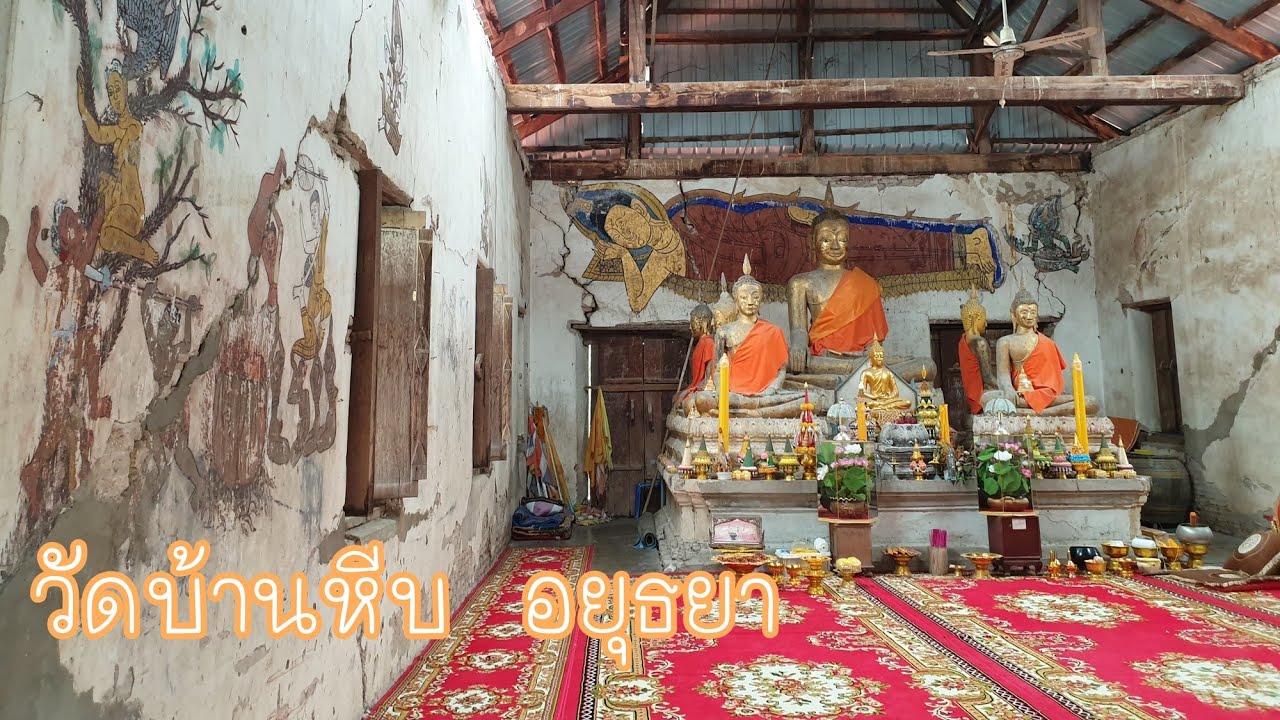
 Click to Access the Navigation Map GPS
Wat Ban Hip Map
Recommend

 Art, Culture and Heritage
 Historical Sites and Monuments(7)
 Landmarks and Memorials(6)
 Royal Palace(4)
 Art, Craft Centres, Tradition(6)
 Museums(9)
 Educational Places
 Museum for Study(1)
 Educational Gardens, Farm(2)
 Training Center(1)
Temple(133)
Training Center(1)
Temple(133)
 Church(2)
 Mosque(2)
 Other Sacred Sites(15)
 Research and Development
 Royal Project(4)
 Suburban Living
 Village, Community(10)
 Local Market(7)
 Floating Market(3)
 Nature and Wildlife
 Dam, Reservoir, Lake(1)
 River, Canal(3)
 Islands(2)
 Other natural attractions(1)
 Entertainment and Agricultural
 Animal camps and shows(2)
 Farms, Parks and Ecotourism(4)
 Travel Articles, Recipes
 Travel Review, Food Review(2)


