
 Home
Home North(
 Chiang Mai(


Wat Thep Kunchon
Rating: 3/5 (22 votes)
 Search By
  Map
Map 
 Have Map
  No Map
Phranakhon Si Ayutthaya attractions
Attractions in Thailand
Open Days: Daily
Opening Hours: 08.00 – 17.00
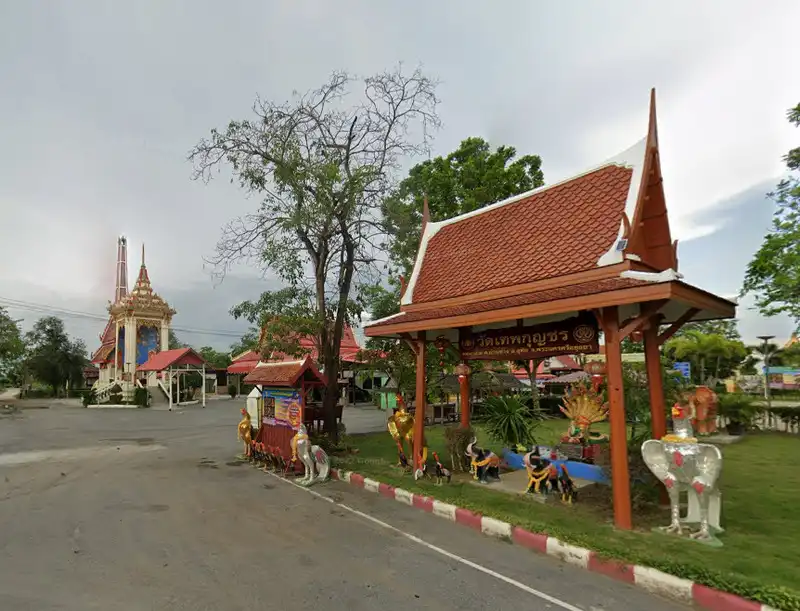
Wat Thep Kunchon is located in Ban Khwit Tai, Moo 3, Ban Chang Subdistrict, Uthai District, Phra Nakhon Si Ayutthaya Province. It belongs to the Mahanikaya order and covers an area of approximately 6 rai. The temple sits on flat land along Khlong Ban Chang, in a calm, simple community setting outside Ayutthaya’s main historic island. Unlike the major heritage zones that can feel crowded, this is a working community temple where local people come to make merit, pay respect, and take part in everyday religious life.
The character of Wat Thep Kunchon as a “canal-side community temple” makes a visit feel different from a checklist-style tour of famous ruins. What stands out here is that it is first and foremost a place for people, not an exhibition space. Visitors may notice local residents stopping by to offer alms, make merit on Buddhist holy days, or help with temple activities as their faith and time allow. These small, lived-in moments give community temples their meaning as spiritual anchors, and they help explain why temples like this continue to play an important role even as society changes.
The temple’s history is relatively clear in terms of records and timelines. Wat Thep Kunchon was granted permission to be built on 27 September 1978 and was officially established as a temple on 17 July 1983 by the Ministry of Education. Mr. Prueang Phut Khlong donated the land and led the establishment of the temple. The founding period reflects how rural communities relied on collective faith and cooperation—labor, shared effort, and pooled resources—to create a religious institution that could truly serve the public, especially in areas that were growing and needed a nearby communal center.
In the wider context of Thai culture, a temple is not only a place for rituals. It is also a shared “central space” that gives a community a common point of connection in terms of belief, relationships, and mutual support during important life events. Thai people often tie the idea of merit to daily life. A temple becomes part of family milestones—ordination ceremonies, house-blessing merit-making, dedicating merit to ancestors, and funeral rites that help people cope emotionally. When a temple is close to home and easy to reach, the bond between community and temple tends to deepen, and religious activities can continue steadily without requiring long travel.
Ban Chang Subdistrict’s flat terrain and proximity to canal networks create a simple but soothing landscape. Settlements along canals are common in Ayutthaya and the Central Plains because waterways once served as main transport routes and as vital resources for agriculture. Canal-side temples often emerged to support communities spread along these older water routes. Even though roads are now the primary mode of travel, traces of water-based life still shape the atmosphere. As a result, worship and merit-making here often feel peaceful rather than hurried.
Another social role of Wat Thep Kunchon is its connection to local education. A primary school (Ban Chang School) is located within the temple area or nearby. This close relationship between temple and school is a classic structure in Thai society, naturally linking religion, education, and community. Children can learn cultural values and everyday etiquette through real-life experience rather than only from textbooks. Volunteer activities during merit-making events, helping keep temple grounds clean, and joining ceremonies on important Buddhist days all become a form of absorbed learning that strengthens younger generations’ ties to their home community.
For readers interested in how temples are formally established, the permission to build and the official declaration of temple status are significant steps that reflect Thailand’s structured administration of religious sites. Many temples begin as small religious grounds or informal monastic places before developing facilities and being officially recognized under government and sangha regulations. After completing this process, a temple can operate more fully—managing land, building structures, and serving as a broader community center. Wat Thep Kunchon is therefore a useful example of a more recent community temple with clear documentation, which supports reliable referencing and makes it easier for local-history readers to understand its development.
From a travel perspective, Wat Thep Kunchon suits a relaxed merit-making visit, especially for those passing through Uthai District or the Rojana Road corridor and looking for a quiet place to reset. Morning visits tend to feel cooler and greener, fitting for prayer, mindfulness, and calm reflection. Afternoon visits work well as a gentle stopover during a longer route, especially for travelers who want to avoid the time pressure that often comes with high-traffic sightseeing.
When visiting a community temple, it is important to respect that it is a lived space for local people. Dress modestly, avoid loud noise, do not use flash photography in areas where it may disturb others, and pay attention to whether a ceremony is taking place. If there is a religious rite underway, move calmly and avoid crossing in front of monks or participants. Making offerings can be done according to personal faith, but it is best to focus on sincerity and appropriateness rather than value, because the core of merit-making in a community temple is building goodwill and mutual support between people and the temple.
In terms of administration, Wat Thep Kunchon follows the standard sangha governance structure. The abbot is Phra Khru Pariyat Yanothayakhun, who oversees temple affairs and coordinates community activities. Stating the temple’s leadership helps complete the informational picture for readers and can be useful for anyone who wishes to contact the temple regarding merit-making events, ceremonies, or community programs. For ceremonies that require specific scheduling, it is advisable to check the latest announcements through official channels or contact the temple directly for confirmation.
Looking beyond the temple grounds, Ban Chang Subdistrict and Uthai District are well positioned for connecting to Ayutthaya’s major attractions, making it easy to plan a route that blends “temple visit–good food–comfortable stay” without exhausting travel. A practical day plan might begin with merit-making at Wat Thep Kunchon, then continue to nearby temples or historic sites, and finish at a cafe or restaurant in the Uthai area, where options have expanded in recent years. This approach helps you start the day with calm and then move toward busier attractions while still keeping an easy pace.
If you want a more meaningful visit, try observing small details of community life: local roads linking villages to the canal, how shared public spaces are arranged around the temple, and the small cooperative routines that people do together. These are part of contemporary Ayutthaya culture that goes beyond the city walls and major ruins. Seeing Ayutthaya in this way adds depth to the trip and highlights the value of community temples that continue to function as real social institutions, not just photo spots.
Getting There: Wat Thep Kunchon is in Ban Chang Subdistrict, Uthai District, Phra Nakhon Si Ayutthaya Province. The most convenient way to travel is by private car or local hired transport. You can search for “Wat Thep Kunchon” on navigation apps or set your destination to Ban Khwit Tai in Ban Chang Subdistrict. After entering Uthai District, follow local roads and signage or ask residents for directions. The route is generally well connected and links easily to major roads such as Rojana Road. If traveling from Bangkok, you can take Highway 32 (Asia Road) toward Ayutthaya and then connect to Uthai District using navigation guidance. Allowing a little extra time in the morning and late afternoon can help avoid heavier traffic on main routes.
In summary, Wat Thep Kunchon is a community temple with value in contemporary local history and social culture. While it is not defined by large-scale ancient monuments, it plays an important role as a spiritual center for Ban Khwit Tai and Ban Chang Subdistrict. Visitors can experience the meaning of a temple as part of daily community life, and it is also easy to combine this stop with visits to Ayutthaya’s key attractions. It is well suited for travelers who want both quiet merit-making and a deeper local perspective in the same trip.
| Place Summary | A Mahanikaya community temple on Khlong Ban Chang in Uthai District, Phra Nakhon Si Ayutthaya. |
| Key Highlights | Peaceful, simple atmosphere; a true local spiritual hub; closely connected to community life and nearby schooling. |
| Location | Ban Khwit Tai, Moo 3, Ban Chang Subdistrict, Uthai District, Phra Nakhon Si Ayutthaya Province |
| Address | Ban Khwit Tai, Moo 3, Ban Chang Subdistrict, Uthai District, Phra Nakhon Si Ayutthaya (canal-side area along Khlong Ban Chang) |
| Affiliation | Mahanikaya |
| Area | Approximately 6 rai |
| Brief History | Permission to build granted on 27 September 1978; officially established as a temple on 17 July 1983. The land was donated and the temple development was led by Mr. Prueang Phut Khlong. |
| Abbot (Latest) | Phra Khru Pariyat Yanothayakhun |
| Nearby Attractions (Approx. Distance) | 1) Wat Yai Chai Mongkhon – 16 km 2) Wat Phanan Choeng Worawihan – 15 km 3) Elephant Kraal (Phra Thinang Pheniat) – 18 km 4) Ayutthaya Historical Park (Wat Phra Si Sanphet / Wihan Phra Mongkhon Bophit Area) – 22 km 5) Bang Pa-In Royal Palace – 20 km |
| Nearby Restaurants (Approx. Distance + Phone) | 1) Suan Lung Daeng – 9 km – 063-662-9222 2) Ayothaya Cafe – 14 km – 091-496-8888 3) The Beloved Cafe & Restaurant – 13 km – 082-426-5926 4) Jungle Cafe (Uthai District, Ayutthaya) – 10 km – 095-165-6044 5) Je Pong Noodles / Made-to-Order Thai Food – 12 km – 098-146-6283 |
| Nearby Accommodations (Approx. Distance + Phone) | 1) Green Residence Hotel Ayutthaya – 12 km – 086-399-9716 2) Kantary Hotel Ayutthaya – 14 km – 035-337-177 3) Classic Kameo Hotel Ayutthaya – 18 km – 035-212-535 4) Ayutthaya Grand Hotel – 15 km – 035-335-483 5) Krungsri River Hotel – 24 km – 035-244-333 |
Frequently Asked Questions (FAQ)
Q: Where is Wat Thep Kunchon located?
A: It is located in Ban Khwit Tai, Moo 3, Ban Chang Subdistrict, Uthai District, Phra Nakhon Si Ayutthaya Province.
Q: What are the open days and opening hours for Wat Thep Kunchon?
A: It is open daily from 08.00 – 17.00.
Q: When was Wat Thep Kunchon established?
A: Permission to build was granted on 27 September 1978, and it was officially established as a temple on 17 July 1983.
Q: What type of visit is Wat Thep Kunchon best for?
A: It is ideal for a calm merit-making and temple visit in a local community setting outside the main historic island.
Q: What should I wear when visiting the temple?
A: Dress modestly and respectfully, avoid revealing clothing, and behave quietly to respect the religious setting.
 Wat Thep Kunchon Map
 Category:
  Group:
  Tag: ●Wat Thep Kunchon●wat thep kunchon ●wat in uthai ayutthaya ●ayutthaya local temple ●ban chang temple ●community temple thailand ●ayutthaya buddhist temple
Last Update: 2 MonthAgo
Tag: ●Wat Thep Kunchon●wat thep kunchon ●wat in uthai ayutthaya ●ayutthaya local temple ●ban chang temple ●community temple thailand ●ayutthaya buddhist temple
Last Update: 2 MonthAgo
Comment
 Nearby Attractions
| Keyword (Advance) |
 Region
|
 Phranakhon Si Ayutthaya(
 Copyright 2012,