

 Home
Home Chiang Mai(




Wat Khan Ham
Rating: 2.9/5 (25 votes)
 Search By
  Map
Map 
 Have Map
  No Map
Phranakhon Si Ayutthaya attractions
Attractions in Thailand
Open Days: Open daily
Opening Hours: 09.00 – 17.00
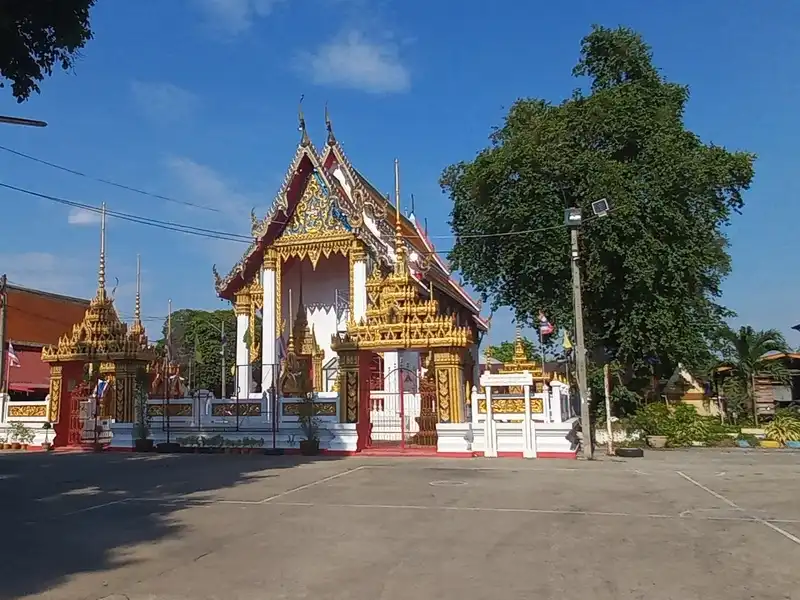
Wat Khan Ham is located in Ban Khan Ham, Moo 4, Khan Ham Subdistrict, Uthai District, Phra Nakhon Si Ayutthaya Province. It is a community temple under the Maha Nikaya order, closely woven into local life in the way a Central Thailand community temple is meant to be. In other words, the temple is not only a place for Buddhist rites and merit-making, but also a spiritual anchor and a social center for residents in the area. On ordinary days, villagers stop by to make merit, pay respects, and set their intentions in a quiet and sincere atmosphere. When the community needs collective strength, the temple becomes a shared space for seasonal merit-making, Kathin and Pha Pa ceremonies, ordinations, community charity events, and mutual support at the village level. As a result, Wat Khan Ham remains a living place – visited in step with the community’s rhythm – and its calm simplicity helps worship return to “intention” rather than a rushed checklist of tourist stops.
The setting of Wat Khan Ham reflects the lowland landscape of Central Thailand. Surrounding it are rice fields and a rural community where the pace of everyday life remains visible: homes spread along local roads and canal lines, people working in tune with the seasons, and a continuing culture of going to the temple as a family “place of refuge” for the heart. A temple nestled among rice fields and public canals naturally creates a sense of stillness – the sounds of nature and the unhurried tempo of village life let the mind settle without effort. This is a defining charm of community temples beyond the province’s busiest tourist routes, because merit-making and quiet reflection happen organically rather than being pushed by crowds or commercial tourism.
The temple land covers 5 rai 3 ngan 52 square wah, a size that clearly reflects a community temple: not so large that it becomes mass-tourism infrastructure, yet spacious enough for essential monastic buildings and for hosting communal merit-making on important occasions. Seen through the lens of land and space, temples like this often grow primarily through local faith – people jointly building, repairing, and maintaining structures, and keeping the grounds orderly and dignified. The temple is not owned in spirit by any single person; it is a shared place that everyone hopes to preserve as a lasting pillar of the community.
In broad terms, the temple boundaries connect with private land, public access routes, and public canals – a common pattern for rural temples in Central Thailand. These temples are typically positioned for direct community access, with public paths that make them easy to reach and canals that remain part of the cultural landscape. Even though modern road travel is now far more convenient, public canals continue to matter as both a symbol of the past and a real environmental element that contributes to the temple’s cool, serene atmosphere. Many visitors feel that this kind of setting makes a temple visit less hurried and less consumption-driven than major attractions, making it well-suited to those who want to make merit quietly and spend time with themselves in a meaningful way.
When the temple’s development is viewed through its buildings, Wat Khan Ham shows clear phases of construction that reflect community growth and changing readiness across different eras. The ordination hall (Ubosot) is 6.50 meters wide and 14 meters long, built in 2465 BE. The sermon hall (Sala Kan Parian) is also 6.50 meters wide and 14 meters long, built in 2483 BE. Later, the chanting hall is 4.50 meters wide and 10 meters long, built in 2499 BE. The temple also has 19 monk residences (kuti). These figures are not merely physical data; they help illustrate how many Central Thailand community temples expand gradually through collective effort. As the community grows, ceremonies become larger, and more people participate, the temple evolves from having core ritual space into having additional facilities for communal gatherings and a wider range of religious practice.
The Ubosot is the heart of the temple in ritual terms, as it is the space for formal Sangha procedures according to monastic discipline. It is also the space that gives people a sense of order and sacredness. The recorded dimensions reflect a community temple philosophy of being “right-sized for real use” – not grand to the point of distance, yet properly proportioned for important rites. With rice fields as a quiet backdrop in a lowland setting, the Ubosot’s simplicity and the surrounding atmosphere make the temple feel approachable and familiar. It is a place one can return to often, not a destination requiring a tourist mindset, but a place to enter with respect and intention as someone who genuinely wants to rest the mind.
The Sala Kan Parian, built in 2483 BE, plays a crucial role as a true community space. It supports gatherings, Dhamma listening, offering meals, and merit-making activities throughout the year. In rural temple life, the sermon hall often functions socially like a village “living room”: people meet, help prepare ceremonies, cooperate on communal tasks, and maintain bonds across generations. Elders pass experience to younger people, and youth learn manners and the culture of living together through temple activities. This is why Wat Khan Ham is not only a place to make merit, but also a space that has continually shaped community identity over time.
The chanting hall, built in 2499 BE, further reflects the temple’s expanded role from “ritual” to “practice.” It supports chanting, daily services, Dhamma listening, and activities that require particular calm. In community temples, having a chanting hall makes spiritual practice more accessible without waiting for major ceremonies. Whenever people feel tired, unsettled, or in need of grounding, they can come to sit quietly, pay respects, chant, and steady the mind in a space arranged appropriately for that purpose. The surrounding rice fields and canals also help practice feel natural, with fewer disturbances and a local rhythm that does not pressure anyone to hurry.
The presence of 19 monk residences suggests an active temple with an ongoing monastic community and continuous management of temple affairs. Strong community temples typically have a healthy relationship between monks and laypeople: monks provide guidance and spiritual leadership, while laypeople support and help maintain the temple according to their faith. This relationship helps keep the temple orderly, clean, and prepared to host ceremonies consistently – especially in lowland areas where seasonal and weather changes are pronounced. Keeping the temple ready is therefore a sign of shared commitment between the Sangha and the community.
For visitors, Wat Khan Ham suits unhurried merit-making because the atmosphere is not driven by commercial tourism. Most people who come are locals or those who truly intend to make merit, so the overall mood is calm and friendly. A respectful walk through the grounds, noticing key buildings that reflect different eras, and taking in the surrounding rice-field landscape allows visitors to see Ayutthaya in a lived-in dimension – not only the famous monumental image of the island-city heritage sites. What people often take home from a visit like this is not a large collection of photos, but the feeling that the mind has rested, slowed down, and returned to the present in a natural way.
Entering a community temple like Wat Khan Ham can follow a simple principle: respect the place and the people who use it in everyday life. Dress modestly, keep voices low, avoid disturbing monks or lay worshippers, and observe ritual areas appropriately. If taking photos, do so discreetly without blocking walkways and without making those practicing feel intruded upon. The essence of a community temple is not spectacle, but peace and sincerity. Visiting in a measured way supports a good experience for visitors while allowing the community to maintain privacy and calm.
Getting There Wat Khan Ham can be reached conveniently by car or motorcycle. For accuracy, set your map destination to “Wat Khan Ham, Uthai District, Phra Nakhon Si Ayutthaya”. When entering local community roads, drive at an appropriate speed as motorcycles and residents travel throughout the day. Park neatly in designated areas or wherever you do not block village access routes. If you would like to extend the trip, a comfortable plan is to make merit in the morning amid the rice-field atmosphere, then continue toward Ayutthaya city or the main historical-zone sites from late morning to afternoon without rushing. Starting the day with a quiet community temple often gives the entire day a gentler and more meaningful rhythm.
Ultimately, Wat Khan Ham is a clear example of a community temple that has grown alongside its village and surrounding rice fields. The recorded construction years help reveal time layers and continuity of faith, while the lowland setting and rice-field environment make a temple visit feel like genuine rest for the mind. For anyone seeking simple merit-making, a calm pace, and a view of Ayutthaya as a living community, Wat Khan Ham is well worth a respectful, intentional visit – because when we enter with reverence, what we often bring back is not only knowledge or images, but a lasting sense of quiet ease.
| Place Summary | A community temple in Ban Khan Ham, Uthai District, Phra Nakhon Si Ayutthaya Province, set amid rice fields and lowland scenery. Calm atmosphere, suitable for merit-making and quiet reflection. |
| Address | Ban Khan Ham, Moo 4, Khan Ham Subdistrict, Uthai District, Phra Nakhon Si Ayutthaya Province |
| Highlights | A rice-field community temple with clearly recorded building data: Ubosot (2465 BE) 6.50 × 14 m, Sermon Hall (2483 BE) 6.50 × 14 m, Chanting Hall (2499 BE) 4.50 × 10 m, 19 monk residences, and temple land area of 5 rai 3 ngan 52 square wah. |
| Abbot / Current Caretaker | Phra Khru Uthai Thammasarot |
| Temple Phone | 089-825-2929 |
| Travel | Set your map destination to “Wat Khan Ham, Uthai District, Phra Nakhon Si Ayutthaya”. Drive carefully on community roads and park neatly. |
| Current Status | Open for worship and merit-making (community temple in a rice-field area). |
| Facilities | Parking area (subject to site conditions), sermon hall / activity buildings, restrooms (subject to site conditions). |
| Fees | No admission fee found (donations welcome). |
| Nearby Tourist Attractions | 1) Wat Yai Chai Mongkhon ~13 km 2) Wat Phanan Choeng Worawihan ~12 km 3) Japanese Village (Ayutthaya) ~14 km 4) Wat Mahathat ~16 km 5) Ayutthaya Historical Park ~16 km |
| Nearby Restaurants | 1) Baan Takorai Restaurant ~10 km Tel. 035-242-173 2) Krua Mae Liu ~12 km Tel. 063-143-8988 3) Pae Krung Kao ~14 km Tel. 035-251-158 4) Go Hub Boat Noodles ~13 km Tel. 035-245-170 5) sala ayutthaya ~16 km Tel. 035-242-588 |
| Nearby Accommodations | 1) sj apartment ayutthaya ~6 km Tel. 081-571-7295 2) green mansion ayutthaya ~9 km Tel. 086-424-5663 3) classic kameo hotel ayutthaya ~12 km Tel. 035-212-535 4) krungsri river hotel ~13 km Tel. 035-244-333 5) ayutthaya retreat ~17 km Tel. 035-795-885 |
Frequently Asked Questions (FAQ)
Q: Where is Wat Khan Ham located?
A: The temple is in Ban Khan Ham, Moo 4, Khan Ham Subdistrict, Uthai District, Phra Nakhon Si Ayutthaya Province, in a rural rice-field area of Ayutthaya.
Q: Is Wat Khan Ham open daily, and what are the opening hours?
A: Generally, it is open daily from 09.00 – 17.00. If there is a special ceremony or event, it is best to call ahead for confirmation.
Q: What are the notable buildings and features at Wat Khan Ham?
A: The temple has clearly recorded construction data, including the Ubosot built in 2465 BE, the sermon hall built in 2483 BE, the chanting hall built in 2499 BE, and a total of 19 monk residences, reflecting the temple’s continued community development.
Q: What type of visit is Wat Khan Ham best suited for?
A: It is ideal for visitors who want a calm, unhurried merit-making experience, enjoy community temples, and appreciate a peaceful rice-field atmosphere beyond the province’s busiest tourist routes.
Q: What is the easiest way to get to Wat Khan Ham?
A: Drive or ride a motorcycle and set your map destination to “Wat Khan Ham, Uthai District, Phra Nakhon Si Ayutthaya”. Use appropriate speed on community roads and park neatly without blocking local traffic.
Q: What etiquette should visitors follow at Wat Khan Ham?
A: Dress modestly, keep voices low, respect ritual areas, avoid disturbing monks and worshippers, and park without blocking village access routes.
 Wat Khan Ham Map
 Category:
  Group:
  Tag: ●Wat Khan Ham●wat khan ham ●wat khan ham ayutthaya ●uthai district temple ●ayutthaya community temple ●rural temple ayutthaya ●buddhist temple in ayutthaya ●things to do in uthai ayutthaya ●temples near ayutthaya ●merit making in ayutthaya ●quiet temples in ayutthaya Last Update: 4 WeekAgo
Comment
 Nearby Attractions
| Keyword (Advance) |
 Region
|
 Phranakhon Si Ayutthaya(
 Copyright 2012,