
lovethailand home >Central Travel Attractions >Phranakhon Si Ayutthaya Travel Attractions >Bang Ban >Wat Taku > Wat Taku
TL;DR: Wat Taku is located at Moo 4, Wat Taku Subdistrict, Bang Ban District, Phra Nakhon Si Ayutthaya Province, Thailand, open Daily, hours 07:00 - 18:00.
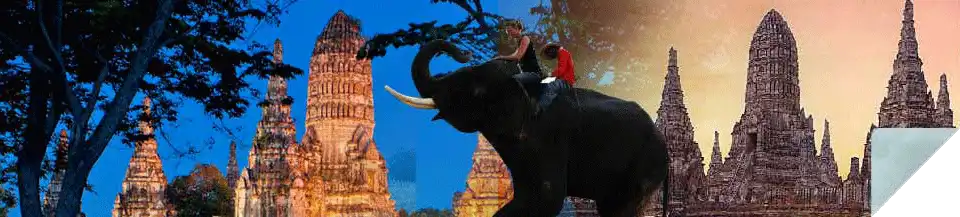
Wat Taku
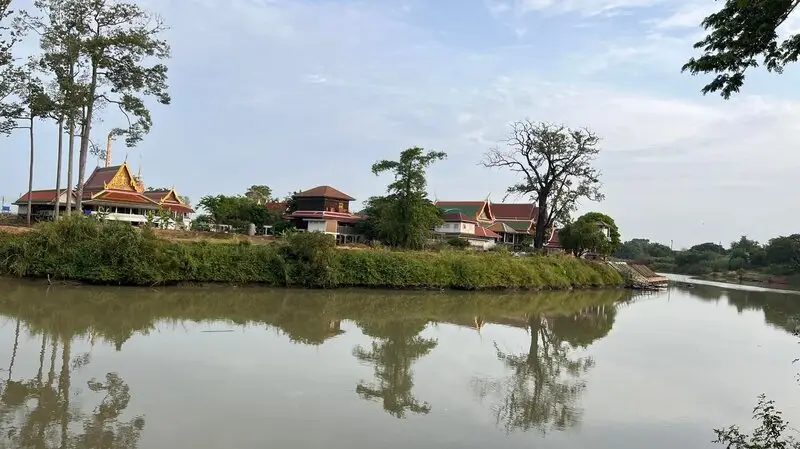
Open Days: Daily
Opening Hours: 07:00 - 18:00
Wat Taku is located in Moo 4, Wat Taku Subdistrict, Bang Ban District, Phra Nakhon Si Ayutthaya Province. This is a community temple under the Mahanikaya order, set on the flat plains of Thailand’s Central region. The canal lines and waterways around Bang Ban have long shaped local life, and they form the cultural backdrop of the area. The first impression of Wat Taku is its simple, quiet countryside calm—an active, living community space rather than a place staged for tourism. On ordinary days, villagers come here as a spiritual refuge, while during major merit-making occasions, the temple becomes a shared heart of the community.
Wat Taku is said to have been established around 1762, which means the temple is not only a religious site, but also a kind of evidence of settlement and community growth in the Bang Ban area. In river-basin societies, temples often emerge alongside communities, markets, waterways, and agricultural life. When people need a public space to make merit, learn, and find emotional grounding, the temple naturally becomes the community’s anchor.
One reason visitors can “read the structure of the temple” clearly is that the architectural details and dimensions are fairly well documented. The ubosot is approximately 7 meters wide and 8.50 meters long, built with brick and mortar. Its scale reflects a practical community temple design that prioritizes real use and structural solidity over grandeur. The sermon hall (sala kan parian) is approximately 15 meters wide and 24 meters long, constructed in concrete, which allows it to support large community gatherings—merit events, meetings, and activities coordinated with local schools or organizations. The chanting hall is approximately 7.50 meters wide and 14.50 meters long, built with a combination of concrete and wood, reflecting an ongoing continuity of faith and day-to-day practice.
Another layer of interest is the temple’s folk-belief narrative that gives Wat Taku its distinctive identity. Beyond standard religious structures, the community recognizes a sacred figure as a spiritual pillar—Luang Pho Ruesi, also affectionately called “Pho Kae” (the revered elder). Publicly shared accounts describe an origin from a termite mound whose natural shape resembled a hermit, after which villagers and the abbot in earlier times applied plaster to form the figure and placed religious texts and palm-leaf manuscripts inside. This belief reflects a blending of Buddhism, Brahmanic hermit traditions, and nature-based local devotion—common in Central Thailand’s river-basin communities, where “nature” is not merely scenery, but part of life and sacred meaning.
In cultural terms, Luang Pho Ruesi (Pho Kae) functions as a shared community symbol: a focal point of devotion that everyone recognizes and can easily pass on through stories. People commonly come to pray for work, studies, health, and family well-being—especially before important life moments such as changing jobs, taking exams, or moving house. This kind of devotion does not contradict Buddhist practice; instead, it places religion “inside everyday life” through a narrative that people can truly relate to and feel connected with.
Beyond individual worship, Wat Taku also serves as a place where community identity is expressed through traditions and merit-making events—especially the Kathin festival, which is one of the largest annual ceremonies for temples and villages. There is publicly shared information about an organized Kathin event that clearly states dates and times and also references the abbot’s name in recent public materials. In addition, Wat Taku is associated with a belief-based ritual known as the “Pho Kae Teacher-Honoring Ceremony,” for which the temple has communicated schedules and details via its own channels. This kind of ceremony shows that Wat Taku does not only follow the general Buddhist calendar, but also preserves community beliefs and rituals that locals feel belong to them.
If you want to experience Wat Taku in a way that feels complete—both devotion and community life—it helps to allow time to walk around the grounds and observe how the temple relates to the surrounding farmland, homes, and nearby canals. Then, pay respects at the main sacred focus, Luang Pho Ruesi (Pho Kae). After that, take a look at the sermon hall and chanting hall, which often function as the community’s “working spaces” as much as religious spaces. Many village activities happen in these areas, from merit events to mutual support efforts and gatherings that connect different generations.
Another defining feature of Bang Ban is its close relationship with water and seasonal water management. This means that local temples are not simply places to pay respects; they can also feel like “anchors” during times when the community must adapt to seasonal environmental conditions. Visiting Wat Taku can therefore be a way to understand everyday life in rural Ayutthaya—where faith, patience, and cooperation form an important social foundation.
Getting There Wat Taku is most convenient to visit by private car. Set your map to Wat Taku Subdistrict, Bang Ban District, Phra Nakhon Si Ayutthaya Province, then use local roads connecting into the village and temple area. Along the way, you’ll pass rice fields, canals, and farming communities—part of the quiet charm of driving through Bang Ban, where the journey itself becomes part of the experience. If you’re traveling as a family or group, consider leaving extra time to walk the temple grounds at a relaxed pace, then stop for local food around the Bang Ban area or nearby main roads before heading back.
| Place Name | Wat Taku |
| Location | Moo 4, Wat Taku Subdistrict, Bang Ban District, Phra Nakhon Si Ayutthaya Province, Thailand |
| Address (For Navigation) | Wat Taku Subdistrict, Bang Ban District, Phra Nakhon Si Ayutthaya 13250, Thailand |
| Place Summary | A long-established community temple in Bang Ban, set in the Central Plains river-basin landscape, with functional community-focused architecture and a distinctive folk-devotion tradition centered on Luang Pho Ruesi (Pho Kae). |
| Highlights | 1) Luang Pho Ruesi / Pho Kae (folk narrative of a plaster-formed figure from a termite mound, with texts and palm-leaf manuscripts placed inside) 2) Ubosot built with brick and mortar (approx. 7 m wide, 8.50 m long) 3) Large sermon hall supporting community activities (approx. 15 m wide, 24 m long) 4) Chanting hall built with concrete and wood (approx. 7.50 m wide, 14.50 m long) 5) A living countryside temple atmosphere in a Central Thailand river-basin community |
| Abbot / Management (Latest) | Phra Khru Veeramongkhon Wachirakit |
| Notable Traditions / Rituals | 1) Annual Kathin festival (dates and times announced via temple / project public notices) 2) Pho Kae Teacher-Honoring Ceremony (a community belief-based ritual with schedules communicated through temple channels) |
| Nearby Tourist Attractions (Approx. Distance) | 1) Bang Ban District area (market/community zone) – approx. 10 km 2) Wat Phai Lom (Bang Ban) – approx. 14 km 3) Wat Phra Khao (Bang Ban) – approx. 18 km 4) Wat Chaiwatthanaram (Ayutthaya Old City) – approx. 28 km 5) Ayutthaya Historical Park (Old City Zone) – approx. 30 km |
| Popular Restaurants Nearby (Approx. Distance + Phone) | 1) Set Arts And Props Cafe And Bistro – approx. 16 km – Tel. 093-576-4611 2) Lim Khao Man Gai (Bang Ban) – approx. 14 km – Tel. 096-661-7992 3) Rim Thang By P'No – approx. 13 km – Tel. 094-461-0333 4) Khao Pad Nai Tree – approx. 13 km – Tel. 061-442-9714 5) Hua Juk Boat Noodles (Bang Ban) – approx. 12 km – Tel. 084-750-3480 |
| Popular Accommodations Nearby (Approx. Distance + Phone) | 1) Metathsana Resort Ayutthaya – approx. 30 km – Tel. 094-572-3388 2) Vanida Resort - Halal – approx. 30 km – Tel. 066-101-9695 3) Sweet Inn Resort – approx. 28 km – Tel. 084-672-9428 4) Home Ayutthaya – approx. 30 km – Tel. 094-287-2589 5) Cattani's Riverside Home – approx. 32 km – Tel. 087-497-6438 |
| Temple Contact Number | Tel. 062-726-2211 |
Frequently Asked Questions (FAQ)
Q: When was Wat Taku established?
A: Publicly shared local information states Wat Taku was established around 1762 and belongs to the Mahanikaya order.
Q: What are the key highlights of Wat Taku?
A: The highlights include Luang Pho Ruesi (Pho Kae) with its termite-mound folk narrative, and the temple’s main buildings—ubosot, sermon hall, and chanting hall—which reflect the role of a living riverside community temple.
Q: What does Luang Pho Ruesi / Pho Kae represent in local culture?
A: It represents a form of folk devotion that blends hermit belief and nature respect with Buddhist life, and it remains an important source of spiritual support for local residents.
Q: What notable traditions or rituals are associated with Wat Taku?
A: The temple holds an annual Kathin festival as a major merit event and is also associated with a Pho Kae teacher-honoring ceremony that the temple communicates through its channels.
Q: How can I contact Wat Taku to ask about ceremonies or activities?
A: You can contact Wat Taku at 062-726-2211.
Q: What is the most convenient way to get to Wat Taku?
A: Private car is recommended. Navigate to Wat Taku Subdistrict, Bang Ban District, Phra Nakhon Si Ayutthaya Province, then use local roads to reach the temple.
 Category: ●Places of Worship
 Group: ●Temple
Last Update : 4 MonthAgo
 Last Update : 4 MonthAgo
 Click to Access the Navigation Map GPS
 Art, Culture and Heritage
 Historical Sites and Monuments(7)
 Landmarks and Memorials(6)
 Royal Palace(4)
 Art, Craft Centres, Tradition(6)
 Museums(9)
 Educational Places
 Museum for Study(1)
 Educational Gardens, Farm(2)
 Training Center(1)
Temple(133)
Training Center(1)
Temple(133)
 Church(2)
 Mosque(2)
 Other religious and spiritural sites(15)
 Research and Development
 Royal Project(4)
 Suburban Living
 Village, Community(10)
 Local Market(7)
 Floating Market(3)
 Nature and Wildlife
 Dam, Reservoir, Lake(1)
 River, Canal(3)
 Islands(2)
 Other natural attractions(1)
 Entertainment and Agricultural
 Animal camps and shows(2)
 Farm, Parks, Gardens and Ecotourism(4)
 Travel Articles, Recipes
 Travel Review, Food Review(2)


