
 Home
Home North(
 Chiang Mai(


Wat Intharam
Rating: 2.9/5 (31 votes)
 Search By
  Map
Map
 Have Map
  No Map
Phranakhon Si Ayutthaya attractions
Attractions in Thailand
Open Days: Daily
Opening Hours: 08:00 – 17:00
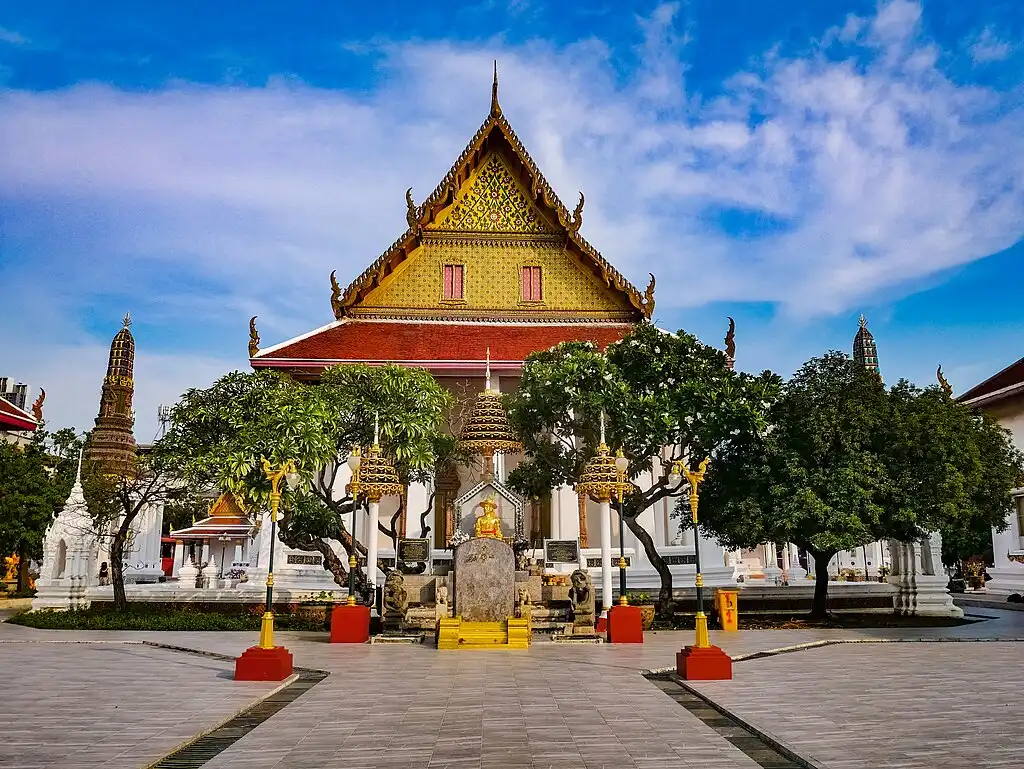
Wat Intharam is located in Moo 3, Ban Thang Chang, Thang Chang Subdistrict, Bang Ban District, Phra Nakhon Si Ayutthaya Province. This community temple belongs to the Mahanikaya order and sits within the flat floodplain landscape of the Chao Phraya River basin. The Bang Luang Mueang Canal is an important waterway that has long sustained local livelihoods and memories, and the surrounding rice fields, canals, and traditional farming homes create a calm, simple, and natural atmosphere—the kind of quiet that many city visitors don’t realize they’ve been missing.
In the past, Thang Chang Subdistrict relied on its network of canals as the main transportation routes. People commonly traveled by water for trading, taking children to school, and visiting temples for merit-making. Wat Intharam therefore has never been only a place for religious rites; it has served as a “community center” in a broader sense—a place to meet, talk, share news, find emotional support on ordinary days, and gather as one during important Buddhist holy days and village merit festivals. The temple, the local school, and the community remain closely connected as a social network that sustains one another.
Wat Intharam is believed to have been established around 1960 and later received its Wisungkhamsima (formal boundary for ordination) on 21 March 1977, enabling the temple to conduct ordinations and formal monastic ceremonies in full accordance with the Sangha regulations. The temple’s growth in the post–World War II period also reflects how Central Thailand communities rebuilt and strengthened their social, cultural, and religious foundations. Many community temples of the same era were shaped largely by local faith and collective effort, and Wat Intharam stands as a clear example of a sacred space created to become the area’s spiritual anchor.
The temple’s most important sacred building is the ordination hall (ubosot). Inside sits the principal Buddha image in the Maravijaya posture, cast in brass, with a lap width of approximately 87 centimeters. This detail aligns with the character of Central Thailand community temples, where Buddhist art often emphasizes serenity, stillness, and stability. The Maravijaya posture symbolizes overcoming inner obstacles, which is why local worshippers commonly come to pray for peace, life stability, and the strength to move through hardships—especially during major life transitions such as starting a new job, relocating, or seeking unity and resilience within the family.
Another meaningful landmark in front of the ubosot is a large Buddha image in the “Stopping the Quarrel” posture (Ham Yat), approximately 3.27 meters tall. This posture is widely associated with calming conflict and restoring harmony, fitting perfectly with a rural setting where the temple has long served as a place to “hold relationships together” among villagers—whether by working collectively for merit events, resolving community issues, or allowing elders to guide younger generations in etiquette and mutual care. Standing before this image can feel like a gentle reminder to soften the mind and return to the quiet foundation of peaceful coexistence.
A distinctive sacred figure closely associated with the local community is “Luang Pho Ruesi” (the Hermit). Local belief says it originated from a termite mound whose natural shape resembled a hermit. In folk tradition, termite mounds are often regarded as spiritually significant sites that connect nature with the unseen world. In the past, villagers and the abbot are said to have worked together to coat the mound with plaster to form a hermit figure, placing palm-leaf manuscripts and religious texts inside. This story reflects a blending of Buddhism, Brahmanic hermit traditions, and local nature-based faith. As a result, Luang Pho Ruesi is not only a sacred object but also a symbol of wisdom, devotion, and the relationship between people and the environment in Central Thailand’s river-basin way of life.
Today, Luang Pho Ruesi is enshrined inside a building near the front of Wat Taku School, making it easy for students and villagers to pay respects. People commonly pray for academic success, work opportunities, health, and household well-being—especially before exams or before starting something important. Because the shrine is close to an educational space, faith and learning naturally appear side by side, quietly reinforcing the idea that knowledge and virtue can grow together.
For travelers, Wat Intharam is best visited without rushing. Take time to walk around the ubosot, observe the details of the Buddha images, and absorb the living atmosphere of a riverside community temple. This is not a place that has been overly staged for tourism; rather, it remains a genuine community space where cultural life continues through everyday merit-making, seasonal temple activities, and events shared with the local school. On major Buddhist holy days such as Makha Bucha, Visakha Bucha, the start of Buddhist Lent (Khao Phansa), and the end of Buddhist Lent (Ok Phansa), the temple becomes noticeably livelier with devotees who come to make merit, join candlelit processions, and participate in rituals that keep the community connected.
Getting There Wat Intharam is most convenient to reach by private car. From Phra Nakhon Si Ayutthaya city, head toward Bang Ban District, then continue into Thang Chang Subdistrict. The temple is situated within Ban Thang Chang community, near canal-side farmland, and parking is available inside the temple grounds. This makes it a comfortable stop for families or small pilgrim groups seeking a quiet place to pay respects while experiencing the authentic rhythm of Central Thailand’s countryside. Along the way, you’ll pass rice fields and canals interspersed with local homes—one of the understated charms of driving through Bang Ban that many visitors describe as a true mental reset.
| Place Name | Wat Intharam |
| Location | Moo 3, Ban Thang Chang, Thang Chang Subdistrict, Bang Ban District, Phra Nakhon Si Ayutthaya Province, Thailand |
| Address (For Navigation) | Provincial Highway 3501, Thang Chang Subdistrict, Bang Ban District, Phra Nakhon Si Ayutthaya 13250, Thailand |
| Place Summary | A riverside community temple in Bang Ban with a peaceful, simple atmosphere, noted for local folk devotion connected to nature and the canal-side farming way of life. |
| Highlights | 1) Luang Pho Ruesi (formed from a termite mound) and its well-known local folk narrative 2) Main Buddha in Maravijaya posture, cast in brass (approx. 87 cm lap width) 3) Large “Stopping the Quarrel” Buddha image (symbolizing harmony and conflict resolution) 4) Classic Chao Phraya river-basin community setting near Bang Luang Mueang Canal |
| Abbot / Management (Latest) | No publicly verifiable official source found for the current abbot’s name (therefore not stated for accuracy). |
| Nearby Tourist Attractions (Approx. Distance) | 1) Wat Taku (Bang Ban) – approx. 6 km 2) Wat Phai Lom (Luang Pho Iat) (Bang Ban) – approx. 12 km 3) Bang Ban Market Area – approx. 12 km 4) Wat Chaiwatthanaram (Ayutthaya Old City) – approx. 28 km 5) Ayutthaya Historical Park (Old City Zone) – approx. 30 km |
| Popular Restaurants Nearby (Approx. Distance + Phone) | 1) See Kuk Food – approx. 12 km – Tel. 081-851-9953 2) Krua Manao – approx. 18 km – Tel. 081-141-5118 3) Zaep Nai Soi...Soi Soi (Wat Chaeng, Bang Ban) – approx. 14 km – Tel. 061-170-1278 4) Fadel (Quail Rotisserie, Countryside Restaurant) – approx. 16 km – Tel. 081-757-7398 5) Zaep Bak 8 Saen (Thung Bang Ban) – approx. 15 km – Tel. 063-962-0664 |
| Popular Accommodations Nearby (Approx. Distance + Phone) | 1) Heuan Suntharee Resort (Bang Ban) – approx. 16 km – Tel. 081-994-3169 2) Sweet Inn Resort (Ayutthaya) – approx. 28 km – Tel. 084-672-9428 3) Wanida Resort (Halal) (Ayutthaya) – approx. 30 km – Tel. 066-101-9695 4) Metathsana Resort Ayutthaya – approx. 30 km – Tel. 094-572-3388 5) Home Ayutthaya – approx. 30 km – Tel. 094-287-2589 |
| Temple Contact Number | - |
Frequently Asked Questions (FAQ)
Q: When was Wat Intharam established?
A: Publicly shared local information states the temple was established around 1960 and received its Wisungkhamsima on 21 March 1977.
Q: Where is Wat Intharam located, and which monastic order does it belong to?
A: It is located in Moo 3, Ban Thang Chang, Thang Chang Subdistrict, Bang Ban District, Phra Nakhon Si Ayutthaya Province, and it belongs to the Mahanikaya order.
Q: What are the highlights that visitors should not miss at Wat Intharam?
A: The key highlights are Luang Pho Ruesi with its termite-mound origin story, the brass Maravijaya main Buddha image in the ubosot, and the large “Stopping the Quarrel” Buddha image symbolizing harmony.
Q: Why is Luang Pho Ruesi significant?
A: Luang Pho Ruesi reflects local river-basin folk belief, with a narrative of being formed from a termite mound shaped like a hermit, and is widely respected for prayers related to study, work, health, and family well-being.
Q: What is the most convenient way to get to Wat Intharam?
A: Private car is recommended. From Ayutthaya city, head toward Bang Ban District and continue into Thang Chang Subdistrict. The temple is within Ban Thang Chang community and has on-site parking.
Q: What is the best time to visit Wat Intharam?
A: Morning hours are ideal for comfortable weather. For a more vivid community atmosphere, consider visiting on major Buddhist holy days such as Makha Bucha, Visakha Bucha, Khao Phansa, and Ok Phansa.
 Wat Intharam Map
 Category:
  Group:
  Tag: ●Wat Intharam●wat intharam bang ban ●wat intharam ayutthaya ●temples in bang ban district ●quiet temple ayutthaya ●riverside community temple thailand ●things to do in bang ban ●buddhist temple near ayutthaya ●luang pho ruesi wat intharam ●chao phraya river basin temple ●cultural travel bang ban ayutthaya Last Update: 2 MonthAgo
Comment
 Nearby Attractions
| Keyword (Advance) |
 Facebook Fanpage
 Region
 Art, Culture and Heritage
 Historical Sites and Monuments(
 Landmarks and Memorials(
 Royal Palace(
 Art, Craft Centres, Tradition(
 Museums(
 Educational Places
 Museum for Study(
 Educational Gardens, Farm(
 Training Center(
 University
 Church(
 Mosque(
 Other religious and spiritural sites(
 Research and Development
 Royal Project(
 Suburban Living
 Village, Community(
 Local Market(
 Floating Market(
 Nature and Wildlife
 Dam, Reservoir, Lake(
 River, Canal(
 Islands(
 Other natural attractions(
 Entertainment and Agricultural
 Animal camps and shows(
 Farm, Parks, Gardens and Ecotourism(
 Travel Articles, Recipes
 Travel Review, Food Review(
 Copyright 2012,