

 Home
Home Chiang Mai(




St Joseph is Church
Rating: 3.5/5 (4 votes)
 Search By
  Map
Map 
 Have Map
  No Map
Phranakhon Si Ayutthaya attractions
Attractions in Thailand
Open Days: Daily (Monday–Saturday and Sunday)
Opening Hours: Monday–Saturday 08.00 – 17.00; Sunday 11.00 – 17.00
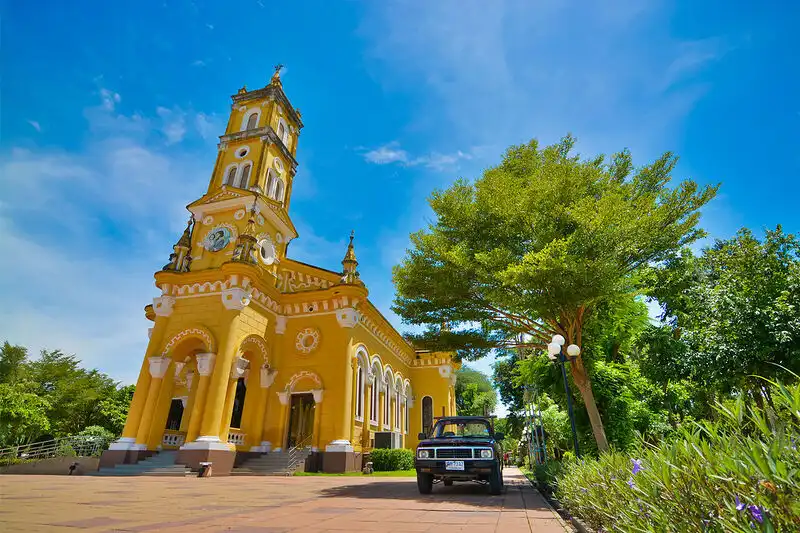
St. Joseph’s Church, Ayutthaya is located at No. 30, Moo 11, Samphao Lom Subdistrict, Phra Nakhon Si Ayutthaya. It is one of the city’s most meaningful cultural and historical attractions, offering a perspective on Ayutthaya that goes beyond brick ruins and temple grounds. Here, Ayutthaya’s story unfolds through the traces of Siam’s connection with the Western world—through religion, education, politics, and the everyday lives of people who shared the same era. This church is therefore both a living place of faith and a tangible history lesson, especially for travelers who want to understand Ayutthaya beyond the standard sightseeing route.
The church stands in Samphao Lom, a riverside area whose community character and historic transport networks are still strongly felt. Being close to the river is not only visually beautiful; it also reflects an era when waterways functioned as the city’s main roads. People traveled, traded, received news, and maintained relationships with other communities along the river routes. Choosing a riverside plot for a religious site and a school was therefore no accident—it positioned the institution where it could truly reach people in daily life, aligning with an urban system driven by water-based networks.
Historically, St. Joseph’s Church is closely tied to the early reign of King Narai the Great. Records state that the first Paris Foreign Mission delegation, led by His Excellency Lambert de la Motte with two other priests, arrived in Ayutthaya on 22 August 1662 (B.E. 2205). That arrival was not merely a religious journey; it reflects the relationship between the state and religion, and Ayutthaya’s openness to new bodies of knowledge at a time when the kingdom played a major role in regional trade and diplomacy.
According to accounts passed down through time, the missionaries contributed significantly to the people of Ayutthaya and gained royal approval. When they later had an audience with King Narai to request land to build a church and a school—for worship and for educating children—the king granted a riverside plot for that purpose. At the time, the site was known as the “Camp of Saint Joseph.” This detail matters because it shows that St. Joseph’s was never intended to be only a ceremonial building; from the beginning, it was built with a social role centered on education and community support. This is precisely why the church carries cultural weight beyond what many visitors initially expect.
The year 1666 (B.E. 2209) is another key milestone frequently cited in the site’s history, as it is recorded as the year when the church began to take concrete form during King Narai’s reign. Establishing a Christian religious institution in that period was shaped by international politics, economics, and the influx of modern knowledge arriving alongside maritime trade. Even though today’s visitors see a church that has gone through multiple restoration phases, knowing the foundational date makes a visit far more meaningful—you are standing on ground connected to more than three centuries of layered history.
One of the most intense chapters in St. Joseph’s story belongs to the final days of the Ayutthaya Kingdom. Records indicate that Thai people used this church compound as a defensive position against the Burmese until 23 March 1767 (B.E. 2310), just 10 days before the fall of Ayutthaya. This episode turned a religious site into a strategic space during a national crisis and highlights a historical reality: sacred places were not used only for rituals, but were drawn into the struggle for survival in times of war. The Burmese reportedly burned the site and looted its valuables, and also took Bishop Brigot and his companions to Burma. These events deepen the church’s significance as a “silent witness” to a major turning point in Thai history.
After the fall of Ayutthaya, the church became abandoned and had no clergy to care for it. Yet abandonment does not mean the absence of meaning. On the contrary, such silence often preserves memories until people return to revive them. In 1831 (B.E. 2374), Father Pallegoix and his group arrived in Thailand and began restoring the site. This marked a turning point: St. Joseph’s returned to life and gradually regained its role within the community through repair works, revitalization, and reorganizing the space for continued use in a new era.
In more recent times, the Archdiocese of Bangkok has carried out further restoration and comprehensive interior decoration. As a result, the church visitors see today is orderly, elegant, and clearly maintained with the intention of preserving a heritage of faith while welcoming respectful tourism. A distinctive element of these restorations is the systematic way the interior supports remembrance of key historical figures connected to the church—especially the placement of the remains of Bishop Pierre Lambert de la Motte and Bishop Louis Laneau within the church, on both sides of the sanctuary area. This allows visitors to encounter the story in a way that feels immediate and historically substantial.
In addition, records note that the remains of six other bishops, along with those of 23 missionaries, were moved to be kept in a memorial structure within the church cemetery. Knowing this detail helps visitors plan their visit more thoughtfully, because St. Joseph’s is not only an attractive main building; it is also a landscape of memory extending into the wider church grounds and cemetery. For travelers who enjoy deeper cultural exploration, taking time to understand why each area is arranged as it is can transform a visit from a simple check-in into genuine learning.
As a travel experience, St. Joseph’s Church offers a mood different from Ayutthaya’s classic temple-ruin circuit. The presence of Christian art and symbolism within a city long rooted in Buddhism and Ayutthaya-era aesthetics creates a distinctive harmony of contrasts. Many visitors feel that looking at the church by the river reveals “another face” of Ayutthaya—an outward-looking, internationally connected city shaped by cultural networks and knowledge flows that have existed for centuries. This atmosphere makes the site suitable for history lovers, photography-focused travelers, and anyone seeking a quiet place to pause and reflect.
To get the most value from the visit, it helps to hold a simple timeline in mind: 1662 (B.E. 2205) for the missionaries’ arrival in Ayutthaya; 1666 (B.E. 2209) for the church’s early construction; 1767 (B.E. 2310) for the wartime episode shortly before Ayutthaya fell and the destruction that followed; the period of abandonment; 1831 (B.E. 2374) for restoration under Father Pallegoix; and finally the modern restoration works carried out by the Archdiocese of Bangkok. With this framework, each part of the site feels purposeful, and the visit becomes more than a surface-level impression.
In terms of dress and etiquette, visitors should follow the same principles used for all sacred spaces: dress modestly, keep noise to a minimum, and respect areas used for worship. Although the church is a tourist attraction, it remains a place of faith where religious services may take place at certain times. Photography is generally possible in an appropriate manner, but visitors should avoid disturbing those who are praying or participating in ceremonies. If a service is underway, it is best to step back, maintain a respectful distance, and observe quietly rather than moving in close for photos. Much of the beauty of places like this lies in the respect visitors show to the space.
Popular photo angles include viewpoints by the riverside where the building stands out clearly, especially in the morning or late afternoon when the light is softer. For images that tell a story, include elements of the river, walkways, or the riverside community, because they better communicate Ayutthaya’s living context than architecture alone. For content creators, connecting the church to broader themes—Siam–Western relations, education, and the events preceding Ayutthaya’s fall—will make articles or posts far more substantial and memorable.
St. Joseph’s Church is also ideal for an itinerary that is short yet rich in meaning, because it is close to many major Ayutthaya landmarks. A practical half-day plan is to visit the church in the morning, continue to prominent temples or museums in the city, and end with a riverside meal or café—an experience Ayutthaya is known for. This creates a well-rounded day that includes sacred spaces of different faiths, historic ruins, and local food culture, without long drives or complicated route changes.
Getting There Visiting St. Joseph’s Church is convenient by private car or public transport. From Bangkok, you can drive to Phra Nakhon Si Ayutthaya and set navigation to “St. Joseph’s Church Ayutthaya,” then follow city routes into Samphao Lom, which is not far from Ayutthaya’s main tourist zone. If you arrive by train or minivan to central Ayutthaya, you can continue by taxi or local hired transport. A useful planning approach is to keep your route in one direction—“church – temples – restaurant – café”—to reduce backtracking and leave more time to truly absorb each place.
From a cultural perspective, St. Joseph’s Church reminds us that Ayutthaya was not only a Buddhist royal capital in a narrow sense, but also a port city connected to the wider world, with remarkable religious and ethnic diversity for its time. The existence of a Christian church and school during King Narai’s reign is evidence of space being granted to different knowledge systems and beliefs, and also reflects Siam’s ability to manage diversity through politics and mutual interests. Visitors who notice this dimension often realize that the church is not just a scenic spot—it is a gateway to a broader understanding of Thai history.
Finally, for those creating search-competitive travel content, the strength of the topic “St. Joseph’s Church, Ayutthaya” lies in answering every practical question a traveler searches for: where it is, when it is open, what historical facts can be verified, what highlights to look for, and—just as importantly—where to eat, where to stay, and what else to visit nearby in a single, workable route. A strong article therefore needs to help readers plan without opening multiple tabs, which is why the summary table below compiles nearby options with approximate road distances and contact numbers for immediate use.
| Name | St. Joseph’s Church, Ayutthaya (st. joseph church) |
| Address | 30 Moo 11, Samphao Lom Subdistrict, Phra Nakhon Si Ayutthaya |
| Overview | A historic riverside Catholic church in Ayutthaya associated with King Narai’s era, early missionary education, and dramatic late-Ayutthaya events; restored across multiple periods and well maintained today. |
| Highlights | Ayutthaya-era Siam–Western history – the story of the “Camp of Saint Joseph” (church and school) – wartime role before Ayutthaya fell – carefully restored interior – memorial elements related to key bishops and missionaries. |
| Latest Steward | A Catholic church under the Archdiocese of Bangkok (on-site steward: Father Worayut Kitbamrung) |
| Getting There | Most convenient by private car – set navigation to “St. Joseph’s Church Ayutthaya” – from central Ayutthaya you can also continue by taxi or local hired transport. |
| Current Status | Open for visits and services at certain times (an actively maintained religious site) |
| Nearby Attractions (Approximate Road Distance) | 1) Japanese Village (approx. 2 km) 2) Wat Phanan Choeng Worawihan (approx. 3 km) 3) Wat Ratchaburana (approx. 4 km) 4) Wat Mahathat (approx. 4 km) 5) Chao Sam Phraya National Museum (approx. 5 km) |
| Nearby Restaurants (Approximate Road Distance + Phone) | 1) De Riva Ayothaya (approx. 5 km) Tel. 061-545-8228 2) Coffee Old City Thai Bistro (approx. 5 km) Tel. 089-889-9092 3) Malakor Kitchen and Cafe (approx. 5 km) Tel. 091-779-6475 4) Baan Ice Riverside Ayutthaya (approx. 4 km) Tel. 081-851-4247 5) Hoi Kha Noodle Boat (approx. 4 km) Tel. 092-743-2200 |
| Nearby Accommodations (Approximate Road Distance + Phone) | 1) Athithara Homestay (approx. 4 km) Tel. 061-654-1927 2) iuDia on the river (approx. 5 km) Tel. 035-323-205 3) SALA Ayutthaya (approx. 5 km) Tel. 035-242-588 4) Krungsri River Hotel (approx. 8 km) Tel. 035-244-333 5) Classic Kameo Hotel Ayutthaya (approx. 10 km) Tel. 035-212-535 |
Frequently Asked Questions (FAQ)
Q: Where is St. Joseph’s Church, Ayutthaya located?
A: It is located at No. 30, Moo 11, Samphao Lom Subdistrict, Phra Nakhon Si Ayutthaya. It is a riverside Catholic church within Ayutthaya’s main sightseeing area.
Q: What are the opening days and hours of St. Joseph’s Church?
A: The church is open daily. Typically, Monday–Saturday 08.00 – 17.00 and Sunday 11.00 – 17.00.
Q: When was St. Joseph’s Church built, and who is it associated with?
A: It is recorded as being built in 1666 (B.E. 2209) during the reign of King Narai the Great, following the arrival of the Paris Foreign Mission group led by Bishop Pierre Lambert de la Motte, who reached Ayutthaya on 22 August 1662 (B.E. 2205).
Q: What was the “Camp of Saint Joseph”?
A: It was the historical name of the riverside plot granted for building a church and a school, used for worship and for educating children, showing that the site’s educational role existed from the beginning.
Q: How is St. Joseph’s Church connected to the fall of Ayutthaya in 1767?
A: Records state that Thai people used the site as a defensive position against the Burmese until 23 March 1767 (B.E. 2310), 10 days before Ayutthaya fell. The Burmese later burned and looted the site and took Bishop Brigot and his companions to Burma.
Q: What should visitors look for inside the church?
A: The remains of Bishop Pierre Lambert de la Motte and Bishop Louis Laneau are kept inside the church near the sanctuary area on both sides, which is an important highlight connected to the site’s history.
Q: How should visitors dress and behave when visiting?
A: Dress modestly, keep noise to a minimum, respect worship areas, and avoid taking photos that disturb people praying or during religious services.
 Tel: 035242589, 035321447
 St Joseph is Church Map
 Category:
  Group:
  Tag: ●St Joseph is Church●st joseph church ayutthaya ●saint joseph church ayutthaya ●catholic church ayutthaya ●ayutthaya attractions ●things to do in ayutthaya ●ayutthaya day trip ●riverside church ayutthaya ●ayutthaya history ●cultural tourism ayutthaya ●ayutthaya travel guide Last Update: 2 MonthAgo
Comment
 Nearby Attractions
| Keyword (Advance) |
 Facebook Fanpage
 Region
 Art, Culture and Heritage
 Historical Sites and Monuments(
 Landmarks and Memorials(
 Royal Palace(
 Art, Craft Centres, Tradition(
 Museums(
 Educational Places
 Museum for Study(
 Educational Gardens, Farm(
 Training Center(
 University
 Temple(
 Mosque(
 Other religious and spiritural sites(
 Research and Development
 Royal Project(
 Suburban Living
 Village, Community(
 Local Market(
 Floating Market(
 Nature and Wildlife
 Dam, Reservoir, Lake(
 River, Canal(
 Islands(
 Other natural attractions(
 Entertainment and Agricultural
 Animal camps and shows(
 Farm, Parks, Gardens and Ecotourism(
 Travel Articles, Recipes
 Travel Review, Food Review(
 Copyright 2012,