
 Home
Home North(
 Chiang Mai(


Wat Lat Rahong (English Vipassana Meditation Center)
Rating: 4.2/5 (5 votes)
 Search By
  Map
Map 
 Have Map
  No Map
Phranakhon Si Ayutthaya attractions
Attractions in Thailand
Open Days: Daily
Opening Hours: 08:00 – 16:30
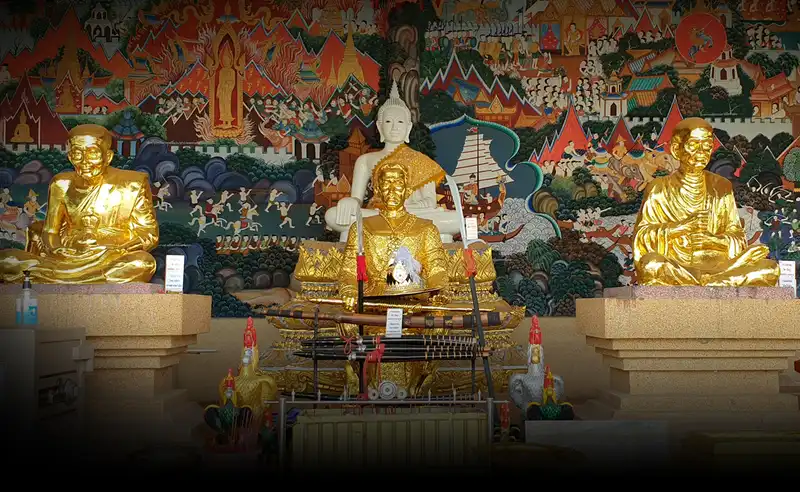
Wat Lat Rahong (English Vipassana Meditation Center) is located in Wat Yom Subdistrict, Bang Pa-In District, Phra Nakhon Si Ayutthaya. It is one of the few temples in Ayutthaya that international visitors consistently mention as a place where meditation practice can be supported in English. For many people, the temple is not simply a stop for merit-making or a quick visit to pay respects, but a meaningful destination for those seeking calm and clarity. Over the years, practitioners from Asia, Europe, and the Americas have come here to train in meditation and vipassana under the guidance of an experienced monastic teacher who has long worked with foreign practitioners. This gives the temple an understated international character while it remains unmistakably Thai in its simplicity, serenity, and role as a spiritual anchor for the surrounding community.
From a visitor’s perspective, one of the temple’s strongest qualities is how naturally the pace of life slows down once you enter the grounds. The urgency of travel gradually dissolves and is replaced by attention to small details that are often missed in daily routines: the movement of wind through trees, the soft sounds of monastic activity, and the generous open spaces that allow the mind to settle. This kind of quiet is a cultural strength of Thai temples, making mindfulness tangible and easy to access. When a temple can also provide structured support for international practitioners, it becomes a bridge between Thai Buddhist culture and people from different languages and backgrounds in a way that feels respectful rather than commercial.
What distinguishes Wat Lat Rahong from many meditation venues is its ability to accommodate both short-term and long-term practice. The structure of training typically emphasizes order and discipline aligned with vipassana principles. Practitioners begin by establishing a foundation of attention through the breath or bodily postures, then develop the capacity to observe changes in body and mind as they truly are. For beginners, the temple’s approach often prioritizes understanding temple etiquette and communal guidelines first, so that practice can unfold in a calm environment with minimal disturbance to oneself and others. Those with more experience can deepen continuity of awareness over longer periods, which is central to sustained vipassana training.
The ongoing presence of foreign practitioners also creates a compelling cultural dimension. Many international visitors learn Thai Theravada Buddhism through direct experience rather than through texts alone. They observe monastic routines, chanting schedules, mindful meals, and the customary respect shown toward sacred spaces as part of everyday life, not as a curated display. At the same time, Thai visitors who come for normal temple activities can see that a Thai temple can function as an authentic, living learning space for people worldwide without needing to reshape itself into a commercial attraction.
As a faith-based travel experience, Wat Lat Rahong suits travelers who want to encounter Ayutthaya beyond monumental ruins. The temple does not rely on grand archaeological spectacle; instead, it reflects the present-day use of a spiritual place with ongoing responsibilities, including supporting those who come to practice. Like many Thai temples, it also continues to serve the community through activities aligned with the Buddhist calendar such as major holy days, Kathina offerings, and other merit-making events, which are typically announced according to each period and circumstance.
For those seriously interested in practice, it helps to recognize that meditation and vipassana are not merely relaxation activities but ongoing training of mind and discipline. Practitioners should prepare in practical terms (time, health, and commitment) and also respect the norms of a practice environment, such as limiting phone use, maintaining silence in appropriate areas, dressing modestly, and following guidance from the teacher or appointed attendants. These expectations are not imposed for severity, but to protect the shared atmosphere that enables focused practice.
In practice-based reflections, many long-term international visitors describe that training in a Thai temple often feels deeper because the environment supports quiet by default: a slower pace, simpler living, and a daily rhythm shaped by monastic routine. This reduces the need to fight constant distractions, as can happen when practicing in large cities. When instruction and communication in English are available in a suitable way, core principles become clearer and confusion for cross-cultural beginners is reduced.
Getting There Wat Lat Rahong can be reached conveniently from the Bang Pa-In area and major routes in Ayutthaya. If you travel by private car, set your map destination to “Wat Lat Rahong” and head toward Wat Yom Subdistrict. It is sensible to allow extra time on weekends and holidays, as traffic in Bang Pa-In can become heavier due to visitors traveling to nearby attractions. If you arrive by train, you can get off at Bang Pa-In Station and continue by local taxi or hired transport to the temple. For those planning a longer practice period, contacting the temple in advance is advisable to receive updated guidance on arrival, preparation, and appropriate conduct, especially for visitors coming from overseas.
When visiting the temple, modest dress is recommended, and shoes should be removed before entering sacred buildings. Please keep voices low, especially near areas used for meditation or chanting, and avoid photographing practice spaces without permission. These are practical ways to maintain a respectful atmosphere and preserve the shared quiet that supports everyone’s training.
If you want to plan a balanced trip, Wat Lat Rahong can serve as a calm pause in a Bang Pa-In–Ayutthaya route. Pairing the visit with nearby historical attractions such as Bang Pa-In Palace or nearby museums allows you to experience both Ayutthaya’s historical dimension and its living spiritual culture in the same day. For those who come to practice seriously, the experience can go beyond sightseeing, because the calm here is not simply a mood but a way of being shaped by the discipline and simplicity of a practice temple.
| Name | Wat Lat Rahong (English Vipassana Meditation Center) |
| Address | 41 Moo 5, Wat Yom Subdistrict, Bang Pa-In District, Phra Nakhon Si Ayutthaya 13160 |
| Place Summary | A temple in Bang Pa-In known for English-supported vipassana practice and long-term experience supporting international practitioners, suitable for meditation training in a quiet environment. |
| Key Highlights | English-supported vipassana practice, experienced guidance for foreign practitioners, short-term and long-term practice options, calm setting suitable for sustained mindfulness training. |
| Abbot / Current Overseer | Phra Khru Kasemwutthikon |
| Fees | No admission fee (donations welcome). For meditation participation details, contact the temple directly. |
| Facilities | Quiet temple grounds suitable for meditation practice and support for international practitioners (stay/practice arrangements depend on the period and temple conditions). |
| Current Status | Open for visits and meditation inquiries as usual. |
| Contact Number | 035-255-000, 081-852-9005 |
| Nearby Tourist Attractions (Approx. Distance) | 1) Bang Pa-In Palace – 6 km – Tel. 035-261-044 2) Wat Niwet Thammaprawat Ratchaworawihan – 7 km – Tel. 035-262-139 3) Arts of the Kingdom Museum – 12 km – Tel. 035-352-995 4) Wat Yai Chai Mongkhon Worawihan – 22 km – Tel. 035-242-640 5) Ayutthaya Historical Park – 25 km – Tel. 035-242-525 |
| Popular Restaurants Nearby (Approx. Distance) | 1) Rak Bang Pa-In Cafe – 8 km – Tel. 094-862-9987 2) The Artisans Ayutthaya – 16 km – Tel. 061-195-9514 3) U-Khao Restaurant & Cafe – 18 km – Tel. 062-793-9993 4) Sala Bang Pa-In Eatery and Bar – 10 km – Tel. 035-246-388 5) The Summer House Ayutthaya – 24 km – Tel. 094-224-2223 |
| Popular Accommodations Nearby (Approx. Distance) | 1) Sala Bang Pa-In – 10 km – Tel. 035-246-388 2) Krungsri River Hotel – 25 km – Tel. 035-244-333 3) Classic Kameo Hotel, Ayutthaya – 26 km – Tel. 035-212-535 4) Kantary Hotel Ayutthaya – 26 km – Tel. 035-337-177 5) Centara Ayutthaya – 26 km – Tel. 035-243-555 |
Frequently Asked Questions (FAQ)
Q: Where is Wat Lat Rahong located?
A: The temple is in Wat Yom Subdistrict, Bang Pa-In District, Phra Nakhon Si Ayutthaya, and can be reached conveniently by private car or local hired transport.
Q: Is Wat Lat Rahong suitable for foreign practitioners?
A: The temple is widely known for English-supported vipassana practice and long experience supporting practitioners from many regions, which helps ensure clearer communication for non-Thai speakers.
Q: What kind of meditation practice is offered?
A: Practice is commonly described as vipassana and meditation training with both short-term and long-term options; for the latest conditions and participation details, contact the temple directly.
Q: What are the opening hours?
A: The commonly published visiting window is approximately 08:00 – 16:30; if you plan to practice seriously, it is prudent to confirm with the temple in advance.
Q: How should visitors dress and behave at the temple?
A: Dress modestly, remove shoes before entering sacred buildings, keep voices low, avoid disturbing practitioners, and refrain from photographing practice areas without permission.
Q: Who should I contact about meditation practice?
A: You can contact the temple directly and reference Phra Khru Kasemwutthikon (the abbot) or call the listed contact numbers to receive the most current guidance.
 Tel: 035255000
 Mobile: 0818529005
 Fax: 035290211
 Wat Lat Rahong (English Vipassana Meditation Center) Map
 Category:
  Group:
  Tag: ●Wat Lat Rahong (English Vipassana Meditation Center)●wat lat rahong ●wat lat rahong ayutthaya ●bang pa-in meditation ●english meditation center thailand ●vipassana retreat ayutthaya ●meditation retreat thailand ●buddhist temple meditation ●ayutthaya spiritual travel ●mindfulness retreat thailand ●thai temple meditation Last Update: 2 MonthAgo
Comment
 Nearby Attractions
| Keyword (Advance) |
 Facebook Fanpage
 Region
 Art, Culture and Heritage
 Historical Sites and Monuments(
 Landmarks and Memorials(
 Royal Palace(
 Art, Craft Centres, Tradition(
 Museums(
 Educational Places
 Museum for Study(
 Educational Gardens, Farm(
 Training Center(
 University
 Church(
 Mosque(
 Other religious and spiritural sites(
 Research and Development
 Royal Project(
 Suburban Living
 Village, Community(
 Local Market(
 Floating Market(
 Nature and Wildlife
 Dam, Reservoir, Lake(
 River, Canal(
 Islands(
 Other natural attractions(
 Entertainment and Agricultural
 Animal camps and shows(
 Farm, Parks, Gardens and Ecotourism(
 Travel Articles, Recipes
 Travel Review, Food Review(
 Copyright 2012,