
lovethailand home >Central Travel Attractions >Phranakhon Si Ayutthaya Travel Attractions >Phranakhon Si Ayutthaya >Pratu Chai > Ayutthaya Elephant Palace Royal Kraal
TL;DR: Ayutthaya Elephant Palace Royal Kraal is located at 49 Moo 9, Pa Thon Road, Pratu Chai Subdistrict, Phra Nakhon Si Ayutthaya District, Phra Nakhon Si Ayutthaya 13000, open Daily, hours 09.00 – 17.00.
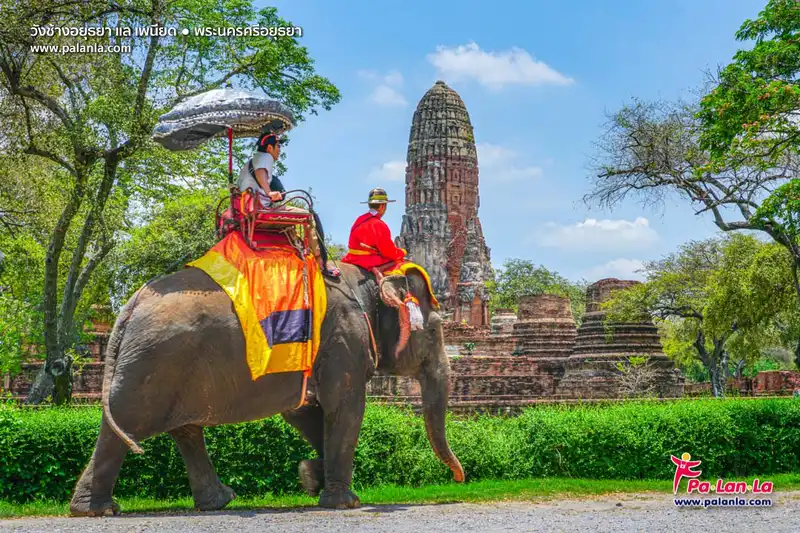
Ayutthaya Elephant Palace Royal Kraal
Open Days: Daily
Opening Hours: 09.00 – 17.00
Ayutthaya Elephant Palace & Royal Kraal is a convenient stop in the “Pratu Chai” zone, one of the busiest sightseeing areas on Ayutthaya’s city island. It sits along Pa Thon Road near Khun Phaen House and within the boundary of the Ayutthaya Historical Park, an area many visitors recognize for its ancient temples and major monuments clustered along the same route. What makes this place compelling is not that it stands alone as a single attraction, but that it occupies a position where several layers of Ayutthaya’s meaning intersect: elephants in historical memory, the earlier landscape of the “kraal” in the city’s collective recollection, and a modern, experience-based visit that can be fitted into a short time slot before moving on to other key sites nearby.
If you are searching for “Ayutthaya elephant camp” or “Ayutthaya Elephant Palace & Royal Kraal” to plan your trip, the first thing to know is that this site has a clearly stated modern founding date. It was established on 17 February 1997, and later its name was adjusted from “Ayutthaya Elephant Camp & Royal Kraal” to “Ayutthaya Elephant Palace & Royal Kraal” for auspicious reasons for the owner and the place itself, and also to align the name and image with the wider context of being within the Historical Park and a World Heritage setting. From a traveler’s perspective, this background helps clarify that the name is not merely signage, but a deliberate choice designed to match the identity of the area and the way visitors perceive the place.
The word “Lae” (แล) in the name is especially interesting because it is an old Thai term that is no longer commonly used in everyday speech. In this context, “Lae” can be explained simply as meaning “to look,” “to see,” or “to watch” with attention. The word “Phaniat” (เพนียด), on the other hand, is directly tied to Ayutthaya’s historical vocabulary, referring to an ancient structure or area used for capturing and noosing elephants in earlier times, particularly in periods when elephants played central roles in the state, including ceremonial life, travel, and warfare. When these two words are read together, the name conveys a broad idea of a place connected with elephants—their work, their care, and the historical meaning of the royal elephant kraal as part of Ayutthaya’s heritage landscape.
Understanding what a “kraal” meant historically can add a clear dimension to your visit. In Ayutthaya’s context, a kraal was not simply an ordinary elephant pen, but part of a wider system for managing elephants that related to state structure and ritual culture. Elephants were a major resource that required specialized knowledge from mahouts, careful training, day-to-day care, and well-controlled space suited to such powerful animals. Because elephants were used in many settings, the kraal became a place that reflected the city’s ability to organize both resources and people. For visitors today, reading the site through this lens can shift the experience from being only about photos or activities to being a touchpoint with Ayutthaya’s deeper historical memory—a city that once had a profound relationship with elephants.
In terms of location and the site’s described physical setting, locally shared descriptions often note an area of roughly 2 rai and outline the surroundings in a way that makes the landscape easy to visualize: to the north is an old pond near Khun Phaen House, to the south is Pa Thon Road, and it is close to the Ayutthaya City Pillar Shrine; to the east is a pond associated with Wat Kaset; and to the west is the municipal floating market project area. Details like these are particularly helpful for visitors planning a walkable route, because they make it easier to orient yourself and estimate travel time between nearby points of interest in the Pratu Chai area—especially if you are exploring by bicycle or using local transport within the city.
The atmosphere of sightseeing in this district is distinctive in that you are almost always “close” to Ayutthaya’s stories. Ancient sites, learning spaces, and popular walk-and-visit points surround you, and many travelers move through this zone throughout the day. This convenience is why Ayutthaya Elephant Palace & Royal Kraal is often listed as a place you can “stop by” if you want to add a different kind of experience to an Ayutthaya trip—whether your focus is the historical idea embedded in the word “kraal,” or a hands-on visit that adds variety, particularly for families who may want children to see a large animal in an environment where staff are present.
That said, any visit involving a very large animal should begin with safety awareness and proper etiquette. Elephants are immensely strong. Even when trained and supervised by mahouts, visitors should follow staff instructions closely, avoid loud noises near elephants, do not run around or make sudden gestures that could startle them, and do not approach beyond the permitted distance. If you are traveling with young children or elderly family members, plan where you stand, how you take photos, and how you wait in line with extra care. These small details keep the visit enjoyable without adding unnecessary risk, and they show respect for both the animals and the people responsible for their care.
If your Ayutthaya trip is content-focused, one strength of the Pratu Chai area is that photos naturally carry a historical mood. The backdrop can include ponds, temples, brick ruins, and pathways that feel unmistakably like an old capital city. Planning your time in a gradual, step-by-step way often works best: start with the closest point, then move on in short segments, such as the City Pillar Shrine, followed by Khun Phaen House, and then the major temples within the Historical Park depending on your schedule and crowd levels that day. This approach keeps your pace relaxed and gives you varied images—old-city angles, waterside scenes, and the contemporary travel atmosphere of Ayutthaya in a single route.
For travelers who want to grasp the “core meaning” of the name more deeply, it can help to read the word “Lae” as an invitation to look at Ayutthaya with more attention. Rather than seeing only brick ruins or repeating temple photos, you can look for relationships between people, the city, waterways, and animals that once served as key forces within the state. When you read the city in that way, Ayutthaya becomes more than a checklist of photo spots, and the word “kraal” no longer feels unfamiliar; it becomes a doorway into an earlier world where elephant management was a major concern of governance and society.
Getting There is straightforward if you use major landmarks in the Pratu Chai area. Pa Thon Road is the main reference line, and nearby points such as Khun Phaen House and the Ayutthaya City Pillar Shrine work well as navigation anchors. Once you arrive, it is wise to allow time for parking and walking, because the Historical Park zone can be crowded, especially on weekends and holidays. If you explore by bicycle, connections within this district are generally convenient, but you should remain mindful of cars and pedestrians and lock your bicycle in a suitable place to keep your belongings safe.
To make your day efficient, consider the idea of “one district, several moods.” You can start with the more ceremonial and old-city feeling of the City Pillar Shrine, continue to Khun Phaen House for local legend and storytelling, then move on to the major temples in the Historical Park, which are the signature highlights of Ayutthaya. End the route with a meal or a café break to rest. This structure allows you to experience history, the old-city landscape, and a relaxed pause in the same day without excessive driving or time lost to crossing between far-away zones.
Ultimately, no matter your reason for visiting, what makes an Ayutthaya trip feel “well done” and trustworthy is respectful travel behavior, especially within a World Heritage setting that belongs to everyone. Keeping the area clean, avoiding disruptive noise, treating staff with courtesy, and following safety guidance all help ensure a better experience for you and for everyone else visiting on the same day.
| Name | Ayutthaya Elephant Palace & Royal Kraal (Wang Chang Ayutthaya Lae Phaniat), Pratu Chai Subdistrict, Phra Nakhon Si Ayutthaya, Phra Nakhon Si Ayutthaya Province |
| Address | 49 Moo 9, Pa Thon Road, Pratu Chai Subdistrict, Phra Nakhon Si Ayutthaya District, Phra Nakhon Si Ayutthaya 13000 |
| Place Summary | A stop in the Pratu Chai area near Khun Phaen House and the City Pillar Shrine, connecting the historical idea of the royal elephant kraal with a visit that fits easily into an Ayutthaya Historical Park route |
| Highlights | 1) Central location within the Ayutthaya Historical Park zone, easy to link multiple sites 2) A layered name rooted in the old term “Lae” and the historical term “Royal Kraal” 3) Near Khun Phaen House, the City Pillar Shrine, and major temples on the city-island route 4) Works well as a stop on a half-day or full-day Ayutthaya itinerary |
| Latest Steward | Ayutthaya Elephant Palace & Royal Kraal (Wang Chang Ayutthaya Lae Phaniat) |
| Travel | Use Pa Thon Road as the main approach, with nearby anchors such as Khun Phaen House and the Ayutthaya City Pillar Shrine, then continue on foot within the Historical Park zone according to your plan |
| Current Status | Open to visitors (it is recommended to check activity details on your travel date and follow staff safety guidance) |
| Contact (Phone) | 065-009-9361, 080-061-9095 |
| Nearby Attractions (Approx. Distance) | 1) Khun Phaen House – approx. 0.5 km 2) Ayutthaya City Pillar Shrine – approx. 0.6 km 3) Wat Mahathat – approx. 2 km 4) Wat Ratchaburana – approx. 2 km 5) Wat Phra Si Sanphet – approx. 3 km 6) Chao Sam Phraya National Museum – approx. 3 km |
| Nearby Restaurants (Approx. Distance + Phone) | 1) Baan Mai Rim Nam Ayutthaya – approx. 2 km – 035-242-248 2) sala ayutthaya eatery and bar – approx. 2 km – 035-242-588 3) baan kao nhom – approx. 2 km – 097-921-9465 4) the summer house ayutthaya – approx. 4 km – 094-224-2223 5) kaowlaor – approx. 4 km – 092-252-2650 6) ruanthai kungpao – approx. 22 km – 081-269-5061 |
| Nearby Accommodations (Approx. Distance + Phone) | 1) sala ayutthaya – approx. 2 km – 035-242-588 2) ayothaya hotel – approx. 4 km – 086-399-0063 3) krungsri river hotel – approx. 7 km – 035-244-333 4) classic kameo hotel, ayutthaya – approx. 10 km – 035-212-535 5) kantary hotel ayutthaya – approx. 10 km – 035-337-177 |
Frequently Asked Questions (FAQ)
Q: Where is Ayutthaya Elephant Palace & Royal Kraal located?
A: It is on Pa Thon Road near Khun Phaen House, within the Ayutthaya Historical Park area in Pratu Chai Subdistrict, Phra Nakhon Si Ayutthaya, Phra Nakhon Si Ayutthaya Province.
Q: What does “Lae” (แล) mean in the name?
A: “Lae” is an old Thai word that means “to look,” “to see,” or “to watch,” implying an attentive way of viewing what is in front of you.
Q: What does “Phaniat” (เพนียด) mean?
A: “Phaniat” refers to an ancient structure or area used for capturing and noosing elephants in earlier times, and it is closely connected with Ayutthaya’s historical heritage.
Q: What time does Ayutthaya Elephant Palace & Royal Kraal open?
A: It is generally open daily from 09.00 – 17.00, but it is wise to check activity details on your travel date.
Q: What should I be careful about when visiting a place with elephants?
A: Follow staff instructions closely, avoid loud noises, do not run or approach elephants without permission, keep children supervised, and prioritize safety at all times.
Q: What attractions can I visit nearby?
A: You can easily continue to Khun Phaen House, the Ayutthaya City Pillar Shrine, Wat Mahathat, Wat Ratchaburana, Wat Phra Si Sanphet, and the Chao Sam Phraya National Museum along the same route.
 Category: ●Entertainment and Agricultural
 Group: ●Animal camps and shows
Last Update : 8 MonthAgo
 Last Update : 8 MonthAgo
 Click to Access the Navigation Map GPS
Ayutthaya Elephant Palace Royal Kraal Map
Recommend

 Art, Culture and Heritage
 Historical Sites and Monuments(7)
 Landmarks and Memorials(6)
 Royal Palace(4)
 Art, Craft Centres, Tradition(6)
 Museums(9)
 Educational Places
 Museum for Study(1)
 Educational Gardens, Farm(2)
 Training Center(1)
 Places of Worship
 Temple(133)
 Church(2)
 Mosque(2)
 Other Sacred Sites(15)
 Research and Development
 Royal Project(4)
 Suburban Living
 Village, Community(10)
 Local Market(7)
 Floating Market(3)
 Nature and Wildlife
 Dam, Reservoir, Lake(1)
 River, Canal(3)
 Islands(2)
 Other natural attractions(1)
Animal camps and shows(2)
Other natural attractions(1)
Animal camps and shows(2)
 Farms, Parks and Ecotourism(4)
 Travel Articles, Recipes
 Travel Review, Food Review(2)


