
lovethailand home >Central Travel Attractions >Phranakhon Si Ayutthaya Travel Attractions >Nakhon Luang >NaKhon Luang > Prasat Nakhon Luang
TL;DR: Prasat Nakhon Luang, Phranakhon Si Ayutthaya attractions : Art, Culture and Heritage, Royal Palace.
Prasat Nakhon Luang
Open Days: Open daily (please check the latest information before visiting)
Opening Hours: Approximately 06:00–18:00 (opening hours may vary depending on the season and temple activities)
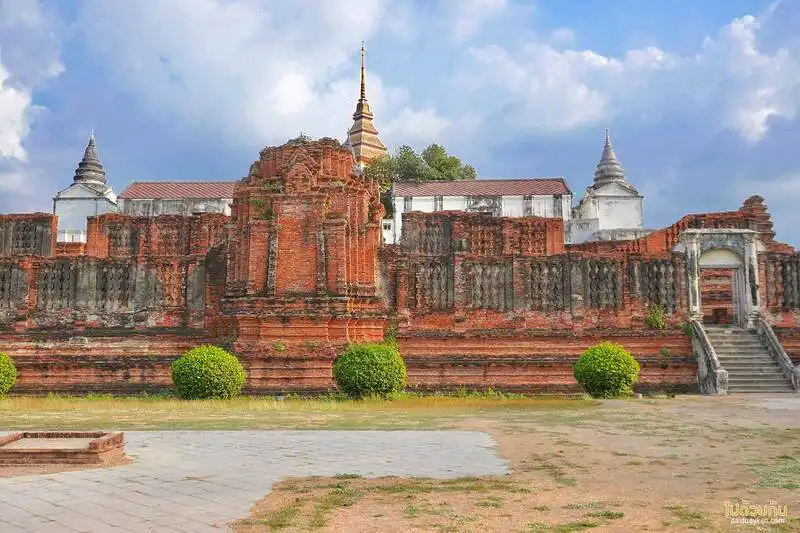
Prasat Nakhon Luang is one of the most important historical sites in Nakhon Luang District, Phra Nakhon Si Ayutthaya Province. It stands on a low hill on the eastern bank of the Pa Sak River, in the quiet community of Tambon Nakhon Luang. This is not just an old ruin to walk around, but also a functioning temple and sacred site where people come to pay respect to the Four Footprints of the Buddha and Lord Ganesha, as well as a scenic viewpoint overlooking the river and the riverside houses in a simple, tranquil atmosphere.
Seen from below, the yellowish–brown tiered structure of the prasat on its square base can make you feel as if you are looking at a Khmer stone sanctuary. But when you walk closer and look up at the steep staircase leading to the upper terrace, you start to sense the Ayutthaya character subtly blended with Khmer–influenced architecture. Every step you climb feels like moving from the everyday world of the riverside community up toward a more sacred realm of rituals and beliefs on the summit of the prasat.
Originally, this area served as a royal pavilion used as a resting place for Ayutthaya kings traveling from the capital to worship the Buddha’s Footprint in Saraburi, or on their way to Lopburi. It is believed to date back to the reign of King Song Tham, and may at first have been nothing more than a wooden pavilion or working residence before later being transformed into a grand brick–and–mortar prasat.
The turning point came in the reign of King Prasat Thong, around 1631 CE, when he wished this to be a full royal residence for his journeys, befitting royal dignity. He ordered the construction of a large brick and stucco prasat, with craftsmen using the concept of “Phra Nakhon Luang” – the great stone sanctuary complex in Cambodia – as a model, then adapting the idea to build a similar structure here in Nakhon Luang. This was done to commemorate the return of Cambodia as a vassal state under Ayutthaya.
Despite this grand royal vision, it is believed that the building of Prasat Nakhon Luang was never fully completed, possibly due to limited funds, labor issues, or political changes at the time. As a result, the prasat that we see today carries the outline of the royal residence it was meant to be, yet ended up in a half–palace, half–religious role over the centuries.
Later, a mondop (square pavilion) was added and enshrined within it were the “Four Footprints of the Buddha.” This shifted the role of the site from a royal way station to a sacred place where people come to pay homage. Over time, more structures were added, restored, and modified in various periods, until Prasat Nakhon Luang became an integral part of Wat Nakhon Luang as it is known today.
Like many historical sites, Prasat Nakhon Luang also suffered from deterioration over time. It was once in a rather dilapidated state before the Fine Arts Department undertook restoration work. In 1995, Her Royal Highness Princess Maha Chakri Sirindhorn graciously presided over the official opening ceremony. Since then, Prasat Nakhon Luang has returned to public attention as a distinctive Ayutthaya–era site outside the main island, offering a different historical perspective from that of the central Ayutthaya Historical Park.
From an architectural point of view, Prasat Nakhon Luang stands on a series of receding square terraces, with stairways on all four sides. The overall layout recalls a Khmer sanctuary built in imitation of Mount Meru, but instead of laterite and sandstone it uses brick and stucco in the Ayutthaya style. The upper level is crowned with a mondop and a series of indented–corner chedis, and in some spots there are walkways where visitors can gaze out over sweeping views of the Pa Sak River and the surrounding rice fields.
The main highlight on the upper terrace is the mondop enshrining the Four Footprints of the Buddha, reflecting the belief in revered footprints from different traditions being symbolically brought together in one place. Devotees come to pay homage for blessings, merit, and protection from misfortune. Within the temple grounds there are also images of Lord Ganesha and other sacred figures, giving Prasat Nakhon Luang both historical depth and ongoing religious significance.
The atmosphere here is noticeably different from the busy ruins on Ayutthaya’s main island, which are often crowded with international visitors. Around Prasat Nakhon Luang, the setting is calm and authentically local: a Thai riverside community along the Pa Sak River, with fishing boats, rice fields, and old wooden houses nestled among trees. Visitors here tend to be those who enjoy old temples, spiritual travelers who revere the Buddha’s footprints and Lord Ganesha, or people seeking a quiet river view away from the crowds.
Climbing the prasat is an experience that may require a bit of physical and mental preparation, as some sections of the staircase are quite steep and high. Elderly visitors or those with knee issues should take particular care, use the handrails, and climb slowly. Once you reach the top, the view of the winding Pa Sak River, rooftops, and surrounding farmlands provides a rewarding payoff for the effort.
For history lovers, Prasat Nakhon Luang is an important piece in the bigger picture of the “royal highway” of Ayutthaya kings connecting three key cities: Ayutthaya, Nakhon Luang – Saraburi (Wat Phra Phutthabat), and Lopburi. This royal pavilion and prasat illustrate a carefully planned network of way stations used for security, convenience, and royal ceremonies along the route.
Beyond the prasat itself, the surrounding precinct of Wat Nakhon Luang also offers interesting spots to explore, such as the viharn and main sermon hall, an open courtyard overlooking the river, fish–feeding areas, and quiet corners shaded by large trees where many visitors like to sit and rest or meditate briefly before or after climbing the prasat. A trip here is therefore not only a “check–in” at a historical site, but also a chance to spend peaceful time with yourself in a serene atmosphere.
The most photogenic times at Prasat Nakhon Luang are usually early morning and late afternoon, when soft light makes the stuccoed surfaces of the building appear gentle and warm. Shadows from the chedis and architectural lines fall across the courtyard and walls, adding depth to photographs. Midday sunlight can be quite harsh, but is manageable if you come prepared with a hat, sunglasses, and an umbrella.
Although this is an open–air historical site, visitors to Prasat Nakhon Luang should still observe proper etiquette in temple and heritage areas: dress modestly, do not climb on or lean heavily against the walls, do not scratch or carve into the bricks and plaster, avoid lighting incense or candles in fire–prone spots, and do not leave trash in the ruins. These small acts of care help keep Prasat Nakhon Luang in good condition for future generations.
Getting There Prasat Nakhon Luang is located in Tambon Nakhon Luang, Nakhon Luang District, on the eastern bank of the Pa Sak River. From Ayutthaya city, you can drive off the main island and follow the roads leading toward Nakhon Luang District, connecting with Highway 347 or 3263. Then follow signs to Nakhon Luang and Wat Nakhon Luang. The distance from Ayutthaya’s main island to Prasat Nakhon Luang is roughly 25–30 kilometers, which takes about 30–40 minutes depending on traffic.
If you are traveling from Bangkok, you can use the same routes as for an Ayutthaya trip in general: take Highway 1 (Phahonyothin Road) or the expressway toward Bang Pa–in, then continue on Highway 32 (Asian Highway) to Phra Nakhon Si Ayutthaya, before turning off toward Nakhon Luang District. Total travel time is roughly 1.5 hours. Travelers without a car can take a van or bus to Ayutthaya city, then hire a taxi or songthaew (local pickup truck) to Prasat Nakhon Luang; make sure to agree on the fare clearly before setting off.
For those using online maps, it is recommended to search for “Prasat Nakhon Luang” or “Wat Nakhon Luang.” The navigation will guide you to the parking area near the temple, from where it is a short walk to the base of the prasat. The final stretch of road passes through local villages and rice fields, so drive carefully as locals, motorcycles, and domestic animals also use the same route.
When visiting Prasat Nakhon Luang, it is best to dress modestly yet comfortably, as you will be walking outdoors and climbing stairs. Lightweight, breathable clothing, long trousers or a long skirt, and closed–toe shoes or trainers with good grip will make it safer and more comfortable to go up and down the steps. Bring a hat, sunglasses, sunscreen, and drinking water – especially in the hot season when the sun is intense – and take extra care if the steps are wet or slippery during the rainy season.
After exploring Prasat Nakhon Luang, visitors can plan to visit several other old temples in Nakhon Luang District, such as Wat Mai Prachumphon, known for its old viharn and late Ayutthaya–period murals, or Wat Klang Nakhon Luang, which houses a rare Buddha image in the cremation pose. Alternatively, you can drive back to Ayutthaya’s main island to continue your tour of the Ayutthaya Historical Park. This makes it easy to shape Prasat Nakhon Luang into either a half–day excursion or part of a full–day trip.
As for food, there are various local eateries and noodle shops around Nakhon Luang District, particularly roadside Thai restaurants along the main road through the town, as well as small community–style cafes and eateries with views of the Pa Sak River. Those who prefer a more stylish dining or café experience can drive back to the island or the Chao Phraya riverside area, where many chic cafes and restaurants line the riverbanks.
Accommodation in Nakhon Luang District is not as concentrated as in Ayutthaya’s main island, but there are several resorts and hotels within a short driving distance of Prasat Nakhon Luang. There are also riverside hotels and guesthouses in Ayutthaya city that can serve as a convenient base for visiting both the Historical Park and Nakhon Luang in a single trip. This allows travelers to tailor their stay to match their preferred style of travel.
Looking at the bigger picture, Prasat Nakhon Luang is far more than a solitary brick–and–stucco building on a hill. It is a historical site that tells the story of Ayutthaya’s royal routes, its relations with Cambodia, the blending of Khmer and Ayutthaya art, and the transformation from a royal way station into a religious site where people still come to pay respect. Visiting this place is both a journey back through history and a chance to slow down and quietly watch the Pa Sak River flow by.
| Place Name | Prasat Nakhon Luang (Wat Nakhon Luang), Phra Nakhon Si Ayutthaya Province |
| Overview | A significant historic site on the banks of the Pa Sak River that combines the roles of a former royal way station of Ayutthaya kings and a present–day religious site. The brick–and–stucco prasat stands on tiered bases, enshrining the Four Footprints of the Buddha and Lord Ganesha within Wat Nakhon Luang. It suits visitors interested in history, spiritual travel, and peaceful river views. |
| Highlights | A brick and stucco prasat adapted from the concept of Cambodia’s Phra Nakhon Luang in an Ayutthaya style, located on a hill by the Pa Sak River. Multiple stairways lead to viewing spots with wide river and countryside vistas. The Four Footprints of the Buddha and various sacred images give it both historical and spiritual significance. |
| Location | Tambon Nakhon Luang, Nakhon Luang District, Phra Nakhon Si Ayutthaya Province, Thailand |
| Approximate Address | Within Wat Nakhon Luang, on the eastern bank of the Pa Sak River, in a village area of Tambon Nakhon Luang, Nakhon Luang District, Phra Nakhon Si Ayutthaya Province, postcode approximately 13260 (please verify the latest coordinates via online maps). |
| Period / Background | Believed to have originated as a royal way station in the reign of King Song Tham. Later, King Prasat Thong ordered the construction of a brick and stucco prasat modeled on Phra Nakhon Luang around 1631 CE to serve as a royal residence during journeys to Wat Phra Phutthabat in Saraburi and Lopburi. A mondop and the Four Footprints of the Buddha were added later on the summit, and the site eventually became part of Wat Nakhon Luang. |
| Key Features / Components | Tiered square bases, stairways on all four sides, a mondop and indented–corner chedis on the upper terrace, the Four Footprints of the Buddha enshrined inside, and other sacred images within the precincts of Wat Nakhon Luang, together with temple buildings and an open courtyard overlooking the Pa Sak River. |
| Origin of the Name “Prasat Nakhon Luang” | The name is thought to be linked to the concept of “Phra Nakhon Luang” in Cambodia, whose architectural style inspired this prasat. Located in Nakhon Luang District of Phra Nakhon Si Ayutthaya, the name “Prasat Nakhon Luang” thus reflects both its architectural inspiration and its geographical setting. |
| Getting There (Overview) | From Ayutthaya city, drive by private car or hired vehicle toward Nakhon Luang District via main roads connecting to Highways 347 or 3263. Follow signs to Tambon Nakhon Luang and Wat Nakhon Luang. The distance from the main island is about 25–30 km, taking around 30–40 minutes. It is recommended to use online maps and pin “Prasat Nakhon Luang” or “Wat Nakhon Luang” for easier navigation. |
| Current Status | A historical site within Wat Nakhon Luang, open to visitors and worshippers daily. There is no direct admission fee for the prasat itself, but visitors may make voluntary donations to support the upkeep and restoration of the site. |
| Fees / Charges | In general, there is no set entrance fee for Prasat Nakhon Luang or the temple grounds. Donation boxes are available for those who wish to contribute toward restoration and maintenance. If special religious events or festivals are held, certain activities may involve specific offerings or contributions; details should be checked locally. |
| Facilities | Parking area within Wat Nakhon Luang, shaded rest areas, worship and offering spots for sacred images, temple toilets, and small shops or stalls selling drinks and basic items (facilities may change over time according to temple management). |
| Nearby Attractions (with Distance) | Wat Nakhon Luang (temple grounds surrounding the prasat) – approx. 0.1 km Wat Klang Nakhon Luang (Buddha in cremation posture) – approx. 4 km Wat Mai Prachumphon (old temple with viharn and murals) – approx. 6 km Wat Tako (Luang Pho Ruai) – approx. 18 km Ayutthaya Historical Park and Ayutthaya Island – approx. 25 km (actual distance depends on the route taken) |
| Nearby Restaurants (Distance + Phone) | Koo Lao Kai Ruan Nakhon Luang – approx. 3 km, Tel. 084-084-2411 Khrua Im Aroi Nakhon Luang (local Thai cuisine) – approx. 4 km, Tel. 087-080-8765 Baan Suan 89 Cafe & Restaurant by the Pa Sak River – approx. 5 km, Tel. 065-587-8222, 082-812-8999 The Summer House Ayutthaya (riverside café and restaurant on the Chao Phraya) – approx. 28 km, Tel. 094-224-2223 Malakor Kitchen and Cafe near Wat Ratchaburana on Ayutthaya Island – approx. 25 km, Tel. 091-779-6475 |
| Nearby Accommodation (Distance + Phone) | Toh Buk Seng Ayutthaya Hotel in Nakhon Luang District – approx. 5 km, Tel. 035-200-335, 098-289-0387 Vela Riverview Ayutthaya, riverside stay in a nearby district – approx. 10 km, Tel. 088-088-0188 Krungsri River Hotel, large hotel on the Chao Phraya River near Ayutthaya city – approx. 25 km, Tel. 035-244-333 Niwas Ayutthaya, homely guesthouse near Wat Mahathat – approx. 25 km, Tel. 093-590-0599 Baan Thai House Ayutthaya, garden resort near Ayutthaya Railway Station – approx. 28 km, Tel. 080-437-4555 |
| Main Contact Numbers | Wat Nakhon Luang (for information on temple activities and visiting hours) – Tel. 035-285-125 Local tourism information and activities related to Prasat Nakhon Luang – Tel. 064-505-3907 (it is advisable to call in advance to confirm the latest visiting hours and conditions) |
Frequently Asked Questions (FAQ)
Q: Is Prasat Nakhon Luang open every day?
A: In general, Prasat Nakhon Luang and the grounds of Wat Nakhon Luang are open daily during daylight hours, roughly from 06:00–18:00. However, opening times may be adjusted according to the season or temple events, so it is recommended to check the latest information from Wat Nakhon Luang or local tourism pages before visiting.
Q: Is there an entrance fee to visit Prasat Nakhon Luang?
A: There is usually no fixed admission fee to enter the prasat or the temple grounds. Visitors are welcome to make donations to support restoration and maintenance. During special festivals or religious events, certain activities may involve specific offerings or contributions, which can be clarified directly with temple staff.
Q: How is Prasat Nakhon Luang different from Wat Nakhon Luang?
A: Prasat Nakhon Luang refers to the brick–and–stucco structure on the hill, originally intended as a royal residence and later converted into a sanctuary enshrining the Four Footprints of the Buddha. Wat Nakhon Luang refers to the surrounding temple complex, including the viharn, sermon hall, courtyards, and other religious buildings. Both are located in the same area and are often collectively referred to as “Wat Nakhon Luang” or “Prasat Nakhon Luang” in everyday use.
Q: If I am afraid of heights or have knee problems, should I climb up the prasat?
A: Some sections of the staircase at Prasat Nakhon Luang are quite steep and high. Visitors with knee issues, fear of heights, or difficulties climbing should carefully assess their physical condition first. If you are not comfortable climbing, you can still enjoy the site by viewing and photographing the prasat from below, taking in the river scenery, and paying respect to sacred images within the lower temple area.
Q: How much time should I allow for a visit to Prasat Nakhon Luang?
A: If you plan to visit only Prasat Nakhon Luang and the immediate temple grounds at a relaxed pace, around 1–1.5 hours is usually sufficient. If you also wish to visit other nearby temples in Nakhon Luang District, such as Wat Klang Nakhon Luang or Wat Mai Prachumphon, or combine the trip with a visit to Ayutthaya’s Historical Park, you should allow at least half a day to a full day.
Q: What is the best time of day to visit Prasat Nakhon Luang?
A: Early morning (around 07:00–09:00) and late afternoon (after about 16:00) are ideal times, as the weather is cooler and the light is more flattering for photography. Both morning and evening light enhance the shapes of the prasat and the Pa Sak River scenery. Midday can be very hot and bright, so if you visit then, be sure to bring a hat, umbrella, and plenty of drinking water.
Q: How should I prepare for a trip to Prasat Nakhon Luang?
A: Wear modest, breathable clothing and closed–toe shoes or trainers suitable for climbing stairs. Bring a hat or umbrella, sunglasses, sunscreen, and drinking water, especially in the hot season. Please follow temple and heritage site rules, such as not climbing on fragile structures, not writing or scratching on bricks or plaster, and not leaving litter in the ruins, to help preserve the site for future visitors.
 Category: ●Art, Culture and Heritage
 Group: ●Royal Palace
Last Update : 8 MonthAgo
 Last Update : 8 MonthAgo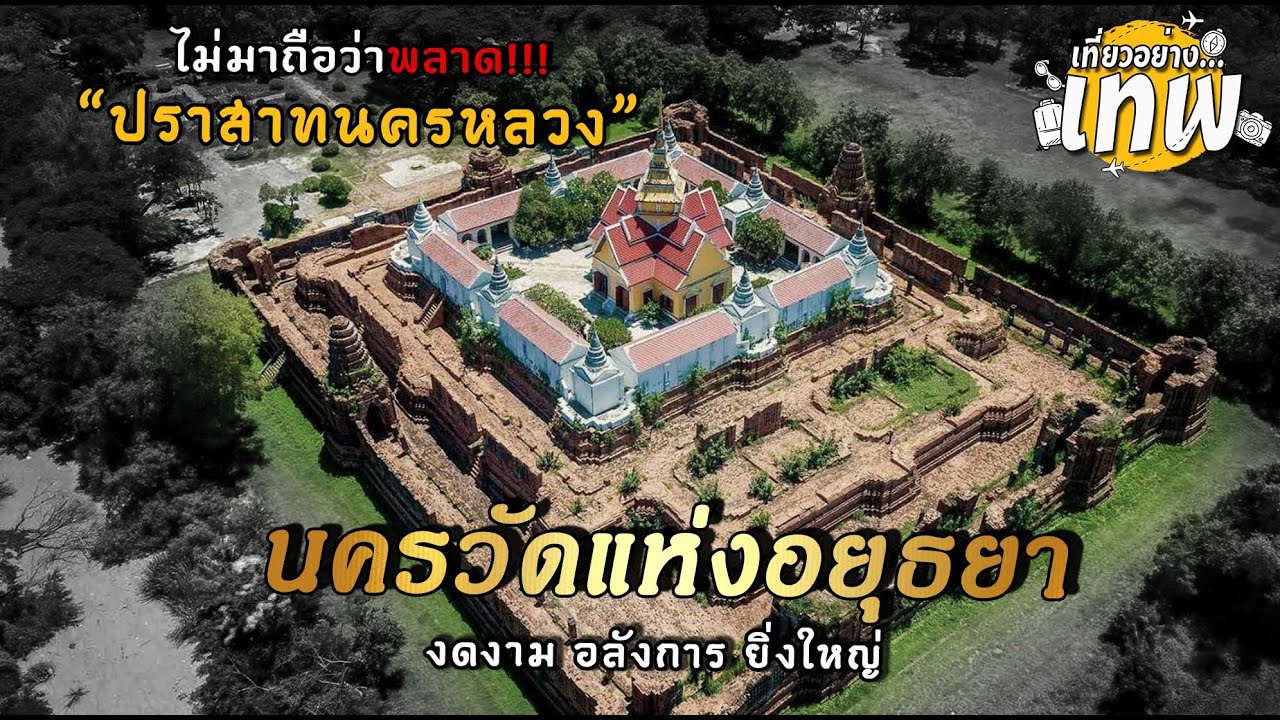
 Click to Access the Navigation Map GPS
Prasat Nakhon Luang Map
Recommend

 Historical Sites and Monuments(7)
 Landmarks and Memorials(6)
Royal Palace(4)
Landmarks and Memorials(6)
Royal Palace(4)
 Art, Craft Centres, Tradition(6)
 Museums(9)
 Educational Places
 Museum for Study(1)
 Educational Gardens, Farm(2)
 Training Center(1)
 Places of Worship
 Temple(133)
 Church(2)
 Mosque(2)
 Other Sacred Sites(15)
 Research and Development
 Royal Project(4)
 Suburban Living
 Village, Community(10)
 Local Market(7)
 Floating Market(3)
 Nature and Wildlife
 Dam, Reservoir, Lake(1)
 River, Canal(3)
 Islands(2)
 Other natural attractions(1)
 Entertainment and Agricultural
 Animal camps and shows(2)
 Farms, Parks and Ecotourism(4)
 Travel Articles, Recipes
 Travel Review, Food Review(2)


