

 Home
Home Chiang Mai(




Bamboo Utensils Museum
Rating: 3.5/5 (4 votes)
 Search By
  Map
Map 
 Have Map
  No Map
Ang Thong attractions
Attractions in Thailand
Open Days: Monday – Friday (Closed on Saturday, Sunday, and Public Holidays)
Opening Hours: 09:00 – 16:00
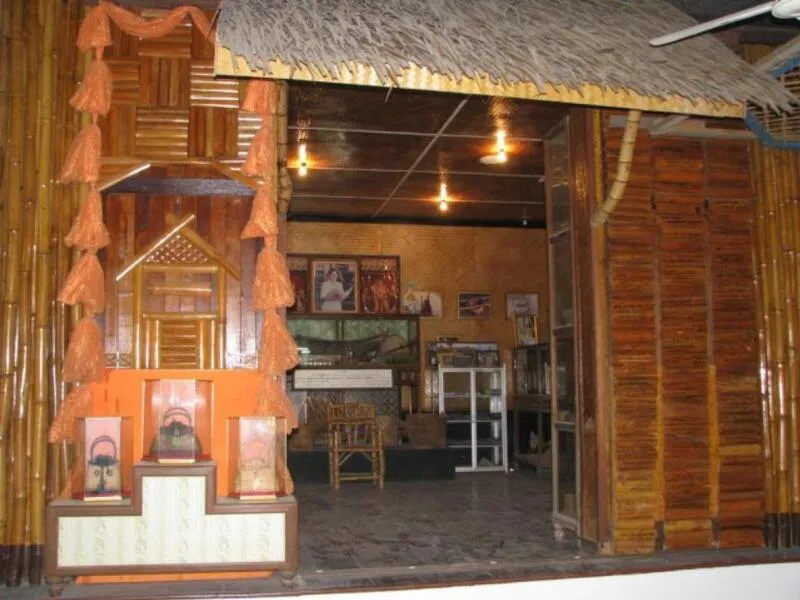
Bamboo Utensils Museum, Bang Chao Cha Subdistrict within Wat Yang Thong, Pho Thong District, Ang Thong Province, is a well-known learning site for the Central Plains’ “bamboo weaving and bamboo basketry” heritage. Established in 1997, it brings together traditional bamboo crafts once used in farming and local fishing livelihoods, alongside modern, value-added contemporary pieces. It suits cultural travel, family visits, and study trips for anyone who wants a hands-on understanding of local wisdom.
Bamboo Utensils Museum, Bang Chao Cha Subdistrict is located on the grounds of Wat Yang Thong, Moo 8, Bang Chao Cha Subdistrict, Pho Thong District, Ang Thong Province. This place is more than a “display room” because it serves as a community memory archive, a platform for passing on traditional craft skills, and a mirror of a local economy that grew from natural resources such as bamboo. Bang Chao Cha is not famous only for beautiful patterns, but for objects designed from real working life: practical craft logic, durability, and a true fit for “field use” in the everyday rhythm of the Central Plains.
Geographically, Bang Chao Cha lies in a lowland river-basin landscape whose ecosystem supports bamboo and local vegetation. The bamboo used by villagers is not chosen at random; there is knowledge in selecting both species and the age of the culm to suit each type of work. Tasks requiring toughness call for bamboo that yields strong strips. Tasks requiring flexibility call for bamboo that can be split without cracking. Fine, detailed pieces require strict control over the “width of bamboo strips” so the weave pattern stays crisp and even. This knowledge has accumulated in the community over a long period, shaped by real work and family-based transmission.
In the past, bamboo weaving was a set of “survival tools” for rural communities, supporting everything from rice farming and fishing to storage and food preparation. Many objects displayed in the museum—such as fish traps, baskets, winnowing trays, chicken coops, bird cages, and household containers—were once found in nearly every home. Their forms were not designed for beauty alone; each carries functional reasoning. For example, the weave openings must be small enough to prevent fish from escaping, yet open enough for water flow. Structures must be light enough to carry, yet strong enough to hold rice or harvest loads in real conditions.
As Thai society shifted, modern materials such as plastic and metal replaced bamboo utensils in many areas. Bang Chao Cha faced the same challenge, but what sets this community apart is that it refused to let its wisdom disappear with time. Instead, it followed a model of “living conservation”: preserving older objects as evidence while adapting the craft to contemporary life, so artisans can still earn a livelihood, younger generations can still see value, and visitors can still learn from real examples.
The museum was established in 1997 through collaboration among villagers, local agencies, and Wat Yang Thong. Its clear goal was to collect bamboo-woven objects representing local life and organize learning information so future generations could understand both the “objects” and the “contexts” behind them. The timing mattered because modern household goods were rapidly spreading. Without serious collecting, many items might have been discarded, sold, or lost without trace.
Inside, exhibits are typically arranged by use categories, helping visitors see at a glance how a community used bamboo across daily life. The section on traditional fishing reveals relationships between people and waterways. The agriculture section shows the precision of rice-farming routines. The household section highlights how earlier generations managed resources carefully and intelligently. The modern section shows that the community is “extending” rather than “copying” because it retains traditional structural logic while adjusting functions for today’s homes.
Another strong theme the museum communicates is “craft thinking.” Bamboo weaving is not mechanical repetition. It requires controlled hand pressure, measurement, angle management, and constant problem-solving. Each bamboo strip differs slightly by nature, so artisans must learn to “read the material”: where to bend, where to reduce force, where to reinforce a frame, and where to hide joints for a clean finish. As you view many pieces in sequence, it becomes clear that beauty in bamboo craft comes from discipline and consistency, not from expensive materials.
Bang Chao Cha is known as a true “craft community,” with artisan groups, skill transmission, and product development continuing over time. This keeps the museum connected to real life rather than isolated from it. Many visitors treat the museum as a starting point for understanding, then continue by viewing products, talking with artisans, or visiting community sales points. In this way, learning and local income distribution happen together in a tangible way.
For travelers who value “meaning” more than “check-ins,” this place stands out culturally because it shows how a Central Plains community uses nature rationally. Bamboo is not just material; it is shared knowledge embedded across the village. Combined with the setting of Wat Yang Thong as a traditional community hub, the visit gains a social and spiritual dimension as well. Thai temples often connect people of different ages, and a community museum within a temple supports learning in a natural, respectful atmosphere.
To get the most from the visit, it helps to walk through the exhibits slowly. Start with larger tools where shapes are obvious, then move into finer, more detailed pieces. This approach helps you read the “language of the weave,” because once you understand basic interlacing logic and structural framing, you will begin to see why certain patterns suit heavy loads, why others improve ventilation, and why some forms are designed to stack for space efficiency in households that must store many items.
Although the museum focuses on bamboo utensils, what visitors take away is an understanding of “design from context,” a core principle of Thai local wisdom. Good bamboo craft does not begin with beauty; it begins with real-life needs: carrying to the fields, exposure to water and sun, weight-bearing, and easy repair. Once you understand those needs, you can see how the beauty of folk craft comes from balance and appropriateness—a cultural value you can genuinely grasp.
Ang Thong Province offers many cultural destinations, including major temples, sculpture traditions, and community markets. The Bamboo Utensils Museum in Bang Chao Cha can serve as a “jigsaw piece” that completes a richer cultural route. Travelers can plan a day trip linking crafts with religion and local food, or break the journey into shorter segments to absorb details without rushing.
One practical point: the museum is located inside a temple compound. Visitors should dress modestly, speak appropriately, and respect the religious setting. For large groups or formal study visits, coordinating in advance helps the experience run smoothly and may allow deeper explanations from local caretakers or community members.
Overall, the Bamboo Utensils Museum, Bang Chao Cha Subdistrict, reflects conservation that keeps moving forward. It shows that local wisdom is not confined to ceremonies; it lives in everyday &ldquotools” created out of necessity by working people. When those tools are preserved with their stories and contexts, they become a powerful learning space—helping visitors value Thai craft as knowledge, not merely decoration.
Getting There From the Pho Thong District Office, take the Sena – Chan Sut route for about 5.5 km, then turn right into Wat Yang Thong for about 1.5 km. You can search “Wat Yang Thong, Bang Chao Cha, Ang Thong” on navigation apps. Parking is available within the temple grounds and suits private cars and vans.
| Place Name | Bamboo Utensils Museum, Bang Chao Cha Subdistrict |
| Address | Wat Yang Thong, Moo 8, Bang Chao Cha, Pho Thong, Ang Thong 14120 |
| Coordinates | 14.6613, 100.3937 |
| Place Summary | A community museum preserving and presenting traditional and contemporary bamboo weaving from Bang Chao Cha. |
| Key Highlights | Comprehensive categories of bamboo utensils, clear craft logic and daily-life context, and visible evolution from practical tools to contemporary products. |
| Brief History | Established in 1997 through collaboration between the community and Wat Yang Thong to safeguard Bang Chao Cha’s bamboo craft heritage. |
| Local Caretaker (Wat Yang Thong) | Phra Khru Wirot Kittikhun (Updated 2026-02-25) |
| Fees | Free admission (Donations welcome) |
| Current Status | Open during official weekday hours (Advance contact recommended for group visits). |
| Contact Numbers | Wat Yang Thong: 035-644-326 Bang Chao Cha Weaving Center/Local Craft: 035-644-091, 035-644-319 |
| Nearby Tourist Attractions With Distance | 1. Talat San Chao Rong Thong – 7 km 2. Ban Bang Sadet Royal Dolls Center – 15 km 3. Wat Khun Inthapramun – 18 km 4. Wat Chaiyo Worawihan – 20 km 5. Wat Muang (Ang Thong) – 25 km |
| Popular Restaurants Nearby | 1. Lek Ban Roh – 25 km, Tel. 035-612-070 2. Into Farm – 28 km, Tel. 092-729-4433 3. Pizza A.T. Garden – 27 km, Tel. 080-909-2206 4. Nimit – 26 km, Tel. 035-631-052 5. Flamingo Cafe & Restaurant – 30 km, Tel. 089-160-4373 |
| Popular Accommodations Nearby | 1. Ban Rao Resort (Ang Thong) – 24 km, Tel. 064-425-6163 2. Bualuang Boutique Resort (Ang Thong) – 26 km, Tel. 035-949-850 3. Rim Chon Resort – 28 km, Tel. 035-611-527 4. Resort AngThong – 27 km, Tel. 035-610-800 5. HomeStay 99 – 18 km, Tel. 095-794-6860 |
Frequently Asked Questions (FAQ)
Q: When was the Bamboo Utensils Museum in Bang Chao Cha established?
A: It was established in 1997 to preserve and share Bang Chao Cha’s bamboo weaving heritage.
Q: What are the museum’s main highlights?
A: The museum presents a wide range of traditional bamboo tools used in real daily life, explains the craft process, and shows how the community developed contemporary bamboo products while keeping its original identity.
Q: What are the opening days and hours?
A: It opens Monday to Friday from 09:00 to 16:00 and is closed on weekends and public holidays.
Q: Is there an admission fee?
A: No. Admission is free, and visitors may donate if they wish.
Q: How much time should I plan for a visit?
A: Plan about 45–60 minutes for a comfortable visit, including time to read exhibit explanations.
 Bamboo Utensils Museum Map
 Category:
  Group:
  Tag: ●Bamboo Utensils Museum●bang chao cha bamboo museum ●bamboo weaving ang thong ●bamboo handicraft thailand ●wat yang thong ang thong ●cultural tourism ang thong ●pho thong attractions ●thai bamboo basketry ●community museum thailand ●traditional bamboo crafts ●bang chao cha handwoven bamboo Last Update: 2 DayAgo
Comment
 Nearby Attractions
| Keyword (Advance) |
 Facebook Fanpage
 Region
 Landmarks and Memorials(
 Royal Palace(
 Art, Craft Centres, Tradition(
 Historical Houses and The Ancient City(
 Educational Places
 Educational Gardens, Farm(
 Places of Worship
 Temple(
 Other religious and spiritural sites(
 Research and Development
 Royal Project(
 Suburban Living
 Village, Community(
 Local Market(
 Floating Market(
 Nature and Wildlife
 River, Canal(
 Other natural attractions(
 Entertainment and Agricultural
 Farm, Parks, Gardens and Ecotourism(
 Outdoor and Adventure Activities(
 Shopping
 Shopping and Night Market(
 Travel Articles, Recipes
 Travel Review, Food Review(
 Central Thai Cuisine, Central Thai food recipes(
 Copyright 2012,