
 Home
Home North(
 Chiang Mai(


Wat Oi
Rating: 3.4/5 (7 votes)
 Search By
  Map
Map 
 Have Map
  No Map
Ang Thong attractions
Attractions in Thailand
Open Days: Open Daily
Opening Hours: 08:00 – 17:00
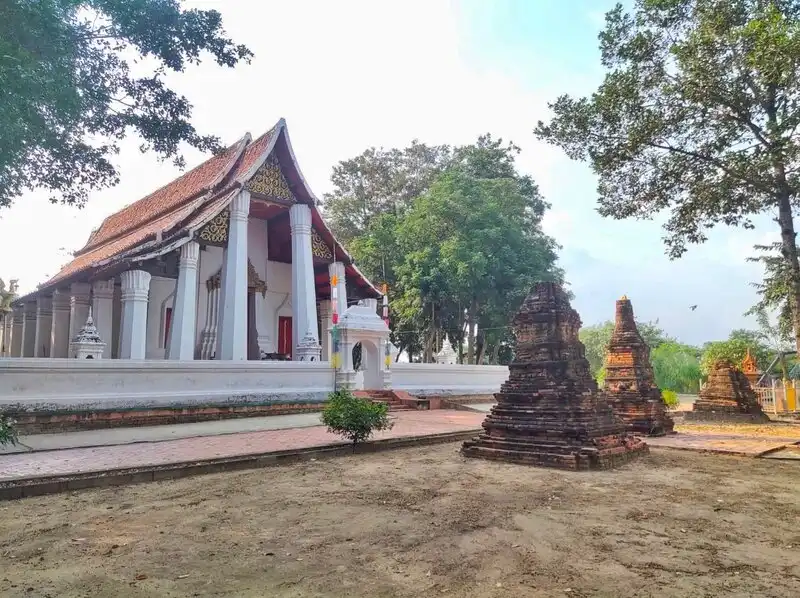
Wat Oi in Ang Thong is an old riverside temple on the Noi River in Wiset Chai Chan District. It stands out for its historic “Maha Ut” ordination hall, a windowless, enclosed structure. Inside, the principal Buddha image known as “Luang Pho Dam” is enshrined, and local tradition says the temple was connected to the Ayutthaya-era oath-taking ceremony, “Thuean Nam Phra Phiphat Sattaya.” This is an ideal stop for an unhurried cultural temple visit—walk through the architecture, reflect on the riverside community history, and enjoy the calm atmosphere.
Wat Oi in Ang Thong Province is an old temple on the banks of the Noi River in Wiset Chai Chan District, Sala Chao Rong Thong Subdistrict. Its name may sound simple, but once you step inside, you will notice that its “specialness” does not come from modern grandeur. Instead, it lies in the weight of history, traditional craftsmanship, and the temple’s long-standing role as a spiritual center for Central Thailand’s river communities. Wat Oi is also remembered in local historical narratives as being associated with the “Thuean Nam Phra Phiphat Sattaya” oath-taking ceremony during the Ayutthaya period, making a visit here more than just a merit-making stop—it becomes a walk through living history, read through architecture that still stands.
Wat Oi sits in a landscape shaped by waterways like the Noi River. Communities along this river grew through boat travel, trade, and inter-city connections over centuries. Because the temple is right by the water, its relationship with the community has naturally been close—a place of spiritual refuge, merit-making, and gatherings on important days. At the same time, the riverside setting gives Wat Oi a distinct quietness: breezes, shade from trees, and a slower rhythm that invites visitors to take their time, observe details, and move through the space without rushing.
Historically, Wat Oi is recorded as having been established around 1527 CE (B.E. 2070) and received its official consecrated boundary (wisungkhamsima) around 1537 CE (B.E. 2080). These dates confirm the temple’s Ayutthaya-era origins. This age aligns with the temple’s key architectural features, especially its main ordination hall, a traditional brick-and-mortar structure typical of old Central Thai temples. What makes Wat Oi distinctive, however, is that the ordination hall is fully enclosed with no windows—a hallmark of what is known as a “Maha Ut” ubosot, where artistic design and layers of belief are brought together in a single sacred space.
Looking at the broader Ayutthaya and Central Plains context, riverside temples often served multiple roles at once: religious center, learning space, and community gathering point during major festivals. The fact that Wat Oi still functions as a living temple today reflects the continuity of the Wiset Chai Chan community. Moreover, Wat Oi has been described as a site connected to the “Thuean Nam Phra Phiphat Sattaya” ceremony in the Ayutthaya period, which elevates the temple’s meaning from local importance to a place associated with political ritual and loyalty—core elements of governance and social order in the past.
The heart of a visit to Wat Oi is its historic ordination hall, built in a large “six-bay” layout with brick-and-mortar construction. The roof structure is wooden, covered with traditional clay tiles. These details show that the ubosot was not designed merely as a ritual building, but also as a work of skilled craftsmanship requiring expert builders and carpenters. The solid masonry feels steady and enduring, while the wooden roof and clay tiles give the temple its warm, authentic old-temple character. Walking around the ubosot, you can also observe the boundary stones placed in the eight directions, a feature that helps visitors “read” the sacred spatial order through elements set around the building.
Another defining feature is that Wat Oi’s ordination hall is a “Maha Ut” ubosot—an enclosed structure with no windows. Step inside and the atmosphere is noticeably different from ubosots where daylight filters through openings. The enclosed walls and stillness create a focused interior that feels centered and meditative, well-suited to ritual and contemplation. For cultural travelers, this is where the meaning of a “Maha Ut” ubosot becomes clear through direct experience: the light and shadow, the coolness of thick walls, and the quietness of the space are all tangible.
Inside the ubosot, the principal Buddha image known locally as “Luang Pho Dam” is enshrined. It is described as a bronze or metal-cast Buddha image and has long been a core focus of local devotion. The name “Luang Pho Dam” is easy to remember and reflects how communities give familiar, distinctive names to sacred figures. Paying respect here is not merely a customary act—it is a way to connect with a lineage of faith passed down through generations, with the historic ubosot as a powerful reminder of how long that devotion has endured.
For visitors who want both spiritual merit and cultural insight, a good way to experience Wat Oi is to begin by taking in the riverside setting, then move toward the temple’s central axis—the Maha Ut ubosot. Observe the thickness of the masonry, the overall structure, and the boundary stones before stepping inside to pay respect to Luang Pho Dam. This sequence helps you “read the place” like a story: start with the riverside landscape and community context, move into sacred architecture, and end at the spiritual heart of the temple.
Wat Oi also carries contemporary social meaning through its role in the local community. There is information that the “Creative Children Foundation” established a shelter within the temple area known as “Ban Dek Klai Wat” (a home for children near the temple), offering support for vulnerable children. This reflects a familiar Thai idea: temples are not only religious sites, but also places that can help people rebuild their lives in difficult moments. Understanding this social dimension adds depth to the visit, highlighting “sacredness connected to real life,” not only symbolic sacredness.
Wat Oi is also suitable as a calm, unhurried anchor stop for a one-day temple route in the Wiset Chai Chan area, where there are other significant temples and communities shaped by Central Plains river culture. Beginning at Wat Oi—with its Maha Ut ubosot and Luang Pho Dam—you can continue to nearby sites within the same day while keeping the tone of a cultural learning trip focused on reflection rather than rushing to collect locations.
As a place of worship, visitors should observe basic etiquette: dress respectfully, keep noise low in sacred buildings, and avoid disturbing monks or ongoing religious activities. The quiet atmosphere is part of Wat Oi’s value as a riverside temple, and respecting the space helps preserve both religious propriety and the experience of other visitors.
Getting There Wat Oi is located in Moo 10, Sala Chao Rong Thong Subdistrict, on the banks of the Noi River. It can be reached via Highway 3454. From main routes, head toward the Sala Chao Rong Thong area and continue following local signs to Wat Oi. According to commonly used local reference, the temple is about 1 kilometer north of Wat Khian. For public transport, travel first to Wiset Chai Chan District or Ang Thong town, then take local transport onward to Sala Chao Rong Thong. It is advisable to allow extra time, as local transport frequency can be lower than in major cities.
| Name | Wat Oi |
| Summary | A historic riverside temple in Wiset Chai Chan, known for its “Maha Ut” windowless ordination hall and the revered principal Buddha image “Luang Pho Dam,” with local narratives linked to the Ayutthaya era. |
| Address | Sala Chao Rong Thong Subdistrict, Wiset Chai Chan District, Ang Thong, Thailand |
| Key Highlights | Historic “Maha Ut” ubosot (windowless enclosed ordination hall), eight-direction boundary stones, principal Buddha image “Luang Pho Dam” (bronze/metal-cast), peaceful Noi River setting, and local tradition linking the temple to Ayutthaya-era oath-taking rituals. |
| Abbot (Latest) | Phra Maha Somchai Ariñchano |
| Current Status | An active local temple open for worship and merit-making. |
| Nearby Attractions (Approx. Distance) | 1) Sala Chao Rong Thong Market (Approx. 3 km) 2) Wat Khian (Approx. 1 km) 3) Wat Muang (Approx. 12 km) 4) Wat Khun Inthapramun (Approx. 16 km) 5) Wat Chaiyo Worawihan (Approx. 22 km) |
| Popular Restaurants Nearby (Approx. Distance + Phone) | 1) Niramit Restaurant (Approx. 6 km) Tel. 081-852-4777 2) DR STEAK (Approx. 10 km) Tel. 035-632-145 3) Somwang Phochana (Bitter Gourd Chicken Noodles) (Approx. 10 km) Tel. 090-958-0284 4) Samoe Jai Restaurant (Approx. 12 km) Tel. 035-622-755 5) Chaya Home - Cafe & Eatery (Approx. 11 km) Tel. 086-066-4311 |
| Popular Accommodations Nearby (Approx. Distance + Phone) | 1) Patamanan Residence (Approx. 9 km) Tel. 095-505-1935 2) Wiset Sabai Resort (Approx. 10 km) Tel. 081-587-5993 3) Thi Ni Mi Dee Resort (Approx. 11 km) Tel. 094-131-8081 4) Bualuang Ang Thong Hotel (Approx. 18 km) Tel. 035-611-116 5) Ratchaphruek DC Resort Ang Thong (Approx. 20 km) Tel. 080-193-3277 |
Frequently Asked Questions (FAQ)
Q: Where is Wat Oi located?
A: Wat Oi is located in Sala Chao Rong Thong Subdistrict, Wiset Chai Chan District, Ang Thong Province, on the banks of the Noi River.
Q: How old is Wat Oi?
A: The temple is recorded as having been established around 1527 CE (B.E. 2070) and received its consecrated boundary around 1537 CE (B.E. 2080), placing it in the Ayutthaya era.
Q: What is a “Maha Ut” ubosot?
A: A “Maha Ut” ubosot is an enclosed ordination hall with thick walls and no windows. Wat Oi is notable for this distinctive architectural feature.
Q: Who is “Luang Pho Dam” and where is it enshrined?
A: “Luang Pho Dam” is the principal Buddha image enshrined inside Wat Oi’s ordination hall. It is described as a bronze or metal-cast Buddha image and is deeply revered by local worshippers.
Q: Is Wat Oi connected to the Ayutthaya oath-taking ceremony?
A: Local tradition and historical narratives describe Wat Oi as being associated with the Ayutthaya-era oath-taking ritual known as “Thuean Nam Phra Phiphat Sattaya.”
Q: What is “Ban Dek Klai Wat” at Wat Oi?
A: Information indicates that an area within the temple grounds has been used as “Ban Dek Klai Wat,” a shelter supported by the Creative Children Foundation to assist vulnerable children.
Q: What is the best time to visit Wat Oi?
A: Morning hours around 08:00 – 10:00 are ideal for a quiet walk and riverside atmosphere. Afternoons can be suitable for a shorter merit-making visit before continuing to nearby sites.
Q: What etiquette should visitors follow at the temple?
A: Dress respectfully, keep noise low in sacred areas, remove shoes before entering religious buildings, and avoid disturbing monks or ongoing ceremonies.
 Wat Oi Map
 Category:
  Group:
  Tag: ●Wat Oi●wat oi ●wat oi ang thong ●wat oi wiset chai chan ●noi river temple ●maha ut ubosot ●windowless ubosot thailand ●luang pho dam ●ayutthaya era temple ●ang thong temple tour ●cultural temple trip thailand Last Update: 2 WeekAgo
Comment
 Nearby Attractions
| Keyword (Advance) |
 Facebook Fanpage
 Region
 Art, Culture and Heritage
 Landmarks and Memorials(
 Royal Palace(
 Art, Craft Centres, Tradition(
 Museums(
 Historical Houses and The Ancient City(
 Educational Places
 Educational Gardens, Farm(
 Other religious and spiritural sites(
 Research and Development
 Royal Project(
 Suburban Living
 Village, Community(
 Local Market(
 Floating Market(
 Nature and Wildlife
 River, Canal(
 Other natural attractions(
 Entertainment and Agricultural
 Farm, Parks, Gardens and Ecotourism(
 Outdoor and Adventure Activities(
 Shopping
 Shopping and Night Market(
 Travel Articles, Recipes
 Travel Review, Food Review(
 Central Thai Cuisine, Central Thai food recipes(
 Copyright 2012,