
lovethailand home >North Travel Attractions >Tak Travel Attractions >Tha Song Yang >Tha Song Yang > Moei River
TL;DR: Moei River is located at Thai–Myanmar border area in Tak Province, with a major tourist access point at Tha Sai Luat Subdistrict, Mae Sot District, open Daily, hours Riverside areas can be visited throughout the day; morning and late afternoon.
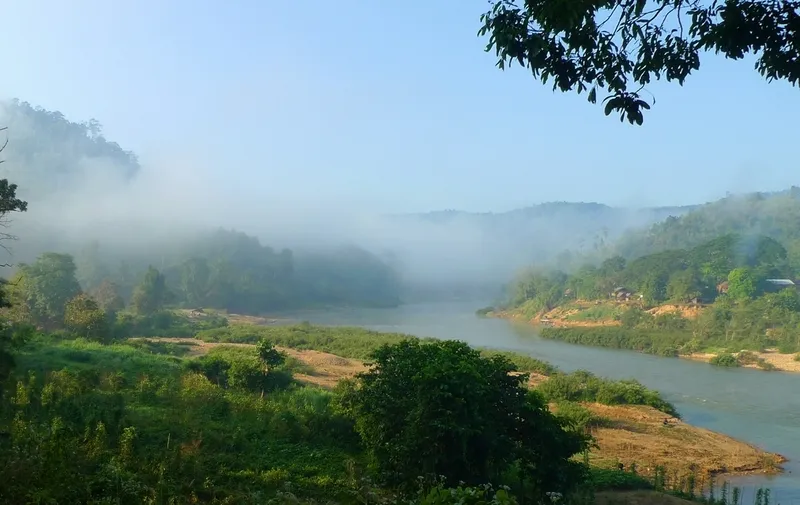
Moei River
Open Days: Daily
Opening Hours: Riverside areas can be visited throughout the day; morning and late afternoon are recommended
The Moei River in Tak Province is one of the most important border rivers in western Thailand. Known in Myanmar as the Thaungyin or Taungyin River, it is approximately 327 km long and rises in Phop Phra District, Tak Province. From there, it flows unusually from south to north through Mae Sot, Mae Ramat, and Tha Song Yang districts before joining the Salween River system farther north. The river forms a natural border between Thailand and Myanmar in several sections, especially around Mae Sot, where it plays a major role in geography, trade, tourism, local livelihoods, and cross-border cultural exchange.
The Moei River is not only a physical river. It is also a living border space. For Thai communities in Tak Province, it is part of daily life, local history, trade, fishing, agriculture, and tourism. For communities on the Myanmar side, especially around Myawaddy, the same river carries its own local names, stories, and economic importance. The river therefore functions as both a boundary and a connection. It separates two countries on the map, yet it also brings people, goods, languages, foods, and traditions together along the border.
The source of the Moei River lies in the Phop Phra area of Tak Province, where mountain streams and borderland waterways combine before flowing northward. The river passes through varied landscapes: forested mountains, agricultural areas, border villages, market zones, and quieter riverside communities. Its route through Phop Phra, Mae Sot, Mae Ramat, and Tha Song Yang makes it one of the most recognizable natural features of Tak’s western frontier.
One of the river’s most distinctive geographical features is its direction of flow. Many rivers in Thailand are commonly imagined as flowing southward, but the Moei River flows northward before connecting to the Salween River system. This unusual direction makes it especially interesting for travelers, students, and readers who want to understand the physical geography of the Thai–Myanmar border.
The river’s most accessible tourism point is around Rim Moei Market in Tha Sai Luat Subdistrict, Mae Sot District. This market sits on the Thai bank of the Moei River opposite Myawaddy in Myanmar. It is one of the best places for visitors to experience the border atmosphere without needing to travel deep into remote areas. The market sells local goods from both Thailand and Myanmar, including dried foods, textiles, souvenirs, household items, handicrafts, and cross-border products.
Walking through Rim Moei Market gives travelers a direct sense of how the river shapes local life. The market is not only a shopping place; it is a cultural meeting point. Visitors can hear different languages, see Thai and Myanmar goods side by side, and observe how the river, the border, the bridge, and the market work together as one landscape. The Moei River provides the setting, while the market reveals the economic and cultural energy of the area.
Local communities along the Moei River have depended on the river for generations. The river supports fishing, farming, transportation, and small-scale local trade. Fish from the river and nearby waterways have long been used in local cooking, including grilled fish, fried fish, fish curries, and seasonal dishes. For many riverside families, the river is not an abstract geographical feature; it is a source of food, income, and memory.
Historically, the Moei River was an important route for communication and local movement before modern roads and bridges became dominant. Boats, rafts, and natural crossing points helped people move across or along the river. Goods, food, and daily necessities circulated through riverside communities. Today, roads and the Thai–Myanmar Friendship Bridge have become more important for formal travel and transport, but the river still represents the older connection between the two sides.
The Thai–Myanmar Friendship Bridge No. 1 is one of the most visible symbols of the river’s modern role. Near the bridge, visitors can see the Moei River flowing between Mae Sot and Myawaddy, with people, vehicles, shops, border services, and trade activities moving around it. The bridge and river together show how natural geography and modern infrastructure combine to create one of Thailand’s key border gateways.
For travelers, the Moei River offers several kinds of experiences. At the easiest level, visitors can walk around Rim Moei Market, take photos by the riverside, and view Myanmar across the water. Those interested in culture can observe the mix of Thai, Burmese, Karen, and other border communities. Those interested in geography can follow the river route northward toward Mae Ramat and Tha Song Yang to see quieter landscapes, mountain areas, and riverside villages.
From Mae Sot town, the most convenient way to visit the Moei River is to travel to Tha Sai Luat Subdistrict and Rim Moei Market. The distance from Mae Sot town is around 6–7 km, making it suitable for a half-day trip. Visitors can travel by private car, rental car, motorcycle, or local transport. The route can easily be combined with Wat Thai Wattanaram, Wat Don Kaew, Mae Sot town, and other nearby attractions.
Travelers who want to understand the river more deeply can continue north along the Mae Sot–Mae Ramat–Tha Song Yang route. This section reveals another side of the Moei River. Away from the busy market and bridge area, the river becomes part of quieter forested and rural landscapes. Mountains, ethnic communities, farms, and border villages appear along the route. This broader journey helps show that the Moei River is not only a market river, but also a forest, village, and highland river.
Economically, the Moei River supports the border region in many ways. It provides natural resources for fishing and riverside agriculture, while the areas around the river support markets, restaurants, transport services, guesthouses, hotels, and cross-border trade. Rim Moei Market is a clear example of how a natural river can support a wider border economy. Visitors who shop, eat, and stay in Mae Sot help local businesses connected to the river landscape.
The river is also environmentally important. It forms a freshwater ecosystem for fish, aquatic life, riverside plants, birds, and other wildlife. It supports agriculture and helps maintain the natural character of the border region. Protecting water quality, reducing riverside waste, preventing riverbank damage, and using water responsibly are essential for both communities and tourism. If the river environment declines, the effects will be felt by local people, wildlife, and the tourism economy.
Because the Moei River is a border river, environmental care requires cooperation from many groups. Communities, traders, travelers, local authorities, and cross-border users all affect the river. Visitors can contribute in simple ways: do not throw rubbish into the river, avoid creating waste near the banks, respect local rules, and support businesses that keep their surroundings clean. Responsible tourism helps preserve the river as both a natural and cultural resource.
Culturally, the Moei River is one of the best places to observe the diversity of the Thai–Myanmar border. Thai, Burmese, Karen, Mon, and other communities have shaped the area through food, language, clothing, markets, religion, and daily life. At Rim Moei Market and nearby riverside areas, this diversity becomes visible. The river is therefore not just a natural boundary; it is a meeting place of cultures.
Travelers should also remember that the Moei River area includes sensitive border zones. Photography should be done respectfully and only in appropriate areas. Visitors should not photograph restricted security areas without permission, should not attempt informal border crossings, and should follow official regulations if they plan to cross into Myanmar. The river is beautiful and culturally rich, but it is also part of an international border.
The best time to visit the riverside around Mae Sot is in the morning or late afternoon. Morning offers cooler weather and active market scenes, while late afternoon provides softer light for photography. Visitors who plan to walk around Rim Moei Market should allow at least 1–2 hours to browse goods, take photographs, and enjoy the riverside atmosphere without rushing.
The Moei River is also useful for educational travel. It demonstrates unusual river flow, border geography, the Salween basin connection, cross-border trade, and multicultural settlement. A visit can help students and travelers understand how rivers shape human settlement, politics, economy, and culture. Few rivers show these relationships as clearly as the Moei River in Tak Province.
For families, the safest and easiest places to learn about the river are Rim Moei Market, designated riverside viewpoints, and areas near the Thai–Myanmar Friendship Bridge. Children should not play near steep or unstable riverbanks, and visitors should avoid entering the water in unsafe areas. The best family experience is to observe the river, market, bridge, and border scenery from safe public areas.
Photographers will find the Moei River especially rewarding because it combines landscape and human life. Good subjects include the river surface, boats, border views, the bridge, market scenes, riverside trade, and the Myanmar side of the landscape. The strongest photographs usually include both the river and the people who live around it, because this is what makes the Moei River different from an ordinary scenic river.
A one-day Mae Sot itinerary can easily be built around the Moei River. Start in the morning at Rim Moei Market, walk along the riverside, photograph the Thai–Myanmar border scene, then return to Mae Sot town for lunch. In the afternoon, visit Wat Thai Wattanaram, Wat Don Kaew, local cafés, or other city attractions. In the evening, visitors can return to the riverside for softer light and a quieter atmosphere.
With two days, travelers can extend the route north toward Mae Ramat and Tha Song Yang. This allows them to see a quieter and more natural side of the river. The route connects with attractions such as Mae Usu Cave, Mae Moei National Park, and mountain viewpoints in Tha Song Yang. This wider journey reveals the river’s different personalities: a busy trade river at Mae Sot, a rural border river farther north, and a natural highland river in quieter landscapes.
Overall, the Moei River is far more than a line dividing Thailand and Myanmar. It is a natural border, a trade corridor, a cultural meeting place, a source of local livelihoods, and an important tourism landscape of Tak Province. The easiest place to experience it is around Rim Moei Market and the Thai–Myanmar Friendship Bridge in Mae Sot, while travelers who continue toward Mae Ramat and Tha Song Yang will discover quieter riverside communities and mountain scenery. For visitors interested in nature, culture, photography, and border history, the Moei River is one of the most meaningful places to understand western Thailand.
| Name | Moei River |
| Location | Thai–Myanmar border area in Tak Province, with a major tourist access point at Tha Sai Luat Subdistrict, Mae Sot District |
| Address | Moei River riverside area, Tha Sai Luat Subdistrict, Mae Sot District, Tak 63110, Thailand |
| Highlights | A Thai–Myanmar border river about 327 km long, flowing from south to north through Phop Phra, Mae Sot, Mae Ramat, and Tha Song Yang before joining the Salween basin |
| History / Importance | An important river for border geography, trade, traditional movement, fishing, local livelihoods, and tourism, especially around Rim Moei Market and the Thai–Myanmar Friendship Bridge in Mae Sot |
| Name Origin | Known as the Moei River in Thailand and as the Thaungyin or Taungyin River in Myanmar, reflecting the shared cultural geography of both riverbanks |
| Distinctive Features | A rare south-to-north flowing border river that naturally separates and connects Thailand and Myanmar, especially between Mae Sot and Myawaddy |
| Travel Information | From Mae Sot town, travel to Tha Sai Luat Subdistrict and Rim Moei Market, about 6–7 km away, by private car, rental car, motorcycle, or local transport |
| Current Status | A border river and tourism landscape of geographical, cultural, economic, and environmental importance in Tak Province |
| Open Days | Daily for riverside viewpoints and Rim Moei Market area |
| Opening Hours | Riverside areas can be visited throughout the day; morning and late afternoon are recommended. Shop opening hours vary. |
| Facilities | Parking areas around Rim Moei Market, shops, restaurants, toilets, riverside viewpoints, and access to the Thai–Myanmar Friendship Bridge area |
| Main Areas / Zones | Rim Moei Market, Moei River riverbank, Tha Sai Luat Subdistrict, Thai–Myanmar Friendship Bridge No. 1, riverside viewpoints, and the Moei River route through Mae Sot, Mae Ramat, and Tha Song Yang |
| Caretaker | The main tourist riverside area around Rim Moei Market is within Tha Sai Luat Subdistrict Municipality, Mae Sot District, together with border and local authorities |
| Main Contact Number | Tha Sai Luat Subdistrict Municipality, Tel. 055-563-043 / Tha Sai Luat Subdistrict Administrative Organization, Tel. 055-564-000 / TAT Tak Office, Tel. 055-514-341 |
| Official Website / Official Page | Tha Sai Luat Subdistrict Municipality: www.thasailoud.go.th and Tourism Authority of Thailand |
| Nearby Tourist Attractions | 1. Rim Moei Market, about 0 km 2. Thai–Myanmar Friendship Bridge No. 1, about 1 km 3. Wat Thai Wattanaram, about 4 km 4. Wat Don Kaew, Mae Sot, about 6 km 5. Mae Sot town, about 7 km 6. Pha Charoen Market, Mae Sot, about 8 km 7. Si Fa Cave / Blue Cave, about 30 km |
| Nearby Restaurants | 1. Mingalarbar Mae Sot, about 5 km, Tel. 081-425-4188 2. A. Kung Phao Mae Sot, about 9 km, Tel. 055-531-073, 082-951-6563 3. Roti Kad Luang 33 Nang Len, about 7 km 4. Tui Khao Soi Mae Sot, about 7 km 5. Pla Sod Mueang Chot Restaurant, about 8 km 6. Restaurants inside Rim Moei Market, about 0 km |
| Nearby Accommodations | 1. Centara Life Hotel Mae Sot, about 8 km, Tel. 055-532-601 to 8, 085-480-2291 2. Eco Inn Hotel Mae Sot, about 7 km, Tel. 066-125-3266 3. Retro Twin Home @ Maesot, about 7 km, Tel. 093-286-4291 4. One Budget Hotel Tak Maesot, about 8 km, Tel. 098-253-7558 5. Maesot Siri Hotel, about 8 km 6. Chatchanan Resort, about 9 km |
Frequently Asked Questions (FAQ)
Q: Where is the Moei River located?
A: The Moei River is a Thai–Myanmar border river in Tak Province. It flows through Phop Phra, Mae Sot, Mae Ramat, and Tha Song Yang, with the easiest tourist access around Rim Moei Market in Tha Sai Luat Subdistrict, Mae Sot District.
Q: How long is the Moei River?
A: The Moei River is about 327 km long and is part of the Salween River system.
Q: What makes the Moei River special?
A: It flows from south to north and serves as a natural border between Thailand and Myanmar in several sections of Tak Province.
Q: Where is the best place to visit the Moei River?
A: Rim Moei Market and the Thai–Myanmar Friendship Bridge No. 1 in Tha Sai Luat Subdistrict, Mae Sot District, are the most convenient places to experience the river.
Q: How is Rim Moei Market connected with the Moei River?
A: Rim Moei Market is located on the Thai bank of the Moei River opposite Myawaddy, Myanmar. It is a well-known border market that reflects the trade and cultural exchange of both riverbanks.
Q: How do travelers get to the Moei River from Mae Sot town?
A: Travel from Mae Sot town to Tha Sai Luat Subdistrict and Rim Moei Market, about 6–7 km away, by private car, motorcycle, or local transport.
Q: When is the best time to visit the Moei River?
A: Morning and late afternoon are ideal because the weather is cooler, the light is better for photography, and the riverside atmosphere is more pleasant.
Q: What should visitors be careful about near the Moei River?
A: Visitors should respect border regulations, avoid photographing restricted areas without permission, avoid unsafe riverbanks, and follow local officers’ instructions.
 Category: ●Nature and Wildlife
 Group: ●River, Canal
Last Update : 4 MonthAgo
 Last Update : 4 MonthAgo
 Click to Access the Navigation Map GPS
 Art, Culture and Heritage
 Historical Sites and Monuments(2)
 Landmarks and Memorials(3)
 Art, Craft Centres, Tradition(6)
 Historic Homes and Cities(2)
 Educational Places
 Educational Gardens, Farm(2)
 Places of Worship
 Temple(22)
 Other Sacred Sites(9)
 Suburban Living
 Village, Community(5)
 Local Market(3)
 National Parks and Marine Reserves(9)
 Mountain (Doi)(9)
 Dam, Reservoir, Lake(14)
 Waterfalls(23)
 Hot Springs(2)
 Caves(6)
River, Canal(1)
Caves(6)
River, Canal(1)
 Bays and Beaches(1)
 Islands(1)
 Other natural attractions(1)
 Entertainment and Agricultural
 Farms, Parks and Ecotourism(5)
 Outdoor and Adventure Activities(4)


