

 Home
Home Chiang Mai(




Dong Mafai Waterfall
Rating: 3.7/5 (11 votes)
 Search By
  Map
Map 
 Have Map
  No Map
Prachuap Khiri Khan attractions
Attractions in Thailand
Open Days: Please check access availability with Kui Buri National Park before traveling
Opening Hours: Please check with Kui Buri National Park before traveling
Dong Mafai Waterfall is a natural attraction hidden within the lush and fertile forests of Prachuap Khiri Khan Province, and it is one of the most appealing destinations for travelers who prefer the quiet atmosphere of a headwater forest over the bustle of commercial tourist spots. The waterfall is located in Moo 9, Ban Yan Sue, Hat Kham Subdistrict, Kui Buri District, about 35 kilometers from the district center, and lies within Kui Buri National Park. The surrounding area therefore remains clearly rich in natural abundance, with forests, streams, mountains, and an environment well suited to serving as an important source of water for the region.
The charm of Dong Mafai Waterfall lies in its genuinely natural character, from the route into the area all the way to the waterfall itself. Visitors arriving here can immediately sense that the atmosphere is different from that of nature attractions that have already been heavily developed, because this place feels like entering a headwater forest where the rhythm of nature itself determines the beauty of the landscape. The sound of flowing water, insects, birds, and the shade of large trees all make a visit to Dong Mafai Waterfall more than just sightseeing; it becomes a true escape from the fast pace of city life.
Local and tourism information consistently states that Dong Mafai Waterfall is located within Kui Buri National Park, an area well known for its rich ecosystem and wildlife. For this reason, Dong Mafai Waterfall is not merely a leisure site for tourists, but also part of a natural landscape that plays an important role in the headwater system of Kui Buri District and Prachuap Khiri Khan Province as a whole. The significance of an area like this is clear: when the forest remains healthy, the water stays clear, the streams continue to flow, and wildlife can keep relying on the area as a habitat.
From a historical perspective, Dong Mafai Waterfall is interesting because it forms part of the Kui Buri forest landscape, long recognized as one of the outstanding natural areas of Prachuap Khiri Khan. The name of the waterfall is not arbitrary, but directly connected to the character of the area itself, because many wild mafai trees grow around the waterfall. This gave rise to the name “Dong Mafai.” The name is both simple and landscape-based, as it reflects what local people actually saw and how they connected the place to the real conditions of the forest.
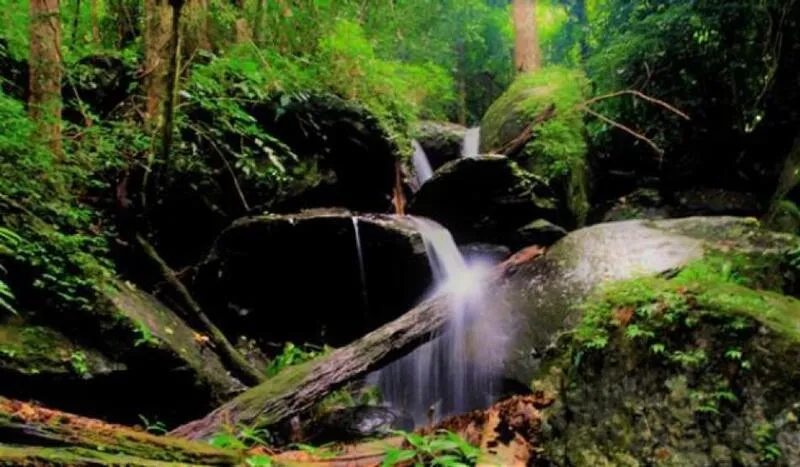
A key feature of Dong Mafai Waterfall is that it cascades down in tiers, with around 15 levels formed by the headwaters of the Kui Buri Right Tributary. The waterfall flows over granite rock formations, which gives it a beauty different from waterfalls that simply plunge down a vertical cliff. Its charm lies in watching the water gradually move over each rocky level, creating a continuous, rhythmic, and layered image. Combined with the dense, green forest along both sides of the stream, the overall atmosphere becomes deeply shaded and refreshing.
Another reason Dong Mafai Waterfall appeals to nature lovers is that some parts of it form pools where visitors can enjoy the water. The stream here is clear and cool, as expected from water that comes directly from a healthy headwater forest, making it suitable for swimming, soaking the feet, or simply relaxing on a hot day. Even so, the attraction of this place goes far beyond swimming alone, because many visitors enjoy exploring the different tiers of the waterfall, observing the rocks, forest, moss, ferns, and the atmosphere of the damp woodland that changes with elevation and proximity to the water.
Local information indicates that Dong Mafai Waterfall is especially full of water from around August to December, which corresponds to the late rainy season through the beginning of winter. This is considered one of the most beautiful times to visit, because the forest is vibrant green, the waterfall is powerful, the water fully covers the rock layers, and the air is pleasantly moist, making it ideal for photography and nature walks. At the same time, visitors should be especially careful of slippery paths and stronger currents in some areas, because the beauty of nature in the high-water season often comes with wet and potentially hazardous conditions.
The tiers often described as the most beautiful are those between levels 8 and 15, especially level 14, where water drops from a large cliff into a pool below from a height of about 10 meters. Details like this show that Dong Mafai Waterfall is not a small waterfall where you simply arrive, take a look, and leave. Instead, it is a place with depth, with scenery that changes from one tier to the next, and it invites nature-loving travelers to spend time with the route and the surroundings rather than rushing to the destination and turning back immediately.
The beauty of Dong Mafai Waterfall extends far beyond the water itself, because the forest around it is filled with many types of plant life, including ferns, orchids, moss, and large trees that create a distinct ecosystem typical of moist headwater forests. The density of the vegetation makes visitors feel the coolness and humidity of the air as they walk through the area. The natural path enveloped in greenery is therefore a major part of the waterfall’s appeal, because whether one looks up at the tree canopy, down at the moss-covered rocks, or along the flowing stream, there are always small details that reflect the richness of the forest.
In terms of wildlife, Dong Mafai Waterfall and the surrounding forest are also described as habitats for many species, which is consistent with the overall character of Kui Buri National Park as a place known for its abundant nature. Birdwatchers may be especially interested, because there are reports of great hornbills flying over the treetops in this area. Beyond that, the presence of a healthy headwater forest also means the area supports countless smaller animals whose lives help keep the ecosystem in balance.
A large takhian tree estimated to be around 200 years old and embraced by a banyan tree is another detail that makes Dong Mafai Waterfall stand out from many other waterfalls. It reflects the age of the forest, the continuity of nature, and the relationship between living things within the same ecosystem. A great tree like this is not merely a beautiful feature in photographs, but also gives visitors the sense that this place has history, time, and a living natural world that has long existed before humans came to see it.
For general travelers, Dong Mafai Waterfall suits many styles of travel. Those who prefer a relaxed trip can come to rest, swim, take photos, and enjoy the fresh air, while those with a deeper interest in nature can spend more time exploring the route, observing the waterfall tiers, plant life, and the surrounding atmosphere in full. At the same time, travelers interested in eco-tourism will find that this place clearly reflects the value of a headwater forest, because every component of the site is interconnected, from water, rock, and forest to wildlife, humidity, and the quiet calm of the landscape.
Traveling to Dong Mafai Waterfall requires good planning, because the site lies within a national park and is not near a town or major community with complete facilities close at hand. If starting from Kui Buri District, visitors need to take the route into Hat Kham Subdistrict and the Ban Yan Sue area before entering the national park zone. Traveling by private car is the most convenient option, especially for those who wish to visit several sites within Kui Buri National Park in one day.
Getting There from Prachuap Khiri Khan town, visitors can take Phetkasem Road south toward Kui Buri District, then continue along local roads to Hat Kham Subdistrict and Ban Yan Sue, which serves as the approach area for attractions within the national park. Those traveling from Bangkok usually drive south along Phetkasem Road via Pran Buri and Kui Buri before turning into the park area. It is important to check road conditions, weather, and access information with park officials before departure, especially during periods of continuous rain or when flash water levels may rise.
In terms of experience, Dong Mafai Waterfall is particularly suitable for travelers seeking a place that encourages them to slow down. Its beauty is not that of a landmark where one takes a photo in a few minutes and moves on, but rather a place where the longer one stays, the more details emerge. The more one walks, the more layers of rock appear. The more one listens, the more sounds of nature can be heard. The more one observes, the more clearly the richness of the landscape can be understood. This is therefore a place for people who want to spend real time with nature, not just check in and continue onward.
Another aspect that gives Dong Mafai Waterfall value as a tourist site is that it broadens the overall image of nature tourism in Kui Buri, which is not defined only by wildlife watching. Many people know Kui Buri from images of wild elephants and gaurs in grasslands, but in reality the area also contains waterfalls, headwater forests, viewpoints, and natural trails that make the picture of Kui Buri more complete. Dong Mafai Waterfall is therefore well suited to being part of an itinerary for travelers who want to understand Kui Buri in a deeper way than the usual image suggests.
For those who enjoy nature photography, Dong Mafai Waterfall offers a wide range of visual elements throughout the route, from wide waterfall scenes and streams flowing over granite rocks to moss, ferns, wild orchids, sunlight filtering through the canopy, and even the rich detail of the damp forest floor full of life. Photography in a place like this does not depend only on one highlighted viewpoint, because almost every section of the path contains details that can tell the story of the forest.
Although Dong Mafai Waterfall is highly appealing for its tranquility and natural character, visitors should always keep responsible travel in mind. Do not litter, disturb wildlife, make excessive noise, or damage plants and the surrounding environment, because the value of a place like this lies precisely in the fact that it has remained so well preserved. If visitors help protect it, the area can continue to serve as a place of relaxation and a source of natural learning for a long time to come.
Overall, Dong Mafai Waterfall is an excellent destination for those looking for a different side of Prachuap Khiri Khan beyond seaside towns and familiar tourist spots. It offers the beauty of a headwater forest in a way that is quiet, profound, and full of detail. It is a waterfall with scenic value, ecological importance, and strong potential for eco-tourism. If you truly love nature, prefer the sound of flowing water over the noise of crowds, and want to experience the atmosphere of a forest that still breathes deeply, Dong Mafai Waterfall is one destination that deserves a place on your Prachuap Khiri Khan travel list.
| Name | Dong Mafai Waterfall |
| Location | Moo 9, Ban Yan Sue, Hat Kham Subdistrict, Kui Buri District, Prachuap Khiri Khan Province |
| Address | Kui Buri National Park area, Ban Yan Sue, Hat Kham Subdistrict, Kui Buri District, Prachuap Khiri Khan Province |
| Highlights | A 15-tier waterfall in a headwater forest, flowing over granite rock formations, with pools suitable for swimming. Tiers 8–15 are especially scenic, with tier 14 featuring an approximately 10-meter cliff. |
| History / Significance | An important headwater area within Kui Buri National Park and part of one of the most ecologically rich forest landscapes in Prachuap Khiri Khan Province. |
| Name Origin | Named after the many wild mafai trees growing around the waterfall and the surrounding forest. |
| Natural Features | A rich headwater forest with ferns, orchids, moss, large takhian trees, and a variety of wildlife. |
| Best Time to Visit | Around August–December, when the water is abundant and the forest is lush and green, though paths may be slippery during the rainy season. |
| Getting There | Travel from Kui Buri District into Hat Kham Subdistrict and Ban Yan Sue, then continue into Kui Buri National Park. A private car is recommended, and visitors should check current conditions before traveling. |
| Current Status | Still a natural attraction within Kui Buri National Park. Visitors should confirm area access with park officials before every trip. |
| Contact | Kui Buri National Park Tel. 032-646292 |
| Nearby Tourist Attractions | 1. Kui Buri National Park (Wildlife Viewing Area) – approx. 11 km 2. Pha Ma Hon Waterfall – approx. 12 km 3. San Makha Viewpoint – approx. 15 km 4. Khao Sam Roi Yot – approx. 45 km 5. Ao Manao – approx. 50 km |
| Nearby Restaurants | 1. Je Nu Khao Tom - Made-to-Order Food – approx. 30 km Tel. 087-763-0961 2. Meet&More cafe’ Kui Buri – approx. 31 km Tel. 084-608-5237 3. Usa Pla Phao Kui Buri – approx. 31 km Tel. 061-821-0883 4. Krua Nan Na Si – approx. 33 km Tel. 093-092-2526 5. Sai Kaew Seafood Kui Buri – approx. 40 km Tel. 092-268-1915, 090-792-7725 6. The Terrance Restaurant – approx. 42 km Tel. 032-820-141 7. Kui Buri Hotel and Resort – approx. 40 km Tel. 032-820-111, 089-166-1668 |
| Nearby Accommodations | 1. Kui Buri Hotel and Resort – approx. 40 km Tel. 032-820-111, 089-166-1668 2. Tolani Resort Kui Buri – approx. 52 km Tel. 032-510-466 3. Dhevan Dara Beach Villa Kuiburi – approx. 42 km Tel. 032-820-141, 064-624-2246 4. Vartika Resovilla Kuiburi – approx. 41 km Tel. 089-887-7539 5. Ao Noi Sea View – approx. 48 km Tel. 081-401-6001 6. Joy Hotel – approx. 49 km Tel. 089-666-0094 7. Fah Chom Kluen Hotel – approx. 52 km Tel. 032-611-017 |
Frequently Asked Questions (FAQ)
Q: Where is Dong Mafai Waterfall located?
A: Dong Mafai Waterfall is located in Moo 9, Ban Yan Sue, Hat Kham Subdistrict, Kui Buri District, Prachuap Khiri Khan Province, within Kui Buri National Park.
Q: How many tiers does Dong Mafai Waterfall have?
A: Dong Mafai Waterfall has around 15 tiers. It flows over granite rock formations and has pools suitable for swimming in some areas.
Q: What is the best time to visit Dong Mafai Waterfall?
A: Around August to December is the best period, when the water is plentiful and the forest is especially lush and beautiful, though paths may be slippery during the rainy season.
Q: What are the highlights of Dong Mafai Waterfall?
A: The highlights of Dong Mafai Waterfall are its unspoiled headwater forest setting, beautiful streams flowing over granite rock layers, diverse forest plants, and a peaceful atmosphere ideal for relaxation and nature study.
Q: What is the origin of the name Dong Mafai Waterfall?
A: The name comes from the many wild mafai trees growing around the waterfall and surrounding forest, which gave rise to the name “Dong Mafai.”
Q: What type of travelers is Dong Mafai Waterfall suitable for?
A: It is suitable for travelers who enjoy nature, light trekking, swimming, photography, and eco-tourism in a peaceful forest setting that is still not overly crowded.
Q: How should I prepare before visiting Dong Mafai Waterfall?
A: Visitors should check area access information with Kui Buri National Park before traveling, wear shoes with good grip, prepare suitable clothing for walking in damp terrain, and avoid littering or disturbing nature.
 Dong Mafai Waterfall Map
 Category:
  Group:
  Tag: ●Dong Mafai Waterfall●dong mafai waterfall ●dong mafai waterfall kui buri ●kui buri waterfall ●prachuap khiri khan waterfall ●kui buri national park waterfall ●nature attractions kui buri ●waterfall in prachuap khiri khan ●hidden waterfall thailand ●eco tourism kui buri ●forest waterfall kui buri Last Update: 3 DayAgo
Comment
 Nearby Attractions
| Keyword (Advance) |
 Region
|
 Muang Prachuap Khiri Khan(
 Copyright 2012,