
lovethailand home >Central Travel Attractions >Phetchaburi Travel Attractions >Muang Phetchaburi >Ban Mo > Phra Ram Ratchaniwet (Ban Puen Palace)
TL;DR: Phra Ram Ratchaniwet (Ban Puen Palace) is located at Ban Mo Subdistrict, Mueang Phetchaburi District, Phetchaburi, open Daily, hours 09.00 – 15.30.
Phra Ram Ratchaniwet (Ban Puen Palace)
Open Days: Daily
Opening Hours: 09.00 – 15.30
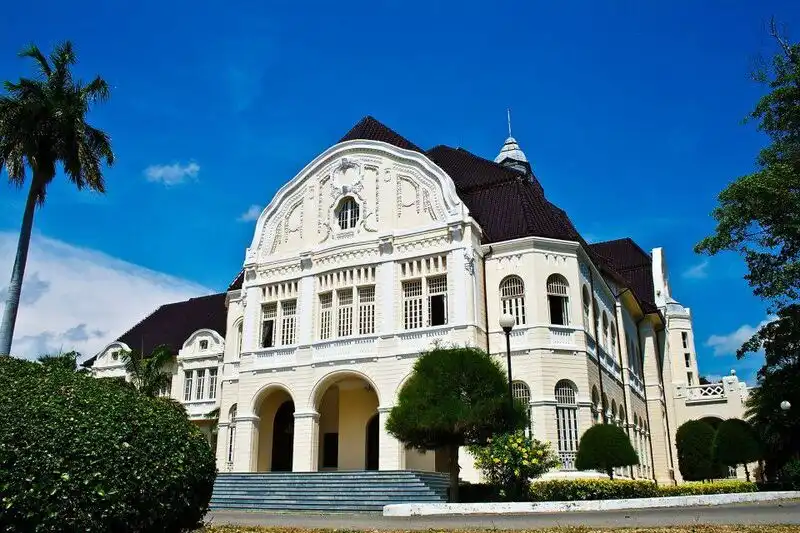
Phra Ram Ratchaniwet (Ban Puen Palace) is one of Phetchaburi’s most distinctive historical attractions, especially if you are used to Thai royal palaces defined by layered roofs, ornate Thai motifs, and a classic temple-palace atmosphere. Arriving at Ban Puen, the first impression feels like stepping into a European mansion intentionally placed in the heart of Phetchaburi. The main building follows Western architectural principles from a period when Siam was increasingly engaging with international styles, creating an overall mood that is elegant, restrained, and formal in a way that clearly contrasts with other attractions in the same province.
The appeal of Phra Ram Ratchaniwet is not only that it provides a beautiful backdrop for photos, but that it stands as tangible evidence of an era when the Thai court was actively adapting to the modern world. The palace is located in Ban Mo Subdistrict, Mueang Phetchaburi District, and is tied to the intention of King Chulalongkorn (Rama V), who wished to build a royal residence for overnight stays during the rainy season. It is said to have been constructed using his personal funds, with land purchased from local residents in the area. This gives Ban Puen a deeper narrative than simply “beautiful architecture”: it represents planning for seasonal living, travel, and the management of a royal residence outside the capital in a practical, reasoned way.
Looking more closely, Phra Ram Ratchaniwet demonstrates how architecture can function as a “language” that communicates the state’s image and its relationship with the outside world. The European design expresses a sense of international modernity, similar in spirit to Western royal residences that emphasize symmetry, crisp lines, and practical spatial engineering. For visitors, this is why touring Ban Puen often feels like reading history through buildings rather than through signage alone. The details of windows, light openings, layout, and the atmosphere of different rooms make the period and its ideas feel concrete and immediately understandable.
Construction is commonly stated to have begun in 1909 and to have been completed in 1916, with completion occurring during the reign of King Vajiravudh (Rama VI). The residence was then given the name “Phra Thinang Sornphet Prasat,” and later renamed “Phra Ram Ratchaniwet” in 1918. This change of name reflects a clearer elevation of the site’s status and function, emphasizing its role as a place for reception and official use rather than only a seasonal retreat.
Another reason Phra Ram Ratchaniwet is compelling as a cultural visit lies in the figures associated with its construction and design. According to widely cited accounts, Chao Fa Boriphat Sukhumphan, Prince of Nakhon Sawan Woraphinit, and Prince Damrong Rajanubhab are mentioned as key leaders overseeing the construction. The design is attributed to Mr. Karl Döring, a German architect. These details offer a clear picture of cross-cultural collaboration that helped European architectural ideas take shape in a Thai provincial setting, both conceptually and in the practical realities of construction.
If you ask what to focus on while touring Ban Puen, the best answer is to begin with the overall structural composition before getting lost in smaller decorative details. European-style palaces often express beauty through proportion, symmetry, and spatial relationships. Standing at a viewpoint where you can see the building as a whole, you can sense the rhythm of rooflines, walls, and the placement of openings that guide natural light into the interior in a deliberate pattern. After that, step closer and notice window frames, moldings, light apertures, and the calm, orderly interior atmosphere. This is why Ban Puen suits visitors who enjoy classic photography: the architecture often “frames itself,” producing polished-looking images with minimal editing.
The experience of visiting Phra Ram Ratchaniwet can shift noticeably depending on the time of day. Mornings tend to be best for exterior photos because the light is less harsh and the temperature is more comfortable. The period near closing can be ideal for those who prefer a quieter walk, as the visitor flow may be lighter. Because this is a royal heritage site, it is best visited with respectful behavior: speak softly, avoid touching displays or restricted areas, and follow staff guidance so that the visit remains smooth and appropriately mindful of the setting.
The historical interest of Phra Ram Ratchaniwet extends beyond its royal origins into later uses. There is information indicating that during the reign of King Prajadhipok (Rama VII), parts of the site were used for educational and training purposes, including a Scout leader school, an agricultural teacher training school, and a local primary school. This perspective helps Ban Puen feel less like a place defined only by the royal court and more like a cultural asset that became connected to Thai society through public development and education. When you tour the palace with this in mind, it becomes easier to picture how the site transitioned across different roles as national contexts changed.
For travelers planning a well-rounded Phetchaburi itinerary, Ban Puen works well as a “central anchor” for a city-based historical route. It sits within the city zone and connects easily by car to other major heritage sites such as Phra Nakhon Khiri Historical Park (Khao Wang), Wat Yai Suwannaram, Wat Mahathat Worawihan, Khao Luang Cave, and Wat Kamphaeng Laeng. If you only have half a day, a sequence that starts at Ban Puen and continues to Khao Wang or one of the main temples can make the city’s historical narrative feel continuous, moving from a European-style royal residence to a hilltop palace and long-established sacred sites.
In practical terms, a visit to Phra Ram Ratchaniwet is generally best planned for at least 60–120 minutes. This allows time for exterior viewing, architectural details, and absorbing the historical storyline. If photography is a priority, consider adding a little extra time to wait for the right light and explore different angles. European-style buildings often look especially striking when sunlight hits the walls and shadows emphasize depth and geometry. The key is not to rush: Ban Puen’s atmosphere is defined by stillness and order, and walking slowly tends to make the visit feel more rewarding.
Getting There From Bangkok, there are two common driving routes. One option is to take Rama II Road south, passing through Samut Sakhon and Samut Songkhram, then connect toward Phetchaburi and enter Mueang District. Another option is to use Phetkasem Road (Highway 4) heading directly to Phetchaburi. Once you reach the city zone, use navigation to pin “Phra Ram Ratchaniwet (Ban Puen Palace), Ban Mo Subdistrict” to enter correctly. If traveling by bus, you can ride from Bangkok’s Southern Bus Terminal to Phetchaburi and then take a local taxi or app-based ride to the palace. By train, you can get off at Phetchaburi Station and continue into town by local transport.
In short, if you want a Phetchaburi attraction that feels different from beaches or cafés, Phra Ram Ratchaniwet offers classic architectural beauty with a meaningful historical storyline. This is a place where you can see Siam’s transition toward modernity through architecture, and where Phetchaburi becomes more than a stopover city, revealing traces of royal history and modern-era thinking embedded in the building’s details. Visiting Ban Puen is an efficient way to add genuine cultural depth to a Phetchaburi trip without needing a long travel time, while still gaining more value than you might expect.
| Place Name | Phra Ram Ratchaniwet (Ban Puen Palace) |
| Address | Ban Mo Subdistrict, Mueang Phetchaburi District, Phetchaburi |
| Place Summary | A European-style royal residence in Phetchaburi, built with personal royal funds as a rainy-season retreat. Known for its classic Western architecture and its value as a historical-cultural visit. |
| Key Highlights | 1) Rare European architecture in a Thai provincial city 2) “European Palace In Phetchaburi” atmosphere with strong photo angles and crisp symmetry 3) Historical narrative linked to Rama V–VI and the role of receiving guests 4) Convenient to combine with Khao Wang, major temples, and Khao Luang Cave within the city |
| Era / History | Commonly stated to have begun in 1909 and completed in 1916 (completed in the reign of Rama VI). Initially named “Phra Thinang Sornphet Prasat,” later renamed “Phra Ram Ratchaniwet” in 1918. Design is attributed to Karl Döring (German), with widely cited accounts mentioning royal figures overseeing construction. |
| Open Days | Daily |
| Opening Hours | 09.00 – 15.30 |
| Getting There (Brief) | Drive from Bangkok to Phetchaburi and pin “Phra Ram Ratchaniwet (Ban Puen Palace), Ban Mo” for correct entry. Or travel by bus/train to Phetchaburi and continue by local taxi or app-based ride. |
| Facilities | Parking area and onsite staff (interior access details may vary depending on site management at the time). |
| Nearby Tourist Attractions (Approx. Distance) | 1) Phra Nakhon Khiri Historical Park (Khao Wang) – 5 km 2) Wat Yai Suwannaram – 4 km 3) Wat Mahathat Worawihan, Phetchaburi – 6 km 4) Khao Luang Cave – 8 km 5) Wat Kamphaeng Laeng – 7 km |
| Nearby Restaurants (Approx. Distance + Phone) | 1) Khao Chae Pa Uen (Phetchaburi) – 7 km – 032-425-362 2) Chan Rung Noodles (Phetchaburi) – 6 km – 032-425-181 3) Ta Tue Siu Mee (Phetchaburi) – 6 km – 032-425-539 4) The Garage Cafe Phetchaburi – 6 km – 089-454-8969 5) Rabieng Rim Nam (Phetchaburi) – 6 km – 032-425-707 |
| Nearby Accommodations (Approx. Distance + Phone) | 1) Sun Hotel Phetchaburi – 7 km – 032-400-000 2) Royal Diamond Hotel Phetchaburi – 7 km – 032-411-061 3) Keeree Boutique Hotel – 6 km – 086-890-8722 4) Chedi View Hostel & Rooftop Bar – 6 km – 090-950-6529 5) A+ Hometel Phetchaburi – 6 km – 097-978-5524 |
| Contact Phone | 065-512-8905, 086-617-4013 |
Frequently Asked Questions (FAQ)
Q: Which days is Phra Ram Ratchaniwet (Ban Puen Palace) open, and what time does it close?
A: It is generally open daily, and the commonly updated visiting hours are 09.00 – 15.30. Morning visits are recommended for more comfortable weather and a smoother walk-through.
Q: How many hours should I plan for a worthwhile visit?
A: For a balanced visit that includes walking and photography, plan 1 – 2 hours. If you prefer reading details and focusing on architectural elements, 2 – 3 hours is more comfortable.
Q: What makes Ban Puen Palace different from other attractions in Phetchaburi?
A: Its European architectural style creates a classic Western-palace atmosphere with strong symmetry and clean lines, making it highly photogenic and historically meaningful, especially in its links to the era of Rama V–VI.
Q: Can I take photos, and is there any etiquette I should follow?
A: Photos are generally allowed, but visitors should be respectful: keep voices low, avoid touching displays or restricted areas, and avoid blocking other visitors.
Q: What nearby places are good to visit in the same day?
A: Good same-day options include Phra Nakhon Khiri (Khao Wang), Wat Yai Suwannaram, Wat Mahathat Worawihan, Khao Luang Cave, and Wat Kamphaeng Laeng, all of which are convenient within the city zone.
 Category: ●Art, Culture and Heritage
 Group: ●Royal Palace
Last Update : 8 MonthAgo
 Last Update : 8 MonthAgo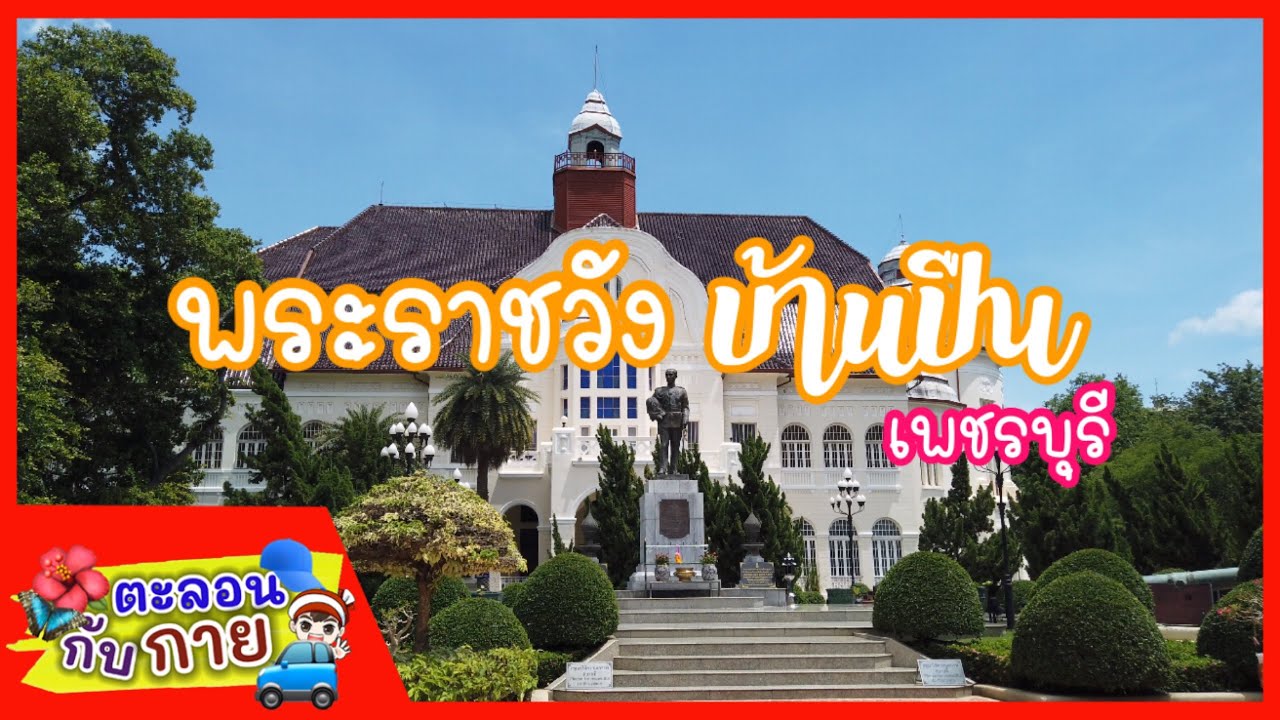
 Click to Access the Navigation Map GPS
Phra Ram Ratchaniwet (Ban Puen Palace) Map
Gellery
Recommend

 Historical Sites and Monuments(1)
 Landmarks and Memorials(1)
Royal Palace(2)
Landmarks and Memorials(1)
Royal Palace(2)
 Art, Craft Centres, Tradition(8)
 Museums(1)
 Educational Places
 Educational Gardens, Farm(4)
 Places of Worship
 Temple(72)
 Other Sacred Sites(6)
 Research and Development
 Royal Project(6)
 Suburban Living
 Village, Community(10)
 Floating Market(1)
 Nature and Wildlife
 National Parks and Marine Reserves(4)
 Mountain (Doi)(3)
 Dam, Reservoir, Lake(3)
 Waterfalls(5)
 Hot Springs(1)
 Caves(13)
 River, Canal(1)
 Bays and Beaches(11)
 Islands(1)
 Other natural attractions(10)
 Entertainment and Agricultural
 Farms, Parks and Ecotourism(3)
 Theater(1)
 Outdoor and Adventure Activities(1)
 Travel Articles, Recipes
 Travel Review, Food Review(3)


