
 Home
Home North(
 Chiang Mai(


Wat Nong Prong
Rating: 4/5 (4 votes)
 Search By
  Map
Map 
 Have Map
  No Map
Phetchaburi attractions
Attractions in Thailand
Open Days: Please check with the temple before traveling
Opening Hours: Please check with the temple before traveling
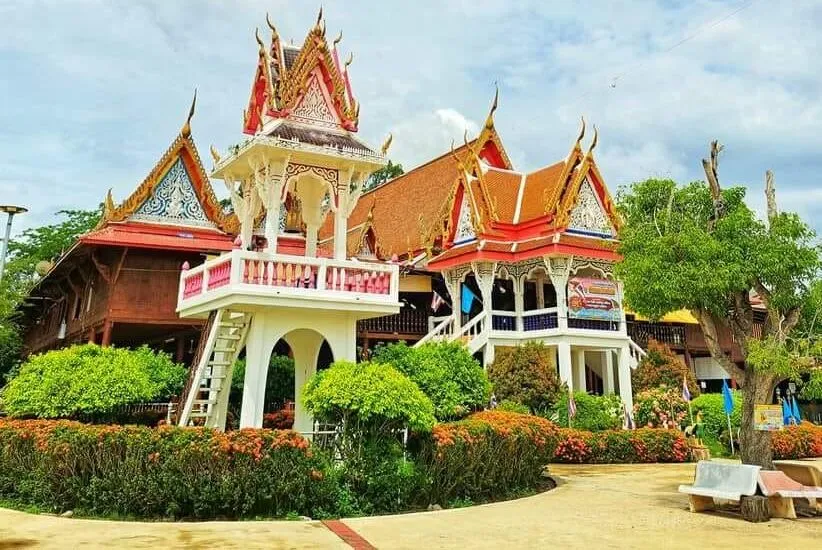
Wat Nong Prong is the main temple of Nong Prong Subdistrict in Khao Yoi District, Phetchaburi Province. Many people recognize it as a community temple with spacious grounds, abundant shade, and a noticeably green, peaceful atmosphere. Rather than being designed as a commercial tourist attraction, the temple remains a living religious space maintained by the local community, used for Buddhist activities, and serving as an important gathering point for the subdistrict.
The appeal of Wat Nong Prong is not only its calm, leafy setting and open space, but also the chance to see multiple “layers of time” coexisting in one place. The temple has existed for a long period, and its buildings have been continuously renovated to meet the community’s needs. As newer structures were built, some older elements gradually disappeared. Even so, the temple has preserved key remnants that allow later generations to “read the past” through tangible evidence—especially the small satellite stupas (chedi rai) standing in front of the former ordination hall (ubosot) that has since been dismantled, and the boundary stones (sema) from the earlier ubosot, which still mark the sacred monastic boundary and preserve memories of the former sacred space.
For travelers who enjoy visiting temples with local stories, Wat Nong Prong is best experienced at an unhurried pace. Because the temple grounds are wide and well-shaded, walking around is more comfortable than at crowded temples with limited space. You can explore step by step—from the temple yard that functions as a communal area, to the archaeological features that reflect older artistic and belief traditions, and then back to present-day functional spaces such as the newer ubosot, sermon hall, and community activity areas. This movement helps visitors visualize the “transition” of how rural Thai temples grow and adapt as society changes.
As the principal temple of the subdistrict, Wat Nong Prong has a role far beyond prayer and merit-making. It is a center for major rites and ceremonies, from ordinations and funerals to Kathin and Pha Pa (robe-offering) events and important preaching traditions, as well as broader public activities at the subdistrict level. Community meetings, mutual help during urgent situations, and intergenerational gatherings often naturally take place around a temple like this. This “community temple” character means that visiting Wat Nong Prong is not simply about viewing a site—it is also about seeing local life in motion, held together by shared faith.
In terms of its history, Wat Nong Prong is described as a long-established temple, with its structures continually renovated over time as needs changed. When the earlier ubosot was dismantled and a newer ubosot was constructed, the most visible surviving evidence from the older phase includes the chedi rai in front of the former ubosot and the original ubosot sema stones. These remains reflect both material form and the concept of the sacred monastic boundary. Because such evidence is still present, Wat Nong Prong holds added cultural value: visitors do not see only newer buildings, but also traces of the past that remain standing, inviting questions and learning.
What makes Wat Nong Prong especially meaningful is the recorded “archaeological evidence” within the temple grounds. It is noted that there are at least 2 chedi rai, as well as small red sandstone sema stones believed to have belonged to the former ubosot. These features function like a book written without letters, expressed instead through proportions, bases, and decorative details. By reading architectural elements closely, we can sense the craftsman’s intention and the beliefs embedded in the structure—for example, stacked bases that elevate the stupa’s status, stucco ornament that communicates both beauty and symbolism, and decorative tiers that reflect artistic influences from particular periods.
The first chedi rai is described as a “twelve-cornered stupa” (a recessed-corner plan), built of brick coated with plaster and decorated with stucco patterns. Its base begins with 2 stepped layers of plinth-like courses, then rises into a lion-leg base adorned with stucco ornament. Decorative details extend from the upper band of the lotus-bud base. Above this appears a tier described as kinnari or a “yak carrying” tier, followed by clustered moldings that support a projecting molding beneath the bell’s rim. The bell is slender in form and decorated with interlaced motifs and a kala (a guardian face motif). The upper finial has completely collapsed, but the identity of the monument remains clearly legible through the surviving base and bell, which strongly convey craftsmanship and aesthetic taste of its era.
The second chedi rai is also a twelve-cornered stupa built of brick and plaster. Its lowest base is a plinth, above which is a lotus-bud base alternating with a lion base, then clustered moldings supporting a slender bell. The uppermost portion survives only as a damaged throne base (banlang). When compared to the first stupa, the second shares the same core “formal language” while differing in certain details. This makes the walk more engaging, as visitors can observe where the craftsman emphasized stability through base layering, how decorative tiers are arranged, and whether certain areas show evidence of later repair.
Another important feature is the set of small red sandstone sema stones. These are stated to have been the boundary stones of the former ubosot, and they are now used as the sema of the new ubosot. The stones have a rounded, pointed top, with a curved profile that narrows at the waist, and include an element referred to as “tua-ngao.” The main sema is described as resembling a pair of lungs. Sema stones mark the sacred boundary for major monastic rites, functioning as the physical definition of the ubosot’s consecrated space. Therefore, reusing the earlier sema stones is a clear symbolic bridge between past and present: even though the ubosot building changed, the sanctity of the ritual boundary continues and is honored through the continuation of the original sema.
When walking through the archaeological features of the temple, it is worth doing more than taking a quick photo and moving on. These stupas and sema are not simply old objects; they are a “language of the community” that indicates how belief systems, ritual structures, and artistic values once operated here. Observing stucco motifs such as the kala face, or the arrangement of lion-leg bases and layered moldings, helps reveal that the builders aimed for dignity and reverence, creating monuments designed to be “markers of faith” rather than mere decoration.
The temple environment is also described as notably green and shady, which matches the character of many central Thailand rural temples that typically include tree-lined open areas and broad communal grounds. Morning is often the best time to visit because the weather is cooler and the light helps reveal details in stucco work and surface texture. If you visit in the afternoon, bringing water and a hat can be helpful, especially if you plan to walk around the grounds to locate the former ubosot area and the chedi rai positions.
As a cultural destination, Wat Nong Prong suits travelers who appreciate places that are “simple but meaningful.” It may not be as visually dramatic as major tourist temples, yet it offers value as a subdistrict temple reflecting real community life, with archaeological traces that add substance and story to the visit. You can plan a half-day or one-day trip with Wat Nong Prong as a primary stop, then continue to other points in Khao Yoi District or into Phetchaburi town to explore the old-town atmosphere and the province’s well-known local food.
Getting There You can reach Wat Nong Prong by driving along Phetkasem Road (Highway 4). From Khao Yoi District toward Mueang Phetchaburi District, look for the right-hand turn between kilometer markers 144–145. From the junction, it is about 500 meters to the temple.
If you drive from Bangkok via Phetkasem Road, Wat Nong Prong is relatively easy to access because it is close to the main highway. As you approach the area, slow down and watch carefully for the turnoff, especially if you are unfamiliar with the route. The access road leads into local community lanes. Setting your map destination to “Wat Nong Prong, Khao Yoi, Phetchaburi” can reduce confusion. After turning in, continue about 500 meters until you reach the temple area, then park in designated spaces or wherever you do not block local traffic.
If your main purpose is to view the archaeological evidence, walk carefully and respect the area. Do not climb onto the chedi or touch fragile stucco details directly, as older plaster work can be easily damaged by pressure or moisture from hands. Viewing from a small distance and observing with care helps preserve these remains for the future and is appropriate etiquette for both a religious site and a heritage place.
| Summary | The principal temple of Nong Prong Subdistrict, known for its shady, spacious grounds and important archaeological evidence, including 2 chedi rai and older ubosot sema stones that continue to be used. |
| Address | Moo 4, Nong Prong Subdistrict, Khao Yoi District, Phetchaburi 76140, Thailand |
| Highlights | Two twelve-cornered chedi rai (brick and plaster) with notable base structures and stucco decoration, original red sandstone sema stones from the former ubosot reused for the new ubosot, and a calm, green, spacious temple environment suitable for quiet walking and learning. |
| Abbot / Caretaker | Phra Athikan Samian Aphassaro |
| Nearby Tourist Attractions | 1) Tham Khao Yoi Cave – approx. 8 km 2) Khao Yoi Market / District Area – approx. 9 km 3) Phra Nakhon Khiri Historical Park (Khao Wang) – approx. 25 km 4) Wat Mahathat Worawihan (Phetchaburi Town) – approx. 27 km 5) Bang Tabun Community (Ban Laem) – approx. 30 km |
| Nearby Restaurants | 1) Brown Canyon – approx. 10 km – 082-305-5194 2) Pa Song Phochana – approx. 12 km – 032-895-819 3) Krua Ban Khwan – approx. 13 km – 086-939-7979 4) IKO Camp & Cafe – approx. 16 km – 092-464-6929, 086-616-8282 5) Khao Kaeng Tamrap Mae Luan – approx. 22 km – 032-896-941, 090-916-6659 |
| Nearby Accommodations | 1) LeMae Residence – approx. 14 km – 095-458-8836 2) Pop House Hotel – approx. 16 km – 032-706-796 3) TPN Homestead – approx. 15 km – 092-465-9938, 087-922-6414 4) Wipula House – approx. 15 km – 088-794-1955, 088-794-4155, 095-596-5442 5) NK Place – approx. 14 km – 086-314-4522 |
Frequently Asked Questions (FAQ)
Q: Where is Wat Nong Prong, and what type of temple is it?
A: Wat Nong Prong is located in Moo 4, Nong Prong Subdistrict, Khao Yoi District, Phetchaburi Province. It is the principal subdistrict temple and serves as a center for religious activities and key community merit-making events.
Q: What are the key archaeological highlights at Wat Nong Prong?
A: The main highlights are 2 twelve-cornered chedi rai (brick and plaster) and small red sandstone sema stones from the former ubosot that remain preserved and have been reused for the new ubosot.
Q: What is notable about the first chedi rai?
A: The first stupa has a two-tiered plinth base, followed by a lion-leg base, with tiers described as kinnari or “yak carrying” elements, and a slender bell decorated with interlaced motifs and a kala face. Although the finial has collapsed, the base and bell still clearly show its artistic form.
Q: Why are the red sandstone sema stones important?
A: Sema stones mark the consecrated boundary used for major monastic rites in the ubosot. At Wat Nong Prong, the sema from the former ubosot have been carried forward and reused, showing continuity of the sacred ritual boundary from past to present.
Q: How do I get to Wat Nong Prong in a simple way?
A: Drive along Phetkasem Road and look for the right-hand turn between kilometer markers 144–145. From the junction, it is about 500 meters to the temple.
Q: If I want to see the old remains, how should I behave?
A: Dress respectfully, walk carefully, avoid climbing on the chedi or touching fragile stucco and old surfaces directly, and keep quiet so you do not disturb monks or local community activities.
 Wat Nong Prong Map
 Category:
  Group:
  Tag: ●Wat Nong Prong●wat nong prong ●khao yoi temple ●phetchaburi temple ●things to do in khao yoi ●cultural attractions phetchaburi ●thai temple archaeology ●chedi rai thailand ●sema stones thailand ●historical temple phetchaburi ●wat in central thailand Last Update: 1 MonthAgo
Comment
 Nearby Attractions
| Keyword (Advance) |
 Region
|
 Muang Phetchaburi(
 Copyright 2012,