

 Home
Home Chiang Mai(




Tourist village (Thai Song Dam)
Rating: 4/5 (5 votes)
 Search By
  Map
Map 
 Have Map
  No Map
Phetchaburi attractions
Attractions in Thailand
Open Days: Open daily
Opening Hours: 09:00 – 16:00 (Advance contact recommended for group visits or cultural performances)
Thai Song Dam (Lao Song) Cultural Tourism Village, Khao Yoi District, Phetchaburi Province is a living ethnic heritage community where the concept of “community-based tourism” takes on genuine meaning. Visitors do not simply walk through static displays and leave; instead, they step into a cultural landscape shaped by generations of Thai Song Dam people—also known as Lao Song—who have settled in Phetchaburi for over 200 years. The strength of this destination lies in its authenticity. It remains a real community with residents who actively preserve and interpret their own history, language, beliefs, textiles, and rituals rather than presenting culture as a staged backdrop for tourism.
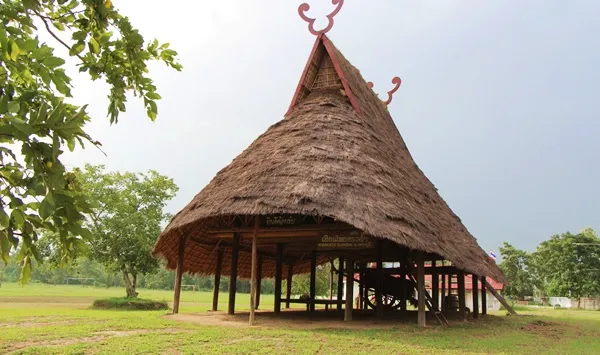
If you are looking for a different kind of experience in Phetchaburi—one that moves beyond beaches and cafés and invites reflection on cultural roots and ethnic diversity—this village offers a compelling alternative. The Thai Song Dam are widely recognized for their distinctive black attire, but clothing is only one element of a complex cultural system. Here, visitors learn about traditional house layouts, domestic tools, weaving techniques, ancestral belief systems, and social structures that have sustained the community across generations. A visit to the cultural center feels like opening another chapter of Phetchaburi’s history—one that many travelers may not have previously encountered.
Inside the cultural center, exhibitions present the historical migration of the Thai Song Dam into Thailand, alongside displays of traditional houses and household objects that reveal daily life in tangible detail. Textile exhibits highlight garment construction, symbolic embroidery, and the cultural meaning of black clothing beyond aesthetics. Dedicated sections also introduce the community’s traditional language and script—key markers of identity and continuity. Rather than functioning solely as a museum, the center acts as a collective memory archive through which the community communicates with younger generations and visitors alike.
Ritual practices are contextualized with clarity, allowing visitors to understand their social function. Marriage ceremonies reflect kinship structures and communal obligations, while the “Sen Ruen” house ritual connects ancestral spirits with household well-being. These traditions are presented not as mystical curiosities but as integral frameworks for social order and moral guidance. Through structured interpretation, complex belief systems become accessible, helping visitors appreciate how ritual reinforces cohesion and continuity.
For organized groups seeking cultural demonstrations—such as traditional performances, folk games, weaving workshops, or ritual simulations—advance coordination is recommended. Activities are community-led and require preparation, as they are rooted in real practice rather than scheduled commercial shows. This approach enhances the depth and integrity of the experience, ensuring that visitors engage with living culture rather than theatrical reproductions.
Textile weaving remains one of the most valued skills within the village. Demonstrations reveal the patience and technical precision required in producing handwoven fabrics. Purchasing locally made handicrafts directly supports community artisans and contributes to sustainable cultural preservation. Spending time observing or conversing with a weaver often becomes one of the most memorable aspects of a visit, revealing how heritage survives through quiet, consistent craftsmanship.
For travelers seeking deeper immersion, homestay options allow guests to stay with Thai Song Dam families in traditional-style houses. This arrangement provides insight into daily routines, meal preparation, family interactions, and spatial organization within the household. As with group activities, advance booking is essential to allow hosts to prepare appropriately and maintain mutual respect between visitors and residents.
Getting There The Thai Song Dam Cultural Tourism Village is located in Khao Yoi District, Phetchaburi Province. Travelers driving from Bangkok or central Phetchaburi can use Highway No. 4 (Phetkasem Road), pass the Khao Yoi intersection, continue toward Phetchaburi town for approximately 1 kilometer, then turn left near Ban Wang School and follow the local road into the cultural center area. Public transport travelers may disembark in Khao Yoi or Phetchaburi town and continue via local transport services. Advance coordination is advisable if planning to attend demonstrations or stay overnight.
The most suitable time to visit is during the morning or early afternoon, allowing sufficient time to explore exhibitions without haste. Soft natural light during these hours enhances photography, particularly of textiles and architectural details. Visiting on days when cultural activities are scheduled provides a more comprehensive experience, but prior arrangement is essential to ensure availability and proper preparation by the community.
Feedback from visitors consistently highlights the educational value and authentic atmosphere of the village. Many appreciate the structured presentation of ethnic history and the opportunity to interact directly with community members. Families often find the site appropriate for children and students learning about cultural diversity. Some visitors recommend allocating ample time to explore details within the exhibits and arranging performances in advance for a fuller experience.
Overall, the Thai Song Dam Cultural Tourism Village in Khao Yoi offers a meaningful exploration of identity, continuity, and adaptation. It is an ideal destination for travelers interested in anthropology, cultural heritage, and community-based tourism. By dedicating time and attention to the experience, visitors gain not only knowledge of a distinct ethnic group but also a broader understanding of how cultural diversity enriches the story of Phetchaburi and Thailand as a whole.
| Place Name | Thai Song Dam Cultural Tourism Village (Thai Song Dam Cultural Center), Khao Yoi |
| Address | Moo 5, Khao Yoi Subdistrict, Khao Yoi District, Phetchaburi Province, Thailand |
| Key Features | Ethnic heritage learning center featuring traditional houses, costumes, language, rituals, weaving demonstrations, and community-based activities |
| Area Type | Ethnic village + Community museum + Cultural activity zone (advance booking recommended) |
| Travel Information | Accessible via Highway 4 (Phetkasem Road), turn near Ban Wang School toward the cultural center area |
| Current Status | Open as a cultural learning destination and community-based tourism site |
| Contact Number | +66 32 562 061 ext. 24 +66 32 561 200 |
Frequently Asked Questions (FAQ)
Q: What is the Thai Song Dam Cultural Tourism Village?
A: It is a community-based cultural destination in Khao Yoi District where visitors can learn about the Thai Song Dam (Lao Song) ethnic group, including their history, language, clothing, rituals, and daily life.
Q: What are the opening hours?
A: The village is generally open daily from 09:00 to 16:00. Advance contact is recommended for group visits or organized cultural performances.
Q: What can visitors see inside the cultural center?
A: Exhibits include migration history, traditional houses, household tools, ethnic costumes, language and script displays, and explanations of key rituals such as marriage ceremonies and the Sen Ruen ritual.
Q: Are cultural performances available?
A: Yes, but they require advance coordination with the community, as performances and demonstrations are arranged upon request rather than on a fixed daily schedule.
Q: Is homestay accommodation available?
A: Yes, visitors may stay with local families in traditional-style houses, but reservations must be made in advance.
Q: Can visitors travel without a private car?
A: Yes, travelers can reach Khao Yoi or Phetchaburi town via public transport and continue locally, though private transportation or pre-arranged transfers are more convenient for in-depth visits.
 Tourist village (Thai Song Dam) Map
 Category:
  Group:
  Tag: ●Tourist village (Thai Song Dam)●thai song dam village khao yoi ●thai song dam cultural center phetchaburi ●lao song community thailand ●ethnic tourism phetchaburi ●khao yoi cultural attraction ●thai song dam homestay ●sen ruen ritual thailand ●community-based tourism thailand ●ethnic minority thailand travel ●cultural village phetchaburi Last Update: 3 DayAgo
Comment
 Nearby Attractions
| Keyword (Advance) |
 Facebook Fanpage
 Region
 Art, Culture and Heritage
 Historical Sites and Monuments(
 Landmarks and Memorials(
 Royal Palace(
 Art, Craft Centres, Tradition(
 Museums(
 Educational Places
 Educational Gardens, Farm(
 University
 Places of Worship
 Temple(
 Other religious and spiritural sites(
 Research and Development
 Royal Project(
 Floating Market(
 Nature and Wildlife
 National Parks and Marine Reserves(
 Mountain (Doi)(
 Dam, Reservoir, Lake(
 Waterfalls(
 Hot Springs(
 Caves(
 River, Canal(
 Bays and Beaches(
 Islands(
 Other natural attractions(
 Entertainment and Agricultural
 Zoos and Aquariums(
 Farm, Parks, Gardens and Ecotourism(
 Waterpark(
 Theater(
 Outdoor and Adventure Activities(
 Travel Articles, Recipes
 Travel Review, Food Review(
 Copyright 2012,