
 Home
Home North(
 Chiang Mai(


Wat Sanam Phram
Rating: 2.9/5 (18 votes)
 Search By
  Map
Map 
 Have Map
  No Map
Phetchaburi attractions
Attractions in Thailand
Open Days: Daily
Opening Hours: Recommended visiting time 08:00 – 17:00 (some areas may be temporarily restricted during religious ceremonies)
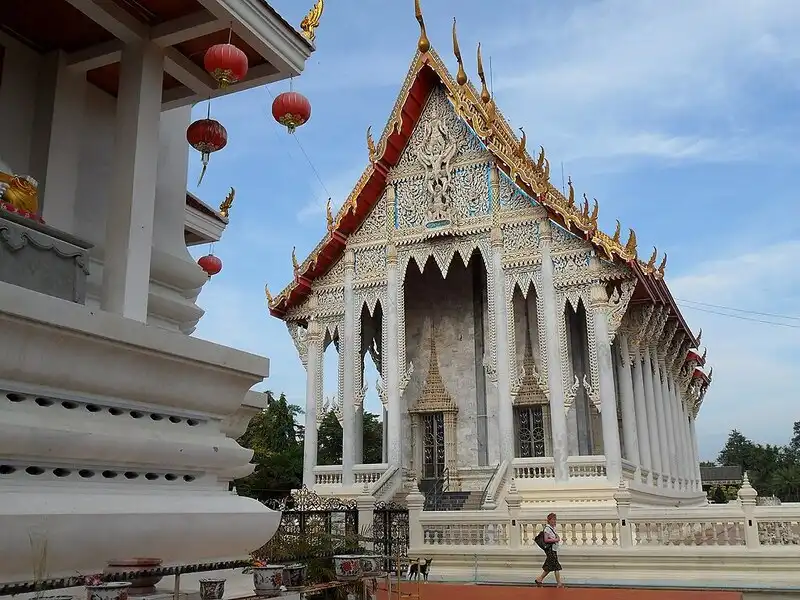
Wat Sanam Phram, Phetchaburi is a Dhammayut (Thammayut) temple located on Matayawong Road in Tha Rap Subdistrict, Mueang Phetchaburi District. It is often described as an “old temple from the reign of King Rama IV,” closely connected to the period when King Mongkut (Rama IV) ordered the construction of Phra Nakhon Khiri (Khao Wang) and established temples in Phetchaburi as models of Dhammayut discipline and order. Visiting Wat Sanam Phram is therefore not only about paying respects; it is also like stepping into an “architectural language” that tells the story of a time when Siam was moving from a traditional world toward modernity, expressed through Thai architecture blended with Western aesthetics and the strong Chinese influence that was especially popular in Phetchaburi during that era.
What makes Wat Sanam Phram particularly compelling is its identity as a Rama IV–era temple that does not rigidly separate art from religion, but instead embraces hybrid design with thoughtful balance. This is evident in the concept of building a “new ordination hall (ubosot)” and adding monks’ quarters, along with decorative choices that carry a Chinese-and-Western flavor. Such stylistic fusion reflects the mindset of elites and master craftsmen at a time when Siam was engaging more intensely with the West. Observing the details of this temple feels like reading a map of societal transformation: the choice was to “adapt” rather than “sever,” preserving religious and cultural foundations while allowing new forms to enrich both beauty and meaning.
The spiritual heart of the temple lies in its ubosot and key monastic buildings. The ubosot is built of brick and plaster and clearly shows a mix of Thai, Eastern, and Western influences. At the rear, it features a transverse projection (mukh khwang). The single-tier roof extends with wing-like eaves on all four sides, supported by surrounding columns. Between the columns are arched openings, which evoke Western architectural rhythms of arcades and apertures, while the roofline and finials retain a distinctly Thai spirit. The building’s beauty is not in being “new,” but in how its borrowed forms from multiple cultures harmonize without diminishing the sacred character of the space.
Looking up at the roof, one striking feature is the chofa and hang hong shaped as naga heads. Using naga imagery on temple roof ornaments is common in Thai Buddhism, as the naga is closely tied to Buddhist narratives and symbolizes protection of the Dharma. In Wat Sanam Phram, however, the form is integrated with the hall’s broader composition so that the naga seems to function as a bridge between enduring belief and the era’s contemporary aesthetic sensibilities.
Another highlight for lovers of craftsmanship is the gable (na ban) and its stucco ornamentation, as well as the carved wooden doors and windows. These works are associated with Khru Chaloem Phueng Taeng, a renowned Phetchaburi master artisan credited with the gable stucco motifs and the overall design of the woodcarving. This level of detail makes Wat Sanam Phram more than a beautiful temple; it becomes an open-air classroom for the “Phetchaburi school of craftsmanship,” known for precision, delicacy, and lively linework. The gable stucco also reflects Chinese influence popular at the time, such as animal figures including Chinese lions and birds, adding layers of meaning and visual richness within a religious setting.
Beyond the ubosot, the boundary markers (sema stones) provide another useful clue to the period. Wat Sanam Phram is said to feature rectangular sema stones, a form that was especially popular during the reign of King Mongkut (Rama IV). Observing sema stones across Thai temples can often reveal differences in period even without signage, because their shapes and styles reflect the standards and tastes of a particular era. Here, the rectangular form works like a “seal of the time,” reinforcing the temple’s Rama IV identity in a tangible way.
The monks’ residences (kuti) present two notable types that illustrate architectural transition. The first is a twin two-storey masonry residence influenced by Western design, with “gingerbread” fretwork along the eaves. This decorative woodwork is a hallmark of Western-influenced architecture in the mid-Rattanakosin era; it is not only ornamental but also creates shadow patterns and rhythm, giving the façade a softer, more animated character. The second type is a traditional Thai wooden residence with samruat-style walling, firmly rooted in vernacular Thai architecture. Seen together, these two types feel like a quiet dialogue between “Thai house” and “new-style house,” coexisting peacefully within the temple grounds rather than competing.
As for sacred objects, the temple houses a Buddha image in the Maravijaya posture (subduing Mara) in a pavilion. This posture is widely revered in Thai temples because it recalls a pivotal moment in the Buddha’s life: victory over Mara through mindfulness and wisdom. Paying respects to a Maravijaya Buddha at Wat Sanam Phram can feel like a personal reminder to return to Buddhism’s core: training the mind to remain steady. After admiring the architecture, sitting quietly before the main image can bring the entire experience together into something both “beautiful” and “still.”
From the perspective of history and present-day standing, Wat Sanam Phram is a Dhammayut temple in Tha Rap Subdistrict, Mueang Phetchaburi District, and it has been listed or presented through public-sector channels as a place for Dhamma practice. This indicates that the temple continues to play an active role in religious life and community practice rather than functioning solely as a photogenic site. The temple also appears in business directories as a contactable place, supporting its current, operational presence.
Getting There If you start from central Phetchaburi, reaching Wat Sanam Phram is straightforward because the temple is within Mueang District and located on Matayawong Road in Tha Rap Subdistrict. A practical route is to use main roads within the municipal area, head toward the Tha Rap zone, and then follow road signs or navigation apps to Matayawong Road. Upon arrival, look for the temple walls and the ubosot structure. If traveling by private car, it is recommended to check parking availability inside the temple or nearby, and to avoid peak periods during major merit-making events when the area may be crowded. If using public transport, local songthaews or hired vehicles in Phetchaburi town can be an option; simply tell the driver “Matayawong Road, Wat Sanam Phraam” to be dropped as close to the entrance as possible.
The atmosphere around the temple feels like “Phetchaburi at a slower tempo”—not flashy, but rich in details that reward attentive eyes. If you prefer temples that are not defined solely by grandeur, but by the depth of Thai architecture blended with Western elements, Wat Sanam Phram naturally encourages you to slow down. Every corner offers a story, from the arches between columns to the stucco animal figures on the gable, and the shifting shadows cast by the gingerbread fretwork on the two-storey twin residence.
For a respectful visit, dress modestly and keep your voice low. If you wish to take photos around the ubosot or in areas where ceremonies are taking place, consider the appropriateness of the moment. Dhammayut temples often emphasize discipline and proper conduct, especially during chanting or when devotees are making merit. If you plan to offer sangkhathan sets or donations, it is best to ask staff or caretakers on-site for the most appropriate way to proceed.
As a meaningful travel stop, Wat Sanam Phram fits well into a Phetchaburi half-day itinerary. It is close to key temples and popular food zones in town. You can visit the temple in the morning to pay respects and explore the architecture, then continue to well-known local flavors such as khao chae, lod chong with palm sugar, or riverside eateries, and finish with heritage landmarks such as Khao Wang or other major temples. This kind of route works well for Thai visitors seeking an easy trip near Bangkok and for international travelers who want to understand Thai culture through “temples & craftsmanship” in a way that feels distinct from big-city sightseeing.
Another aspect that completes the picture is understanding Dhammayut in the Phetchaburi context. The Dhammayut order is rooted in principles of monastic discipline and a return to correct Vinaya practice. That Wat Sanam Phram was established in the same broader context as Phra Nakhon Khiri helps illustrate how Phetchaburi, at the time, was a place where state and institutions invested seriously in governance, culture, and religion. The temple thus becomes more than a site for rituals; it functions as a community institution of both knowledge and beauty.
If you are particularly interested in Thai architecture blended with Western influence, consider focusing on three layers: (1) clearly Western-leaning elements such as arches, column rhythms, and the hall’s projection layout; (2) Chinese-influenced motifs such as gable animals and auspicious symbolism; and (3) the Thai core, including roof finials, naga imagery, and the sacred logic of the ubosot interior. Seen this way, the “fusion” here is not a random mixture, but a deliberate composition where each tradition has a role and the overall result genuinely holds together.
For visitors who want to connect the experience to history, it helps to view Wat Sanam Phram as part of the Rama IV era when Siam was increasingly communicating with the outside world. Renovating and enhancing temples in a Chinese-and-Western style echoes architectural developments seen in the capital during the same period. Yet Wat Sanam Phram sits in Phetchaburi—a gateway city, an old city, and a city of artisans—so the “Phetchaburi character” appears in the fine workmanship: the stucco details, the woodcarving, and the careful refinement that local craftsmen are known for.
In terms of stewardship and continuity, online monk records mention Phra Phrom Wachirasunthon (Ueam Chutintharo) as being associated with the position of abbot of Wat Sanam Phraam in administrative-history data. This points to continuity in monastic leadership and the temple’s relationship with broader ecclesiastical structures at the provincial or regional level.
In closing, Wat Sanam Phram may not be the most talked-about temple when Phetchaburi is mentioned, yet that relative quiet can be an advantage. It allows for a calmer visit with room to truly see the details. For travelers who want a deeper, more artisanal view of Phetchaburi—those who appreciate craftsmanship and prefer learning history through real places rather than quick check-ins—Wat Sanam Phram is a highly worthwhile choice. If you are looking specifically for a Dhammayut temple in Phetchaburi with a Rama IV character and engaging Thai architecture blended with Western elements, this temple deserves a serious place on your itinerary.
| Place Name | Wat Sanam Phram, Phetchaburi |
| Address | 321 Tha Rap Subdistrict, Mueang Phetchaburi District, Phetchaburi 76000, Thailand |
| Temple Phone Number | 032-428-950 |
| Type / Order | Local Temple – Dhammayut (Thammayut) Order |
| Place Summary | A Dhammayut temple in Phetchaburi commonly associated with the Rama IV era, noted for an ubosot and monastic buildings that blend Thai, Chinese, and Western architectural aesthetics. |
| Key Highlights | Brick-and-plaster ubosot with a rear transverse projection, arched openings between columns, a roof with naga-shaped finials, gable stucco animal motifs (e.g., Chinese lions), credited fine stucco and woodcarving by a Phetchaburi master artisan, plus two types of monks’ residences (a two-storey twin masonry building with gingerbread fretwork and a traditional Thai wooden kuti with samruat-style walling). |
| Caretaker / Abbot (As Listed Online) | Phra Phrom Wachirasunthon (Ueam Chutintharo) |
| Getting There | Located on Matayawong Road in Tha Rap Subdistrict, Mueang Phetchaburi. From central Phetchaburi, follow main municipal roads toward Tha Rap and set your navigation destination to “Wat Sanam Phraam, Phetchaburi.” |
| Current Status | Open for merit-making and visits under normal conditions (please respect ceremony times and chanting periods). |
| Nearby Attractions (Driving Distance – Approx.) | 1) Wat Mahathat Worawihan (Phetchaburi) – ~1 km 2) Phra Nakhon Khiri (Khao Wang) – ~4 km 3) Wat Yai Suwannaram Worawihan – ~2 km 4) Phetchaburi Riverside Community/Market Area – ~2 km 5) Wat Kamphaeng Laeng – ~3 km |
| Popular Restaurants Nearby (Driving Distance – Approx. + Phone) | 1) Ow-Thoeng Nai Ki (desserts / lod chong / ice cream) – ~1 km – Tel. 081-855-8819, 081-852-3350 2) Phen Prik Phet (noodles) – ~2 km – Tel. 032-412-990 3) Jiam Liang Sia Roast Pork Rice – ~2 km – Tel. 032-415-085 4) Mae On Khao Chae (riverside market area) – ~2 km – Tel. 089-410-1696 5) Rabiang Rim Nam Phetchaburi – ~3 km – Tel. 032-425-707 (or 098-051-5636) |
| Popular Accommodations Nearby (Driving Distance – Approx. + Phone) | 1) Royal Diamond Hotel – ~5 km – Tel. 032-411-061 2) Sun Hotel Petchaburi – ~6 km – Tel. 032-400-000, 085-832-8282 3) Phetch House Hotel – ~5 km – Tel. 032-426-375, 080-787-8111 4) 99/9 BOX HOTEL – ~6 km – Tel. 082-633-3336, 082-554-6615 5) The Peach Hotel Phetchaburi – ~6 km – Tel. 061-430-5723, 032-893-260 |
Frequently Asked Questions (FAQ)
Q: Where is Wat Sanam Phram in Phetchaburi located?
A: It is on Matayawong Road in Tha Rap Subdistrict, Mueang Phetchaburi District, Phetchaburi.
Q: Is Wat Sanam Phram a Dhammayut (Thammayut) temple?
A: Yes. It is a temple under the Dhammayut order and is often discussed within the religious context of Phetchaburi.
Q: What are the main architectural highlights of Wat Sanam Phram?
A: The ubosot and monastic buildings blend Thai, Chinese, and Western aesthetics, including arched openings between columns, gable stucco animal motifs (such as Chinese lions), and a two-storey twin residence featuring gingerbread fretwork.
Q: What is the best time to visit Wat Sanam Phram?
A: Morning to afternoon is recommended (around 08:00–17:00) for better light and clearer viewing, and to avoid times when some areas may be limited due to ceremonies.
Q: What should I wear when visiting the temple?
A: Dress modestly (avoid sleeveless tops and short bottoms), keep quiet, and respect ceremony areas, especially around the ubosot.
Q: How can I contact Wat Sanam Phram directly?
A: You can call the temple at 032-428-950.
 Wat Sanam Phram Map
 Category:
  Group:
  Tag: ●Wat Sanam Phram●wat sanam phram phetchaburi ●wat sanam phraam phetchaburi ●dhammayut temple phetchaburi ●rama iv era temple ●thai-western blended temple architecture ●chinese-western style ubosot ●phetchaburi temple heritage ●wat sanam phram ubosot ●phetchaburi cultural travel ●temples in phetchaburi Last Update: 1 MonthAgo
Comment
 Nearby Attractions
| Keyword (Advance) |
 Region
|
 Muang Phetchaburi(
 Copyright 2012,