
Main >Central
>Phetchaburi >Kaeng Krachan
>Kaeng Krachan
> Ban Phu Khem Eco-Tourism Project (Homestay)
TL;DR: Ban Phu Khem Eco-Tourism Project (Homestay), Phetchaburi attractions : Suburban Living, Village, Community.
Ban Phu Khem Eco-Tourism Project (Homestay)
Open Days: Daily (overnight stays/activities are available by advance booking)
Opening Hours: Please contact in advance to schedule entry and activities
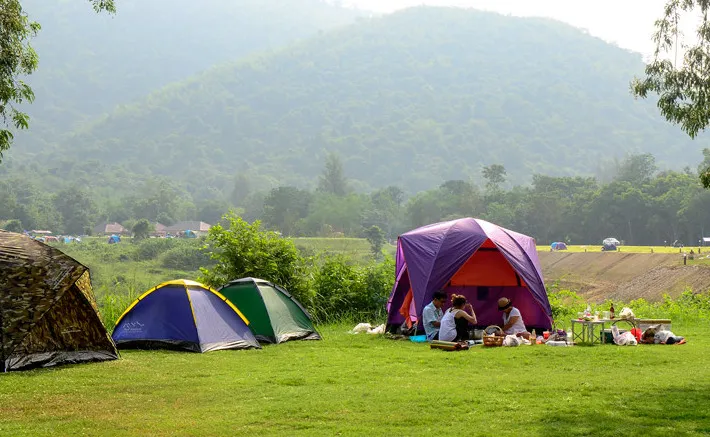
Ban Phu Khem Eco-Tourism Project (Homestay) is a destination that lets you experience the “real life of a community by the reservoir and upstream forest” inside Kaeng Krachan National Park at close range. This place did not begin simply because locals wanted to open their homes to visitors; it grew out of a small but serious crisis that affected household livelihoods and the future of local natural resources. As fish became harder to find and catches were no longer sufficient to support families, fish numbers kept declining and income from fishing became increasingly uncertain. The community therefore needed a new path—one that would allow them to “keep living with nature” without damaging it further. Over time, Ban Phu Khem took shape as community-based ecotourism, grounded in local rules, built around everyday ways of life, and valued for its calm atmosphere—ideal for travelers who want to step away from city noise.
The heart of Ban Phu Khem is a shift from relying on fishing beyond the ecosystem’s capacity toward “protecting fish habitats” and creating alternative income through agriculture and ecotourism. In the early stage, the community sought a permanent fish conservation area so fish could breed successfully. This led to the idea of establishing a protected fish breeding zone at “Khao Dok Mai,” covering roughly 70 rai, where 200,000 fish were released and rules were set to prohibit both locals and outsiders from fishing within the designated area. However, when communication with surrounding communities was not yet aligned, misunderstandings and friction emerged, and parts of the project had to be paused so the community could refine the approach into something more widely accepted and sustainable. This experience made one point unmistakable: “conservation” is not just putting up a sign. It requires participation, shared understanding, and a rule system that all sides can accept.
With the original problem of not being able to catch enough fish to support families, Ban Phu Khem expanded its perspective toward supplementary livelihoods that fit local geography and resources. Some fishers turned to farming, orchards, and crops, while the community began studying ecotourism management more seriously. A study visit was organized to “Lahu Village, Um Yom, Tak Province” during 29–30 May 2001 with support from the PTT village development program for the Kaeng Krachan area. The lessons were then brought back for a feasibility discussion in the village. The meeting conclusion on 11 June 2001 marked a key milestone: 20 households joined the pilot phase, the first committee of 12 members was established, and Mr. Somsak Sripanya was appointed as project chair. This mattered because Ban Phu Khem was not built as scattered, individual homestays; it became a community-managed effort with shared agreements, a local governance structure, and visitor guidelines consistent with conservation goals.
Once Ban Phu Khem committed to ecotourism, what travelers gained was not spectacle but peace, privacy, and the feeling of being in a place where “nature is still nature.” Ban Phu Khem is often mentioned as one of the park’s beautiful sunrise and sunset viewpoints. Morning light reflecting on the water or the orange glow of evening slowly sinking behind mountain ridgelines is a simple kind of beauty that draws people back into nature’s rhythm. It does not rely on effects—only on time and enough stillness to truly “see.”
Activities at Ban Phu Khem are designed to match the local context: fishing (within permitted zones and under community rules), visiting local farms and orchards, forest walks and nature study, boat trips to see the Phetchaburi headwaters, and cruises around the Kaeng Krachan Dam reservoir. There are also gentle learning experiences about community life that do not excessively disrupt everyday routines. What makes these activities feel different from typical tours is the community’s emphasis on environmental impact as a first priority. Many visitors therefore appreciate Ban Phu Khem as a quiet retreat and as a way to experience Kaeng Krachan through the community lens—not only through standard “check-in” attractions.
Ban Phu Khem also has a practical constraint that naturally helps guide visitor behavior: electricity comes from solar panels, so power is limited each night. Environmentally, this detail matters because limited energy changes how we rest almost automatically—we spend more time talking, more time looking up at the sky, and less time consuming unnecessary power. When night falls, silence and darkness are not problems if you prepare and align your expectations with the place. This is the real charm of an ecotourism homestay—it does not try to imitate the city; it gently invites you to step away from it.
From a “deeper environmental” perspective, Ban Phu Khem sits within a connected ecosystem chain: upstream forest – streams – rivers – reservoir – farmland – community. The decline in fish that the community experienced is a signal of vulnerability in freshwater ecosystems and of resource use exceeding ecological capacity (even if no single group is solely responsible). When fish numbers fall, household food security is shaken immediately. That is why the idea of a “fish conservation and breeding area” was not a symbolic gesture; it functioned as a community-level mechanism for long-term stability. In nature, a protected zone helps safeguard breeding stock so reproduction can continue, and young fish can disperse outward to surrounding waters, supporting population recovery over time—provided that rules are enforced and shared acceptance is maintained.
Another often-overlooked issue is “water quality” and “sediment” within the reservoir system. As land use around the reservoir increases—farming, orchards, or construction—the risk of sediment and nutrient runoff into the water also rises. If nutrient levels become too high, algae growth can accelerate and push the aquatic ecosystem out of balance. For Ban Phu Khem as an ecotourism area, this makes waste management, wastewater handling, and visitor behavior even more important: reducing single-use plastics, not discarding food scraps into waterways, using soap/shampoo carefully, and taking as much waste back out of the area as possible. Good ecotourism is not only about being “close to nature”; it is about “not adding burdens to nature” through small, practical actions that are truly doable.
In terms of wildlife and forest walking, Kaeng Krachan is a large forest landscape with high biodiversity. Nature study at Ban Phu Khem should therefore follow safety and responsibility principles: do not feed animals, do not disturb habitats, avoid loud noise during wildlife foraging periods, and avoid using harsh flashlights or camera flashes that disrupt animals at night. For boat trips, respect appropriate routes and speeds, reduce waves that erode banks, and avoid approaching areas that may be spawning grounds or nurseries for aquatic life. Keeping an appropriate “distance” is the core etiquette of living alongside nature.
Ban Phu Khem also features “special activities rooted in local culture and traditions,” turning a visit into more than a stay—it becomes a meaningful encounter between people and place. Examples include the Phetchaburi bamboo sticky rice roasting tradition (December to February), fishing competitions (May to September), grilled fish festivals, and the Karen community’s “wrapped rice” tradition in the ninth lunar month, along with seasonal nature walks. These are not just entertainment; they are cultural language showing “how the community lives with resources” and “how seasonal rhythms shape local life.” For travelers interested in ethnic culture, learning about Karen traditions in the Kaeng Krachan area offers another dimension of how belief, daily living, and respect for nature connect.
To preserve peace and safety, Ban Phu Khem has clear visitor rules: no weapons, no gambling, no drugs of any kind, no inappropriate sexual behavior, no gunfire, no hunting, no fighting or loud disturbances, no leaving the premises at night without permission, and no actions that could cause damage such as triggering a fire. Guests must follow the group’s rules strictly. These guidelines are not meant to be unnecessarily strict; they protect the community and the conservation area so the place can welcome visitors sustainably.
Getting There If you are driving from Bangkok, take Phet Kasem Road (Highway 4) through Nakhon Pathom and Ratchaburi into Phetchaburi Province. Continue past Phetchaburi town for about 20 kilometers until you reach the Tha Yang intersection, then turn right into Tha Yang District. Follow the route along the irrigation canal on Highway 3499 for roughly 30 kilometers until you see Kaeng Krachan Hospital on the left. Turn right toward Ban Mae Khamoei for about 22 kilometers. You will pass Wat Mae Khamoei on the left, then turn left toward Ban Phu Khem (concrete/winding road) for about 2 kilometers, followed by approximately 5 kilometers of laterite/dirt road until you reach the national park entrance. Drive a further 9 kilometers to find Ban Phu Khem School on the left. Continue about 200 meters, then turn left to the entrance leading toward Ban Lung Laem (the homestay access route). The final section should be driven with a well-prepared vehicle and extra time, especially during the rainy season.
Another option is travel by boat. You can contact boat tour services at Kaeng Krachan National Park headquarters. This can be suitable for travelers who want a wide-angle view of the reservoir and prefer not to drive the laterite section. Services and conditions may vary by season, water level, and operating schedules, so it is best to ask in advance to plan your trip appropriately.
In terms of overall experience, Ban Phu Khem suits travelers who genuinely want a quiet stay, value privacy, enjoy nature-based activities, and are ready for a simple lifestyle—including limited nightly electricity, potentially unstable signal in some periods, and the need to respect community rules. If you come to “live with nature” rather than to “use hotel-style services,” Ban Phu Khem offers something increasingly rare: silence, a dark sky with stars, and time that is not dictated by a city schedule.
In a larger picture, Ban Phu Khem is an example of community adaptation to changing resources. When fish stocks declined, the community did not choose the shortcut of catching more; it pursued conservation and alternative livelihoods. Ecotourism therefore becomes both an income tool and a platform to communicate the value of upstream landscapes to outsiders. When visitors understand the context and help uphold the rules, the community gains motivation and strength to continue protecting resources. Ban Phu Khem is a place where the phrase “responsible travel” can become real—not just nice wording on a brochure.
To get the most from your trip, it helps to set a simple goal before you arrive: focus on birds/wildlife in the early morning, take a boat trip to see the Phetchaburi headwaters, do a forest walk for nature study, or learn about local farming. Then speak with the hosts to arrange activities suited to the season and available time. Small preparations—comfortable walking shoes, a rain jacket in wet season, a hat, drinking water, mosquito repellent, and a flashlight—make a big difference for comfort and safety in a natural setting.
Ultimately, Ban Phu Khem will not be the answer for everyone. But if you are looking for a Phetchaburi destination where nature feels genuinely present, where calm and privacy are central, where conservation is community-owned, and where life slows down, Ban Phu Khem is “worth it” in a deeper sense than simple fun—because it reminds us that nature does not need more spectators. It needs visitors who respect the place and keep their footprint as light as possible.
| Name | Ban Phu Khem Eco-Tourism Project (Homestay) |
| Address | Ban Phu Khem, Kaeng Krachan Subdistrict, Kaeng Krachan District, Phetchaburi, Thailand |
| Highlights | Community-based ecotourism homestay in the Kaeng Krachan area, focused on tranquility, privacy, nature activities, and community rules to protect resources (solar power with limited nightly electricity) |
| History / Origins | Fish conservation initiative began on 11 August 2000 and evolved into community ecotourism; community meeting summary on 11 June 2001 (20 households joined the pilot phase; first 12-member committee established) |
| Signature Activities | Fishing (under local rules), visits to local farms/orchards, forest walks & nature study, boat trips to the Phetchaburi headwaters, reservoir cruises around Kaeng Krachan Dam, sunrise – sunset viewpoints |
| Festivals / Seasonal Events | Bamboo sticky rice roasting tradition (Dec – Feb), fishing competition (May – Sep), grilled fish festival, Karen “wrapped rice” tradition (9th lunar month), seasonal nature walks |
| Current Status | A community-run ecotourism destination and homestay in the Kaeng Krachan area, suitable for travelers seeking quiet stays and nature-focused activities |
| Contact Numbers | Ban Phu Khem Ecotourism Center (Homestay Booking): 086-178-5365 P’Laem (Information): 086-167-6353 Kaeng Krachan Subdistrict Administrative Organization: 032-459-342, 032-459-343 |
| Travel | From Tha Yang intersection → Highway 3499 along the irrigation canal → pass Kaeng Krachan Hospital → turn toward Ban Mae Khamoei → pass Wat Mae Khamoei → enter Ban Phu Khem (includes a laterite/dirt-road section) → reach Ban Phu Khem School, then turn into the homestay area (vehicle readiness and pre-contact recommended) |
| Nearby Tourist Attractions | 1) Talat Guangzhou (Kaeng Krachan) – approx. 36.24 km 2) Ban Tham Suea Homestay – approx. 12.11 km 3) Kaeng Krachan Dam rafting/river activity zone – approx. 24.63 km 4) Kaeng Krachan Adventure Point – approx. 8.67 km 5) Bamboo Riverhouse – approx. 29.88 km |
| Popular Restaurants Nearby | 1) Wirot Kaeng Krachan Ros Ded – (Kaeng Krachan area) – 032-459-076 2) Ton Nam Phet Resort (Restaurant / in-resort dining) – (Kaeng Krachan area) – 081-857-4979 3) Ton Nam Phet Resort (Alternate contact) – (Kaeng Krachan area) – 087-151-8836 4) Kaeng Krachan SAO (ask about community dining / group meal arrangements) – 032-459-342 5) Kaeng Krachan SAO (alternate line) – 032-459-343 |
| Popular Accommodations Nearby | 1) Boat House Paradise Resort – approx. 8.90 km – 032-459-076 (contact via Kaeng Krachan area service line) 2) Harmony Resort Kaeng Krachan – approx. 15.19 km – 092-269-2298 3) Baan Mai Rai Charoen Resort – approx. 13.54 km – 081-000-9795 4) Bamboo Riverhouse – approx. 29.88 km – 081-945-2482 5) Ton Nam Phet Resort – (Kaeng Krachan area) – 081-857-4979 |
Frequently Asked Questions (FAQ)
Q: What is Ban Phu Khem?
A: Ban Phu Khem is a community-run ecotourism homestay project in the Kaeng Krachan area, created to build alternative income and protect local natural resources while offering peaceful, nature-based experiences.
Q: Do I need to book in advance?
A: Yes. Advance booking is recommended so the hosts can confirm accommodation and arrange activities appropriate to the season and group size.
Q: Is there electricity at the homestay?
A: Yes, but electricity comes from solar panels and is limited each night, so it is best to prepare essential items and expect a simple stay.
Q: What are the most popular activities?
A: Boat trips to see the Phetchaburi headwaters and Kaeng Krachan Dam reservoir, forest walks for nature study, and sunrise/sunset viewing are among the highlights, along with seasonal community activities.
Q: Are there important rules visitors must follow?
A: Yes. No weapons, no drugs, no hunting, no loud disturbances, no fighting, and strict compliance with community rules for safety and conservation.
Q: What should I prepare before visiting?
A: Comfortable walking shoes, a hat, a rain jacket in wet season, mosquito repellent, a flashlight, and other essentials, plus contacting the hosts in advance to confirm route access and entry arrangements.
 Category: ●Suburban Living
 Group: ●Village, Community
 Last Update : 2 MonthAgo

 Click to Access the Navigation Map GPS
 Art, Culture and Heritage
 Historical Sites and Monuments(
 Landmarks and Memorials(
 Royal Palace(
 Art, Craft Centres, Tradition(
 Museums(
 Educational Places
 Educational Gardens, Farm(
 University
 Places of Worship
 Temple(
 Other religious and spiritural sites(
 Research and Development
 Royal Project(
 Floating Market(
 Nature and Wildlife
 National Parks and Marine Reserves(
 Mountain (Doi)(
 Dam, Reservoir, Lake(
 Waterfalls(
 Hot Springs(
 Caves(
 River, Canal(
 Bays and Beaches(
 Islands(
 Other natural attractions(
 Entertainment and Agricultural
 Farm, Parks, Gardens and Ecotourism(
 Theater(
 Outdoor and Adventure Activities(
 Travel Articles, Recipes
 Travel Review, Food Review(


