
 Home
Home North(
 Chiang Mai(


Wat Bang Khun Sai
Rating: 2.7/5 (9 votes)
 Search By
  Map
Map 
 Have Map
  No Map
Phetchaburi attractions
Attractions in Thailand
Open Days: Daily
Opening Hours: 06:00 – 18:00
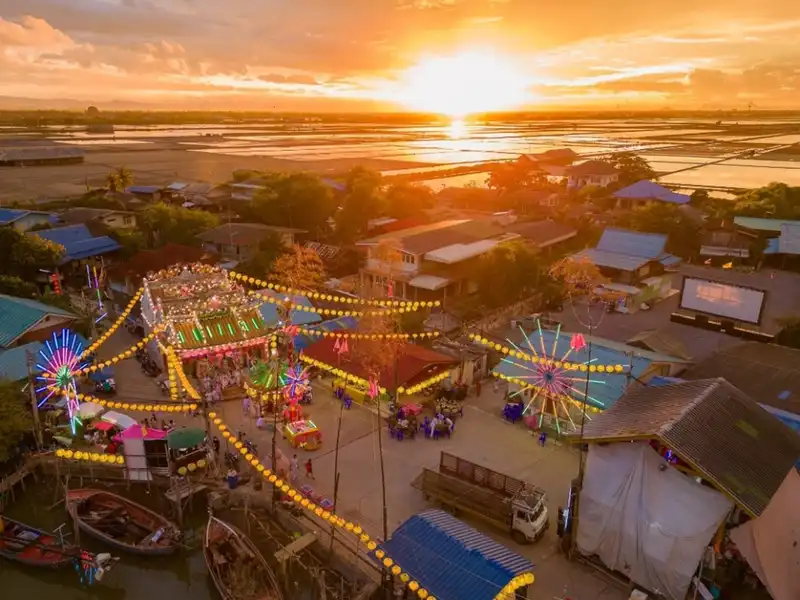
Wat Bang Khun Sai, Phetchaburi is a community temple affiliated with the Mahanikai order, located in Ban Bang Khun Sai (Moo 10), Bang Khun Sai Subdistrict, Ban Laem District, Phetchaburi. The temple sits within a coastal landscape shaped by the Gulf of Thailand, salt fields, fishing livelihoods, tidal canals, and a rhythm of life that moves with sea conditions and seasons. In this setting, the temple is not only a formal religious site, but also the place where the community gathers to mark life events, renew social ties, and preserve shared memory through merit-making and collective work.
What distinguishes Wat Bang Khun Sai is its lived function as a temple of the village. It is used year-round, not as a short-stop attraction but as a working spiritual center where residents come for daily worship and for the most important communal moments: morning merit-making, ordinations, funerals, and annual festivals. When a Kathin or Pha Pa ceremony arrives, the temple becomes the village’s organizing hub, bringing together families, returning relatives, local volunteers, and donors. The temple grounds hold the familiar patterns of Thai rural Buddhism, yet the atmosphere is unmistakably coastal: open skies over salt pans, sea breezes drifting inland, and water routes that connect villages as much as roads do.
Local tradition places the temple’s earliest beginnings around 2310 BE (1767 CE), during the turbulent transition after the fall of Ayutthaya. The narrative remembered in the community speaks of a forest-wandering monk known as “Luang Pho Ton,” who came to stay in the area. Villagers, then a small fishing settlement, supported him with a simple kuti and invited him to remain through the rains retreat. Over time, that early monastic presence grew into a settled religious site and, eventually, the temple that the community recognizes today. This origin story matters because it reflects the way many coastal temples formed: not by a single royal decree, but by local faith, labor, and shared responsibility.
A concrete marker of the temple’s long-standing presence is associated with an older ordination hall and an inscription beneath the main Buddha image pedestal referencing “R.S. 118,” corresponding to 2442 BE (1899 CE). Such an inscription is meaningful because it shows that, by that period, the temple already functioned as an established religious place where devotees invested in construction or restoration work substantial enough to leave an enduring record. It anchors the temple’s story in a timeframe that local residents can point to, bridging oral memory with a traceable historical reference.
Inside the compound, Wat Bang Khun Sai reflects the practical, resilient design of contemporary Thai community temples. The main ordination hall (ubosot) is a large Thai-style structure built for stability and real-world use, supporting major ceremonies and accommodating large congregations on festival days. In large merit-making events, the orderly use of space becomes visible: areas for devotees, coordinated movement during rituals, and the careful management that comes from repeated community practice. The monks’ living quarters are arranged as functional residence space for the sangha, underscoring that this is not a museum-like site but a living temple with ongoing religious duties and community responsibilities.
One distinctive feature associated with Wat Bang Khun Sai is the presence of a shrine connected to Admiral Prince Abhakara Kiartivongse, Krom Luang Chumphon Khet Udomsak (“Sadet Tia”). In Thai coastal communities, especially among fishing families and people whose livelihood depends on the sea, reverence for Sadet Tia is both cultural and emotional: he represents protection, discipline, and a guiding spirit for those who travel by water. In this sense, the shrine adds an additional layer to the temple’s identity, placing Wat Bang Khun Sai at the intersection of Buddhism, maritime life, and coastal belief systems that have long coexisted in Thailand.
Beyond architecture and religious structures, the temple’s strongest appeal is the surrounding environment. Bang Khun Sai is known for salt farming and fishing, and the scenery around the temple frequently includes salt pans, canals, and the wide openness of coastal land. Visiting in the morning or late afternoon is especially rewarding: light reflects off shallow water surfaces and salt fields, creating a calm, expansive mood that supports a slower, more reflective temple visit. Many travelers find that this setting changes how the temple feels: instead of the dense, enclosed atmosphere of city temples, here the experience is airy, coastal, and grounded in working landscape.
For visitors, a respectful approach is straightforward: dress modestly, keep voices low in sacred areas, and avoid interrupting monks during chanting periods or temple duties. When traveling as a group, coordinating in advance is practical, as it allows the temple to manage space and reduce disruption to both the sangha and nearby residents. This matters particularly in small coastal villages where the boundary between “temple life” and “community life” is close and daily routines remain sensitive to noise and crowd movement.
Wat Bang Khun Sai also fits naturally into a one-day coastal itinerary in Ban Laem. Many visitors pair the temple with nearby salt-field experiences and coastal learning points. The Laem Phak Bia Environmental Research and Development Project (a widely known learning site linked to environmental management under royal initiative) is often a key stop for travelers interested in sustainability and coastal ecology. Others continue to Hat Chao Samran for a relaxed seaside atmosphere, or return toward Phetchaburi town to connect coastal culture with the province’s iconic heritage landmarks. With a well-planned route, it is easy to combine “temple visit – seafood meal – coastal nature learning” without rushing the day.
Getting There From Phetchaburi town, drive toward Ban Laem District and continue into Bang Khun Sai Subdistrict. Most of the route is flat and comfortable, passing salt fields and coastal village roads. Travel time is typically around 40–50 minutes from the town center, depending on traffic and the chosen approach road. Parking is generally available within the temple area. If you plan to visit multiple coastal stops in one day, placing the temple earlier in the itinerary often works well, followed by seafood lunch and an afternoon coastal learning or seaside walk.
| Place Summary | A long-standing coastal community temple in Bang Khun Sai, rooted in local faith and village life, with a distinctive maritime cultural layer reflected in its Sadet Tia (Krom Luang Chumphon) shrine and its salt-field coastal setting. |
| Address | 128 Moo 10, Bang Khun Sai Subdistrict, Ban Laem District, Phetchaburi 76110, Thailand |
| Affiliation | Mahanikai Order |
| Period | Local tradition dates early origins to around 2310 BE (1767 CE); an inscription reference includes R.S. 118 (2442 BE / 1899 CE). |
| Key Highlights | Large contemporary Thai-style ubosot designed for community ceremonies; strong year-round village religious role; coastal salt-field atmosphere; Sadet Tia (Krom Luang Chumphon) shrine reflecting maritime cultural devotion. |
| Abbot / Current Caretaker | Phra Samuh Boonlert Puññakusalo |
| Contact Number | 032-481-423 |
| Nearby Attractions With Distance | 1. Bang Khun Sai Salt-Farm Community – 5 km 2. Laem Phak Bia Environmental Research Project – 18 km 3. Hat Chao Samran Beach – 25 km 4. Ban Laem Market Area – 20 km 5. Phra Nakhon Khiri (Khao Wang) – 38 km |
| Popular Restaurants Nearby With Distance And Phone | 1. Manorah Restaurant – 4 km / 063-578-8143, 084-394-0998 2. Krua Halal Toyyiban – 5 km / 087-370-9730 3. Baan Poo Pen 2 (Laem Phak Bia Branch) – 22 km / 088-194-4172 4. Baan Talay Restaurant (Laem Phak Bia) – 22 km / 085-405-2856 5. Ja Daeng Seafood – 25 km / 099-483-3407, 093-765-5363, 093-745-4651 |
| Popular Accommodations Nearby With Distance And Phone | 1. i Tara Resort & Spa – 24 km / 032-478-301, 088-874-7474 2. Eco Moment Beach Resort – 25 km / 032-770-555, 083-198-4477 3. Seaman Resort – 25 km / 081-846-1327, 089-122-7968 4. Sea Sky Beach Resort – 25 km / 032-478-431 5. Fisherman’s Resort – 28 km / 032-478-020-4, 086-300-4510 |
Frequently Asked Questions (FAQ)
Q: Where is Wat Bang Khun Sai located?
A: It is in Ban Bang Khun Sai (Moo 10), Bang Khun Sai Subdistrict, Ban Laem District, Phetchaburi, within a coastal community known for fishing and salt fields.
Q: What makes this temple different from a typical inland community temple?
A: Its setting and identity are strongly coastal, with salt-field scenery, village water routes, and a maritime layer of devotion expressed through the Sadet Tia (Krom Luang Chumphon) shrine alongside core Buddhist practice.
Q: How old is Wat Bang Khun Sai?
A: Local tradition places early origins around 2310 BE (1767 CE), and an inscription reference includes R.S. 118 (2442 BE / 1899 CE), showing the temple’s established presence by the late 19th century.
Q: What is the best time of day to visit?
A: Morning and late afternoon are especially pleasant, when coastal light reflects off salt fields and shallow water surfaces, creating a calm atmosphere for worship and slow-paced walking.
Q: Do visitors need to call the temple before visiting?
A: For individual worship visits, entry is generally straightforward. For group visits or coordinated activities, calling ahead is practical so the temple can help manage space and reduce disruption to monks and nearby residents.
Q: What can I combine with a visit to Wat Bang Khun Sai in one day?
A: Many visitors pair the temple with a seafood meal and coastal learning or seaside stops, such as the Laem Phak Bia environmental learning area and Hat Chao Samran Beach, creating a full but unhurried Ban Laem coastal itinerary.
 Wat Bang Khun Sai Map
 Category:
  Group:
  Tag: ●Wat Bang Khun Sai●wat bang khun sai ●bang khun sai phetchaburi ●wat bang khun sai ban laem ●ban laem temple ●phetchaburi coastal temple ●bang khun sai salt fields ●laem phak bia phetchaburi ●hat chao samran beach ●ban laem travel guide ●coastal community thailand Last Update: 1 MonthAgo
Comment
 Nearby Attractions
| Keyword (Advance) |
 Region
|
 Muang Phetchaburi(
 Copyright 2012,