
 Home
Home North(
 Chiang Mai(


Wat Tha Chai Siri
Rating: 2.5/5 (18 votes)
 Search By
  Map
Map 
 Have Map
  No Map
Phetchaburi attractions
Attractions in Thailand
Open Days: Daily
Opening Hours: 06:00 – 18:00
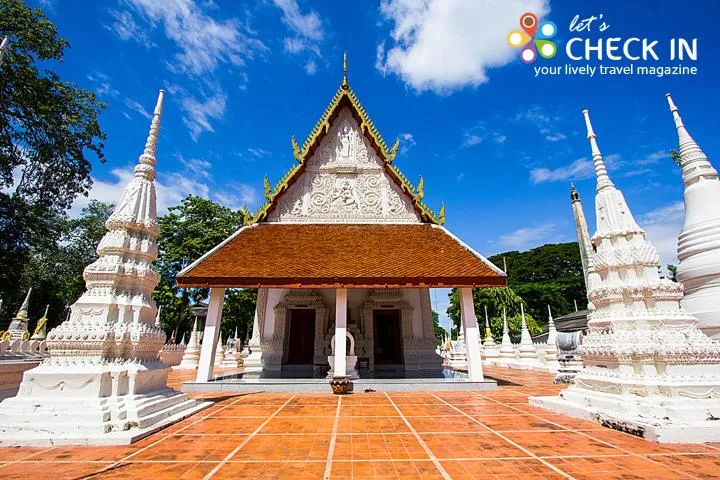
Wat Tha Chai Siri (Ban Lat District, Phetchaburi) is an ancient temple of outstanding significance in terms of history, religion, and the cultural landscape of the Phetchaburi River Basin. It is located at No. 121, Ban Samo Phlue, Phetkasem Road, Moo 1, Samo Phrue Subdistrict, Ban Lat District, Phetchaburi Province, and belongs to the Mahanikaya order. The temple occupies a prominent riverside setting along the Phetchaburi River and lies on an important transportation corridor that has been used since earlier times. For this reason, the temple is not merely a religious site, but also a historical space that clearly reflects the role of riverside communities and long-standing travel routes in the past.
The temple land covers an area of 14 rai and 15 square wah. Its northern boundary adjoins the Phetchaburi River, while the southern, eastern, and western sides border private land. In addition, the temple holds three plots of monastic land (thoranisong) totaling 8 rai, 3 ngan, and 64 square wah, registered under land title deeds no. 8006, 8007, and 8005. The presence of substantial monastic land reflects the temple’s status and its former role as a community center, as well as the systematic management of resources connected to Buddhism.
The temple’s geography is closely connected to the Phetchaburi River, which has long served as the lifeline for settlement in this region. Temples established along rivers commonly function as religious centers, resting points for travelers, and ritual spaces closely tied to river-based ways of life. The name “Tha Chai” (meaning a landing or pier) reflects the area’s historic role as a community river landing and a node for transportation, linking travel, trade, and communication between communities on both sides of the river.
According to local registration records and related documents, Wat Tha Chai Siri is an old temple with roots spanning multiple historical periods. There is information indicating that the temple once received Wisungkham Sima around 1910 BE during the Sukhothai era, suggesting that this site held legitimate monastic status under Buddhist discipline since the early formation of Thai states. The presence of a recognized temple during that time also points to the importance of the Phetchaburi River Basin as a regional settlement zone and religious center.
Later, during the Ayutthaya period, Wat Tha Chai Siri was clearly constructed and developed, with records stating that it was built in 2225 BE. The ordination hall (Ubosot) from this era is a key piece of evidence confirming the temple’s role within the network of river-basin temples in Ayutthaya times. The temple also retains an ancient Ayutthaya-period chedi, which further reinforces the continuity of religious use and ritual practice on this site across centuries.
The temple continued to play a visible role in the Rattanakosin era. It received Wisungkham Sima again in 2445 BE during the reign of King Rama V. The Wisungkham Sima boundary measures 25 meters wide and 42 meters long. Receiving Wisungkham Sima in this period not only reaffirmed the temple’s status within the modern Sangha system, but also reflected the broader restructuring of temples and ecclesiastical administration in line with state reforms in the late 19th century.
The temple’s name changed over time according to historical context. It was originally known as “Wat Tai,” then changed to “Wat Tha Chai,” later to “Wat Tha Chai Siri Rat,” and finally became “Wat Tha Chai Siri” as it is known today. These name changes reflect the temple’s location, its relationship to riverside community life, and the use of auspicious meanings to strengthen the temple’s identity as a sacred place.
One historical narrative that gives Wat Tha Chai Siri its distinctive character is a story of conflict that is said to have taken place inside the ordination hall. It has been passed down that, at one point, Thai soldiers who had been defeated in battle fled into the Ubosot and continued fighting there, leading to a violent clash in which blood splattered onto the walls. This account is recorded in the cremation memorial book issued for Phra Khru Siri Watchira Tham, a former abbot of Wat Tha Chai Siri. Beyond being a local legend, the story functions as a form of historical memory that reflects the temple’s role as a social and political space during times of crisis.
The monastic structures within Wat Tha Chai Siri reflect the layout of an older community temple. The Ubosot was built in 2225 BE and serves as the temple’s core. The sermon hall (Sala Kan Parian) measures 9 meters wide and 13 meters long, designed as a two-storey Thai-style structure combining masonry and wood, used for religious and community activities. The chanting hall is a Thai-style wooden building with a calm, simple atmosphere. The monks’ quarters are arranged as wooden row houses encircling the dining hall on all four sides, a layout found in many older temples. The temple also has one wooden funeral pavilion used for community ceremonies.
The temple’s key sacred objects include the principal Buddha image in the granting-blessings posture, an example of Lopburi-period art, standing approximately 2.75 meters tall. This posture conveys compassion and protection. The temple also has an ancient Ayutthaya-period chedi and several other Buddha images, together reflecting artistic development and layers of faith across different historical eras.
In administration, Wat Tha Chai Siri has a long and continuous line of abbots, including Phra Athikan Chiang, Phra Athikan Bunma, Phra Athikan Noi, Phra Athikan Tai, Phra Athikan Thong, Phra Athikan Phum, Phra Athikan Mui, Phra Khru Yan Siri (2459–2505 BE), Phra Khru Siri Thira Tham (2505–2532 BE), Phra Samuh Chuen (2532–2539 BE), and the current abbot, Phra Khru Thammathon Saraphop Punyachoto (2539 BE–present), who continues to oversee the temple and maintain its role as a religious and community center.
Wat Tha Chai Siri also has a strong educational role. It opened a Phra Pariyatti Dhamma School (Dhamma Division) in 2482 BE to support Buddhist studies for monks and novices. In addition, a primary school is located within the temple grounds, covering more than 2 rai, demonstrating the long-standing relationship between temples and general education in rural Thai communities.
Getting There Visiting Wat Tha Chai Siri is convenient by private car. Travelers can take Phetkasem Road from Phetchaburi town toward Ban Lat District. The temple is located along the roadside and near the Phetchaburi River, making it easy to access and easy to spot.
| Place Summary | An ancient riverside temple on the Phetchaburi River with a long history spanning Sukhothai, Ayutthaya, and Rattanakosin periods, and a major role in the Samo Phlue community. |
| Address | 121 Ban Samo Phlue, Phetkasem Road, Moo 1, Samo Phrue Subdistrict, Ban Lat District, Phetchaburi, Thailand |
| Current Abbot (Latest) | Phra Khru Thammathon Saraphop Punyachoto |
| Highlights | Riverside temple on the Phetchaburi River, Lopburi-period principal Buddha image, Ayutthaya-period chedi, historical story of conflict inside the Ubosot |
| Nearby Tourist Attractions | 1) Phra Nakhon Khiri (Khao Wang) – 13 km 2) Wat Mahathat Worawihan – 12 km 3) Wat Khao Bandai It – 11 km 4) Tham Khao Luang – 15 km 5) Phra Ram Ratchaniwet – 17 km |
| Nearby Restaurants | 1) Krua Tanote – 7 km Tel. 082-252-4990 2) Krua Kamnan Chob – 8 km Tel. 065-942-6496 3) PENN Palmyra & Chill – 9 km Tel. 087-487-8464 4) Ban Lat Riverside Restaurant – 5 km 5) Suan Ahan Lan Aroi – 14 km Tel. 088-594-9878 |
| Nearby Accommodations | 1) Super Resort Phetchaburi – 13 km Tel. 080-009-8883 2) Kane Inn Phetchaburi – 14 km Tel. 089-116-4557 3) Ton Tan Resort – 14 km Tel. 032-490-088 4) Maithong Riverside – 16 km Tel. 095-978-2914 5) Wang Bua Resort – 21 km Tel. 081-135-8497 |
Frequently Asked Questions (FAQ)
Q: When was Wat Tha Chai Siri built?
A: Wat Tha Chai Siri is recorded as having been built around 2225 BE during the Ayutthaya period, with historical roots extending back to the Sukhothai era.
Q: What is the principal Buddha image at the temple?
A: The principal Buddha image is in the granting-blessings posture, created in Lopburi-period artistic style, and stands approximately 2.75 meters tall.
Q: Why is Wat Tha Chai Siri historically significant?
A: The temple has a long multi-era history and preserves a local historical narrative of conflict said to have occurred inside the Ubosot, reflecting the temple’s broader role in Thai society in earlier times.
Q: Who is the current abbot of Wat Tha Chai Siri?
A: The current abbot is Phra Khru Thammathon Saraphop Punyachoto.
Q: How can I get to Wat Tha Chai Siri?
A: Drive along Phetkasem Road from Phetchaburi town toward Ban Lat District. The temple is located along the roadside and near the Phetchaburi River, making it easy to reach.
 Wat Tha Chai Siri Map
 Category:
  Group:
  Tag: ●Wat Tha Chai Siri●wat tha chai siri ●wat tha chai siri phetchaburi ●wat tha chai siri ban lat ●riverside temple phetchaburi river ●lopburi art buddha image ●ayutthaya period chedi ●wisungkham sima thailand ●temples in phetchaburi ●things to do in ban lat ●thai historical temples Last Update: 1 MonthAgo
Comment
 Nearby Attractions
| Keyword (Advance) |
 Facebook Fanpage
 Region
 Art, Culture and Heritage
 Historical Sites and Monuments(
 Landmarks and Memorials(
 Royal Palace(
 Art, Craft Centres, Tradition(
 Museums(
 Educational Places
 Educational Gardens, Farm(
 University
 Other religious and spiritural sites(
 Research and Development
 Royal Project(
 Suburban Living
 Village, Community(
 Floating Market(
 Nature and Wildlife
 National Parks and Marine Reserves(
 Mountain (Doi)(
 Dam, Reservoir, Lake(
 Waterfalls(
 Hot Springs(
 Caves(
 River, Canal(
 Bays and Beaches(
 Islands(
 Other natural attractions(
 Entertainment and Agricultural
 Farm, Parks, Gardens and Ecotourism(
 Theater(
 Outdoor and Adventure Activities(
 Travel Articles, Recipes
 Travel Review, Food Review(
 Copyright 2012,