
 Home
Home North(
 Chiang Mai(


Wat Pa Paen
Rating: 3.2/5 (12 votes)
 Search By
  Map
Map 
 Have Map
  No Map
Phetchaburi attractions
Attractions in Thailand
Open Days: Daily
Opening Hours: 06:00 – 18:00
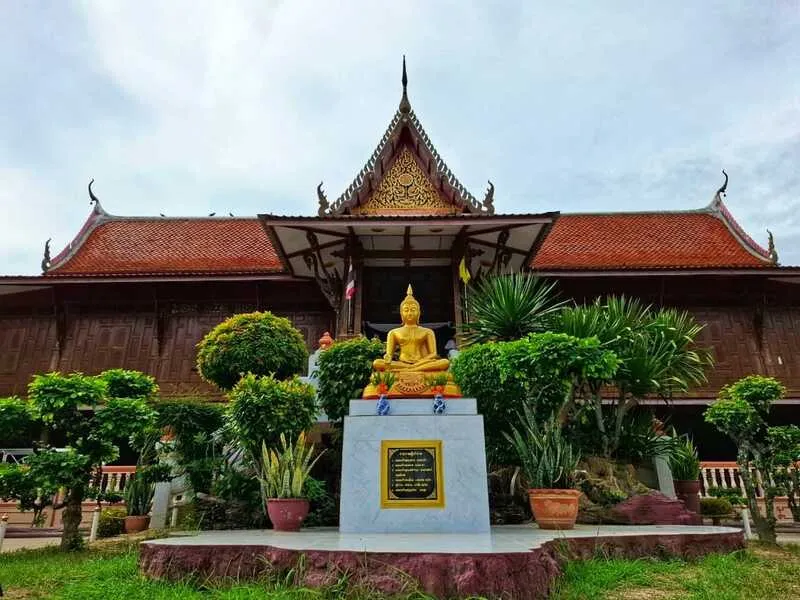
Wat Pa Paen (Ban Lat District, Phetchaburi) is an old temple on the eastern bank of the Phetchaburi River, set within Ban Lat’s long-established community landscape where archaeological traces and local history have been closely tied to the river for generations. The temple is located at No. 67, Moo 3, Ban Lat Subdistrict, Ban Lat District, Phetchaburi Province, and belongs to the Mahanikaya order. The temple land covers 12 rai, 1 ngan, and 92 square wah. Its southern and western boundaries adjoin private land, while the eastern side borders the Phetchaburi River. This setting creates an open, airy atmosphere with the shade of greenery and the calm of riverside surroundings, making it well-suited for paying respects, making merit, and taking an unhurried walk to appreciate the temple’s architecture and sacred artifacts.
The name “Wat Pa Paen” reflects the area’s original landscape, which was once a broad plain on the eastern side of the Phetchaburi River, backed by abundant forest. Locals therefore referred to it in connection with the environment and community lore as a temple founded on the woodland of “Amdaeng Paen,” a woman recognized for her key role in initiating and supporting the temple’s establishment through faith and devotion among the early Ban Lat community. As a result, the temple has long been more than a place for religious rites; it has served as the spiritual heart of the community, bringing people together through merit-making, funerary ceremonies, ordinations, and the transmission of Buddhist teachings in a local, community-based way across many generations.
According to oral history and information appearing in government records, Wat Pa Paen was established around 2275 BE and was granted Wisungkham Sima in 2311 BE. The Wisungkham Sima boundary measures 19.4 meters in width and 31 meters in length. Receiving Wisungkham Sima is significant because it formally designates the area for valid monastic acts, especially ordination, one of the most important ceremonies in Thai society. A temple with Wisungkham Sima therefore provides assurance that key sangha rites can be conducted in accordance with monastic discipline and official ecclesiastical regulations. It is not surprising that the temple has long been a major destination for locals during important merit-making seasons, and historically it also served as a “resting point” for travelers, since its location is clearly connected to transportation routes by both water and land.
In geographical terms, Wat Pa Paen stands within a riverine environment where water has shaped the community’s way of life. The Phetchaburi River is a vital artery that has sustained agriculture and riverside settlements for centuries. Temples along such waterways often play roles beyond religious observance: they function as public space for the village, a common ground for festivals and merit-making, a refuge in difficult times, and a place of cultural learning—from listening to sermons and observing precepts to maintaining communal traditions through collective public work. This pattern of relationships still allows visitors today to sense the “temperature of the community” that has gradually formed through shared faith and local stewardship.
Another layer of interest at Wat Pa Paen lies in its archaeological dimension linked to the Ban Lat area. There are references to the “Noen Pho Yai” archaeological mound group, where excavations reportedly uncovered pottery fragments, Buddha image casting molds, and other artifacts reflecting long-standing settlement and Buddhist practice in the region. The importance of such finds is not only their age, but their role in confirming that Ban Lat is an old community with deep cultural roots—and that Wat Pa Paen serves as one piece of social evidence helping to explain the continuity of belief and ritual practices within Phetchaburi’s cultural landscape.
A defining highlight that many visitors come specifically to pay respects to is “Luang Pho Hin Saksit Narumit Mahamongkhon,” a standing stone-carved Buddha in the posture of pacifying the ocean (Ham Samut). The image is 175 centimeters tall and 50 centimeters wide, and is described in terms of art history as Dvaravati-period style. Locals refer to it with a name that reflects deep devotion and belief in its sacredness. The Ham Samut posture is often associated with calm, restraint, and the halting of danger and turmoil—a symbolic meaning that aligns closely with the temple’s role as a refuge for the community. Viewed up close, the carving conveys a dignified simplicity and a strong sculptural presence typical of ancient stone works that emphasize solidity of form and meaning rather than elaborate courtly ornament.
Inside the ordination hall (Ubosot) is the principal Buddha image in meditation posture, a stucco sculpture with a lap width of 36 inches and a height of 50 inches, created in the Rattanakosin period. Stucco principal images are common in many community temples because they reflect local faith and community-based construction in eras when casting metal images required higher costs. Such stucco works are often connected to local artisans, giving each temple a distinctive character. Even when the Buddha follows standard iconography, differences in proportions and surrounding ambiance allow visitors to feel the temple’s local identity clearly.
The temple’s monastic buildings and key structures vary in materials and periods, reflecting ongoing restoration and development according to the community’s resources. The Ubosot is reinforced concrete, measuring 8 meters wide and 15.70 meters long, providing strength and suitability for important monastic ceremonies. The sermon hall (Sala Kan Parian) is a traditional Thai-style wooden building, 19.60 meters wide and 39.70 meters long, constructed in 2516 BE, with an airy, open feel ideal for gatherings on observance days, merit-making events, and community activities. The chanting hall is a Thai-style teakwood structure, 3.35 meters wide and 27.25 meters long, built in 2526 BE; teakwood lends a particular warmth and serenity, especially when sitting inside during evening chanting and prayers.
Within the temple grounds there is also 1 monk’s residence (Kuti), built of teakwood; 1 funeral pavilion (Sala Bamphen Kuson), constructed in reinforced concrete with a Thai-inspired form; and a kitchen building. These supporting facilities clearly demonstrate the temple’s role as a community ceremonial center, because merit-making events, funerals, and ordinations require both space for large gatherings and infrastructure for food preparation and logistical support. Phetchaburi is also well known for its rich food and dessert traditions, so temple festivals often become occasions where locals showcase culinary skills and community hospitality as part of the merit-making culture.
Wat Pa Paen also preserves significant items linked to Thai history during the reign of King Chulalongkorn (Rama V). There is mention of a “Phat Rong” (ceremonial fan), a palm-leaf fan trimmed in gold, granted by Rama V to Phra Athikan Nu, a former abbot. Additionally, there are tiffin carriers, alms bowls, and medicinal items granted in the funeral of Prince Uruphong Ratchasomboj, a son of Rama V. These objects add a layer of “historical memory” to the temple, connecting it not only to local community history but also to broader events and cultural contexts of Siam during a pivotal period of modernization.
An important event frequently recalled by locals is King Rama V’s private royal tour (Prapas Ton) to this temple in 2452 BE, with references to a royal letter mentioning the granting of ceremonial fans and the temple’s upkeep. The temple’s buildings were said to have been organized neatly and improved, becoming more prosperous thereafter. In the context of local temples, such a Prapas Ton narrative confirms that riverside community routes along the Phetchaburi River were significant for travel and administration at the time, and that temples serving as “waypoints” naturally gained attention and support when noteworthy events occurred.
The recorded list of abbots reflects continuous administration and transitions through different eras: the 1st abbot Phra Athikan Mek; the 2nd Phra Kham; the 3rd Phra Athikan Nu (2452 BE); the 4th Phra Athikan Nok; the 5th Phra Athikan Yui, Thamiko; the 6th Phra Samuh Chin, Chutintharo (2503–2514 BE); the 7th Phra Khru Si Watcharaphon (Phra Thop, Angkuro) (2515–2541 BE); and the 8th Phra Maha Prasong, Mahaviro (2541 BE–present). This sequence helps illustrate that the temple’s development did not occur in isolated phases but accumulated gradually through the work of successive monastic leaders in partnership with the community’s sustained devotion.
In terms of education, Wat Pa Paen has a Buddhist scripture school (Phra Pariyatti Dhamma School) that opened in 2503 BE. This reflects a significant role of Thai temples in the post-war period, when society placed stronger emphasis on religious education and on nurturing monastic scholarship at the local level. Such a school positions the temple not only as a site for rites and worship, but as a learning space that supports monastic discipline and Buddhist knowledge over the long term, especially in communities where the temple remains a central spiritual institution.
Getting There By private car from Phetchaburi city, you can take Highway 3179 toward Ban Lat District, then follow local directions and signage to Wat Pa Paen. The final approach is a short turn-in from the main road, making it straightforward to reach. If you use navigation, search for “Wat Pa Paen Ban Lat” and check real-time traffic before departure. As the temple is close to a community area and near the river, drive carefully during the rainy season or on festival days when parking and traffic may be heavier.
By public transport, a practical approach is to start from central Phetchaburi, then use local taxis, hired vehicles, or songthaews that travel toward Ban Lat District, and finally connect by a short local hire to the temple. Because transport frequency in community areas may be less regular than in town, planning your timing in advance helps ensure a smooth trip, particularly if you intend to arrive in the morning or on Buddhist observance days.
Upon entering the temple grounds, what stands out is the calm simplicity of a riverside community temple, paired with layered historical details and sacred objects worth exploring. Architecture enthusiasts can observe the Thai-style wooden forms of the sermon hall and the teak chanting hall, both strongly rooted in local craft traditions. Those interested in antiquities should spend time paying respects to Luang Pho Hin Saksit Narumit Mahamongkhon and reflecting on the meaning of the Ham Samut posture, often interpreted as embodying the power of calm and protection. Seen through the lens of community culture, the temple is not merely a tourist stop but a living “memory space” of Ban Lat people, still functioning continuously within everyday community life.
Visitors who come to worship and make merit are encouraged to dress respectfully, avoiding overly revealing or tight clothing, and to remove footwear before entering important buildings in accordance with Thai custom. Maintaining quiet in monastic living areas and ceremonial spaces is also important, especially during chanting, prayers, or ongoing rites. Paying attention to these small details helps your visit feel harmonious with the temple’s way of life and shows respect to both the religious site and the host community.
If you plan a half-day or full-day outing, Wat Pa Paen connects well with other key destinations in Phetchaburi, since it is not far from the city and several heritage and cultural attractions such as Phra Nakhon Khiri (Khao Wang), Wat Mahathat Worawihan, Wat Khao Bandai It, and Tham Khao Luang. This makes it easy to design an itinerary combining temple visits, old-town exploration, and local food in a single day without rushing. Phetchaburi is especially known for its distinctive local cuisine, so allowing time to stop at local eateries in Ban Lat can make the trip noticeably more complete.
Overall, Wat Pa Paen stands out for its early Rattanakosin-era longevity and even deeper roots in the community landscape and archaeological context. It features a mix of community-scale Thai architecture, wooden structures with strong local character, sacred antiquities centered on the revered “Luang Pho Hin Saksit,” and narratives linked to King Rama V that enrich the temple’s historical depth. For those seeking a temple in Phetchaburi that offers calm, simplicity, and stories that illuminate Ban Lat’s community heritage, Wat Pa Paen is a destination that fulfills that purpose without the need for embellishment.
| Place Summary | An old riverside temple in Ban Lat District, notable for Luang Pho Hin Saksit Narumit Mahamongkhon (a standing stone Buddha in the Ham Samut posture, Dvaravati style) and a combination of Thai-style wooden buildings and reinforced-concrete structures reflecting the temple’s development across eras. |
| Address | 67 Moo 3, Ban Lat Subdistrict, Ban Lat District, Phetchaburi 76150 |
| Current Abbot (Latest) | Phra Maha Prasong Mahaviro (2541 BE – present) |
| Highlights | Luang Pho Hin Saksit Narumit Mahamongkhon (Dvaravati) / Stucco principal Buddha in meditation posture in the Ubosot (Rattanakosin) / Thai-style wooden sermon hall (2516 BE) / Thai-style teakwood chanting hall (2526 BE) / Calm community-temple atmosphere by the Phetchaburi River |
| Contact Number | 032-491-279 |
| Nearby Tourist Attractions (Approx. Distance) | 1) Phra Nakhon Khiri Historical Park (Khao Wang) – 12 km 2) Wat Khao Bandai It – 10 km 3) Tham Khao Luang – 14 km 4) Wat Mahathat Worawihan, Phetchaburi – 13 km 5) Phra Ram Ratchaniwet (Ban Puen Palace) – 16 km |
| Nearby Restaurants (Approx. Distance + Phone) | 1) Ploywan Restaurant – 6 km – 089-081-2559 2) Tanote Restaurant (Krua Tanote) – 9 km – 082-252-4990 3) Krua Kamnan Chob – 8 km – 065-942-6496 4) PENN Palmyra & Chill – 7 km – 087-487-8464 5) Suan Ahan Lan Aroi – 14 km – 088-594-9878 |
| Nearby Accommodations (Approx. Distance + Phone) | 1) Super Resort Phetchaburi – 12 km – 080-009-8883 2) Kane Inn Petchaburi – 13 km – 089-116-4557 3) Ton Tan Resort Phetchaburi – 13 km – 032-490-088 4) Maithong Riverside – 18 km – 095-978-2914 5) Wang Bua Resort – 20 km – 081-135-8497 |
Frequently Asked Questions (FAQ)
Q: Where is Wat Pa Paen located?
A: Wat Pa Paen is located at No. 67, Moo 3, Ban Lat Subdistrict, Ban Lat District, Phetchaburi Province, near the Phetchaburi River and serving as an important community temple in the Ban Lat area.
Q: What is the must-see highlight for worship at Wat Pa Paen?
A: The key highlight is Luang Pho Hin Saksit Narumit Mahamongkhon, a standing stone-carved Buddha in the Ham Samut posture that locals venerate as a sacred protector of the community.
Q: When was Wat Pa Paen established, and when did it receive Wisungkham Sima?
A: The temple was established around 2275 BE and received Wisungkham Sima in 2311 BE. The Wisungkham Sima boundary measures 19.4 meters wide and 31 meters long.
Q: Who is the current abbot of Wat Pa Paen?
A: The latest recorded abbot is Phra Maha Prasong Mahaviro, serving from 2541 BE to the present.
Q: What is the most convenient way to get to Wat Pa Paen?
A: The most convenient option is driving from Phetchaburi city via Highway 3179 toward Ban Lat District, then turning into the temple area following local signs. You can also search “Wat Pa Paen Ban Lat” in navigation to choose the best route based on real-time traffic.
Q: Which buildings at Wat Pa Paen are especially interesting?
A: The temple features a reinforced-concrete Ubosot, a Thai-style wooden sermon hall built in 2516 BE, and a Thai-style teakwood chanting hall built in 2526 BE, along with a funeral pavilion and kitchen facilities supporting community ceremonies.
Q: Does Wat Pa Paen have an educational role?
A: Yes. The temple has a Phra Pariyatti Dhamma School that opened in 2503 BE, supporting Buddhist learning and monastic education at the local level.
 Wat Pa Paen Map
 Category:
  Group:
  Tag: ●Wat Pa Paen●wat pa paen ●wat pa paen phetchaburi ●ancient temple phetchaburi ●ban lat temple ●sacred stone buddha Last Update: 1 MonthAgo
Comment
 Nearby Attractions
| Keyword (Advance) |
 Facebook Fanpage
 Region
 Art, Culture and Heritage
 Historical Sites and Monuments(
 Landmarks and Memorials(
 Royal Palace(
 Art, Craft Centres, Tradition(
 Museums(
 Educational Places
 Educational Gardens, Farm(
 University
 Other religious and spiritural sites(
 Research and Development
 Royal Project(
 Suburban Living
 Village, Community(
 Floating Market(
 Nature and Wildlife
 National Parks and Marine Reserves(
 Mountain (Doi)(
 Dam, Reservoir, Lake(
 Waterfalls(
 Hot Springs(
 Caves(
 River, Canal(
 Bays and Beaches(
 Islands(
 Other natural attractions(
 Entertainment and Agricultural
 Farm, Parks, Gardens and Ecotourism(
 Theater(
 Outdoor and Adventure Activities(
 Travel Articles, Recipes
 Travel Review, Food Review(
 Copyright 2012,