
 Home
Home North(
 Chiang Mai(


Wat Hua Na
Rating: 2.7/5 (15 votes)
 Search By
  Map
Map 
 Have Map
  No Map
Phetchaburi attractions
Attractions in Thailand
Open Days: Daily
Opening Hours: 06:00 – 18:00
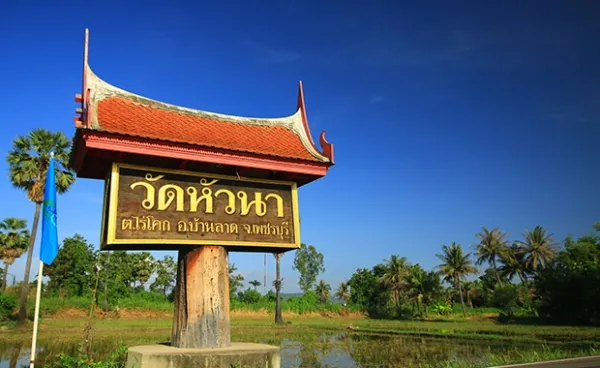
Wat Hua Na is located at No. 85, Moo 5, Rai Khok Subdistrict, Ban Lat District, Phetchaburi Province. It is a local temple under the Mahanikai order with deep roots in the Ban Lat community and surrounding areas. The temple plays a clear role as a spiritual center for local residents and as a shared public space that the community truly uses in everyday life—from alms-giving, chanting, and regular merit-making to seasonal religious observances, Kathin and Pha Pa ceremonies, ordinations, and funerary rites dedicated to the departed. Viewed through the context of Ban Lat as a semi-rural area where agricultural lifestyles remain active and communities are distributed along local roads, Wat Hua Na functions as a practical “core” that connects people, faith, and close-knit neighborly relationships in a tangible way.
The charm of a community temple like Wat Hua Na does not come from grandeur in the way famous tourist temples in central Phetchaburi might, but from its calm atmosphere, sincerity, and the fact that the “life of the temple” continues every day. The area surrounding the temple retains the gentle Ban Lat character that visitors can feel immediately—simple, unhurried, and genuinely local. Stopping by Wat Hua Na suits anyone who wants to pay respects with intention, take a quiet pause from busy routines, witness authentic community Buddhist practice, or add cultural depth to a Phetchaburi trip beyond the old town and beaches by using a temple as a window into the local way of life.
Wat Hua Na was established in 1832 (B.E. 2375), placing it among the long-standing temples of the early Rattanakosin era. In that period, temples in rural Thailand commonly served as hubs for knowledge, moral guidance, and community order. A temple therefore functioned as more than a place for rituals; it was a community institution that gave people a shared framework and a stable spiritual anchor. The foundation of Wat Hua Na in that era reflects a settled community in Rai Khok with strong faith and the need for a firm center of devotion. The temple has grown alongside Ban Lat through many stages—from times when movement depended heavily on local routes, to periods of community expansion, to an era when education and public-benefit activities became more pronounced, and into the present, when more people seek cultural travel and quiet spaces for reflection.
Another key milestone in Wat Hua Na’s history is the royal granting of Wisungkhamsima in 1973 (B.E. 2516), with a designated boundary measuring 25 meters by 43 meters. Wisungkhamsima is an official consecration of the area where major monastic acts can be performed in accordance with the Vinaya, especially ordination. This confirms the temple’s institutional readiness in terms of facilities, organization, and its formal religious function within Thailand’s Sangha structure. Receiving Wisungkhamsima during that period also reflects the temple’s development and the community’s growing stability: the temple was not only a place for general merit-making, but a religious center capable of fulfilling its monastic role in full.
The temple land covers approximately 30 rai. This generous area allows for a well-planned layout where principal sacred structures and community-support spaces can coexist comfortably. Temples with sufficient land are typically able to organize zones clearly—areas for monastic acts, ceremonial spaces, monks’ residences, and functional community areas such as kitchens or event-support zones. For visitors, the spacious setting prevents overcrowding, makes walking around pleasant, and highlights the care and intention behind maintaining the grounds.
Wat Hua Na’s structures clearly reflect the temple’s development during the latter half of the 20th century. The ordination hall, the heart of formal monastic rites, measures 25 meters wide and 43 meters long and was built in 1973 (B.E. 2516) as a Thai-style masonry building. This type of construction emphasizes durability and long-term use. During important ceremonies or major festivals when many laypeople come to make merit, the ordination hall becomes the most revered space, where people pay respects to the principal Buddha image, make heartfelt wishes, and participate in rituals with composure.
Adjacent to the ordination hall is the prayer hall, built in 1972 (B.E. 2515), measuring 20 meters by 40 meters and designed in a Thai architectural style. The prayer hall reflects the “daily rhythm” of temple life because it supports routine practices such as chanting, evening prayers, and other ceremonies that require a calm and orderly atmosphere. When visitors hear chanting or see the space prepared with care, they immediately recognize that the temple is actively practicing its religious duties rather than existing solely as a place to stop for photos.
The sermon hall was built in 1996 (B.E. 2539) as a Thai-style wooden structure measuring 13 meters wide and 50 meters long. In community temples, the sermon hall is often the true heart of communal life because it functions as a multipurpose space for listening to sermons, making merit meals for monks, community meetings, temple charity activities, and event support such as food distribution. The wooden construction creates an airy, comfortable environment suited to local weather and large gatherings. For many locals, this is the shared space that holds personal milestones—merit-making days, ordinations, Kathin ceremonies, and moments of remembrance.
Within the grounds, there are six monks’ quarters, all wooden buildings reflecting the simple and disciplined lifestyle of monastics in a community temple. The quarters provide quiet spaces for rest and daily practice, supporting the temple’s ability to host monks during regular periods and the annual rains retreat without disrupting the overall serenity. Wat Hua Na also has a merit-making pavilion for funerary rites, built with reinforced concrete, as well as a kitchen facility that supports major community events such as merit-making ceremonies, Kathin and Pha Pa activities, communal meals, and other occasions that require organized food preparation and logistics.
In terms of administration, Wat Hua Na has a clear lineage of abbots over time: Phra Dokmai, Phra Thep, Phra Bua, Phra That, Phra Kaew (served 1927–1968), Phra Athikan Plueang Thanavamso (served 1969–1990), and the current abbot Phra Khru Wirun Yanawach, who has served since 1991 (B.E. 2534). Continuity in monastic leadership strongly influences a community temple’s stability, because the abbot serves as both spiritual leader and steward of resources, and as a key coordinator with the local community. When temple management is consistent, the community gains a clear center for organizing merit-making and public-benefit activities.
Wat Hua Na also supports education through its Dhamma Studies School (Phra Pariyatti Tham), opened in 1982 (B.E. 2525). The presence of a pariyatti school means the temple functions beyond ceremonies as a structured learning space for Buddhist teachings, strengthening education for monks, novices, and local residents who seek deeper understanding of the Dhamma. In a rural setting, this is especially important because it preserves accessible religious learning within the community and helps keep Buddhist principles practical and relevant in daily life.
As a cultural travel destination, Wat Hua Na offers an experience distinct from major temples in central Phetchaburi. It is less about visiting a landmark and more about stepping into authentic community life. Visitors can observe how the grounds are organized for real use, see structures that actively support community merit-making, and notice the orderliness that comes from shared care. Spending time here often feels close, comfortable, and unforced, without being guided toward photo spots. With a little more time, visitors tend to appreciate a quietness that is not empty but alive—because the temple is genuinely used, with regular visitors, monastic routines, and a steady community rhythm.
Wat Hua Na is also well-suited for travelers building a serious Ban Lat–Phetchaburi itinerary. Ban Lat connects to multiple zones: central Phetchaburi with important temples and historic architecture, community and agricultural areas with local products, and routes continuing toward Cha-am and the coast. Wat Hua Na can therefore serve as a “pause point” that adds merit-making and local cultural understanding before moving on to livelier destinations.
For visitors who come specifically to pay respects, beginning at the ordination hall is appropriate because it is the most sacred space for formal monastic rites. From there, you can walk around the grounds respectfully, observing each structure and how the community uses space in practice. If chanting or ceremonies are underway in the prayer hall or sermon hall, it is best to keep noise low, speak only when necessary, and respect the laypeople who are making merit. Community temples often feel welcoming and approachable, but composure is what preserves the calm and sacred atmosphere.
Temple etiquette helps ensure a good experience for both visitors and the temple community. Dress modestly, avoid revealing clothing, keep voices down, do not enter restricted areas, and avoid photographing during ceremonies or from angles that could be disrespectful. If you wish to make merit, doing so thoughtfully within your means—such as offering alms, supporting utilities, contributing to the temple’s public-benefit activities, or participating in seasonal merit-making—directly supports the temple and the community and helps the temple maintain its role as a stable local center.
Getting There Wat Hua Na is best reached by private car or local hired transport. Start from Ban Lat District or from Phetchaburi city and follow local roads into Rai Khok Subdistrict. As you approach the community area, watch for directional signs and note traffic conditions during morning hours or on merit-making days. If you visit during a festival or an important ceremony, allow extra time and follow the temple’s on-site guidance for parking and movement to ensure convenience and safety for everyone.
With a balanced plan, Wat Hua Na can serve as either a starting point or a restful stop that makes a Phetchaburi trip feel complete in both spiritual and cultural dimensions. From the temple, continuing to nearby attractions and restaurants in Ban Lat or central Phetchaburi is straightforward, and routes onward to nature areas or relaxation zones are also convenient. Overall, Wat Hua Na suits those who want a calm place to make merit, see a community temple that is actively part of local life, and understand Phetchaburi through the lens of everyday community culture.
| Place Summary | A Mahanikai community temple in Ban Lat District, established in 1832, featuring a Thai-style masonry ordination hall (built 1973) and complete facilities supporting active religious and community life in a calm local setting |
| Address | No. 85, Moo 5, Rai Khok Subdistrict, Ban Lat District, Phetchaburi 76150, Thailand |
| Key Highlights | Historic community temple (est. 1832) with Wisungkhamsima granted in 1973, a large Thai-style masonry ordination hall, and a Thai-style wooden sermon hall that supports ongoing community merit-making |
| Abbot (Current) | Phra Khru Wirun Yanawach |
| Contact Number | 0 3244 6535, 08 1378 1609 |
| Travel | Private car or local hired transport; travel from Ban Lat District or Phetchaburi city into Rai Khok via local roads |
| Current Status | Open for merit-making and religious activities |
| Nearby Tourist Attractions With Distance | 1) Tan Palm Garden (Ban Lat) – 12 km 2) Wat Tham Rong (Ban Lat) – 14 km 3) Phra Ram Ratchaniwet (Ban Puen Palace) – 18 km 4) Wat Mahathat Worawihan (Phetchaburi) – 22 km 5) Phra Nakhon Khiri (Khao Wang) – 24 km |
| Popular Restaurants Nearby | 1) Rabiang Rimnam (Phetchaburi) – 22 km. Tel. 032-425-707 2) Krua Muang Phet (Phetchaburi) – 21 km. Tel. 032-400-900 3) Larp Pak (Phetchaburi) – 23 km. Tel. 032-400-150 4) Jek Meng (Phetchaburi) – 22 km. Tel. 032-425-000 5) Pad Thai Tha Yang (Tha Yang) – 28 km. Tel. 032-461-268 |
| Popular Accommodations Nearby | 1) Royal Diamond Hotel (Phetchaburi) – 22 km. Tel. 032-411-061 2) Sun Hotel Phetchaburi (Phetchaburi) – 21 km. Tel. 032-400-400 3) Ban Khun Hotel (Phetchaburi) – 22 km. Tel. 032-400-222 4) Sweet Dreams Guest House (Phetchaburi) – 23 km. Tel. 032-425-555 5) The Cozy Hotel (Phetchaburi) – 22 km. Tel. 032-400-333 |
Frequently Asked Questions (FAQ)
Q: When was Wat Hua Na established?
A: Wat Hua Na was established in 1832 (B.E. 2375).
Q: When did Wat Hua Na receive Wisungkhamsima?
A: The temple received Wisungkhamsima in 1973 (B.E. 2516).
Q: Who is the current abbot of Wat Hua Na?
A: The current abbot is Phra Khru Wirun Yanawach.
Q: What are the main structures inside the temple?
A: The temple includes a Thai-style masonry ordination hall, a prayer hall, a Thai-style wooden sermon hall, monks’ quarters, a merit-making pavilion, and a kitchen facility.
Q: How does Wat Hua Na support education?
A: The temple operates a Dhamma Studies School (Phra Pariyatti Tham), opened in 1982 (B.E. 2525).
Q: What is the best way to get to Wat Hua Na?
A: The recommended way is by private car or local hired transport via local roads into Rai Khok Subdistrict from Ban Lat District or Phetchaburi city.
Q: How can I contact Wat Hua Na?
A: You can call 0 3244 6535 or 08 1378 1609.
 Wat Hua Na Map
 Category:
  Group:
  Tag: ●Wat Hua Na●wat hua na ●wat hua na ban lat ●wat hua na phetchaburi ●temple in ban lat ●rai khok temple ●buddhist temple phetchaburi ●mahanikai temple thailand ●wisungkhamsima wat hua na ●cultural temple visit phetchaburi ●how to get to wat hua na Last Update: 1 MonthAgo
Comment
 Nearby Attractions
| Keyword (Advance) |
 Region
|
 Muang Phetchaburi(
 Copyright 2012,