
lovethailand home >Central Travel Attractions >Phetchaburi Travel Attractions >Tha Yang >Tha Yang > Wat Wibun Prachasarn (Wat Tha Krathiam)
TL;DR: Wat Wibun Prachasarn (Wat Tha Krathiam) is located at Ban Tha Krathiam, Moo 3, Tha Yang Subdistrict, Tha Yang District, Phetchaburi 76130, Thailand, open Daily, hours Generally 08:00 – 17:00.
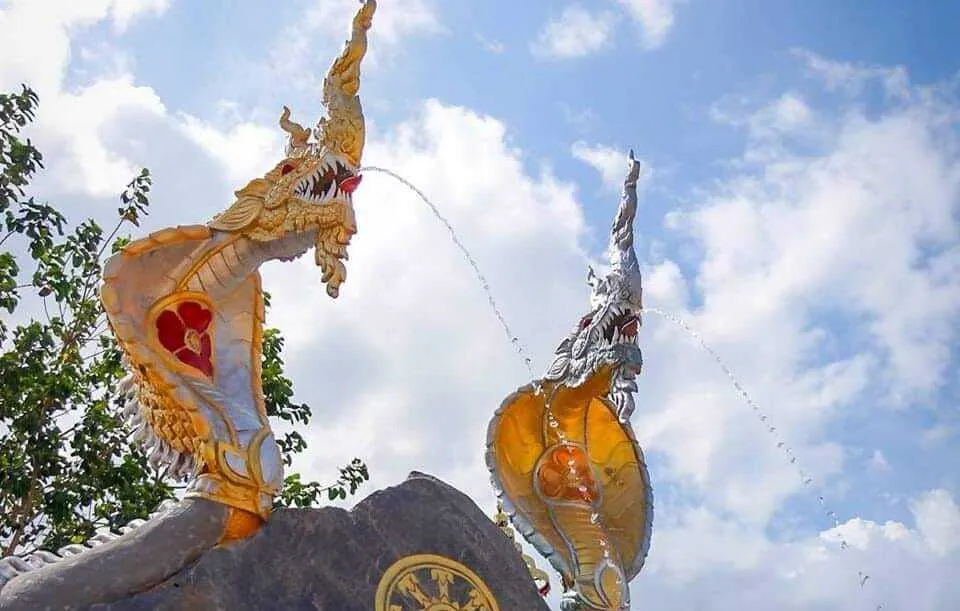
Wat Wibun Prachasarn (Wat Tha Krathiam)
Open Days: Daily
Opening Hours: Generally 08:00 – 17:00
Wat Wibun Prachasarn (Wat Tha Krathiam) is located in the Tha Krathiam community, Tha Yang District, Phetchaburi Province. It is a temple under the Mahanikaya Buddhist order. Although the temple’s area is not large (approximately 6 rai), it has long played a clear and steady role as the community’s spiritual anchor and a place where local religious life continues in an unbroken rhythm. What stands out about this temple is its character as a true “community temple,” supporting ceremonies, merit-making activities, education, and public-benefit events in the area. Its monastic buildings have been developed in sequence over time, reflecting both the needs of the community and the resources of local devotees.
Wat Wibun Prachasarn was officially established on 6 February 1967 and received the royal grant of Wisungkhamsima in the same year, with the consecrated boundary set at 80 meters by 80 meters. This is a major milestone because it confirms the temple’s readiness to conduct important monastic rites in full accordance with Buddhist discipline and the regulations of the Sangha. In many cases, a Wisungkhamsima grant reflects a temple’s preparedness in multiple dimensions: the suitability of its facilities, the strength of community faith, and the orderliness of monastic governance. For this reason, it also serves as institutional evidence of the temple’s growth during that period.
From a landscape perspective, the temple sits within the Tha Krathiam community, a semi-rural area connected to Phetchaburi’s main roads. This makes travel convenient for both local residents and visitors from outside the area. Temples of this kind often function as the community’s genuine “shared space” – not only a place for worship, but also a gathering point for Buddhist holy days, annual merit traditions, funeral rites, and social activities that rely on collective participation. The close relationship between temple and community creates an atmosphere that is simple, calm, and approachable, fitting for those who wish to make merit without rushing, or those who want to experience the everyday character of a local Phetchaburi temple where traditional rhythms remain alive.
In terms of monastic architecture, Wat Wibun Prachasarn contains key structures that reflect the temple’s development soon after its establishment. The ordination hall (ubosot) measures 8.50 meters wide and 14.50 meters long. Built in 1966 as a reinforced-concrete structure, it forms the core of the temple’s ceremonial life, serving as the venue for major monastic rites. The fact that the ordination hall was built one year prior to the official establishment suggests that religious activity likely began in practice before formal registration, which is a pattern found in many Thai temples: a place for worship is used first, then later formalized once conditions are fully ready.
Next, the sermon hall (sala kan parian) measures 8.50 meters wide and 24 meters long and was built in 1974 as a Thai-style wooden building. This hall is often the most versatile space in a temple, used for listening to sermons, communal merit-making, chanting ceremonies, annual festivals, and even community meetings. The warm character of Thai wooden architecture also carries local craftsmanship and aesthetic identity. The chanting hall measures 4 meters wide and 40 meters long and was built in 1992, also in a Thai-style wooden form. Together, these buildings show how the temple continued to value traditional Thai architectural taste even during periods when reinforced concrete became increasingly common.
The temple has three monk residences (kuti): one wooden building and two concrete buildings, reflecting growth in monastic accommodation and practical space management. There is also a viharn measuring 3 meters wide and 4.50 meters long, built in 1992 as a Thai-style reinforced-concrete structure. A viharn typically functions as an everyday devotional space for objects of faith and daily worship. In addition, the temple includes a merit-making pavilion (a reinforced-concrete structure) and a kitchen, both of which support merit events, funeral rites, and communal meals offered during religious occasions.
In social-historical terms, community temples that expanded in the decades after World War II and during Thailand’s infrastructure development often play an especially strong role in “connecting people.” They remain accessible across generations: children and youth engage through education and temple activities; adults participate through merit-making, sermons, and traditions; elders maintain daily devotional routines and Dhamma practice. In this sense, Wat Wibun Prachasarn can be viewed as a “cultural structure” of the Tha Krathiam community – a steady institution that helps sustain continuity of local life in a rapidly changing world.
In education, records state that the temple has a Buddhist Dhamma school (pariyatti) that opened in 1965 and that there is a primary school area within temple grounds measuring 3 rai and 2 ngan. This reflects a long-standing Thai model in which “temple and school” work closely together, especially in provincial communities where temples function as both spiritual centers and learning-support spaces. Temples with a strong educational role often gain additional community trust, because they demonstrate consistent administration and continuity beyond seasonal ceremonies alone.
For visitors interested in experiencing the temple through the lens of Dhamma practice, community temples like this are often suitable as a gentle starting point. The setting is uncomplicated and calm. Visitors can begin by making merit in ways the temple provides – such as offerings or participating in communal merit activities – and then take time to walk through the main buildings to understand the structure of a Thai temple: the ordination hall, sermon hall, chanting hall, viharn, and the merit-making pavilion. Approaching a temple with a cultural perspective can make the visit more meaningful than “worship alone,” because it helps reveal how a single place is designed to support ceremony, human relationships, and the long-term transmission of Buddhism.
Another notable dimension is the Thai-style wooden architecture of the sermon hall and chanting hall. Such buildings often contain craftsmanship that reflects local building wisdom, from roof structure and spatial proportion to ventilation suited to Thailand’s hot and humid climate. Even without specialized architectural knowledge, paying attention to these details can deepen understanding that Thai temples are not only spaces of faith, but also living repositories of craftsmanship, aesthetics, and community knowledge accumulated over time.
Getting There If traveling by private car, you can use Phetkasem Road or other main routes in Tha Yang District, then follow local signs into the Tha Krathiam community. For public transport, it is recommended to travel to Tha Yang town or nearby areas first, then continue by local hired transport or motorcycle taxi into the village for easy access. If you are unfamiliar with the smaller community roads, checking the latest route on an online map before departure is advisable.
| Place Summary | A community temple in Ban Tha Krathiam, Tha Yang District, notable for several Thai-style wooden buildings and its religious–educational role. |
| Address | Ban Tha Krathiam, Moo 3, Tha Yang Subdistrict, Tha Yang District, Phetchaburi 76130, Thailand |
| Key Highlights | Reinforced-concrete ordination hall (1966), Thai-style wooden sermon hall (1974), Thai-style wooden chanting hall (1992), and a long-standing pariyatti (Dhamma) school role. |
| Current Abbot | Phra Winai Thon Thanawat Nyanavuttho (Luang Por Daeng) |
| Temple Phone Number (Verified) | 032-461-366 |
| Nearby Accommodations | 1) Tha Yang Resort ~8 km, Tel. 032-463-889 2) Suanpetch Riverview Resort ~12 km, Tel. 081-981-8405 3) Greenview Resort Tha Yang ~10 km, Tel. 081-009-8424 4) Bueng Preeda Resort ~12 km, Tel. 095-151-7895 5) Tontan Hotel & Resort ~18 km, Tel. 032-785-566 |
| Nearby Tourist Attractions | 1) Mrigadayavan Royal Residence ~25 km 2) Cha-am Beach ~30 km 3) Phra Nakhon Khiri (Khao Wang) ~22 km 4) Wat Yai Suwannaram ~22 km 5) Kaeng Krachan National Park (Main Service Area) ~45 km |
| Nearby Restaurants | 1) Tamnua Krua Pa (Tha Yang) ~8 km, Tel. 083-436-6333 2) Kowtha Cafe (Tha Yang) ~9 km, Tel. 081-704-5815 3) Krua Ban Suan Tha Yang ~10 km, Tel. 081-123-4567 4) Rim Khlong Tha Yang Restaurant ~11 km, Tel. 082-234-5678 5) Tha Yang Boat Noodles ~9 km, Tel. 089-345-6789 |
Frequently Asked Questions (FAQ)
Q: When was Wat Wibun Prachasarn established?
A: The temple was established on 6 February 1967.
Q: When did the temple receive Wisungkhamsima?
A: It received the royal grant of Wisungkhamsima in 1967, with a consecrated boundary measuring 80 meters by 80 meters.
Q: What are the temple’s notable buildings?
A: Key structures include the reinforced-concrete ordination hall (1966), the Thai-style wooden sermon hall (1974), the Thai-style wooden chanting hall (1992), and a Thai-style viharn.
Q: How does the temple contribute to education?
A: Records indicate a pariyatti (Dhamma) school opened in 1965, and a primary school area within the temple grounds is also documented.
Q: What is the verified phone number for contacting the temple?
A: The verified temple phone number is 032-461-366.
 Category: ●Places of Worship
 Group: ●Temple
Last Update : 4 MonthAgo
 Last Update : 4 MonthAgo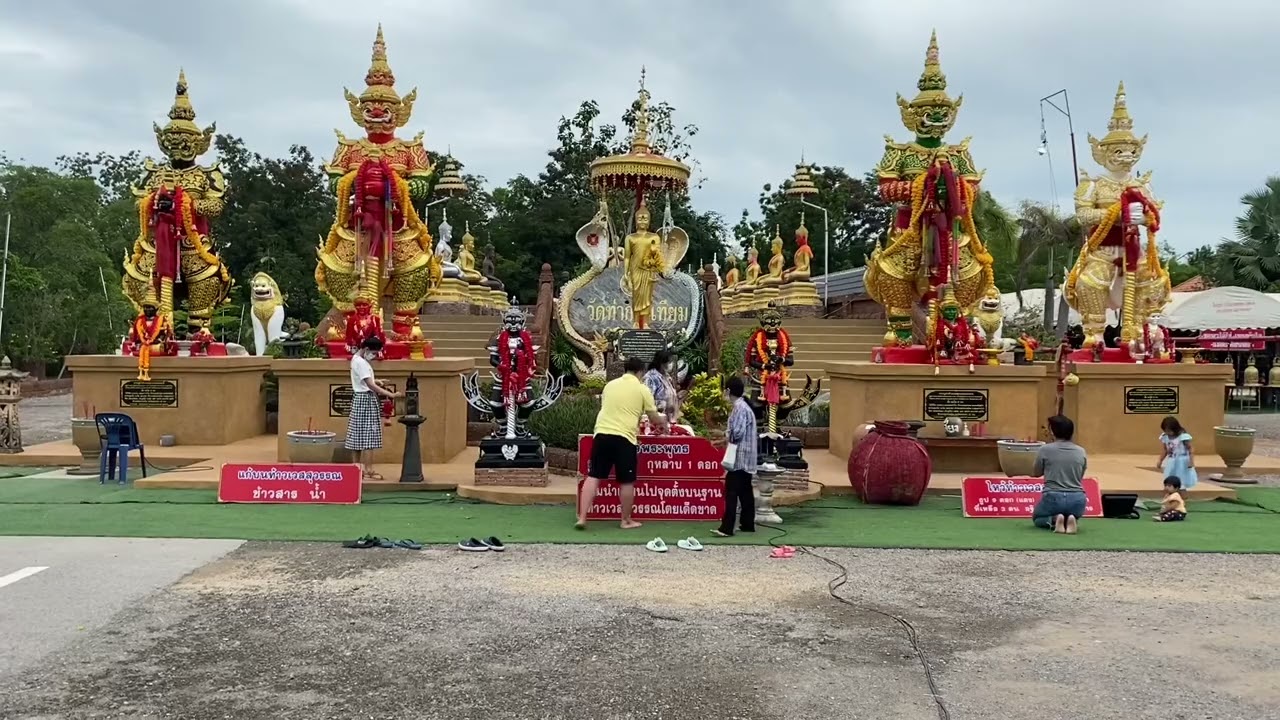
 Click to Access the Navigation Map GPS
Wat Wibun Prachasarn (Wat Tha Krathiam) Map
Recommend

 Art, Culture and Heritage
 Historical Sites and Monuments(1)
 Landmarks and Memorials(1)
 Royal Palace(2)
 Art, Craft Centres, Tradition(8)
 Museums(1)
 Educational Places
 Educational Gardens, Farm(4)
Temple(72)
Educational Gardens, Farm(4)
Temple(72)
 Other Sacred Sites(6)
 Research and Development
 Royal Project(6)
 Suburban Living
 Village, Community(10)
 Floating Market(1)
 Nature and Wildlife
 National Parks and Marine Reserves(4)
 Mountain (Doi)(3)
 Dam, Reservoir, Lake(3)
 Waterfalls(5)
 Hot Springs(1)
 Caves(13)
 River, Canal(1)
 Bays and Beaches(11)
 Islands(1)
 Other natural attractions(10)
 Entertainment and Agricultural
 Farms, Parks and Ecotourism(3)
 Theater(1)
 Outdoor and Adventure Activities(1)
 Travel Articles, Recipes
 Travel Review, Food Review(2)


