

 Home
Home Chiang Mai(




Wat Cha Am
Rating: 3.2/5 (26 votes)
 Search By
  Map
Map 
 Have Map
  No Map
Phetchaburi attractions
Attractions in Thailand
Open Days: Daily
Opening Hours: Approximately 08:00 – 17:00
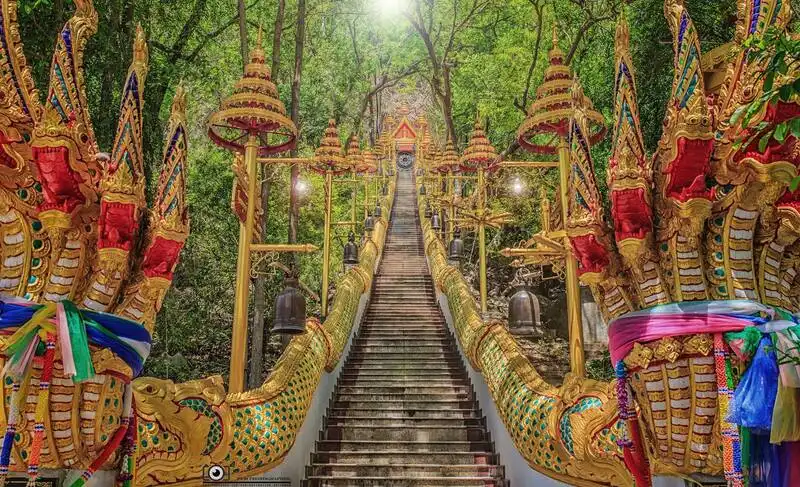
Wat Cha-am is located in Cha-am District, Phetchaburi Province. It is an ancient temple that has long existed alongside the formation and growth of the coastal community of Cha-am since the mid-19th century. The temple is not merely a place for religious ceremonies; it also serves as a spiritual center, a foundation for moral cultivation, and a cultural space that has continuously connected generations of local people over time.
According to the historical evidence that still remains, Wat Cha-am was established in the year 1864, during the late reign of King Rama IV. At that time, the western coast of the Gulf of Thailand was seeing increasing permanent settlements of fishing communities and trading villages. However, the name of the temple’s founder was never officially recorded, or the documents may have been lost over time. At present, the temple is still in the process of researching and compiling additional historical information in order to present a more complete account of its origins.
Although written records about the founder are lacking, collective community memory has served as an important historical archive. According to oral accounts passed down by local elders, the former abbots of Wat Cha-am are remembered in succession as follows: Luang Pho Choti, Luang Pho Wek, Luang Pho Chao, Luang Pho Chin, and Luang Pho Lam. These names reflect the continuity of Buddhist leadership rooted in community faith and demonstrate that Wat Cha-am has been sustained through the collective devotion of local residents.
Key Historical Milestones of Wat Cha-am In 1864, Wat Cha-am was first established amid the social context of a coastal rural society that relied heavily on natural resources and the sea. The temple therefore functioned as both a religious and social center of the community. Later, in 1934, Wat Cha-am was granted Wisungkhamsima, marking a significant milestone that elevated the temple’s legal and religious status. This royal boundary designation allowed the temple to conduct ordination ceremonies in full accordance with monastic law.
The granting of Wisungkhamsima was not only a legal recognition but also a reflection of Wat Cha-am’s role as a center for ordination and the preservation of Buddhism along the Phetchaburi coastline. As a result, the temple has remained significant both spiritually and socially for generations.
In terms of architecture and monastic structures, Wat Cha-am has undergone continuous development and renovation in accordance with each era. The main buildings, including the ordination hall, sermon hall, and monks’ residences, serve as essential spaces for religious rites, merit-making activities, and community gatherings. Their architectural character reflects a balance between practical use, simplicity, and the deep faith held by the local community.
Regarding monastic administration, Wat Cha-am is currently led by Phra Athikan Amnat Thanissaro as the abbot. He plays a key role in overseeing temple affairs, revitalizing the temple’s function as a spiritual center, and fostering cooperation between the temple and the local community.
Wat Cha-am maintains a deep connection with the way of life of Cha-am residents, particularly fishing and coastal communities. The temple serves as the venue for important life-cycle rituals from birth to old age and death, hosts merit-making ceremonies and traditional events, and functions as a spiritual anchor that nurtures moral values within the community.
Getting There Wat Cha-am is easily accessible from Cha-am town via the main roads of the district. Located close to the beach and major tourist attractions, the temple allows visitors to combine religious visits, local history exploration, and seaside relaxation within a single trip.
| Place Summary | An ancient temple closely tied to the Cha-am community, established in 1864, with enduring roles in religion, tradition, and coastal community life. |
| Address | Cha-am District, Phetchaburi Province, Thailand |
| Key Highlights | Coastal community temple, long historical continuity, community memory as cultural heritage. |
| Current Abbot | Phra Athikan Amnat Thanissaro |
| Nearby Accommodations | 1) Long Beach Cha-am Hotel ~3 km, Tel. 032-508-999 2) Methavalai Cha-am Hotel ~4 km, Tel. 032-508-000 3) Ban Talay Dao Cha-am ~5 km, Tel. 032-508-666 4) Golden Beach Cha-am ~4 km, Tel. 032-508-777 5) Rainbow Cha-am ~3 km, Tel. 032-508-888 |
| Nearby Tourist Attractions | 1) Cha-am Beach ~2 km 2) Mrigadayavan Palace ~7 km 3) Cha-am Night Market ~2 km 4) Cha-am Forest Park ~6 km 5) Sirindhorn International Environmental Park ~5 km |
| Nearby Restaurants | 1) Krua Medsai ~2 km, Tel. 032-508-111 2) Krua Cha-am ~2 km, Tel. 032-508-222 3) Ban I-Sara Cha-am ~3 km, Tel. 032-508-333 4) Lung Nuay Seafood ~4 km, Tel. 032-508-444 5) Krua Rim Talay ~3 km, Tel. 032-508-555 |
Frequently Asked Questions (FAQ)
Q: When was Wat Cha-am established?
A: Wat Cha-am was established in 1864.
Q: When was Wisungkhamsima granted to Wat Cha-am?
A: The temple received Wisungkhamsima in 1934.
Q: Who is the current abbot of Wat Cha-am?
A: The current abbot is Phra Athikan Amnat Thanissaro.
Q: Why is Wat Cha-am important to the local community?
A: It serves as a spiritual center, a venue for traditions and ceremonies, and a cornerstone of coastal community life.
Q: Is Wat Cha-am easy to visit for tourists?
A: Yes, the temple is conveniently located near Cha-am town and major tourist attractions.
 Wat Cha Am Map
 Category:
  Group:
  Tag: ●Wat Cha Am●wat cha-am ●cha-am temple ●temples in phetchaburi ●historic temple cha-am ●buddhist temple cha-am ●coastal temple thailand ●cha-am cultural attractions ●temples near cha-am beach Last Update: 2 WeekAgo
Comment
 Nearby Attractions
| Keyword (Advance) |
 Facebook Fanpage
 Region
 Art, Culture and Heritage
 Historical Sites and Monuments(
 Landmarks and Memorials(
 Royal Palace(
 Art, Craft Centres, Tradition(
 Museums(
 Educational Places
 Educational Gardens, Farm(
 University
 Other religious and spiritural sites(
 Research and Development
 Royal Project(
 Suburban Living
 Village, Community(
 Floating Market(
 Nature and Wildlife
 National Parks and Marine Reserves(
 Mountain (Doi)(
 Dam, Reservoir, Lake(
 Waterfalls(
 Hot Springs(
 Caves(
 River, Canal(
 Bays and Beaches(
 Islands(
 Other natural attractions(
 Entertainment and Agricultural
 Farm, Parks, Gardens and Ecotourism(
 Theater(
 Outdoor and Adventure Activities(
 Travel Articles, Recipes
 Travel Review, Food Review(
 Copyright 2012,