
 Home
Home North(
 Chiang Mai(


Wat Wang Chan (Wat Ban Song)
Rating: 2.9/5 (17 votes)
 Search By
  Map
Map 
 Have Map
  No Map
Phetchaburi attractions
Attractions in Thailand
Open Days: Daily
Opening Hours: 08:00 – 17:00
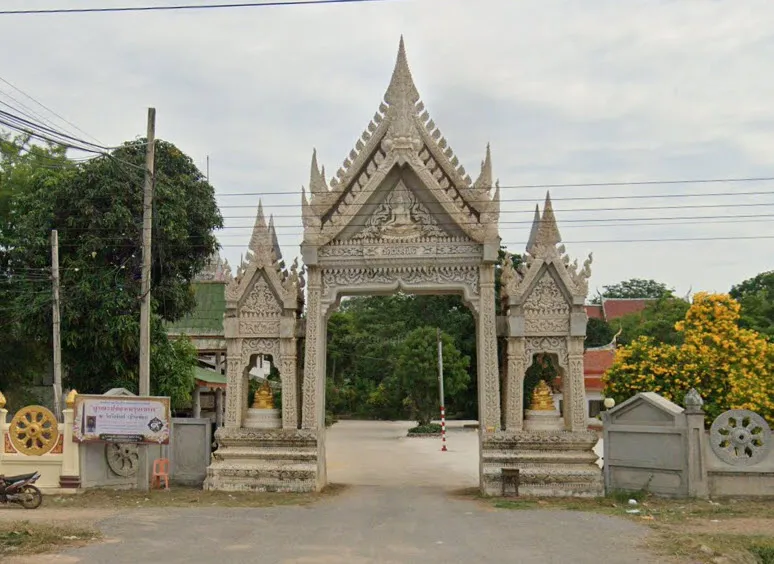
Wat Wang Chan (Wat Ban Song) is a long-established community temple in Ban Wang Chan, Moo 1, Wang Chan Subdistrict, Kaeng Krachan District, Phetchaburi. In a destination best known for forests, the reservoir, and outdoor activities around Kaeng Krachan Dam and Kaeng Krachan National Park, a village temple like this works as a genuine “pause point” that adds a human rhythm to an otherwise nature-focused itinerary. Visitors who are used to checking into viewpoints, boat piers, and restaurants often find that a short stop at a lived-in temple helps reset the pace of the day: the atmosphere becomes quieter, conversations soften, and the feeling of travel turns from “rushing through places” into “understanding where you are.”
What makes Wat Wang Chan worth writing about is not spectacle, but continuity. It has grown alongside Ban Song (the village name widely associated with the temple), and it remains part of everyday life rather than an attraction built primarily for tourism. This difference matters for travelers who want a more complete picture of Kaeng Krachan. Nature here is powerful and obvious, but the village network that supports local life is more subtle. A community temple is often the best lens for seeing that network because it is where merit-making, funerals, seasonal ceremonies, school-related events, and collective problem-solving tend to converge. Even if you arrive on an ordinary weekday, small cues such as noticeboards, donation boxes, or the way local people greet one another can reveal how the temple functions as a shared public space.
The temple land is sizeable for a rural community setting. The main plot is recorded at 37 rai 2 ngan 20 square wah, and there is also a plot of monastic land (thonii song) recorded at 11 rai 3 ngan 65 square wah under land title deed no. 3238. A temple with this scale of land can separate zones for religious functions and community activities more clearly than a small temple can. For visitors, this usually translates into a calmer experience: there is more breathing space, walking paths do not feel cramped, and gatherings can happen without making the whole compound feel congested. It also means the temple can host village events more comfortably, especially during periods like Kathin and Pha Pa when attendance increases.
The stated boundaries also show how closely the temple is tied to local circulation. To the north it borders the road leading into Ban Song and a water area (a pond or wetland). To the east it borders private land. To the south it borders the Khuen Phet – Kaeng Krachan road (a key corridor connecting village zones with the wider Kaeng Krachan travel route). To the west it borders another access road into Ban Song. This kind of positioning is typical of a temple that acts as a community hub: people can approach it easily from multiple directions, and it can serve as a natural meeting point without requiring long detours. For travelers driving through Kaeng Krachan, that accessibility makes the stop practical rather than symbolic: it fits into a day plan without forcing you to reorganize the route.
The temple is recorded as established in 1912 (B.E. 2455), and the place-name is explained through local geography and memory. In the past, the area was associated with a riverside setting and the presence of chan trees (which contributed to the name “Wang Chan”). Meanwhile, the village has been known as Ban Song, which is why the temple is commonly referred to as Wat Wang Chan (Wat Ban Song). Place-names like this are important for travel writing because they encode the relationship between landscape and settlement: they tell you what older residents noticed first, what the area was known for, and how identity is carried forward even as roads and travel patterns change.
A key turning point occurred in 1968 (B.E. 2511), when the temple was relocated from the older site to the current location near the Kaeng Krachan road. The relocation is associated with Phra Athikan Prawin, who led the move and the re-establishment process so the temple could continue serving the community under the new spatial reality shaped by transport and development. In rural Thailand, temple relocation is never a purely technical act; it is a community decision that involves negotiating land, access, and ritual continuity. The fact that this site has remained in use since then suggests that the move succeeded in aligning the temple with how local people actually travel, gather, and live.
Wat Wang Chan later received royal consecration of the ordination boundary (wisungkhamsima) on 2 June 1989 (B.E. 2532), with a boundary recorded at 30 meters wide and 60 meters long. For readers who are not familiar with Thai monastic administration, this is not a decorative detail: it signals that the temple has an officially designated ubosot boundary for formal monastic acts in accordance with monastic discipline and relevant regulations. For visitors, it helps explain why the ubosot is treated with particular respect and why certain ceremonies are centered around that space.
The temple’s buildings reflect a practical community layout rather than a tourist-oriented design. The ubosot is a reinforced concrete structure recorded as 6.50 meters wide and 25.50 meters long, built in 1981 (B.E. 2524). This is the core sacred space, used for key ceremonies and moments of concentrated quiet. The sala kan parian (preaching hall) is recorded as a wooden building, 9 meters wide and 28 meters long, built in 1968 (B.E. 2511). Wooden halls often carry a warmth and a sense of everyday familiarity that suits village usage: people gather there for sermons, communal meals during merit-making days, and ritual preparation. The prayer hall (ho suat mon) is recorded as reinforced concrete, built in 1981, supporting regular chanting and devotional practice.
Monastic residences (kuti) are recorded as eight units, with four wooden buildings and four mixed wood-and-concrete structures, also associated with construction around 1981. There is also a large multipurpose pavilion recorded at 17 meters wide and 44 meters long (wooden, built in 1981), plus a funeral pavilion (sala bamphen kuson) recorded as reinforced concrete. In a community temple, these structures are not “extras.” They are the infrastructure that allows the temple to hold funerals, host large merit-making events, and function as a social support system. For travelers, understanding this helps shift the gaze: you stop looking for a single iconic highlight and start reading the temple as a working civic-religious space.
The principal revered object recorded for the ubosot is a Buddha image in the Mara-vijaya posture (victory over Mara), one image serving as the spiritual anchor for worship. For many visitors, paying respect here is less about ritual complexity and more about setting a calm intention for the day. In Kaeng Krachan, where itineraries often involve water activities, long drives, and outdoor exposure, starting with a quiet moment can feel grounding. A simple visit might include lighting incense if appropriate, offering flowers, making a small donation according to one’s means, and spending a few minutes in silence. The value of the stop is proportional to attention, not to how long you stay.
Administration and leadership history is recorded through a list of abbots remembered by the community: Phra Chai (the first), Phra Prathip (the second), Phra Prawin Wiriyathero (1969–1971), Phra Somphong Analayo (1971–1978), and Phra Khru Piyawatcharatham (1978–2002). In community temples, such lineages function like a social timeline. They signal continuity of care, the long-term relationships between monks and households, and the way the temple accumulates trust across generations. Where visitors often look for the newest facilities, this type of record points instead to something more important for cultural travel writing: the durability of community institutions.
Wat Wang Chan also holds a recorded educational role through a Dhamma (ธรรม) division of a monastic school (phra pariyatti) that opened in 1972 (B.E. 2515). Even without seeing a classroom in action, this detail matters because it tells you the temple has been more than a ceremony venue. It has been part of local learning, moral education, and the transmission of Buddhist knowledge. In a district where many visitors focus on forests and reservoirs, a temple with a documented learning function adds balance to the story of the place: Kaeng Krachan is not only nature; it is also a lived landscape of teaching, caretaking, and community organization.
From a travel-planning perspective, Wat Wang Chan fits best as a calm stop either at the start of the day (before heading deeper toward the reservoir zone and viewpoints) or as a gentle decompression stop after nature activities. If you are doing a one-day Kaeng Krachan route, a common structure that works well is: begin with a short merit-making visit to stabilize the day’s rhythm, then move on to the dam area for scenery and water viewpoints, and later choose a restaurant by the reservoir. If the trip extends beyond a single day, the temple becomes even more useful as a cultural counterpoint to repeated nature stops. Rather than treating it as a checkbox, it is better to approach it as an anchoring place that reveals how the local community structures time and shared responsibility.
Getting There Wat Wang Chan (Wat Ban Song) is accessed via the Khuen Phet – Kaeng Krachan road. From Kaeng Krachan town area, drive along the main corridor toward Wang Chan Subdistrict, then follow local access roads into Ban Song (Ban Wang Chan area). Because the temple is embedded in the village context and connected by roads on multiple sides, the final approach is typically straightforward. Drive slowly once you enter the community zone, watch for local traffic and pedestrians, and park respectfully without blocking village access. As with any Thai temple visit, dress modestly, keep voices low, and avoid entering sacred buildings during ceremonies unless invited or clearly permitted by local signage.
| Place Name | Wat Wang Chan (Wat Ban Song) |
| Address | Ban Wang Chan, Moo 1, Wang Chan Subdistrict, Kaeng Krachan District, Phetchaburi |
| Place Summary | A long-established community (Mahanikaya) temple associated with Ban Song, recorded as founded in 1912 and relocated to the current roadside setting in 1968. The temple received wisungkhamsima on 2 June 1989 (30 m x 60 m). Its layout reflects practical village use, combining wooden and reinforced concrete structures and supporting community rituals, education, and everyday merit-making. |
| Key Highlights | Historic village temple identity linked to riverside landscape and chan trees; relocated in 1968 to match community access; spacious temple land and additional monastic land enabling community-scale events; mixed-material architecture (wood and reinforced concrete) suited to real daily use; recorded Dhamma pariyatti education since 1972; a meaningful cultural pause within Kaeng Krachan’s nature-centric travel routes. |
| Abbot / Temple Leadership | Recorded leadership history includes Phra Chai, Phra Prathip, Phra Prawin Wiriyathero (1969–1971), Phra Somphong Analayo (1971–1978), and Phra Khru Piyawatcharatham (1978–2002). (No verified current abbot contact was found from accessible sources at the time of writing.) |
| Nearby Tourist Attractions (Approx. Driving Distance) | 1) Kaeng Krachan Dam ~18 km 2) Kaeng Krachan Suspension Bridge ~20 km 3) Kaeng Krachan Reservoir Viewpoints / Boat Zone ~20 km 4) Kaeng Krachan National Park (Front Gate Area) ~28 km 5) Phanoen Thung Viewpoint Zone ~45 km |
| Popular Restaurants Nearby (Approx. Driving Distance) | 1) Wirot Kaeng Krachan Ros Ded ~18 km (Tel. 081-426-9506) 2) Sewana @ Kaeng Krachan ~19 km (Tel. 094-084-8210, 094-084-8209) 3) Haeo Hua Pla Mor Fai (Kaeng Krachan) ~20 km (Tel. 096-851-4055) 4) Kaeng Phet (Rim Khuen / Dam Area) ~20 km (Tel. 032-459-242, 081-705-3648) 5) Chai Hat Restaurant (Dam Area) ~20 km (Tel. 089-258-8790, 091-814-9789) |
| Popular Accommodations Nearby (Approx. Driving Distance) | 1) Kaeng Krachan River Resort ~22 km (Tel. 081-255-2006, 081-705-2260) 2) Kaeng Krachan Country Club & Resort ~22 km (Tel. 032-459-260, 032-459-261) 3) Jamjan Resort ~23 km (Tel. 032-409-901, 093-017-5222) 4) Baan Maka Chalet Resort ~25 km (Tel. 081-906-0606, 081-848-9009) 5) Kenaray Farmstay ~27 km (Tel. 094-979-5665) |
Frequently Asked Questions (FAQ)
Q: Where is Wat Wang Chan (Wat Ban Song) located?
A: It is in Ban Wang Chan (Ban Song area), Moo 1, Wang Chan Subdistrict, Kaeng Krachan District, Phetchaburi, with access via the Khuen Phet – Kaeng Krachan road and village approach routes.
Q: Why is this temple also called “Wat Ban Song”?
A: The temple is closely associated with the village historically known as Ban Song, so local usage commonly pairs the place-name with the village identity as Wat Wang Chan (Wat Ban Song).
Q: When was the temple established, and why was it relocated?
A: It is recorded as established in 1912 (B.E. 2455). In 1968 (B.E. 2511), it was relocated from the older site to the current location near the main road to improve access and long-term community use, with the relocation associated with Phra Athikan Prawin.
Q: What does wisungkhamsima mean for visitors?
A: Wisungkhamsima is the officially designated ordination boundary for the ubosot, which indicates the temple has an authorized space for formal monastic acts. Wat Wang Chan received this on 2 June 1989 (B.E. 2532), recorded as 30 meters by 60 meters.
Q: What are the key buildings and sacred focus points at the temple?
A: The recorded structures include a reinforced concrete ubosot (built 1981), a wooden preaching hall (built 1968), a reinforced concrete prayer hall (built 1981), eight monastic residences, a large multipurpose pavilion, and a funeral pavilion. The main revered object recorded is the ubosot’s principal Buddha image in the Mara-vijaya posture.
Q: Is it worth stopping here if my main plan is Kaeng Krachan Dam?
A: Yes. If you want a trip that includes both nature and community life, this temple works well as a calm stop that helps reset the day before or after visiting the dam and reservoir zone, without requiring a major detour.
 Wat Wang Chan (Wat Ban Song) Map
 Category:
  Group:
  Tag: ●Wat Wang Chan (Wat Ban Song)●wat wang chan ●wat ban song ●kaeng krachan temple ●phetchaburi temple ●temples in phetchaburi ●merit making in thailand ●kaeng krachan day trip ●kaeng krachan dam ●kaeng krachan national park ●things to do in kaeng krachan Last Update: 1 MonthAgo
Comment
 Nearby Attractions
| Keyword (Advance) |
 Region
|
 Muang Phetchaburi(
 Copyright 2012,