
 Home
Home North(
 Chiang Mai(


Wat Khao Kling
Rating: 3.1/5 (19 votes)
 Search By
  Map
Map 
 Have Map
  No Map
Phetchaburi attractions
Attractions in Thailand
Open Days: Daily
Opening Hours: 08:00 – 17:00
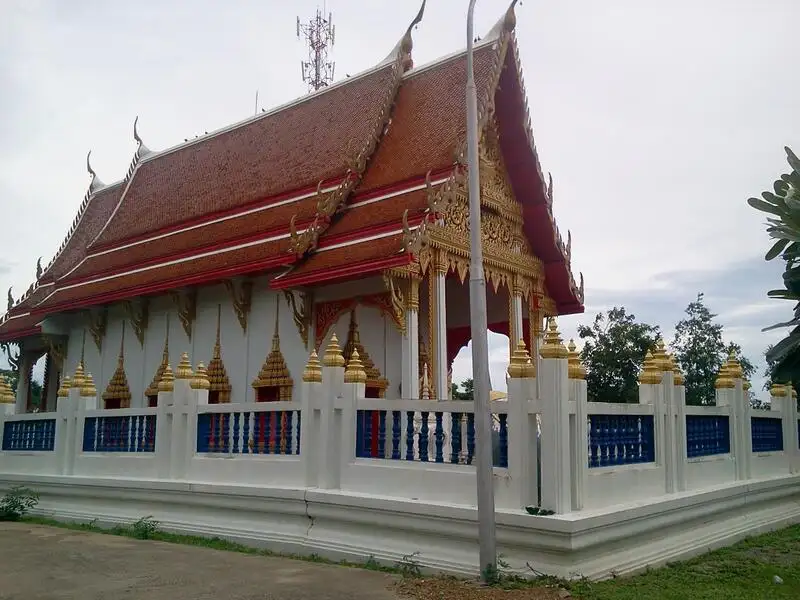
Wat Khao Kling is located at No. 104, Ban Khao Kling, Moo 11, Kaeng Krachan Subdistrict, Kaeng Krachan District, Phetchaburi Province. It is a local (community) temple under the Maha Nikaya sect, and its “sense of place” is clear even before you step through the entrance. One side of the temple connects to the Khuen Phet – Kaeng Krachan Road, a main route used by travelers, while the other side is embraced by mountains and public land. This setting gives the temple a naturally calm atmosphere. Although Kaeng Krachan is widely known as a nature destination where people head for the dam, forests, and ecotourism routes, a community temple like Wat Khao Kling functions as a “pause point” along the way—a short moment that slows the rhythm of the day before you return to outdoor activities, continue driving, or explore restaurants around the dam area.
The temple land covers approximately 49 rai and 20 square wah (Nor Sor 3 document no. 2914). A site of this size allows the temple to arrange its religious and community-use spaces in a complete and practical way. There is room for the core religious zone used for ceremonies as well as areas that support community gatherings. This is typical of rural temples that are “used in real life” rather than built mainly for tourism. Because the grounds are not cramped, visitors often feel a sense of openness and ease. You can choose your own pace—whether you want a quick visit to pay respects or a slower walk to observe the temple environment—without feeling rushed or in anyone’s way.
The temple boundaries make it easy to understand its position within the local community structure. To the north, it borders the Khuen Phet – Kaeng Krachan Road, meaning the temple sits along a key travel corridor in the district. This makes it convenient to stop by and realistic to plan as a rest point on a day trip. To the west, it borders public land, while the south and east border mountains and public land as well. This relationship gives Wat Khao Kling both “easy access” and “mountain-backed quiet” in the same place. Many visitors notice that once they enter the temple grounds, outside noise gradually fades and the tension of travel naturally loosens.
The charm of Wat Khao Kling lies in its identity as a living community temple that moves with everyday local rhythms. People come to make merit, pay respects, join seasonal merit-making events, and gather when there are funerals or important village occasions. If you want to see Kaeng Krachan in both the “nature dimension” and the “people dimension,” stopping at a community temple adds an essential layer to the experience. You will see how the community uses the temple as a shared space—for faith and for mutual support in daily life. This kind of beauty does not need to be staged; it comes from the steady continuity of meaningful practices repeated with intention.
Historically, Wat Khao Kling was established in 1985 (B.E. 2528). It originally began as a monk residence known as “Chitta Wiwek Khiriwan,” founded by Mr. Plaek Khlai Phet to support wandering monks who stayed here under their forest canopies. Over time, additional buildings were constructed and the process of officially establishing the temple was completed in line with the relevant regulations. This story reflects a common pattern in rural religious sites: the place starts as a practical space for practice and support, then gradually develops into a fully structured temple serving the community. In time, the temple becomes not only a place for rituals but also a social institution that stands alongside the village in a stable and enduring way.
The temple received its wisungkhamsima on April 23, 1986 (B.E. 2529), with a boundary area measuring 40 meters in width and 60 meters in length. This milestone is important for understanding the temple’s formal status, because a wisungkhamsima establishes the ordination hall boundary for performing monastic acts according to the Vinaya and related regulations. With this, the temple is prepared to conduct key religious ceremonies properly and in accordance with the standards of the Sangha. If you keep this context in mind before walking around, you can better appreciate the temple’s development from a monk residence into a structured center of faith with an official framework.
One reason Wat Khao Kling is “easy to read” for visitors is the completeness and clarity of its buildings. The ordination hall (ubosot) measures 8 meters wide and 23.50 meters long, built in 1980 (B.E. 2523) as reinforced concrete. It supports important ceremonies and often serves as a calm focal point for those who come to pay respects with quiet attentiveness. The sermon hall (sala kan parian) measures 9 meters wide and 15 meters long, built in 1973 (B.E. 2516), also reinforced concrete, typically used for merit-making, listening to Dhamma talks, and community activities. There are 9 monk residences (kuti), including 2 half-concrete, half-wood structures, reflecting growth shaped by real needs rather than extravagance—practical readiness for monastics and visitors alike.
Another building that contributes to the temple’s character is the viharn, measuring 12 meters wide and 20 meters long, built as a single-story wooden structure. Wood architecture often feels warm and blends naturally with the surrounding mountains and greenery. The temple also has a large multipurpose pavilion measuring 32 meters wide and 20 meters long, built in 1994 (B.E. 2537) as single-story reinforced concrete, along with one reinforced-concrete funeral pavilion. In addition, there are a Dhamma practice pavilion, a kitchen, and a storage pavilion. Together, these elements quietly indicate that Wat Khao Kling is not merely a “pass-by” worship stop, but a temple capable of supporting real community gatherings. When Kathina, Pha Pa, or other communal events take place, there is enough space for activities to run smoothly and in an orderly manner.
In terms of revered objects, the temple enshrines a principal Buddha image made of laterite in the Maravijaya posture, and another metal Buddha image also in the Maravijaya posture. For visitors who want to begin the day with calm, paying respects with focused intention and spending a brief moment with the breath is a simple way to feel “ready to travel” before heading into Kaeng Krachan’s outdoor activities. Many people make merit in modest ways—offering alms according to their means, contributing to utilities, or donating through the temple’s donation boxes. Community temples often care for large grounds and support village activities year-round, so meaningful merit-making does not need to be grand. What matters is sincerity and appropriateness to the place.
When you view Kaeng Krachan as a whole, two attractions usually exist side by side. The first is nature—Kaeng Krachan Dam, the reservoir, boat routes, viewpoints, and the forested zones of Kaeng Krachan National Park. The second is community life—the everyday rhythm of people in the district. Wat Khao Kling sits at a balanced point between these two. It is near a main route and remains a genuinely community-based temple with a real role for local people. If you want a day trip that includes both “faith and reflection” and “relaxation in nature,” the temple can be a strong starting point. Begin by paying respects so the mind becomes steady, then continue to the dam or viewpoints without needing a major detour or losing significant time.
Beyond its spiritual role, Wat Khao Kling also has an educational dimension. There is information indicating that a Pali and Dhamma school (Phra Pariyatti Dhamma) opened in 1985 (B.E. 2528). This helps clarify the temple’s identity: it is not only a place for rituals, but also a place for learning and training in the Dhamma. For readers interested in local life, this kind of educational activity reinforces the temple’s position as a “center” that supports both inner development and knowledge within the community, rather than a place that people merely pass through.
If you visit without rushing, try walking around the temple by “reading how spaces function” rather than only searching for photo angles. You may notice the practical rhythm of a community temple: where villagers commonly park, where people gather before ceremonies, where they rest during merit-making events, and the notice boards that reflect what the temple is doing at that time. Paying attention to these small details can make the stop more meaningful. You are not only visiting to pay respects, but also getting to know the community through one of the places it values most.
For travelers who want a meaningful “complete one-day” plan around Kaeng Krachan, a good approach is to start in the morning by paying respects and making merit at Wat Khao Kling, then drive to Kaeng Krachan Dam to enjoy reservoir views, walk around or stop by the suspension bridge, and if time allows, continue with a boat activity or proceed to the Kaeng Krachan National Park zone depending on your energy and the season. This approach offers both calm and enjoyment without overpacking the schedule. It also suits family travel: adults can make merit, children can learn about temple life and community culture, and everyone can still experience nature within the same district.
Getting There You can reach Wat Khao Kling via the Khuen Phet – Kaeng Krachan Road, as the temple is in Ban Khao Kling, Moo 11, Kaeng Krachan Subdistrict. You can simply set your map destination to “Wat Khao Kling” and follow the district’s main route. As you approach the village, slow down and drive carefully, taking into account local traffic and road conditions. Upon arrival, dress modestly, avoid loud voices, and respect areas used for religious activities, especially if the temple or the community is holding an event. Visiting with appropriate temple etiquette helps ensure a smooth and positive experience for both visitors and local residents.
| Name | Wat Khao Kling (Wat Khao Kling) |
| Address | No. 104, Ban Khao Kling, Moo 11, Kaeng Krachan Subdistrict, Kaeng Krachan District, Phetchaburi Province |
| Place Summary | A Maha Nikaya community temple in Ban Khao Kling along the Khuen Phet – Kaeng Krachan route. The site was established as a temple in 1985 (B.E. 2528), originally a monk residence named “Chitta Wiwek Khiriwan,” and received its wisungkhamsima on April 23, 1986 (B.E. 2529). With spacious grounds and complete temple buildings, it is a suitable stop for merit-making and a calm reset before continuing a nature trip in Kaeng Krachan. |
| Key Highlights | Easy access from a main travel road, spacious grounds (approx. 49 rai 20 sq. wah), reinforced-concrete ordination hall built in 1980 (B.E. 2523), a large multipurpose pavilion supporting community merit-making events, revered Maravijaya Buddha images (laterite and metal), convenient linkage to Kaeng Krachan Dam and Kaeng Krachan National Park routes |
| Caretaker / Abbot (Latest Verified) | Phra Samuh Athit Sumedho (appointment information dated April 11, 2023) |
| Temple Phone Number (Verified) | 064-549-8597 |
| Nearby Tourist Attractions (Approx. Driving Distance) | 1) Kaeng Krachan Dam ~9 km 2) Kaeng Krachan Suspension Bridge ~10 km 3) Kaeng Krachan Dam Reservoir Viewpoints / Boat Zone ~12 km 4) Kaeng Krachan National Park Headquarters (Front Zone) ~20 km 5) Phanoen Thung Route (Entry Point in the Park) ~28 km |
| Nearby Restaurants (Approx. Driving Distance) | 1) Sawanah@Kaeng Krachan ~12 km Tel. 094-084-8210 2) Wirot Kaeng Krachan Ros Ded ~13 km Tel. 081-426-9506 3) Chaai Haad Kaeng Krachan ~12 km Tel. 089-258-8790, 091-814-9789 4) Raeo Hua Pla Hotpot (Kaeng Krachan) ~12 km Tel. 096-851-4055 5) Kaeng Phet Restaurant (Kaeng Krachan Dam Area) ~12 km Tel. 032-459-242 |
| Nearby Accommodations (Approx. Driving Distance) | 1) Kaeng Krachan River Resort ~16 km Tel. 081-255-2006, 081-705-2260 2) Baan Maka Chalet Resort (Baan Maka) ~26 km Tel. 081-906-0606 3) Kenaray Farmstay ~28 km Tel. 094-979-5665 4) Thanuree River Resort ~18 km Tel. 081-944-6571, 083-085-8649 5) Jamjan Resort ~16 km Tel. 032-409-901, 093-017-5222 |
Frequently Asked Questions (FAQ)
Q: Where is Wat Khao Kling located?
A: Wat Khao Kling is located at No. 104, Ban Khao Kling, Moo 11, Kaeng Krachan Subdistrict, Kaeng Krachan District, Phetchaburi Province, along the Khuen Phet – Kaeng Krachan route, making it convenient to stop by while traveling.
Q: Which Buddhist sect does Wat Khao Kling belong to?
A: Wat Khao Kling is a local (community) temple under the Maha Nikaya sect.
Q: What is the background history of Wat Khao Kling?
A: The temple was established in 1985 (B.E. 2528). It originally began as a monk residence called “Chitta Wiwek Khiriwan,” and later developed into an officially established temple. It received its wisungkhamsima on April 23, 1986 (B.E. 2529).
Q: What are the main buildings inside Wat Khao Kling?
A: Key structures include the reinforced-concrete ordination hall built in 1980 (B.E. 2523), the reinforced-concrete sermon hall built in 1973 (B.E. 2516), 9 monk residences (including 2 half-concrete, half-wood), a single-story wooden viharn, and a large multipurpose pavilion built in 1994 (B.E. 2537), plus a funeral pavilion, a Dhamma practice pavilion, a kitchen, and a storage pavilion.
Q: What revered objects do visitors commonly pay respects to at Wat Khao Kling?
A: The temple enshrines a laterite principal Buddha image in the Maravijaya posture and a metal Buddha image also in the Maravijaya posture, which visitors often worship for calm and auspiciousness.
Q: Should I stop at Wat Khao Kling when visiting Kaeng Krachan Dam?
A: If you want your trip to include both a moment of merit-making and the nature side of Kaeng Krachan, Wat Khao Kling is a good stop. It is on a main route and offers a calm atmosphere, helping you start the day with a steady mind before heading to the dam or the national park zone.
 Wat Khao Kling Map
 Category:
  Group:
  Tag: ●Wat Khao Kling●wat khao kling ●kaeng krachan temple ●temples in phetchaburi ●wat in kaeng krachan ●kaeng krachan day trip ●kaeng krachan dam ●kaeng krachan national park ●phetchaburi travel ●thailand temple visit ●merit making thailand Last Update: 1 MonthAgo
Comment
 Nearby Attractions
| Keyword (Advance) |
 Region
|
 Muang Phetchaburi(
 Copyright 2012,