
 Home
Home North(
 Chiang Mai(


Wat Kaeng Krachan
Rating: 3.6/5 (11 votes)
 Search By
  Map
Map 
 Have Map
  No Map
Phetchaburi attractions
Attractions in Thailand
Open Days: Daily
Opening Hours: 08:00 – 17:00
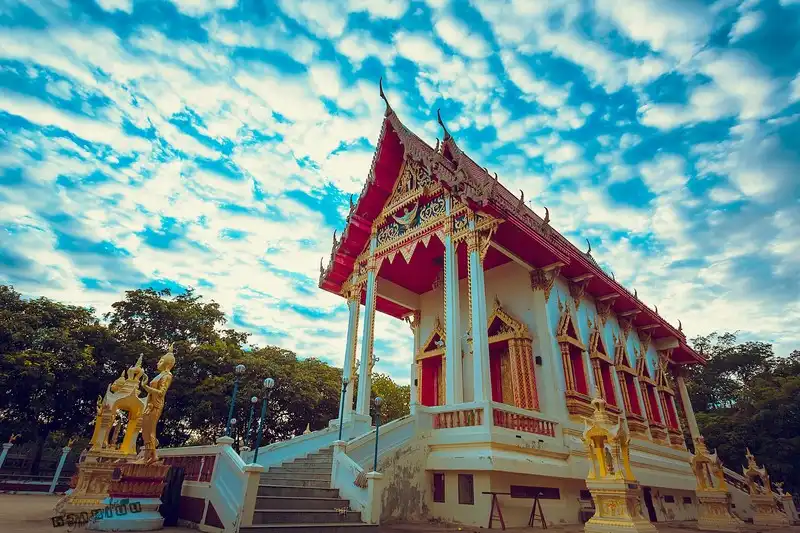
Wat Kaeng Krachan is located in Ban Kaeng Krachan, along the Kaeng Krachan Dam Road, Moo 1, Kaeng Krachan Subdistrict, Kaeng Krachan District, Phetchaburi Province. It is a local Buddhist temple under the Maha Nikaya sect with a strong and clearly defined sense of place. Situated on a hillside within the Kaeng Krachan community, the temple immediately feels different from lowland temples. Visitors often describe the atmosphere as open, airy, and calm, naturally encouraging a slower pace of mind. It is an ideal stop for those wishing to make merit while traveling to the dam or nearby nature attractions, as well as for travelers interested in experiencing a living community temple where daily religious life continues naturally.
The temple grounds cover an area of 22 rai, 2 ngan, and 79 square wah. This spacious setting allows for a well-balanced layout of religious buildings and communal areas, accommodating both sacred functions and community activities. The space supports merit-making ceremonies, traditional festivals, funerals, Kathina and Pha Pa ceremonies, and other important events in local life. The generous layout also provides visitors with room to walk comfortably, pause for reflection, and fully experience the mountainous surroundings that embrace the temple.
The clearly defined boundaries of Wat Kaeng Krachan reflect its role within the local community. To the north lies Takhian Mountain, to the south the Kaeng Krachan Dam Road, to the east the Kaeng Krachan Irrigation School, and to the west the Kaeng Krachan District Office. This positioning demonstrates how the temple is integrated into everyday community life rather than standing apart. Surrounded by key institutions such as roads, schools, and government offices, the temple functions as both a spiritual center and an accessible communal space.
Viewed in a broader context, Kaeng Krachan is shaped by two major forces that coexist naturally: the attraction of nature, including the dam, forests, and ecotourism routes, and the rhythms of everyday community life. Wat Kaeng Krachan is situated at a balanced point between these two dimensions. This makes it particularly suitable for travelers who want to combine inner calm with leisure in a single day. One can begin by making merit and settling the mind before continuing on to visit the dam, enjoy boat trips, or explore scenic viewpoints without detouring or extending travel time.
Historically, Wat Kaeng Krachan was officially established on June 13, 1986, and received royal consecration of its boundary (wisungkhamsima) on September 12, 1986. The consecrated boundary measures 15.80 meters in width and 39.30 meters in length. This designation confirms the temple’s official status and its ability to conduct monastic ceremonies in accordance with religious and legal regulations. Understanding this background helps visitors appreciate the temple’s transition from a growing community space into a formally recognized religious institution.
An important chapter in the temple’s early history is closely connected to the construction of Kaeng Krachan Dam. Around 1961, during the dam’s development across the Phetchaburi River, a monks’ residence was established and monks from Wat Tha Khoi were invited to stay. One of the early resident monks was Phra Khru Sangharak Wichian Dhammarakkhito. This pattern reflects how religious sites often emerge in newly developed areas, beginning as places that support spiritual life before gradually evolving into fully established temples.
As time passed, leadership changed until the temple was formally granted official status in 1986. This gradual process shows that the establishment of a temple is not solely about construction, but about collective readiness involving land, leadership, religious practice, and community acceptance. Wat Kaeng Krachan stands as evidence of the parallel growth of a community and its religious institution, shaped by both natural surroundings and regional development.
In terms of administration, records indicate that Phra Khru Upatham Watcharakit has overseen the temple since 1982 and continues to do so today. This continuity in leadership has supported stable governance and the consistent organization of religious activities, education, and public services. For visitors and readers, information about the abbot provides a clear sense of identity and credibility for the temple.
The layout of Wat Kaeng Krachan allows visitors to easily understand its structure. The ordination hall, measuring 8.60 meters in width, was built in 1983 using reinforced concrete and serves as the main venue for important ceremonies, housing the principal Buddha image. The temple also includes a wooden sermon hall built in 2000, a wooden chanting hall built in 1977, and a multi-purpose wooden pavilion from the same year. There are six monks’ residences, along with a funeral pavilion and a kitchen. These structures reflect practical growth based on community needs rather than architectural grandeur.
The presence of multiple wooden buildings gives Wat Kaeng Krachan a warm and natural atmosphere that aligns with Kaeng Krachan’s identity as a region associated with forests, water, and greenery. Combined with the tranquility of its hillside location, the temple offers a gentle and approachable experience. Many visitors enjoy sitting quietly in the pavilions, listening to the breeze, or taking a brief pause to clear their thoughts before continuing on to nearby nature attractions.
The principal Buddha image in the ordination hall serves as the spiritual focal point of the temple. Visitors often come to pay respects for peace of mind, good fortune before travel, or blessings on important life occasions such as birthdays or new beginnings. As a community temple set on a hillside, Wat Kaeng Krachan offers a balance of reverence and accessibility, making visitors feel welcome rather than distant from sacred space.
Beyond religious functions, Wat Kaeng Krachan also plays an educational role. The temple opened a Dhamma Studies School in 1986 and a General Education Monastic School in 1993. These institutions highlight the temple’s role as both a spiritual and educational center, supporting monks, novices, and the wider community through learning and development.
The temple participates in important traditions such as Tak Bat Thewo, a merit-making ceremony held on the first waning moon of the eleventh lunar month. This ritual commemorates the Buddha’s descent from the Tavatimsa Heaven. During such events, visitors can witness the cooperative spirit of the local community, from preparing offerings to cleaning up together after the ceremony. This continuity of simple traditions reflects the enduring cultural value preserved by community temples like Wat Kaeng Krachan.
For travelers seeking meaningful experiences, a visit to Wat Kaeng Krachan can combine tranquility and exploration in a single day. One may begin with a respectful visit to the temple, walk calmly through the grounds, and observe the wooden structures that reflect local character before continuing on to Kaeng Krachan Dam, scenic viewpoints, or water-based activities. This balance makes the temple particularly suitable for families and travelers of all ages.
Getting There To reach Wat Kaeng Krachan, start from Kaeng Krachan District and follow the Kaeng Krachan Dam Road toward the dam. Enter Ban Kaeng Krachan, Moo 1, Kaeng Krachan Subdistrict. The temple is located within the community on a hillside. Drivers should reduce speed when entering the village area and proceed carefully on the uphill road. Local taxis or hired vehicles can take visitors directly to the temple. Upon arrival, visitors are advised to dress modestly, speak quietly, and respect areas used for religious activities, especially during community events.
| Name | Wat Kaeng Krachan |
| Address | Ban Kaeng Krachan, Kaeng Krachan Dam Road, Moo 1, Kaeng Krachan Subdistrict, Kaeng Krachan District, Phetchaburi Province, Thailand |
| Overview | A hillside community Buddhist temple in Kaeng Krachan with historical ties to the construction of Kaeng Krachan Dam, officially established in 1986 and serving as a spiritual, educational, and communal center. |
| Key Highlights | Hillside location with calm atmosphere, wooden religious buildings, connection to dam development history, active community traditions, monastic education facilities |
| Abbot (Current) | Phra Khru Upatham Watcharakit |
| Contact | 032-459222, 081-9989916 |
Frequently Asked Questions (FAQ)
Q: Where is Wat Kaeng Krachan located?
A: Wat Kaeng Krachan is located in Ban Kaeng Krachan, along the Kaeng Krachan Dam Road, Moo 1, Kaeng Krachan Subdistrict, Kaeng Krachan District, Phetchaburi Province, with convenient access to Kaeng Krachan Dam.
Q: When was Wat Kaeng Krachan officially established?
A: The temple was officially established on June 13, 1986, and received royal consecration of its boundary on September 12, 1986.
Q: How is Wat Kaeng Krachan connected to Kaeng Krachan Dam?
A: The temple’s origins trace back to the dam construction period around 1961, when a monks’ residence was established to support monks serving the developing community.
Q: What are the main structures within the temple?
A: Key structures include the ordination hall, chanting hall, sermon hall, multi-purpose pavilion, monks’ residences, and the principal Buddha image housed in the ordination hall.
Q: Does Wat Kaeng Krachan have an educational role?
A: Yes, the temple operates both a Dhamma Studies School and a General Education Monastic School, supporting religious and general education.
Q: Is Wat Kaeng Krachan worth visiting when traveling to the dam?
A: Yes, the temple is an ideal stop for travelers seeking both spiritual calm and cultural insight before continuing on to Kaeng Krachan Dam and nearby natural attractions.
 Wat Kaeng Krachan Map
 Category:
  Group:
  Tag: ●Wat Kaeng Krachan●wat kaeng krachan ●kaeng krachan temple ●temple near kaeng krachan dam ●phetchaburi temple ●hillside temple thailand ●buddhist temple kaeng krachan ●kaeng krachan travel ●temple near dam thailand Last Update: 1 MonthAgo
Comment
 Nearby Attractions
| Keyword (Advance) |
 Facebook Fanpage
 Region
 Art, Culture and Heritage
 Historical Sites and Monuments(
 Landmarks and Memorials(
 Royal Palace(
 Art, Craft Centres, Tradition(
 Museums(
 Educational Places
 Educational Gardens, Farm(
 University
 Other religious and spiritural sites(
 Research and Development
 Royal Project(
 Suburban Living
 Village, Community(
 Floating Market(
 Nature and Wildlife
 National Parks and Marine Reserves(
 Mountain (Doi)(
 Dam, Reservoir, Lake(
 Waterfalls(
 Hot Springs(
 Caves(
 River, Canal(
 Bays and Beaches(
 Islands(
 Other natural attractions(
 Entertainment and Agricultural
 Farm, Parks, Gardens and Ecotourism(
 Theater(
 Outdoor and Adventure Activities(
 Travel Articles, Recipes
 Travel Review, Food Review(
 Copyright 2012,