
 Home
Home North(
 Chiang Mai(


Wat Lin Chang
Rating: 1.9/5 (10 votes)
 Search By
  Map
Map 
 Have Map
  No Map
Phetchaburi attractions
Attractions in Thailand
Open Days: Daily
Opening Hours: 08:00 – 17:00
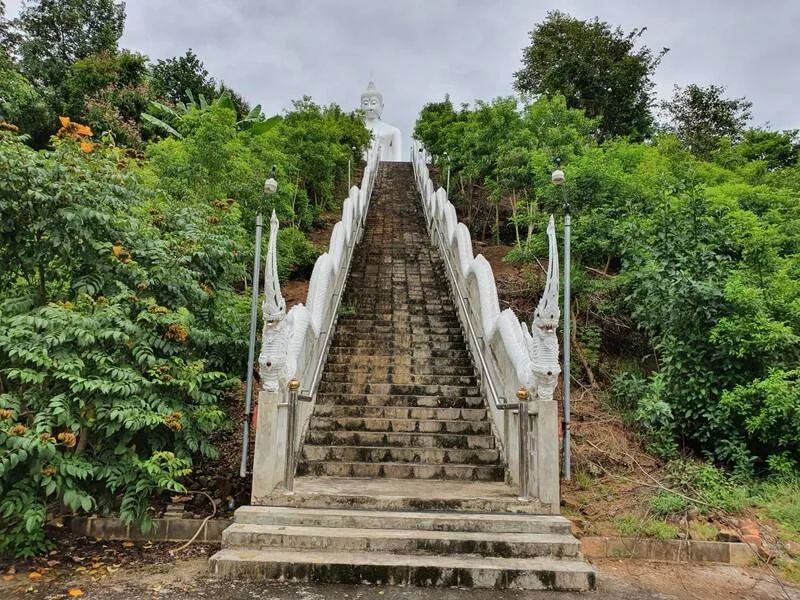
Wat Lin Chang (Nong Ya Plong District, Phetchaburi) is a local temple under the Mahanikaya order that clearly reflects the “evolution of a community temple.” The site originally began as a monks’ residence area in 1949 (B.E. 2492) and gradually accumulated faith, community support, and management structure until it was officially established as a temple on March 21, 1997 (B.E. 2540). The temple is located at No. 37, Ban Lin Chang, Moo 3, Nong Ya Hlong Subdistrict, Nong Ya Plong District, Phetchaburi, with a total temple land area of 6 rai 98 square wah. While it may not be large compared with district-center temples, its meaning is “dense” in social and cultural terms, because it functions as the village’s true communal core for merit-making, religious rites, learning, and the day-to-day weaving together of local life.
The temple’s boundaries further confirm its character as a village temple living closely alongside private land and public access routes. Both the northern and southern sides border land noted as belonging to Mr. Thongsuk Phuangmai; the eastern side borders a public-benefit route; and the western side borders land noted as belonging to Mr. Hom Dangsaeng. This overall setting makes access feel consistent with rural life: the temple can be reached from the subdistrict’s main routes as well as from village connector roads. In practice, the temple serves as a “spiritual meeting point” of the community in everyday life, not merely a place visited only on major holy days.
The formation history of Wat Lin Chang follows a clear sequence. It began as a monks’ residence area in 1949 (B.E. 2492). Later, around 1993 (B.E. 2536), Luang Pho of Wat Khao Phra (Phra Khru Phavana Wiriyachan) went on a tudong journey, encountered the site, and together with villagers developed additional monastic structures, then proceeded with permissions for construction and the formal establishment process until completion. This process reflects how a community “elevates a place of faith” from a purely devotion-driven setting into a temple within the formal Sangha system, with concrete administration and clearly defined monastic activities. When the temple was officially established on March 21, 1997 (B.E. 2540), it was effectively a declaration that Ban Lin Chang had a stable religious center ready to support community life in the long term.
When looking at the main temple buildings, the “construction timeline” clusters closely and aligns with the transition from a monks’ residence area to an officially established temple. The sermon hall (Sala Kan Parian), the practical heart of a community temple, is 11 meters wide and 22 meters long. Built in 1995 (B.E. 2538), it seen here as a two-level, half-concrete/half-wood structure, supporting activities ranging from lay meetings, merit-making events, ordinations, and chanting ceremonies to community gatherings during festivals. The ordination hall (Ubosot) is 6 meters wide and 12 meters long. Built in 1997 (B.E. 2540) as reinforced concrete, it serves as the place for Sangha acts and important Buddhist rites in accordance with Thai Buddhist practice.
The monastic living structures also reflect growth in step with community support. There are 8 monk residences (kuti) in total, consisting of 4 wooden buildings and 4 half-concrete/half-wood buildings, a common and practical pattern in rural temples that prioritize usability and maintenance within local capacity. In addition, a multipurpose pavilion (Sala Anekprasoeng) measuring 14 meters wide and 20 meters long was built in 1996 (B.E. 2539) as reinforced concrete, increasing the temple’s ability to host larger gatherings such as Kathin offerings, Pha Pa ceremonies, annual merit events, or youth activities that require more space and systematic coordination.
Wat Lin Chang also plays an important role in “education within the temple” through a Dhamma Studies Division of the Phra Pariyatti Dhamma School, opened in 1997 (B.E. 2540). This functions as a key mechanism for community temples to pass on foundational Buddhist knowledge, both for monks/novices and for local learners who are interested. With this educational system, the temple is not only a place for rituals; it becomes a space for cultivating ethics, understanding core teachings, and linking faith with everyday life, especially in rural contexts where temples remain strongly central to cultural continuity.
In administration and local governance, the temple has an abbot who continuously connects the Sangha with the community. The current abbot is Phra Khru Sunthon Watcharakarn (Amphon Apalo), responsible for the temple’s overall monastic affairs and development, including site order, coordination of merit events with villagers, and maintaining peace and propriety in accordance with Thai temple customs. Having a clear monastic leader helps village merit-making and public activities move forward in an organized way, and keeps the temple dependable as a living center of faith for the community.
For visitors, Wat Lin Chang offers the experience of a “real community temple”: simple, approachable, and tangibly embedded in everyday village life. Morning is often ideal for making merit, offering food, or paying respects in a quiet atmosphere, while afternoon is suitable for a brief visit, a gentle walk through the grounds, and absorbing the village’s calm. Visitors should dress modestly, behave respectfully, avoid loud noise, keep the area clean, and honor the spaces within the ordination hall and sermon hall, especially when religious activities or ceremonies are taking place during the visit.
Getting There Planning a visit to Wat Lin Chang is straightforward for travelers using a private car. Start by entering Nong Ya Plong District in Phetchaburi, then head into Nong Ya Hlong Subdistrict and follow local roads into Ban Lin Chang. The temple is located at No. 37, Ban Lin Chang, Moo 3, and you can use “Wat Lin Chang” as the destination in navigation apps. Once you reach the village area, look for temple signage and the temple buildings within the grounds. If traveling in a group or with elderly family members, visiting during daylight hours makes parking and walking inside the temple more convenient.
To make the most of a single-day plan, you can shape the trip as “merit-making – nature – food – rest,” because Nong Ya Plong District and nearby areas offer natural attractions, learning points, and several styles of nature-oriented accommodation. Starting the morning with merit-making at Wat Lin Chang sets a calm and auspicious rhythm, after which you can continue to nearby rest spots such as dams or reservoirs, or other nature-based destinations, then stop by a local restaurant, and finish with a resort-style stay that highlights the area’s mountain-and-forest atmosphere, a signature character of Nong Ya Plong.
| Place Summary | A local temple under the Mahanikaya order. Began as a monks’ residence area (1949), officially established as a temple (March 21, 1997), with complete functional temple buildings and a Dhamma Studies Division of the Phra Pariyatti Dhamma School. |
| Address | No. 37, Ban Lin Chang, Moo 3, Nong Ya Hlong Subdistrict, Nong Ya Plong District, Phetchaburi, Thailand |
| Key Highlights | A well-structured development from a monks’ residence area into an official temple; key buildings built in a continuous period (1995–1997): a two-level sermon hall (half-concrete/half-wood), ordination hall, and multipurpose pavilion; 8 monk residences; and Phra Pariyatti Dhamma education. |
| Period / Timeline | Monks’ residence area since 1949; major development momentum from 1993; officially established as a temple on March 21, 1997. |
| Key Evidence | Official establishment date; prior status as a monks’ residence area; building list with dimensions and construction years; Phra Pariyatti Dhamma School (Dhamma Studies Division). |
| Name Origin | Named after “Ban Lin Chang,” the traditional name of the local community. |
| Abbot / Current Caretaker | Phra Khru Sunthon Watcharakarn (Amphon Apalo) |
| Travel | Drive into Nong Ya Plong District, then enter Nong Ya Hlong Subdistrict and continue to Ban Lin Chang, Moo 3. Use “Wat Lin Chang” as the destination in navigation apps. |
| Current Status | Open for worship and merit-making as usual. |
| Contact Number | 032-422-129 |
| Nearby Attractions (Approx. Driving Distance) | 1) Mae Prachan Dam – 7 km 2) Nong Ya Plong Hot Spring – 8 km 3) Kwangzhou Waterfall Floating Market – 10 km 4) Mae Kradangla Waterfall – 14 km 5) Guanyin Bodhisattva Park (Kaeng Krachan) – 26 km |
| Popular Restaurants Nearby (Approx. Driving Distance + Phone) | 1) 289 Hill Farm Cafe & Resort – 12 km (Tel. 099-289-9628) 2) Benyiam Restaurant (Mae Prachan Dam Project Area) – 7 km (Tel. 089-040-6339) 3) Noen Pha Lat Restaurant – 11 km (Tel. 085-380-3010) 4) Inn-Story Cafe – 18 km (Tel. 064-651-6296) 5) Krua Mae Prachan – 7 km (Tel. 083-825-2493) |
| Popular Accommodations Nearby (Approx. Driving Distance + Phone) | 1) Leaves Valley Resort (Thanatthicha Buri Lake Resort & Spa) – 20 km (Tel. 032-494-202, 089-811-6931) 2) Trin Wellness (Phetchaburi) – 24 km (Tel. 095-962-3655) 3) Montoro Resort (Nong Ya Plong) – 16 km (Tel. 032-473-533) 4) Bokkhorani Resort – 22 km (Tel. 086-342-9175, 081-372-4708) 5) The Tree Riverside Resort Kaeng Krachan – 38 km (Tel. 032-706-151) |
Frequently Asked Questions (FAQ)
Q: When was Wat Lin Chang officially established as a temple?
A: Wat Lin Chang was officially established on March 21, 1997 (B.E. 2540).
Q: What was Wat Lin Chang before it became an official temple?
A: It originally began as a monks’ residence area in 1949 (B.E. 2492) before being developed and formally established later.
Q: What makes Wat Lin Chang different from larger city temples?
A: It is a true community temple that grew from local faith and participation, with a clear development timeline from a monks’ residence area into an official temple, supported by complete functional buildings and Dhamma education.
Q: What are the key buildings at Wat Lin Chang?
A: The temple includes a sermon hall, an ordination hall, a multipurpose pavilion, and 8 monk residences, supporting both religious functions and community activities.
Q: Does Wat Lin Chang have an educational role?
A: Yes. It has a Dhamma Studies Division of the Phra Pariyatti Dhamma School, opened in 1997 (B.E. 2540), supporting Buddhist learning and moral education.
Q: Who is the current abbot of Wat Lin Chang?
A: The current abbot is Phra Khru Sunthon Watcharakarn (Amphon Apalo).
Q: What etiquette should visitors follow when visiting the temple?
A: Dress modestly, behave respectfully, avoid loud noise, keep the area clean, and honor religious spaces, especially during ceremonies.
 Wat Lin Chang Map
 Category:
  Group:
  Tag: ●Wat Lin Chang●wat lin chang ●nong ya plong ●phetchaburi temple ●local temple thailand ●kaeng krachan nearby ●mae prachan dam ●nong ya plong hot spring ●temples in phetchaburi ●cafes in nong ya plong ●where to visit phetchaburi
Last Update: 1 MonthAgo
Tag: ●Wat Lin Chang●wat lin chang ●nong ya plong ●phetchaburi temple ●local temple thailand ●kaeng krachan nearby ●mae prachan dam ●nong ya plong hot spring ●temples in phetchaburi ●cafes in nong ya plong ●where to visit phetchaburi
Last Update: 1 MonthAgo
Comment
 Nearby Attractions
| Keyword (Advance) |
 Facebook Fanpage
 Region
 Art, Culture and Heritage
 Historical Sites and Monuments(
 Landmarks and Memorials(
 Royal Palace(
 Art, Craft Centres, Tradition(
 Museums(
 Educational Places
 Educational Gardens, Farm(
 University
 Other religious and spiritural sites(
 Research and Development
 Royal Project(
 Suburban Living
 Village, Community(
 Floating Market(
 Nature and Wildlife
 National Parks and Marine Reserves(
 Mountain (Doi)(
 Dam, Reservoir, Lake(
 Waterfalls(
 Hot Springs(
 Caves(
 River, Canal(
 Bays and Beaches(
 Islands(
 Other natural attractions(
 Entertainment and Agricultural
 Farm, Parks, Gardens and Ecotourism(
 Theater(
 Outdoor and Adventure Activities(
 Travel Articles, Recipes
 Travel Review, Food Review(
 Copyright 2012,