
 Home
Home North(
 Chiang Mai(


Wat Wang Phu Sai
Rating: 3.4/5 (11 votes)
 Search By
  Map
Map 
 Have Map
  No Map
Phetchaburi attractions
Attractions in Thailand
Open Days: Daily
Opening Hours: 08:00 – 17:00
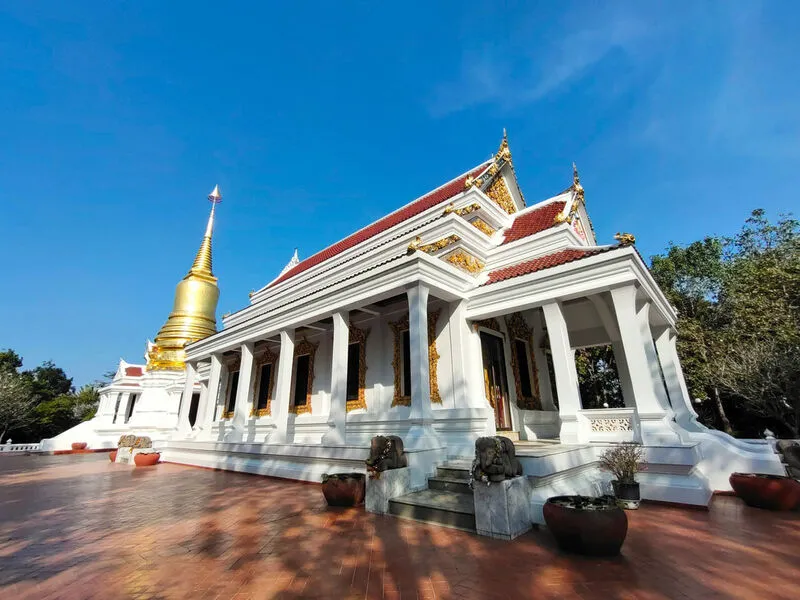
Wat Wang Phu Sai is located at No. 34, Ban Phu Thai, Khao Yoi – Nong Ya Plong Road, Moo 6, Nong Ya Plong Subdistrict, Nong Ya Plong District, Phetchaburi. As a Dhammayut monastery in rural Phetchaburi, the temple projects a calm, disciplined personality that leans toward a forest-style atmosphere and a practice-oriented rhythm. It is not a place built to “perform” for tourism; it is a place built to hold the everyday life of faith. That distinction matters because it changes the way you experience the site. Instead of coming for quick photo stops, visitors tend to arrive to slow down, pay respects, and absorb the quieter relationship between a village, its temple, and the landscape that surrounds them.
The overall land area is substantial, and that scale is one of the first things you notice when you step into the grounds. A larger footprint allows the temple to separate functional zones more clearly: areas for ceremonies, spaces for monastic residence, community gathering zones, and natural buffers that help maintain silence. The boundaries also reflect a lived connection with the community and the environment: public-benefit access and local roads make the temple practically reachable, while the presence of a stream on the western side reinforces the sense of shade, coolness, and gentle seclusion that practice-focused temples value. Even if you arrive with no intention to meditate formally, the setting naturally encourages slower movement and softer attention.
The origin story of Wat Wang Phu Sai is unusually clear for a rural temple, because it includes identifiable civic initiative and a well-defined ecclesiastical endorsement. Local records describe initial construction activity beginning in 1973, led by a community figure, Mr. Yuean Phrommaphot, who recognized that the Nong Ya Plong area at the time contained wide stretches of undeveloped land suitable for establishing a monastery. The project did not proceed as a purely local build; it became a temple with a deliberate name, identity, and trajectory after the site was presented to Somdet Phra Nyanasamvara, the Supreme Patriarch (Somdet Phra Sangharaja), who visited, assessed the location, and supported the establishment. In Thai temple culture, this kind of decisive approval does more than add prestige. It sets a tone. It communicates that the temple is intended to be structurally complete, administratively stable, and anchored to a lineage of practice and discipline.
The temple was officially established on 30 September 1993, and it received its Wisungkhamsima on 13 January 1994, with the boundary measured at approximately 22.20 meters by 33.00 meters. For visitors, these dates and measurements might read like administrative trivia, but in practical Buddhist life, Wisungkhamsima is a formal threshold. It authorizes the ordination boundary and confirms that the monastery can conduct key sangha acts properly. For a rural district, that means the community gains a dependable religious center that can support major rites over the long term, rather than relying on distant temples for formal proceedings.
The principal structures show a pattern of purposeful development. The ordination hall (ubosot) measures about 7.10 meters wide and 15 meters long and was built in 1992 as reinforced concrete, serving as the core ceremonial space for formal sangha activities. The sermon hall (sala kan parian) was built earlier in 1976, also reinforced concrete, and notably rises to two stories at around 18 meters by 21 meters. In practical terms, a two-story sermon hall is a strong signal that the site is designed to host real community volume: alms and merit-making gatherings, sermons, kathin and pha pa ceremonies, training sessions, and the communal logistics that come with Thai village Buddhism. Even for travelers, this translates into a temple that feels “ready” for events, not merely symbolic.
Another clue to the monastery’s living rhythm is the number of monks’ dwellings. Wat Wang Phu Sai has a recorded total of 13 kuti, including two half-concrete/half-wood structures and eleven concrete buildings. This is not a minor detail. A higher count of dwellings often correlates with sustained monastic residence, the capacity to host visiting monks, and occasional influxes of practitioners during periods of retreat. It also aligns with the Dhammayut culture in many regions, where orderliness, durability, and maintenance-friendly architecture are prioritized to support long-term discipline and predictable daily routines.
What differentiates Wat Wang Phu Sai for many visitors, however, is not only function but symbolism. Local descriptions highlight an important sacred structure designed in an adapted style associated with King Rama IV aesthetics. The form is described with specific proportions: a base width around 12.50 meters and a total height to the pinnacle around 26.50 meters, topped with a seven-tiered chatra (umbrella finial). Within this stupa is enshrined a Buddha image named “Phra Phai Phinat,” said to be modeled after a prototype at Wat Bowonniwet Vihara in Bangkok. This reference is meaningful in the context of Dhammayut identity. Wat Bowonniwet is one of the most significant Dhammayut centers in Thailand, and even a modeled lineage connection functions like a cultural bridge: it links a rural monastery to a national narrative of disciplined monastic practice, doctrinal study, and carefully ordered space.
For cultural travelers, this kind of architectural reference creates a deeper viewing experience. You are not only looking at a structure; you are looking at a choice. The decision to echo a Rama IV-inspired, Dhammayut-associated aesthetic communicates values: restraint rather than extravagance, clarity rather than clutter, and an emphasis on form that supports inner quiet. Even if you do not have technical knowledge of Thai religious architecture, you can still feel the intention in the proportions, the way the compound is arranged, and the sense that the temple is curated for calm rather than spectacle.
Because the temple’s strength is serenity, the best way to visit is to treat the experience as a slow sequence rather than a checklist. Arrive in the morning or early afternoon when the light is gentler and the pace of the compound is naturally steady. Begin with a respectful walk to orient yourself: observe how the ubosot is positioned relative to the sermon hall, where lay visitors naturally gather, and how the residential areas are separated for monastic privacy. A practice-oriented monastery works because boundaries are respected. Keeping voices low, dressing modestly, and avoiding intrusive photography are not just etiquette; they are part of maintaining the environment that the temple exists to provide.
If you intend to offer merit (tham bun) through donations, the most appropriate approach is to prioritize utility. Dry goods, everyday monastic necessities, basic medical supplies, cleaning items, and practical support tend to be more genuinely useful than decorative offerings. Temples with large compounds and ongoing community events manage resources systematically. Donations that can be used directly help reduce storage burden and support the day-to-day continuity of monastic life. If you visit during community events such as kathin or pha pa, the temple becomes a lens into rural social structure: families return from outside districts, relatives gather, and merit-making becomes a collective act that refreshes a community’s sense of togetherness.
Wat Wang Phu Sai also fits well into a broader Phetchaburi itinerary that aims to understand the province beyond the city center and coastal routes. Nong Ya Plong is a transitional landscape between lowland communities and the more nature-heavy zone toward Kaeng Krachan. That geography makes the temple a practical “pause point” for travelers who want to balance cultural depth with nature-based relaxation. Many visitors choose to combine a calm temple visit with a café stop, a local meal, and then an overnight stay in the wider Kaeng Krachan region, where riverside and forest-edge accommodations support a slower travel style.
In this sense, the temple becomes more than a destination; it becomes a method. It teaches you how to travel rural Thailand with the right tempo: arrive respectfully, slow down, notice form and function, and leave without disrupting what the community is trying to preserve. Wat Wang Phu Sai is valuable precisely because it remains a working monastery first. Its buildings are not museum displays; they are lived structures supporting rituals, study, residence, and the quiet discipline that practice-focused temples protect.
Getting There If you drive, use Khao Yoi – Nong Ya Plong Road and continue toward Ban Phu Thai (Moo 6), Nong Ya Plong Subdistrict. The temple is recorded at No. 34 along the community route, accessible by normal passenger vehicles. In rural roads, allow extra time and reduce speed at junctions and village sections where local traffic and agricultural vehicles may share the road. For travelers continuing onward, the temple can serve as a calm stop on a route that later connects to the Kaeng Krachan zone, helping you transition from “road mode” into a slower, more grounded travel rhythm.
| Summary | A Dhammayut monastery in Nong Ya Plong with a calm, practice-oriented atmosphere, large land area, complete core structures, and a significant sacred stupa linked in meaning to Dhammayut heritage; suitable for merit-making, quiet reflection, and cultural learning beyond Phetchaburi city routes. |
| Name | Wat Wang Phu Sai |
| Address | No. 34, Ban Phu Thai, Khao Yoi – Nong Ya Plong Road, Moo 6, Nong Ya Plong Subdistrict, Nong Ya Plong District, Phetchaburi 76160 |
| Abbot (Latest) | Phra Khru Saraphan Prakat (Bunsom) |
| Highlights | Dhammayut monastery in a quiet rural setting; suitable for calm worship and reflection; large compound; key sacred structure in an adapted Rama IV-era aesthetic; stupa enshrining “Phra Phai Phinat,” modeled after Wat Bowonniwet Vihara heritage; functional facilities for community ceremonies and seasonal merit-making events. |
| Period | Construction began 1973; Officially established 30 September 1993; Wisungkhamsima granted 13 January 1994 |
| Key Evidence | Land area recorded at 123 rai 2 ngan 88 square wah; Ubosot built 1992; Sermon Hall built 1976 (reinforced concrete, 2 floors); 13 monk residences (kuti); Wisungkhamsima boundary approx. 22.20 m x 33.00 m; stupa with 7-tier chatra and “Phra Phai Phinat” enshrined. |
| Name Origin | Named after the local community area “Wang Phu Thai” to reflect the temple’s identity as a monastery rooted in the village and landscape. |
| Travel | Drive via Khao Yoi – Nong Ya Plong Road to Ban Phu Thai (Moo 6). The temple is at No. 34 along the community route; accessible by normal vehicles; allow extra time on rural junctions and village traffic. |
| Facilities | Ubosot, Sermon Hall, Monk Residences (Kuti), Areas for ceremonies and community gatherings, Large compound suitable for seasonal merit-making events. |
| Fees | No admission fee (donations welcome) |
| Contact Number | 081-167-8392 |
| Nearby Tourist Attractions with Distance | 1) Nong Ya Plong District Office – ~10 km 2) Wat Cha Prong – ~7 km 3) Wat Yang Nam Klat Tai – ~12 km 4) Kaeng Krachan Dam – ~40 km 5) Phra Nakhon Khiri (Khao Wang), Phetchaburi City – ~55 km |
| Popular Restaurants Nearby with Distance and Phone | 1) Im Oon Rim Thang (Nong Ya Plong) – ~12 km – 064-360-7749 2) Krua Kluai Hom (Kaeng Krachan) – ~45 km – 064-962-9509 3) Little Forest Coffee House (Kaeng Krachan) – ~45 km – 062-339-8678 4) NABI CAFE (Kaeng Krachan) – ~55 km – 086-335-6771 5) 289 Hill Farm Cafe & Resort – ~55 km – 099-289-9628 |
| Popular Accommodations Nearby with Distance and Phone | 1) Montoro Resort (Nong Ya Plong) – ~15 km – 032-473-533 2) Trin Wellness Phetchaburi – ~18 km – 082-515-4888 3) Leaves Valley Resort (Kaeng Krachan) – ~50 km – 089-811-6931 4) River Tales (Kaeng Krachan) – ~55 km – 062-318-6886 5) Ban Ob Fah Resort (Kaeng Krachan) – ~60 km – 089-528-2428 |
| Current Status | Open for worship and merit-making |
Frequently Asked Questions (FAQ)
Q: Where is Wat Wang Phu Sai located?
A: The temple is at No. 34, Ban Phu Thai, Khao Yoi – Nong Ya Plong Road, Moo 6, Nong Ya Plong Subdistrict, Nong Ya Plong District, Phetchaburi.
Q: Is Wat Wang Phu Sai a Dhammayut temple?
A: Yes. The temple is under the Dhammayut order.
Q: When was the temple officially established and when did it receive Wisungkhamsima?
A: The temple was officially established on 30 September 1993 and received Wisungkhamsima on 13 January 1994.
Q: What is the key highlight inside the temple compound?
A: A major highlight is the significant sacred stupa described in an adapted Rama IV-era aesthetic, enshrining a Buddha image named “Phra Phai Phinat,” modeled after a Dhammayut heritage reference linked to Wat Bowonniwet Vihara in Bangkok.
Q: Who is the current abbot of Wat Wang Phu Sai?
A: The abbot is recorded as Phra Khru Saraphan Prakat (Bunsom).
Q: What is the best way to visit this temple respectfully?
A: Dress modestly, keep voices low, avoid disrupting monastic areas, and focus on a slower visit that matches the calm, practice-oriented atmosphere.
Q: How can I contact the temple directly?
A: The recorded contact number is 081-167-8392.
 Wat Wang Phu Sai Map
 Category:
  Group:
  Tag: ●Wat Wang Phu Sai●wat wang phu sai ●wat wang phu sai phetchaburi ●nong ya plong temple ●dhammayut temple thailand ●temple in phetchaburi ●wang phu thai temple ●buddhist temple nong ya plong ●kaeng krachan nearby temple ●phra phai phinat ●phetchaburi cultural travel
Last Update: 1 MonthAgo
Tag: ●Wat Wang Phu Sai●wat wang phu sai ●wat wang phu sai phetchaburi ●nong ya plong temple ●dhammayut temple thailand ●temple in phetchaburi ●wang phu thai temple ●buddhist temple nong ya plong ●kaeng krachan nearby temple ●phra phai phinat ●phetchaburi cultural travel
Last Update: 1 MonthAgo
Comment
 Nearby Attractions
| Keyword (Advance) |
 Region
|
 Muang Phetchaburi(
 Copyright 2012,