
lovethailand home >Central Travel Attractions >Kanchanaburi Travel Attractions >Muang Kanchanaburi >Pak Phraek > Wat Khao Meng Amoramet
TL;DR: Wat Khao Meng Amoramet is located at 134 Moo 13, Pak Phraek Subdistrict, Mueang Kanchanaburi District, Kanchanaburi 71000, open Daily, hours Generally 07:00–18:00 (recommended 08:00–17:00 for a more comfortable visit and.
Wat Khao Meng Amoramet
Open Days: Daily
Opening Hours: Generally 07:00–18:00 (recommended 08:00–17:00 for a more comfortable visit and better light for photos)
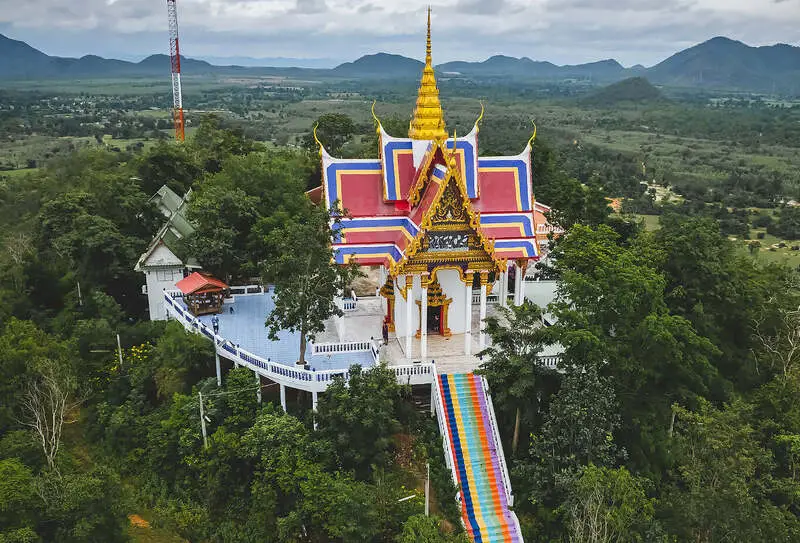
Wat Khao Meng Amoramet in Mueang Kanchanaburi District is one of those temples that gives the phrase “temple-hopping in the city” a meaning beyond simply stopping to pay respect and leaving. Unlike most temples on flat ground, this one revolves around “Khao Meng” (Meng Hill), which becomes the core of the experience. Visitors can choose their own pace—slowly climbing the rainbow staircase to let hurried thoughts settle into calm, or driving up to the summit first and then walking around to take in the artistry and the historical stories hidden on this elevated part of Kanchanaburi town. Wat Khao Meng Amoramet is a community temple under the Mahanikai order, located in Pak Phraek Subdistrict, Mueang Kanchanaburi District, Kanchanaburi Province, with an area of about 35 rai. This sense of being “in the city, yet on a hill” is exactly what gives the temple its distinctive character and makes it ideal for those who want to worship while enjoying wide, open views at the same time.
For many visitors, the first strong impression begins with the “rainbow staircase” stretching up toward Khao Meng. It is widely mentioned that the staircase has around 400 steps, with naga sculptures lining both sides, turning the climb into an activity that is both beautiful and just challenging enough. From a cultural travel perspective, a staircase that requires a bit of physical effort naturally becomes a boundary between the outside world and a sacred space: the higher you climb, the quieter your mind tends to become, and conversations often soften on their own without anyone having to remind you. The special thing here is that the temple does not require everyone to walk up. There is also a road for cars that allows visitors to drive up to the summit, making it possible for families with seniors or small children to experience the highlights comfortably. Ultimately, it comes down to personal choice: whether you want the “ascent” to be part of a small inner ritual, or you prefer the most convenient way to reach the main viewpoints.
When it comes to what gives Wat Khao Meng Amoramet more weight than a typical viewpoint temple, the answer lies in its “historical layers on the summit.” Publicly shared information notes that at the top of Khao Meng there are 2 chedis believed to date to the Ayutthaya period, as well as a Chinese pavilion. The pavilion wall bears Chinese characters, and there is also a Chinese-style stupa on the summit. These details make Khao Meng feel like a place that had been a “destination” even before the temple took its current form. The narrative gains even more depth through local stories suggesting the area may once have served as an observation post against enemies. In other words, the “height” of Khao Meng was not only valuable for views, but also for strategic visibility over the surrounding landscape. Climbing the hill therefore becomes more than going up to pay respect—it can feel like walking upward into the geography and the past of the city at the same time.
Another layer that motivates many people to go all the way to the summit is the “old Chinese pavilion” that the temple has preserved so visitors can enter, look around, and take photos. The presence of the pavilion, 2 Chinese lion statues, Chinese inscriptions, and Chinese-style stupas creates a distinctive atmosphere where Thai Buddhist devotion meets traces of Chinese artistry. This kind of cultural overlap is often seen in trading towns or places where diverse groups historically passed through. For Khao Meng, what stands out is the mention that it was discovered around the late reign of King Rama II, with a hypothesis that it may have been built by Chinese or Vietnamese people. This kind of “uncertainty with tangible traces” makes the pavilion more than a photo backdrop; it invites questions about what people in the past came here to do, and why they chose a site that is especially high and far-reaching in visibility.
From the Chinese pavilion, a typical walk on the summit continues to the pavilion or viharn where a large “Leelai Buddha” image is enshrined—the spiritual heart of Khao Meng. The Leelai posture symbolizes calm and protective grace, and because it is situated above the town below, many visitors feel as if the day’s distractions are naturally left behind once they have paid respect and turned toward the expansive view. In practice, people often spend longer on the summit than expected. Beyond worship, there are places to pause, wide mountain vistas, and a gentle rhythm of wind that makes the area more suited to “being quietly present” than rushing through. If your aim is to rest your mind, Wat Khao Meng Amoramet is especially fitting because it sits in the city yet feels like it takes you out of the city.
What makes a visit here feel “complete” is understanding that the upper area is not only a scenic zone for photos, but also includes a viharn or buildings used by the monastic community for actual religious duties. This means the summit of Khao Meng is a functioning temple space, not merely a tourist landmark. Photography and sightseeing should therefore be done with restraint, avoiding loud voices during times when ceremonies or religious activities may be taking place—especially on Buddhist holy days or in the morning when monks may be using the space for daily practice. Such mindful behavior keeps tourism harmonious with the site and helps preserve the calm atmosphere that is central to Khao Meng’s charm.
For those who want to climb the rainbow staircase enjoyably without feeling overwhelmed, a practical approach is not to treat it as “400 steps” to conquer in one go. Instead, break the climb into short sections and keep a slow, steady pace. When the slope feels steep, lengthen your breathing and maintain a consistent rhythm. Footwear should have good grip, because stairs and hill paths can become slippery when damp—especially in the rainy season or after rainfall. If you are visiting mainly for photos, the light that gives the rainbow colors the best depth is often in the morning or late afternoon, when the sun is softer. Images tend to look gentler and the colors stay pleasing rather than harsh. On the other hand, if your goal is a crisp city panorama, clear weather soon after rain often brings sharper visibility and particularly vivid greens.
From a historical storytelling perspective, Wat Khao Meng Amoramet is an example of a temple that grew upon foundations that existed earlier—whether traces of Chinese artistry or older archaeological remains. Public information also notes that Thailand’s National Office of Buddhism lists the temple as established in 1937 (B.E. 2480). This helps frame the idea that the summit area may have held older elements first, and was later developed into a clearly administered temple within the sangha system. Seen this way, Wat Khao Meng Amoramet becomes especially compelling: you are not only visiting a temple that is simply “finished,” but a place where multiple time layers coexist in one point—stories tied to early Rattanakosin-era discovery, Chinese traces, Ayutthaya-period remains, and later modern development.
If you had to describe who this temple suits best, it fits travelers who want an easy trip without driving far out of town, yet still want both “views” and “tranquility” together. It suits photographers looking for respectful, elegant shots of the rainbow staircase. It suits merit-makers who want to pay respect to the Leelai Buddha image and walk around the summit area. And it suits those who love places with layered stories, because simply standing near the Chinese pavilion and looking closely at the Chinese inscriptions (even if you cannot read them fully) can evoke a strange sense of continuity with people in the past. It also suits history-minded visitors, because the topic of chedis believed to be from the Ayutthaya period and the story of an observation post mean your visit does not end at “beautiful”—it also carries “meaning” to take home and reflect on.
Another reason Wat Khao Meng Amoramet is a strong recommendation for travelers is that it is easy to combine with other major attractions in Kanchanaburi town. Being located within Mueang District, it connects conveniently to landmarks such as the River Kwai Bridge, Don Rak War Cemetery, the Thailand–Burma Railway Centre, and local war museums. This makes it realistic to plan a half-day itinerary that includes worship, viewpoints, and World War II history in a single day without exhausting yourself by constantly switching travel zones.
In terms of atmosphere, hilltop temples often feel slightly breezier and cooler than the town below. The trade-off is stronger sunlight around midday because the space is more open. If you plan to climb the stairs, it is wise to bring water, a hat, or sun protection. If you are traveling with seniors, driving up the hill and then walking only to key points is often the safer, more comfortable choice. Safety-wise, paths can be slippery when damp, and descending stairs can place more strain on the knees than the climb up. If you have knee issues, take your time, use handrails when available, and avoid footwear with slippery soles or heels.
Getting There To reach Wat Khao Meng Amoramet, start from Kanchanaburi town and head toward Pak Phraek Subdistrict. Use navigation apps to search for “Wat Khao Meng Amoramet” or “Wat Khao Meng Amoramet” (English). Once you arrive at the temple area, decide what suits you best: walk up the rainbow staircase or drive up the road to the summit of Khao Meng. If you plan to walk, allow extra time and choose morning or late afternoon to reduce heat. Dress respectfully and wear shoes with good grip for safety.
| Name | Wat Khao Meng Amoramet |
| Address | 134 Moo 13, Pak Phraek Subdistrict, Mueang Kanchanaburi District, Kanchanaburi 71000 |
| Overview | A hilltop temple on “Khao Meng” in Kanchanaburi town, featuring a rainbow staircase of about 400 steps with naga sculptures. The summit includes an old Chinese pavilion with Chinese inscriptions, a Chinese-style stupa, a large Leelai Buddha image, and panoramic views over the city and surrounding mountains. |
| Highlights | Rainbow staircase ~400 steps, naga sculptures on both sides, Chinese pavilion and Chinese inscriptions on the summit, Chinese-style stupa, chedis believed to date to the Ayutthaya period, large Leelai Buddha image, and viewpoints atop Khao Meng. |
| History | A community temple under the Mahanikai order with an area of about 35 rai. Public information notes Chinese elements on the summit (pavilion, inscriptions, Chinese-style stupa) and chedis believed to date to the Ayutthaya period. It is mentioned that the site was discovered around the late reign of King Rama II, with a hypothesis that builders may have been Chinese or Vietnamese. The National Office of Buddhism lists the temple as established in 1937 (B.E. 2480). |
| Sect / Temple Type | Community Temple, Mahanikai |
| Abbot / Temple Supervisor (Latest Publicly Listed) | “Phra Maha Manu Piyasilo” (listed as abbot) |
| Open Days & Hours | Daily (often listed as 07:00–18:00) |
| Admission Fee | Free admission (donations welcome) |
| Facilities | Parking area, staircase up the hill and a drivable road to the summit, worship pavilion/shrine on top, viewpoints (sun and slippery surfaces may be a concern in rainy conditions) |
| Travel | From Kanchanaburi town to Pak Phraek Subdistrict. Search “Wat Khao Meng Amoramet” on navigation apps. You can either climb the rainbow staircase or drive up to Khao Meng summit. |
| Current Status | Open for worship and cultural visits |
| Contact Number | 084-572-7896 |
| Nearby Tourist Attractions (Approx. Distance + Phone) | 1) River Kwai Bridge ~4 km Tel. 02-621-8701 2) Kanchanaburi War Cemetery ~4 km Tel. 034-521-559 3) Thailand–Burma Railway Centre ~4 km Tel. 034-512-721 4) World War II Museum / JEATH Zone ~5 km Tel. 092-669-8798 5) Kanchanaburi Skywalk ~3 km Tel. 098-952-0628 |
| Nearby Restaurants (Approx. Distance + Phone) | 1) Keeree Tara Restaurant ~5 km Tel. 034-513-855 2) Keeree Mantra Restaurant ~5 km Tel. 034-540-889 3) Bell’s Pizzeria ~5 km Tel. 081-010-6614 4) Jolly Frog Restaurant ~4 km Tel. 034-512-028 5) On’s Thai Issan ~4 km Tel. 034-513-884 |
| Nearby Accommodations (Approx. Distance + Phone) | 1) U Inchantree Kanchanaburi ~5 km Tel. 034-521-584 2) Felix River Kwai Resort ~5 km Tel. 034-551-000 3) Dheva Mantra Resort ~6 km Tel. 034-615-999 4) Good Times Resort Kanchanaburi ~6 km Tel. 087-162-4949 5) Mida Resort Kanchanaburi ~25 km Tel. 034-919-606 |
Frequently Asked Questions (FAQ)
Q: Where is Wat Khao Meng Amoramet located?
A: It is in Pak Phraek Subdistrict, Mueang Kanchanaburi District, Kanchanaburi Province, and it is a city-area temple where you can go up to Khao Meng summit.
Q: How many steps are there on the rainbow staircase, and do you have to walk up?
A: It is often said to have around 400 steps, and walking is not the only option because there is also a road that allows you to drive up to Khao Meng summit.
Q: What should you not miss at the top of Khao Meng?
A: The old Chinese pavilion with Chinese inscriptions, the Chinese-style stupa, the worship area with the large Leelai Buddha image, and the panoramic viewpoint over Kanchanaburi town.
Q: What time is best for photography and climbing the stairs?
A: Morning and late afternoon are best because the sun is softer, the rainbow colors look gentler, and the weather is more comfortable than midday.
Q: Is there an admission fee to visit Wat Khao Meng Amoramet?
A: There is generally no admission fee, and visitors can donate according to their faith.
Q: If traveling with seniors, what is the safest way to visit?
A: Driving up to the summit is recommended instead of climbing the stairs. Then, walk only to key points and be mindful of slippery surfaces, especially after rain.
 Category: ●Places of Worship
 Group: ●Temple
Last Update : 7 MonthAgo
 Last Update : 7 MonthAgo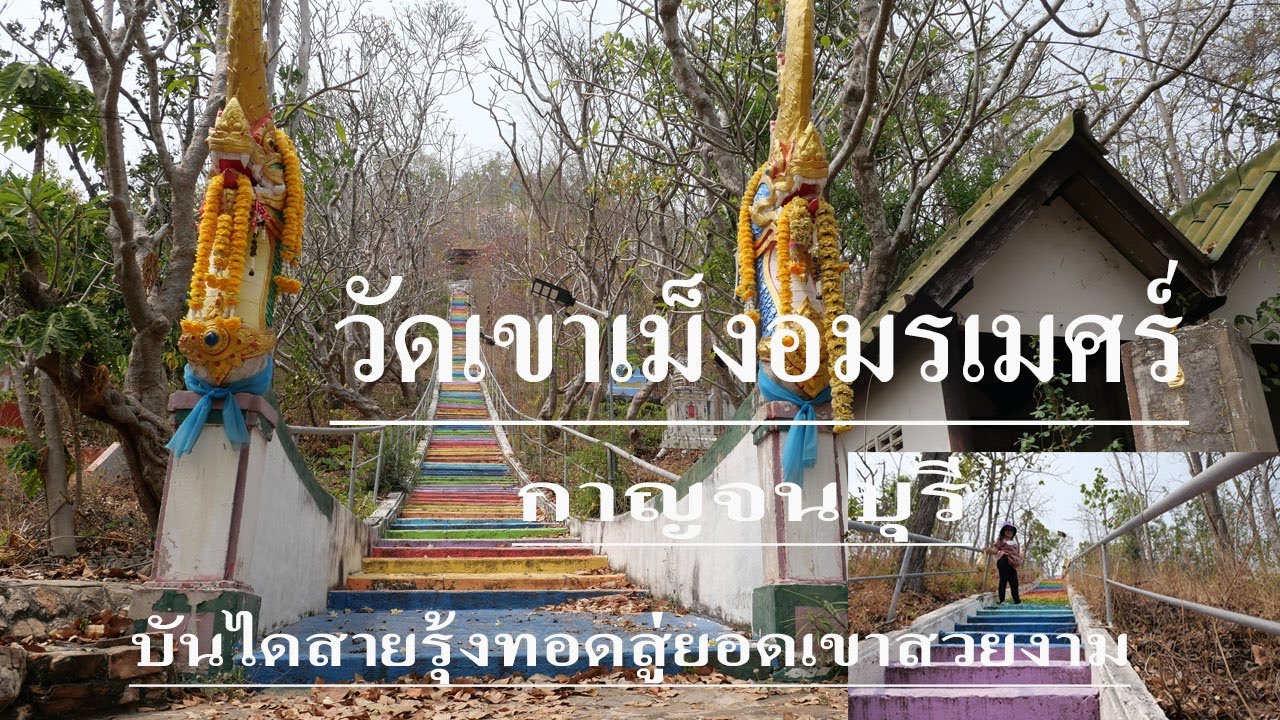
 Click to Access the Navigation Map GPS
Wat Khao Meng Amoramet Map
Recommend

 Art, Culture and Heritage
 Historical Sites and Monuments(13)
 Landmarks and Memorials(5)
 Art, Craft Centres, Tradition(7)
 Museums(7)
 Art Gallery(1)
Temple(37)
Art Gallery(1)
Temple(37)
 Church(2)
 Other Sacred Sites(6)
 Research and Development
 Royal Project(1)
 Suburban Living
 Village, Community(5)
 Local Market(1)
 Nature and Wildlife
 National Parks and Marine Reserves(11)
 Mountain (Doi)(6)
 Dam, Reservoir, Lake(9)
 Waterfalls(19)
 Hot Springs(3)
 Caves(20)
 River, Canal(3)
 Other natural attractions(4)
 Entertainment and Agricultural
 Zoos and Aquariums(2)
 Animal camps and shows(4)
 Farms, Parks and Ecotourism(11)
 Cinema(1)
 Outdoor and Adventure Activities(2)
 Travel Articles, Recipes
 Travel Review, Food Review(1)


