
lovethailand home >Central Travel Attractions >Kanchanaburi Travel Attractions >Si Sawat >Dan Mae Chalaep > Huai Mae Khamin Waterfall
TL;DR: Huai Mae Khamin Waterfall is located at Srinakarin Dam National Park, Tha Kradan Subdistrict, Si Sawat District, Kanchanaburi, open Daily (recommended to check park announcements before your trip), hours 06:00 – 16:30 (the gate closes around 17:00).
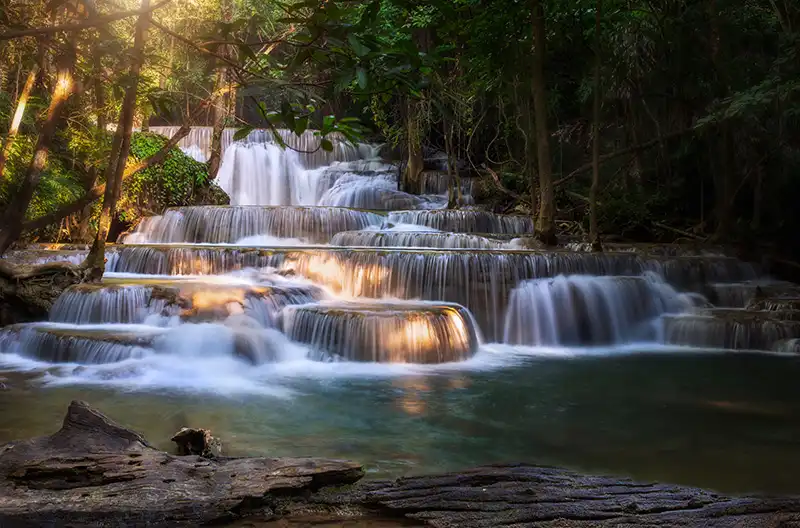
Huai Mae Khamin Waterfall
Open Days: Daily (recommended to check park announcements before your trip)
Opening Hours: 06:00 – 16:30 (the gate closes around 17:00)
Huai Mae Khamin Waterfall is widely regarded as one of the most beautiful and worthwhile waterfalls in Kanchanaburi. It is not just a single photo spot, but a layered experience that gradually unfolds from the lower tiers up to the upper tiers, with a total of 7 levels along the same route. Visiting here feels like walking through multiple scenes of forest and flowing water in one trip. If you love clear water, natural pools for breaks, walking paths that you can choose based on your energy, and the option to stay overnight—either in park accommodation/camping areas or at nearby resorts and raft stays around Srinakarin Dam—Huai Mae Khamin is often more “complete” than many people expect, especially from October to April when the weather is comfortable for long hours outdoors.
The waterfall begins with streams that run down from mountain ridges and highland areas, where multiple small waterways gradually merge into what becomes “Huai Mae Khamin.” As the water flows over natural rock layers and changes in elevation, it forms a sequence of cascades across 7 tiers. The beauty of a multi-tier waterfall is that each level has its own character. Some tiers are ideal for standing viewpoints and photography, some have pools where you can rest, and some feel increasingly quiet and forested as you climb higher. This is why the experience here is not simply “arrive, take a photo, and leave” but rather a set of smaller journeys within one place—often making 2–4 hours pass without you noticing.
Huai Mae Khamin is frequently mentioned alongside the phrase “7 tiers,” which is important to understand before you start walking. Without a plan, many visitors end up reaching only the busiest tier and turning back, even though the other levels are equally charming in different ways. The 7 tiers are clearly named as follows: Tier 1 “Dong Wan,” Tier 2 “Man Khamin,” Tier 3 “Wang Na Pha,” Tier 4 “Chat Kaew,” Tier 5 “Lai Jon Long,” Tier 6 “Dong Phi Suea,” and Tier 7 “Rom Klao.” Each name reflects the atmosphere of the surrounding nature in a way that local people remember easily. Once you walk the trail yourself, you will understand why Tier 4 is the one most often talked about.
The tier that many visitors intentionally choose as their main “rest stop” is Tier 4, “Chat Kaew.” It feels like the best balance between effort and reward: the walk is not overly demanding, yet the scenery is beautiful and the area supports a longer, more comfortable break. Many people plan to reach at least Tier 4 first, then decide whether they still have the energy to continue up to Tiers 5–7. The advantage of this approach is that it keeps the trip enjoyable without pressure, while still ensuring you do not miss the shared consensus highlight that people describe as “truly beautiful.” On days with good sunlight, you can also catch sparkles in the mist and reflections on the water surface, which immediately adds depth to photos.
If you enjoy photography, Huai Mae Khamin offers multiple styles of images in one place: wide shots that capture the waterfall tier with a forest backdrop, tighter shots that focus on flowing water and rock textures, portraits using the fine spray as a foreground layer, and lifestyle frames that tell the story of moving from one tier to the next. A practical tip for better photos is to visit in the early morning or late afternoon when light is softer. If you bring a filter or something to shield your lens from mist, it can significantly reduce water spots on the lens, especially when you stand close to the falling water.
The key point to understand is that the waterfall’s “best look” changes noticeably by season. During the rainy season, water volume is usually high and the sound is powerful, creating a wilder, more dynamic scene, but you trade that for higher risk of slippery paths and occasional safety restrictions in certain areas. In the dry season, water volume decreases, but the benefits are clearer water and a calmer atmosphere—ideal for visitors who prefer an easy walk, controlled photography conditions, and relaxed downtime without competing with heavy rain or strong currents. If your goal is a comfortable nature trip, October to April is typically the most balanced period for both weather and walking safety.
Another reason many people are willing to travel farther is the overall atmosphere of the Srinakarin Dam area and Si Sawat District. This zone feels more spacious and less crowded than the highly popular attractions closer to town. You get sweeping views of the reservoir, layered mountain silhouettes, and forest-lined roads that make the drive itself part of the experience, not merely transportation from point A to point B. Many visitors therefore choose an overnight itinerary to enjoy the calm, photogenic mood of early morning and late afternoon, when the area feels quieter and the light is often more flattering.
When walking around the waterfall, how comfortable or tiring your visit feels is not only about distance, but also preparation. The best footwear is non-slip shoes or secure strap sandals with good grip, because parts of the trail can be damp and algae can form on surfaces. If you carry a small bottle of water and a compact face towel or small towel, you can keep moving comfortably without needing to return to your car frequently. If you travel with children or older family members, build in rest stops and avoid rushing. The areas that require extra caution are rocks with continuous water flow—they may look harmless, but they are usually far more slippery than they appear.
Within the park, there are generally basic facilities such as restrooms, parking, and visitor service areas, along with park accommodation and camping zones during certain operating periods. Staying overnight is especially beneficial for Huai Mae Khamin because you can manage your schedule without rushing and choose to visit early in the morning, when crowds are lighter and temperatures are pleasant. If you aim to complete all 7 tiers, an overnight plan helps you avoid pushing too hard and gives you enough energy for the upper tiers, which require more time and attention. On the other hand, if your time is limited, focusing on “reaching Tier 4 and returning” is still a highly worthwhile plan that feels complete and easy to recommend.
Getting There Driving to Huai Mae Khamin Waterfall is commonly done from Bangkok via Phetkasem Road (Highway 4) through Nakhon Pathom, then onward to Kanchanaburi, continuing to Si Sawat District via Highway 3199 toward the Srinakarin Dam National Park area. Along the route, there are typically directional signs, but the key is to plan enough time because parts of the drive are long and winding. As you get closer to the waterfall zone, road conditions may vary by season, so in the rainy months you should drive at an appropriate speed and always allow extra time.
When choosing an “access route,” many travelers think in terms of vehicle type and convenience. One option is to drive toward Srinakarin Dam via the main route, then continue onward to the waterfall, which many consider straightforward and easy to manage. Another frequently mentioned option is using the car ferry (“phae khanan yon”), which many people find convenient for sedans because you can drive your car onto the ferry to cross the water, typically with a short crossing time per trip. Even so, you should check ferry operating hours on your actual travel date and allow time for queues on weekends and peak season, so your itinerary doesn’t lose momentum before the waterfall walk begins.
Besides private cars, some visitors choose to travel by charter boat for a different experience that brings you closer to the reservoir scenery. This approach works well for groups of friends or families traveling together who want to share costs. After arriving at a pier near the access point, there is a short walk up to the waterfall area. The advantage is a more distinctive journey, but the main caution is to plan your return boat timing clearly, especially if children or older travelers are with you.
For public transport, there is information that local songthaews operate in the area on certain schedules, but the important point is that timings can change depending on season and actual passenger demand. If you do not have a private vehicle, it is advisable to build in buffer time and have a backup plan, such as coordinating with accommodation providers or local contacts for onward transport. This helps prevent the common problem of “arriving successfully but being unable to return” in the evening, especially if you need to get back to Kanchanaburi town or Bangkok the same day.
If you want to maximize value from this trip, a simple way to plan is to decide your main goal first: do you want to “play in the water and relax,” or do you want to “complete all 7 tiers”? These two styles require different time and energy. For the first, you can focus on the easier tiers, especially Tier 4 where many people enjoy resting, and still have time left to visit scenic dam viewpoints or cafes in the Tha Kradan area. For the second, you should start early and prepare properly, because the upper tiers take more time to reach. This planning mindset helps you avoid rushing and also ensures you can exit the park before gate closing time without pressure at the end.
Another topic that many articles mention only briefly—but matters greatly in real life—is water safety. Huai Mae Khamin has areas that appear easy for playing in the water, but the rock surfaces can be much more slippery than they look, especially right after rain or where algae has formed. If you want to enter the water, choose areas designated as suitable by park staff and where other visitors are commonly present. Avoid climbing high rocks or standing near heavy-impact waterfall zones. If children are with you, set a clear “play boundary” because natural areas do not have the protective barriers you would find at a waterpark. Being careful from the start usually leads to a trip that stays fun and ends with peace of mind.
Finally, what makes Huai Mae Khamin a place people want to revisit is that you can enjoy it in different ways across different trips. Your first visit might focus on Tier 4 for photos and relaxation. A later visit could be dedicated to completing all 7 tiers seriously, or to staying overnight around Srinakarin Dam where mornings are quiet and the air feels especially fresh. If you slow down a little, listen to the water and the forest around you, you may find that this trip delivers not only great photos, but also a kind of mental reset that is hard to get from destinations closer to the city. This is why Huai Mae Khamin continues to be searched and recommended as one of Kanchanaburi’s most worthwhile waterfall destinations.
| Place Summary | A 7-tier waterfall inside Srinakarin Dam National Park. Tier 4 “Chat Kaew” is the most popular resting spot. Known for clear water, forest-and-stream atmosphere, and suitability for both day trips and overnight stays. |
| Location | Srinakarin Dam National Park, Tha Kradan Subdistrict, Si Sawat District, Kanchanaburi |
| Key Highlights | 7 tiers (Dong Wan – Rom Klao), Tier 4 Chat Kaew is the most popular rest area, multiple photogenic viewpoints, suitable for both casual walks and completing all tiers, and the nearby Srinakarin Dam landscape adds value to overnight trips. |
| Best Time To Visit | October – April (comfortable weather) / weekday mornings (fewer crowds) |
| History / Origin | Formed by Huai Mae Khamin stream flowing down from mountain ridges and gathering into a watercourse that runs over natural rock layers, creating a 7-tier cascading waterfall and becoming a key nature destination in the Srinakarin Dam area. |
| Getting There | Private car: Bangkok – Kanchanaburi – Si Sawat via Highway 3199 into the park area / Car ferry option: drive onto the ferry to cross and continue to the waterfall (check operating hours) / Charter boat: suitable for groups / Public transport: local services may operate but schedules can change, so plan return timing carefully. |
| Fees | Thai: Adult 60 THB / Child 30 THB, Foreigner: Adult 300 THB / Child 150 THB, Car 30 THB, Motorcycle 20 THB |
| Facilities | Parking, restrooms, visitor services, walkways to each tier, park accommodation/camping areas (subject to operating periods), welfare restaurant (subject to operating periods) |
| Current Status | Generally open to visitors (recommended to check announcements and weather conditions before travel, especially during the rainy season) |
| Contact | 034-540316, 034-540317 |
| Nearby Attractions (With Distance) | 1) Tham Neramit Cave – 10 km 2) Wat Tham Neramit – 12 km 3) Srinakarin Dam Ridge / Viewpoint – 45 km 4) Kanchanaburi City Center – 113 km 5) Tha Kradan Area (services/accommodation around the dam) – 25 km |
| Popular Restaurants Nearby (With Distance + Phone) | 1) Ruen Thara – 25 km – 034-574001 2) Sainam Restaurant – 25 km – 081-206-9312 3) Boon Cafe – 25 km – 086-364-7714 4) Ngern Lai Nong Thong Lai Ma – 28 km – 098-496-3599 5) Phi Jo Taam Lan Khuen – 45 km – 062-626-2491 |
| Popular Accommodations Nearby (With Distance + Phone) | 1) Nam Khang Raft (Huai Mae Khamin) – 2 km – 089-888-6347 2) Ban Kluai Raft – 7 km – 094-323-9793 3) Leaf Lake Kan Resort – 24 km – 094-914-3555 4) Raya Buri Resort – 24 km – 034-696-165 5) Z9 Resort Kanchanaburi – 25 km – 061-360-4959 |
Frequently Asked Questions (FAQ)
Q: Can you swim at Huai Mae Khamin Waterfall?
A: Swimming may be possible in certain suitable, low-risk areas. Avoid slippery rocks and heavy-impact zones near the main cascades, especially after rain, and always follow park staff guidance.
Q: Which months are best to visit Huai Mae Khamin Waterfall?
A: October to April is generally the best period because the weather is comfortable and trip planning is easier. If you want very strong flow, late rainy season can be impressive, but you should check safety announcements before traveling.
Q: Is Tier 4 “Chat Kaew” difficult to reach?
A: It is the most popular tier because the walk is not overly demanding and the resting areas are scenic. Non-slip footwear is recommended because parts of the path can be damp.
Q: Can a sedan reach the waterfall, or do you need a pickup truck?
A: Some road sections can vary by season. With an appropriate route choice and careful driving, sedans can reach the area in many cases. During the rainy season, allow extra time, avoid speeding, and check the latest route conditions before departure.
Q: How much is the park entry fee, and where do you buy tickets?
A: The entry fees follow the national park rate (summarized in the table). Tickets are typically purchased at the gate or the park visitor service point before entering the waterfall area.
Q: If I have limited time, how should I plan the visit for the best value?
A: A practical plan is to focus on Tier 4 “Chat Kaew” first, then add lower tiers depending on your remaining time. This approach captures the main highlight while helping you exit the park before gate closing time.
 Category: ●Nature and Wildlife
 Group: ●Waterfalls
Last Update : 9 MonthAgo
 Last Update : 9 MonthAgo
 Click to Access the Navigation Map GPS
Huai Mae Khamin Waterfall Map
Gellery
Recommend

 Art, Culture and Heritage
 Historical Sites and Monuments(13)
 Landmarks and Memorials(5)
 Art, Craft Centres, Tradition(7)
 Museums(7)
 Art Gallery(1)
 Places of Worship
 Temple(37)
 Church(2)
 Other Sacred Sites(7)
 Research and Development
 Royal Project(1)
 Suburban Living
 Village, Community(5)
 Local Market(1)
 National Parks and Marine Reserves(11)
 Mountain (Doi)(6)
 Dam, Reservoir, Lake(9)
Waterfalls(19)
Dam, Reservoir, Lake(9)
Waterfalls(19)
 Hot Springs(3)
 Caves(20)
 River, Canal(3)
 Other natural attractions(4)
 Entertainment and Agricultural
 Zoos and Aquariums(2)
 Animal camps and shows(4)
 Farms, Parks and Ecotourism(11)
 Cinema(1)
 Outdoor and Adventure Activities(2)
 Travel Articles, Recipes
 Travel Review, Food Review(1)


