
 Home
Home Chiang Mai(










Chungkai War Cemetery
Rating: 4.3/5 (4 votes)
 Search By
  Map
Map 
 Have Map
  No Map
Kanchanaburi attractions
Attractions in Thailand
Open Days: Daily
Opening Hours: 09:00–17:00 (recommended in the morning or late afternoon for a quieter atmosphere and better photo light)
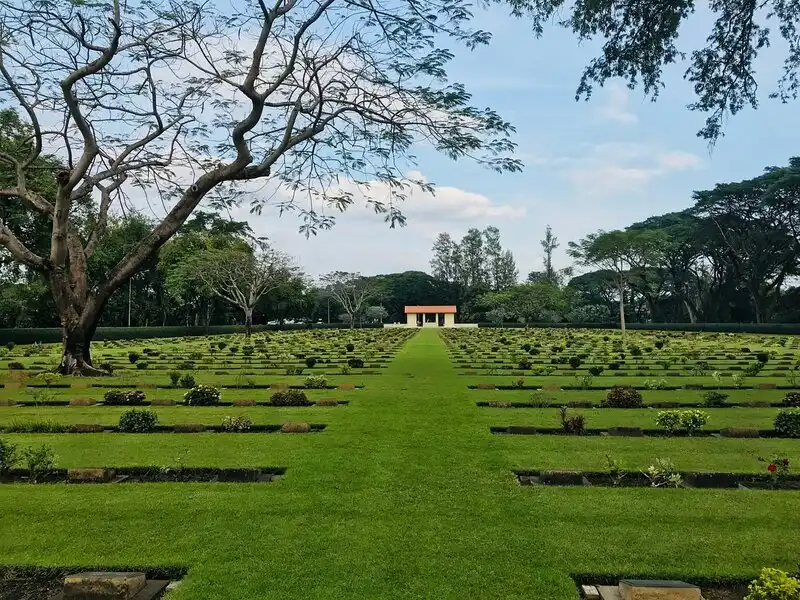
Chungkai War Cemetery (สุสานทหารสัมพันธมิตรช่องไก่) If you have come to know Kanchanaburi through iconic images of the Bridge Over the River Kwai or the Death Railway, it is easy to treat history as something distant—a backdrop that simply adds a storyline to a trip. Yet the moment you step into Chungkai War Cemetery, that feeling often changes without effort. This quiet place brings the Second World War back with real weight. The carefully tended lawn, the orderly rows of graves, and the calm along the Khwae Noi River—so still you can hear the wind—gently remind visitors that what we call the “Death Railway” was never only a scenic route. It was a human story paid for with countless lives. Chungkai is not just a stop to look around; it is a place to pause and understand Kanchanaburi as a true historical city.
Chungkai War Cemetery lies beside the Khwae Noi River, close to Kanchanaburi town. It is often described as not far from the city area, making it relatively easy to visit compared with many other attractions in the province. What sets this cemetery apart is its peace and privacy. It is smaller than Kanchanaburi War Cemetery (Don Rak) in town, yet it feels quieter, more still, and invites you to slow your pace and walk with intention. Many visitors who come specifically to learn about history, or who wish to step away from crowded landmarks, appreciate Chungkai’s simplicity. It does not try to “tell a story” through grandness; instead, it speaks through order, cleanliness, and the sense of respect reflected in how the grounds are maintained.
In terms of meaning, Chungkai is one of the key memorial sites directly connected to the Thailand–Burma Railway, built during World War II as a strategic project for the Japanese military. The line was planned to link Thailand with Burma/Myanmar to move troops and supplies across the region. Because construction was rushed under wartime pressure, it depended on an enormous workforce, including Allied prisoners of war and conscripted Asian labourers. Harsh conditions in tropical terrain, disease, shortages of food and tools, and brutal punishment led to immense loss of life, which is why the route later became known worldwide as the “Death Railway.” Seen within this context, Chungkai is not an isolated place separate from other attractions. It is part of Kanchanaburi’s wider “map of memory” of the war, spread across the province.
This cemetery becomes even more significant because the Chungkai area once contained a large prisoner-of-war camp and was associated with the care of sick prisoners during the war. In other words, this was not only a burial site created later; it was also a place where prisoners’ daily lives unfolded—with hope, illness, exhaustion, and farewells. Many of the graves here reflect deaths caused by disease and starvation within the realities of war, rather than death in direct combat. That is why walking through Chungkai can feel different from visiting a typical war monument. You are standing on ground where human life was tested at its limits during one of the darkest periods in modern history.
One of the first impressions visitors often have is the sense of order and calm designed for remembrance. The cemetery is maintained in the style of the Commonwealth War Graves Commission (CWGC), following shared standards used across many countries to honour the war dead equally and with dignity. You may notice graves aligned in consistent rows, closely cut grass, and carefully placed trees and flowers that soften the atmosphere—gentler than the brutality contained in the history behind it. The slower you walk, and the more you read the names, the more you realise that the “numbers” in history books are made up of individual lives, one person at a time. Each name once belonged to someone with a story, a family, and hopes cut short by war.
Another feature that makes Chungkai distinct is its relationship with the riverside landscape. Standing here creates a powerful contrast. The Khwae Noi River flows peacefully today, yet this area once formed part of a harsh wartime world where people were forced to work under fear and uncertainty. That contrast gives the place its quiet strength. Time moves forward and nature can recover, but human memory should not be allowed to fade. If you give yourself even a short moment to stand in silence, you may understand why many people say Chungkai can “teach history by itself” with very few words.
Because of this, a visit to Chungkai should begin with the right mindset: this is a place of remembrance, not merely a photo backdrop. Dressing respectfully, speaking softly, and walking carefully are important. Photography is generally possible, but it should be done with dignity—no climbing, no disruption to others, and no activities that disturb the calm. If you are visiting with children or family, it helps to explain the context in an age-appropriate way beforehand so the walk becomes a meaningful lesson rather than a quick pass-through. For travellers who want to follow the WWII story in Kanchanaburi thoughtfully, Chungkai is an excellent starting point. It sets the emotional tone for the day and encourages a more responsible, respectful kind of historical travel.
In practical terms, Chungkai suits a visit of about 30–60 minutes, depending on how slowly you walk and whether you choose to read details and reflect. Morning visits are often quieter and more comfortable in temperature. Late afternoon offers warm light that can be beautiful for gentle, documentary-style photos, but you should still allow enough time and avoid rushing. The beauty of Chungkai is not found in one “photo spot.” It lies in the steady rhythm of walking and absorbing the overall atmosphere.
If you want a truly complete day, one effective approach is to connect Chungkai with other WWII sites in Kanchanaburi in a logical sequence. Start here to ground yourself in remembrance, then continue to a museum or to Kanchanaburi War Cemetery (Don Rak) in town for a broader overview. After that, visit the Bridge Over the River Kwai to see a globally recognised physical landmark tied to the railway’s history. If time allows, extend the day to the Death Railway route toward Tham Krasae or Nam Tok Station to finish with a real rail experience. This order gives your trip a clear narrative: begin with quiet reflection, expand into structured learning, and end with the landscape experience that helps explain why building this line under wartime pressure demanded an inhuman cost.
For travellers who like to plan in detail, it is also worth considering different ways of reaching the site, because Chungkai relates to the river environment and Kanchanaburi’s waterside movement. In some seasons, visitors may explore river-linked routes from the town area to better feel Kanchanaburi as a “river city.” Whatever method you choose, the essentials are to allow extra time and check weather conditions, especially during the rainy season when certain surfaces can be slippery or routes may be affected. If you drive, bring comfortable walking shoes, drinking water, and above all, the intention to move through the space with respect—because this is where many lives are remembered in silence.
Getting There Chungkai War Cemetery is slightly outside Kanchanaburi town and can be reached by car. You can generally navigate from the town area toward routes connected with the Khwae Noi riverside and the town pier zone. Some approaches may involve a local car ferry or river crossing before continuing on local roads, so it is wise to allow extra time and check conditions on site, especially if there are unpaved sections. If you are travelling without a private vehicle, you can usually start in Kanchanaburi town and rely on local hired transport, planning your timing to fit within the 09:00–17:00 visiting hours.
Ultimately, Chungkai War Cemetery gives real meaning to the idea of “learning through travel.” It does not aim to impress through spectacle. Instead, it guides visitors toward understanding through quietness, order, and respect for those who died. If you are looking for a place in Kanchanaburi that adds depth to your trip, Chungkai is one of the clearest answers. And when you leave, you may look at the Bridge Over the River Kwai, the Death Railway, and the Khwae Noi River with a different perspective—because you have seen that behind every famous landmark are real people, real names, and real loss that should never be reduced to mere scenery.
| Place Name | Chungkai War Cemetery (สุสานทหารสัมพันธมิตรช่องไก่) |
| Address (Primary Reference) | Khwae Noi River Area, Near Kanchanaburi Town, Kanchanaburi, Thailand |
| Site Summary | A Commonwealth war cemetery connected to the Thailand–Burma Railway, commemorating Allied prisoners of war and wartime deaths in a peaceful riverside setting. |
| Key Highlights | Quiet, respectful atmosphere by the Khwae Noi River; CWGC-style layout; meaningful WWII learning stop away from crowded landmarks. |
| Period | World War II & Post-War Commemoration |
| Key Evidence | War graves and memorial layout; CWGC maintenance standards; direct historical connection to the Thailand–Burma Railway. |
| Name Origin | “Chungkai” refers to the local area associated with a wartime POW camp and related facilities, later used as the cemetery name. |
| Travel | Drive from Kanchanaburi Town toward the Khwae Noi riverside; some approaches may involve a local river crossing; allow extra time and check route conditions. |
| Current Status | Open For Visits During Operating Hours; Maintained As A War Cemetery |
| Fees | Free Entry |
| Facilities | On-Site Parking (As Listed By CWGC), Internal Walkways, Quiet Riverside Grounds |
| Contact Number | Tourism Authority Of Thailand (Kanchanaburi Office): 034 511 200 |
| Nearby Tourist Attractions (With Distance) | 1) Kanchanaburi War Cemetery (Don Rak) – 4 km 2) The Jeath War Museum – 6 km 3) Death Railway Museum & Research Centre – 6 km 4) Bridge Over The River Kwai – 8 km 5) Wat Thewa Sangkharam Bridge Area – 3 km |
| Popular Restaurants Nearby (With Distance + Phone) | 1) Keeree Tara Restaurant – 9 km – 034 513 855 2) By De River – 8 km – 085 405 9161 3) On’s Thai Issan Vegan – 7 km – 087 364 2264 4) Bell’s Pizzeria – 7 km – 081 010 6614 5) Keeree Mantra Restaurant – 10 km – 034 540 889 |
| Popular Accommodations Nearby (With Distance + Phone) | 1) U Inchantree Kanchanaburi – 9 km – 034 521 584 2) Felix River Kwai Resort – 9 km – 034 551 000 3) Dheva Mantra Resort – 12 km – 034 615 999 4) The Bridge Residence Hotel – 9 km – 080 088 8454 5) Mida Resort Kanchanaburi – 40 km – 034 919 606 |
Frequently Asked Questions (FAQ)
Q: How Is Chungkai War Cemetery Different From Kanchanaburi War Cemetery (Don Rak)?
A: Chungkai Is Smaller And More Quiet And Private, Making It Ideal For A Calm, Reflective Visit. Don Rak Is In Town And Is The Better-known Main Cemetery For Most Visitors.
Q: How Long Should I Plan To Spend At Chungkai War Cemetery?
A: Most Visitors Spend Around 30–60 Minutes, Depending On How Slowly They Walk And Whether They Read Details And Reflect.
Q: What Time Of Day Is Best To Visit?
A: Morning Is Usually Quieter With More Comfortable Weather. Late Afternoon Offers Warm Light For Photos, As Long As You Visit Within Operating Hours.
Q: Can I Visit Without A Private Car?
A: Yes. Start From Kanchanaburi Town And Use Local Hired Transport, Planning Your Timing Around The Cemetery’s Opening Hours.
Q: What Etiquette Should I Follow While Visiting?
A: Dress Respectfully, Speak Softly, Walk Carefully, And Take Photos With Dignity. Avoid Any Activity That Disturbs The Quiet Or Disrespects The Memorial Space.
Q: Where Should I Go Next To Better Understand The Death Railway Story?
A: Consider Continuing To Don Rak Cemetery, A Related Museum In Town, And The Bridge Over the River Kwai. If You Have More Time, Extend To Tham Krasae Along The Death Railway Route.
 Chungkai War Cemetery Map
 Category:
  Group:
  Tag: ●Chungkai War Cemetery●chungkai war cemetery ●chong kai war cemetery ●war cemetery kanchanaburi ●ww2 kanchanaburi ●thailand burma railway ●death railway history ●river kwai kanchanaburi ●cwgc thailand ●kanchanaburi historical sites ●places to visit kanchanaburi Last Update: 2 MonthAgo
Comment
 Nearby Attractions
| Keyword (Advance) |
 Facebook Fanpage
 Region
 Landmarks and Memorials(
 Art, Craft Centres, Tradition(
 Museums(
 Art Gallery(
 University
 Places of Worship
 Temple(
 Church(
 Other religious and spiritural sites(
 Research and Development
 Royal Project(
 Suburban Living
 Village, Community(
 Local Market(
 Nature and Wildlife
 National Parks and Marine Reserves(
 Mountain (Doi)(
 Dam, Reservoir, Lake(
 Waterfalls(
 Hot Springs(
 Caves(
 River, Canal(
 Other natural attractions(
 Entertainment and Agricultural
 Zoos and Aquariums(
 Animal camps and shows(
 Farm, Parks, Gardens and Ecotourism(
 Cinema(
 Outdoor and Adventure Activities(
 Travel Articles, Recipes
 Travel Review, Food Review(
 Copyright 2012,