
 Home
Home North(
 Chiang Mai(


Tham Wang Badan Cave
Rating: 4/5 (7 votes)
 Search By
  Map
Map 
 Have Map
  No Map
Kanchanaburi attractions
Attractions in Thailand
Open Days: Daily
Opening Hours: 08.00 – 16.30
Wang Badan Cave, also widely known as “Sawan Wang Badan Cave,” is one of Kanchanaburi’s cave destinations that suits travelers who enjoy a gentle sense of adventure. It is not extreme or technical, but it is also not an easy, walk-in attraction with paved paths. The charm begins before you even reach the entrance, with a nature-education trail of about 1,500 meters through a cool, shaded forest environment. Along the way, interpretive signs gradually help visitors understand the area’s natural setting, step by step, before arriving at a small cave mouth. A key characteristic of this cave is that the visit must be done calmly, in an orderly manner, and with full attention at every step.
Wang Badan Cave leaves a strong impression on those who have been there, often summed up as: “small entrance, but deep inside.” Standing at the mouth of the cave, you can feel the contrast between the outside world and the underground realm. Outside, there is light, breeze, and familiar natural sound. But once you pass through the relatively narrow entry, the atmosphere changes immediately. Darkness and cool air take over, which is why a flashlight is not optional but an essential tool for safer movement. It also allows you to start noticing the fine details of limestone surfaces that nature has shaped over long periods of time into forms that people interpret as different chambers within the cave.
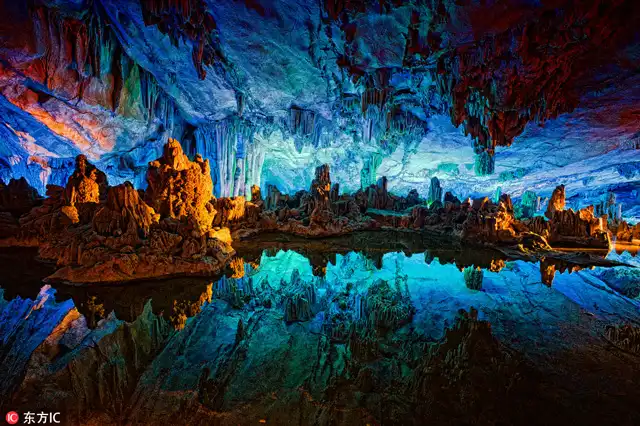
What makes Wang Badan Cave different from a quick cave visit done mainly for photos is its interior structure, often described as a two-level limestone cave. The upper level is where many of the standout stalactites and stalagmites can be seen in a variety of moods. Chambers are named to help visitors “read the scene” more easily, such as the Moon Curtain Chamber, where sections of formations hang down in curtain-like fringes, and the Narai Needle Chamber, where a prominent, large needle-shaped stalactite draws attention and tends to make people pause longer than in other areas. The lower level feels like a different world, because there is flowing water, creating an atmosphere like a subterranean water tunnel beneath the rock. This makes the experience not only visual, but also sensory—you can feel the sound and humidity, as if the cave is alive in its own way.
Before describing the chambers in detail, it helps to understand that limestone caves are extremely delicate natural systems. The formations we admire do not form quickly, and they are not created by a single event. Rainwater seeps through limestone layers, gradually dissolving calcium carbonate into a mineral solution, then drips from cave ceilings or seeps along cave walls. As carbon dioxide slowly escapes from each droplet, calcite crystallizes and builds up in thin layers over time, forming stalactites above and stalagmites below. This process is so slow that it is difficult to measure within a human lifetime. Therefore, even one careless touch can cause long-term harm: skin oils can stain the surface or interfere with crystallization, potentially stopping growth in that spot.
For this reason, the best way to enjoy Wang Badan Cave is not to try to “touch” anything, but to “learn how to see.” Use your light carefully, avoid holding it too close, and try angling the beam so that shadows can reveal depth. Soft shadows help you see the texture, layers, and even the past direction of water flow recorded on the rock surface. This kind of beauty often does not appear if you walk too quickly or blast everything with strong light that turns details into flat whiteness. It emerges gradually when you slow down and give your eyes time to adjust to darkness.
Many people love the “Moon Curtain Chamber” because it feels as if nature worked with extra refinement. In this chamber, some formations gather into sheets or fine fringes, resembling a curtain flowing down from the ceiling. In certain angles, it looks like pleated drapery in layered folds. The beauty is usually best seen when you shine your light at an angle and avoid keeping it fixed in one spot for too long. Slowly change the beam direction and you will notice that the “stone curtain” has uneven thickness, and some parts can appear more translucent than expected. This is why many visitors linger here, discovering details that do not repeat.
The “Narai Needle Chamber” is another area people tend to remember well, because the main formation resembles a large needle-like stalactite hanging prominently from above. The impression here is one of “verticality” and “weight,” which can feel more architectural than decorative. If you stand back enough to see the full form and shine your light to cover the entire feature, you can notice differences in surface texture: some areas look dense and smooth, while others show rippled layers as if shaped by flowing water. With angled light, shadow makes the formation appear three-dimensional, like a sculpture.
Another reason Wang Badan Cave stays memorable is the combination of depth and darkness, which requires shared discipline from everyone. This becomes especially important in narrow passage sections where visitors may need to move one by one. For safe cave-walking, keep to simple rules: always aim your light at the ground before stepping, move slowly with short steps, do not rush or overtake in tight areas, and keep a small distance between people so flashlight beams do not interfere with each other. When lights are not chaotically crossing, you can see the ground more clearly and reduce the risk of stumbling on uneven surfaces.
In the lower level where water flows through, the atmosphere changes again. Humidity increases, the air feels cooler, and water sounds become more distinct in the darkness. The experience is no longer only about “looking at rock,” but also about “listening to the cave.” Water moving through narrow channels or within hollow spaces creates a soft echo, almost like the cave is breathing. This is why some visitors describe it as walking through a large underground water tunnel beneath the rock. However, wet areas are typically more slippery, so you should slow down even further here. Shoes with good traction make a bigger difference than many people expect.
Beyond the cave’s interior beauty, the approximately 1,500-meter walk-in trail is the true “prologue” to visiting Wang Badan Cave. Walking through a humid forest corridor with informative signs naturally slows you down, shifting your rhythm from the rush of the road to the calm of exploration. The distance is not excessive for reasonably fit travelers, but it is not so short that you can treat it casually. If you come with family members or older adults, pacing the walk, resting in intervals, and avoiding haste helps everyone reach the cave entrance without exhaustion, and helps preserve enough focus for the darkness and uneven ground inside.
If Wang Badan Cave could be summarized in one sentence, it would be a place that offers value both as a natural attraction and as a lesson in visitor “skill.” It teaches us to slow down, stay mindful, and respect nature in a very tangible way. Anyone who walks through the cave can feel that the beauty inside was not created for us; it is beauty shaped by time. Our role is simply to enter politely and carefully, so our visit does not become a scar on nature’s artwork.
Getting There From Kanchanaburi town, the main route generally follows Highway 323 toward Sai Yok District. Watch for signage leading to the park ranger unit area in Tha Sao, then drive along the side road for about 3 kilometers to reach the ranger unit, which serves as the starting point for the walk. From there, follow the nature-education trail for approximately 1,500 meters. Walking time is typically around 1 hour on average, depending on pace, rest stops, and seasonal trail conditions. Once you reach the cave entrance, proceed with the visit according to on-site conditions and staff guidance.
Preparation for Wang Badan Cave should focus on safety and mobility. A headlamp is highly useful because it keeps your hands free for balance and directs light where you look. Shoes with strong grip should be treated as standard equipment, because both the approach trail and cave floor may be damp and slippery. Bring a reasonable amount of drinking water for the walk. Wear quick-drying, flexible clothing. In the rainy season, a light rain jacket and a waterproof pouch for your phone or valuables are recommended. Avoid long-hanging bags or bulky items, as they may strike cave walls or affect balance more easily.
For groups with children or older adults, the key decision is not only the desire to see the cave, but also readiness for a 1,500-meter walk and comfort with a narrow entrance and dark conditions. If someone in the group is uneasy in tight spaces or fears darkness, it is best to assess seriously before starting, because hesitation midway can disrupt the group and increase risk. The safest approach is to walk slowly, avoid rushing, take breaks, and ensure each person has their own light so no one depends entirely on another’s beam.
In itinerary terms, Wang Badan Cave can work well as a main activity for the day, especially for travelers who want a genuine nature experience rather than a quick photo stop. The walk-in and walk-out, plus time inside the cave, naturally sets the pace of the trip. If you want to combine nearby highlights, you can plan around other Sai Yok-area attractions such as waterfalls, riverside viewpoints, or historic sites. The main point is to allow sufficient time and avoid starting the forest walk in late afternoon, because returning in low light increases the risk of slipping and makes the exit less comfortable.
Ultimately, Wang Badan Cave offers both wonder and humility at the same time. You may feel awe at formations that resemble curtains and large needle-like shapes, and humility when you realize they were formed by tiny water droplets working together with time far beyond what a human life can count. Visiting the cave is not only about “seeing something beautiful,” but also about learning nature through mindfulness and recognizing that in a fragile environment like this, careful behavior is part of conservation.
| Name | Wang Badan Cave (Sawan Wang Badan Cave) |
| Address / Coordinates | Erawan National Park (Ranger Unit Zone: Wang Badan Area), Tha Sao Subdistrict, Sai Yok District, Kanchanaburi Province Coordinates (As Cited In Public Databases): N 14.34543, E 99.03760 |
| Overview | A small but deep limestone cave with a two-level structure. The upper level features impressive formations and named chambers such as the Moon Curtain Chamber and the Narai Needle Chamber. The lower level includes flowing water and a tunnel-like underground atmosphere. Access begins with an approximately 1,500-meter nature-education trail. |
| Key Highlights | A narrow entrance that admits one person at a time, creating a gentle adventure feel; a two-level limestone cave; well-known chambers such as Moon Curtain and Narai Needle; a lower level with flowing water and a water-tunnel ambiance; a nature-education trail with interpretive signs before reaching the cave. |
| Open Days | Daily |
| Opening Hours | 08.00 – 16.30 |
| Fees | Referenced as Erawan National Park entry fees (please verify current rates before travel): Thai — Adult 100 THB / Child 50 THB; Foreigners — Adult 300 THB / Child 200 THB |
| Facilities | Nature-education trail and interpretive signs; headlamp and grippy shoes recommended; the cave is dark and may be damp/slippery in some sections. |
| Getting There (Summary) | From Kanchanaburi town, follow Highway 323 toward Sai Yok. Turn onto the side road toward the ranger unit in the Wang Badan area (about 3 km). Start walking from the ranger unit, then follow the nature trail for about 1,500 m (approx. 1 hour) to reach the cave. |
| Current Status | A nature-based cave attraction within the national-park area that should be visited with caution. Morning to early afternoon is recommended, and visitors should follow staff guidance closely. |
| Contact (Verified) | Erawan National Park: 034-574-288 |
| Nearby Attractions (Approx. Distance) | 1) Sai Yok Noi Waterfall – 3 km 2) Tham Krasae / Death Railway (Tham Krasae Zone) – 15 km 3) Sai Yok Yai Waterfall (Sai Yok National Park Zone) – 25 km 4) Hellfire Pass – 45 km 5) Erawan Waterfall – 60 km |
| Nearby Restaurants (Approx. Distance + Phone) | 1) Ray Nu Restaurant – 3 km – 081-880-1987 2) Luck Aroi Kitchen – 6 km – 084-507-7745 3) Suan Ahan Wang Pho – 16 km – 087-152-4654 4) Pirom Park – 28 km – 080-989-9798 5) Krua Phak Wan Baan Rai (Narbodind) – 18 km – 034-585-023 |
| Nearby Accommodations (Approx. Distance + Phone) | 1) Yoko River Kwai Resort – 16 km – 081-880-1002 2) River Kwai Jungle Rafts – 22 km – 081-734-0667 3) River Kwai Resotel – 26 km – 02-642-5497 4) Home Phutoey River Kwai Resort – 30 km – 02-642-5497 5) Hintok River Camp at Hellfire Pass – 45 km – 081-754-3898 |
Frequently Asked Questions (FAQ)
Q: Where is Wang Badan Cave located?
A: It is in Erawan National Park, within the Wang Badan ranger-unit area in Tha Sao Subdistrict, Sai Yok District, Kanchanaburi Province. Visitors typically walk about 1,500 meters along a nature-education trail before reaching the cave entrance.
Q: How far is the walk to the cave, and how long does it take?
A: The approach walk is about 1,500 meters and commonly takes around 1 hour, depending on walking pace, rest stops, and seasonal trail conditions.
Q: Why is it called “Sawan Wang Badan Cave”?
A: This is a commonly used name in publicity and traveler descriptions to reflect the cave’s beauty, especially the upper level with notable formations and named chambers such as Moon Curtain and Narai Needle.
Q: What is the most distinctive feature inside the cave?
A: It is often described as a two-level limestone cave. The upper level features impressive formations and notable chambers like Moon Curtain and Narai Needle, while the lower level includes flowing water that creates an underground tunnel-like atmosphere.
Q: What should I prepare before visiting?
A: Bring a headlamp or flashlight, wear shoes with good grip, carry a reasonable amount of water, and wear comfortable clothing. The approach trail is lengthy, the cave is dark, and some sections may be damp and slippery.
Q: What is the most important safety and conservation rule?
A: Be cautious of darkness and slippery ground: walk slowly and shine your light at the floor before each step. Do not touch stalactites or stalagmites because they are fragile and easily damaged, and follow staff guidance carefully.
 Tham Wang Badan Cave Map
 Category:
  Group:
  Tag: ●Tham Wang Badan Cave●wang badan cave ●wang badan cave kanchanaburi ●swan wang badan cave ●cave in sai yok ●erawan national park ●kanchanaburi cave ●limestone cave thailand ●moon curtain chamber ●narai needle chamber ●nature trail sai yok
Last Update: 2 MonthAgo
Tag: ●Tham Wang Badan Cave●wang badan cave ●wang badan cave kanchanaburi ●swan wang badan cave ●cave in sai yok ●erawan national park ●kanchanaburi cave ●limestone cave thailand ●moon curtain chamber ●narai needle chamber ●nature trail sai yok
Last Update: 2 MonthAgo
Comment
 Nearby Attractions
| Keyword (Advance) |
 Region
|
 Muang Kanchanaburi(
 Copyright 2012,