
 Home
Home North(
 Chiang Mai(


Tham Maduea Cave
Rating: 4.3/5 (4 votes)
 Search By
  Map
Map 
 Have Map
  No Map
Kanchanaburi attractions
Attractions in Thailand
Open Days: Open Daily
Opening Hours: 09.00 – 17.00
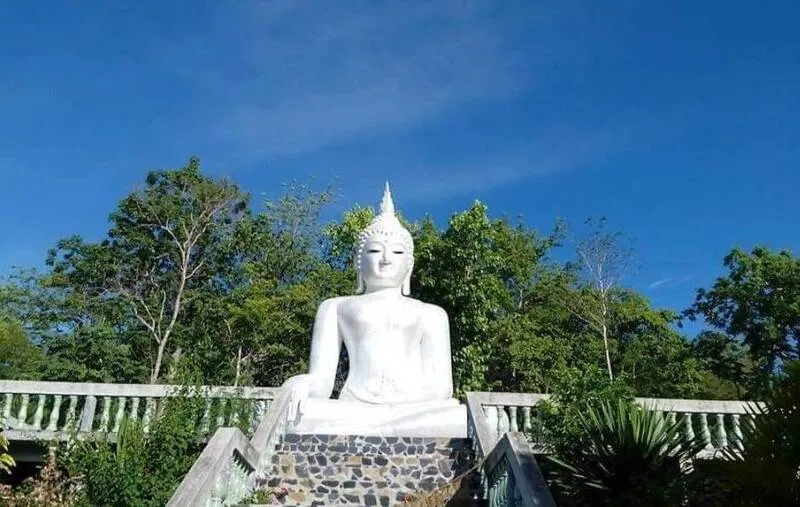
Tham Maduea Cave is a limestone cave located within Wat Tham Maduea in Ban Kao Subdistrict, Kanchanaburi. It is one of those rare destinations that offers a genuine “riverside cave” experience along Thailand’s western travel corridor, because the cave sits right beside the Khwae Noi River. The overall atmosphere blends the calm of flowing water, the shade of surrounding greenery, and a distinctly local simplicity that has not been overly commercialized. For travelers who prefer nature without excessive embellishment, this is a place where you can truly “slow time down” – both while walking through the chambers and while pausing to listen to the river before heading back to the pier side or your parking point.
Tham Maduea is frequently mentioned in relation to nearby landmarks, because it lies “across the river” from the Muang Sing Historical Park (Prasat Muang Sing). The commonly cited distance is roughly 1 kilometer by area, which makes it easy to plan a single-day itinerary that pairs the cave with a historical visit. If you want a trip that combines “natural landscape” and “traces of the past” within one compact zone, the Tham Maduea – Muang Sing pairing tends to feel well-balanced without forcing a rushed schedule.
Many visitors remember Tham Maduea first for how spacious it feels inside. Once you pass the entrance and your eyes adjust to the light, you’ll notice a sequence of chambers connected by natural pathways. Some sections open into high ceilings and wide interior rooms, while others require you to crouch slightly or step carefully as the cave floor changes shape. The cave’s primary beauty comes from its stalactites and stalagmites, which vary significantly from chamber to chamber: in some places they resemble stone curtains, in others long icicle-like drips, and elsewhere layered formations that look like rippling waves. Combined with the lighting installed by the temple to help visitors see details more clearly, the cave’s textures are “brought into view” in a way that requires far less guesswork than many unlit cave environments.
If you’re wondering how much time to set aside, the commonly shared guidance is about 2 hours to explore the cave thoroughly at a comfortable pace. That estimate includes time for photos, breathing breaks, and moving carefully through spots where the ground may be slippery or uneven. What makes cave-walking different from ordinary sightseeing is that you have to keep “reading the environment” continuously: humidity that can make surfaces slick, dim areas that hide level changes, and an interior temperature that often feels slightly cooler than outside. Allowing enough time reduces risk and lets you appreciate the details that are actually worth noticing.
From a natural-science perspective, limestone caves typically form when rainwater seeps through soil and rock layers, becoming mildly acidic and slowly dissolving calcium carbonate in limestone over long periods. Tiny gaps gradually widen into hollows and chambers. As mineral-rich water drips from the ceiling, minerals precipitate and accumulate little by little, creating stalactites above and stalagmites below. Because this process is extremely slow, cave visits are not only about visual beauty but also about witnessing “time made visible” through nature. This is also why avoiding contact with formations matters: even oils or residue from hands can interfere with mineral deposition and disrupt natural growth.
In terms of setting, one distinctive advantage of Tham Maduea is its riverside location on the Khwae Noi River. The surrounding humidity and shade create a cooler, gentler atmosphere than many inland caves. The sound of water and a light riverside breeze can make the overall experience feel less oppressive, even in a confined environment, and it also makes breaks between chambers feel genuinely restorative. Many people choose to pause around the temple grounds or near the pier area before entering, letting the body settle first, then starting the walk gradually. This approach is especially helpful on hot days, because the cave interior can offer a naturally cooling effect that reduces fatigue.
One factor that sets Tham Maduea apart from some other tourist caves is its “access” – it often requires more planning than simply pulling in off the road. A long-standing local route involves taking a small ferry across the river to reach Wat Tham Maduea. The pier is commonly described as being about 1 kilometer from Tha Kilen Railway Station. This route is ideal for travelers who want a more atmospheric journey, such as riding the Death Railway line, getting off at Tha Kilen, then walking or transferring to the pier and crossing over. It feels like a slower, more local style of travel that matches the character of the Khwae Noi riverscape.
Getting There There are 2 main approaches depending on how you travel. By train, you can get off at Tha Kilen Railway Station, then walk or take a short local ride to the ferry pier (commonly cited at about 1 kilometer from the station), and cross the Khwae Noi River to the Wat Tham Maduea side. Many people prefer this option because it is both practical and rich in riverside atmosphere. By car, another approach is to cross the Khwae Noi River bridge in the Ban Kao area and continue for about 2 kilometers toward the temple zone. Some directions reference a connection toward the military camp route (Sai Yok Camp), and the cave is often described as being about 2 kilometers from Sai Yok Camp. Once you arrive, it is wise to confirm the current cave-entry procedure under the area’s management at that time, because there are accounts suggesting that in certain periods you may need to contact relevant authorities to obtain a key to open the cave entrance gate.
If your goal is to “fully explore the cave,” preparation should focus on safety and comfort more than aesthetics. The interior is typically humid and the ground can be slippery, so footwear with good grip is important. Bringing a small amount of drinking water is also useful because cave-walking can be physically demanding, especially if you stay close to 2 hours. Wear breathable clothing that allows easy movement, and consider carrying a small flashlight as backup. Even though the temple has installed lighting, a flashlight adds confidence in dim sections or when you want to see fine textures without relying heavily on flash photography.
Your experience improves significantly when you keep your walking pace steady and unforced, especially in chambers with uneven floors or narrower passages. Follow the route set by the site, and avoid climbing on rocks or formations for photos – not only is it risky due to slipping, but it can also cause damage to cave structures that are difficult to restore. Another practical tip is to maintain a low volume: caves often amplify sound, and loud conversation can disturb others and diminish the sense of nature. Speaking softly and taking quiet moments to observe makes the cave’s atmosphere feel deeper and more memorable.
On a broader itinerary level, Tham Maduea suits travelers who want a trip with “multiple layers.” The surrounding zone offers more than a single cave visit. Nearby, Muang Sing Historical Park is an important archaeological site often associated with Khmer-influenced architecture in the Khwae River region, and the historic railway line around Sai Yok is frequently used as the backbone of local travel routes. Including Tham Maduea as a stop adds variety: it’s not only about scenic photos, but also about a calm, lightly adventurous walk and a tangible connection to Kanchanaburi’s riverside landscape.
For travelers who value a sense of place, the fact that Tham Maduea sits within a temple area naturally shapes visitor behavior. People tend to be more respectful, dress appropriately, and avoid noisy activities. This gives the cave a different character compared with caves in purely commercial settings: serenity becomes part of the experience. You do not need an elaborate plan. Walk slowly, take in the surroundings, and let the cave’s cool air and dim light gently “slow your mind” without forcing it.
If you are looking for photo opportunities, the cave can be visually rewarding because interior lighting creates shadows and depth within chambers. Sections with well-defined stalactite and stalagmite forms are especially good for detail-focused shots. However, avoid repeated flash use, which can disturb others and produce harsh-looking images. For better results while preserving atmosphere, use low-light camera settings or a small tripod where it does not block passageways, and avoid poses that require climbing or standing on slippery surfaces.
Safety deserves special attention for families and older travelers. Caves are humid environments with uneven footing; children should remain close to adults, and older visitors should move at a comfortable pace without pushing through fatigue. There is no need to cover every chamber in one go. If you feel tired, stop and rest – safety is more important than “completeness.” If you are prone to dizziness or feel uneasy in enclosed spaces, consider your comfort level before entering and choose wider, brighter sections first.
If you want the visit to feel “worth it without being exhausting,” a practical approach is to sequence activities intelligently. Start the day at Muang Sing or along a railway-side viewpoint, then explore the cave during a less intense sun period, and later stop for a meal around Sai Yok or Wang Pho before heading to your accommodation. If you are especially interested in trains, you can make the historic railway journey the anchor of the day, using Tha Kilen as your drop-off point and walking onward to the pier. This creates a naturally paced day with built-in rests rather than long, continuous driving.
For travelers who care about responsible tourism, Tham Maduea is a clear reminder that natural beauty remains intact only when visitors help protect it. The simplest actions matter: do not leave trash, do not touch formations, do not write on cave walls, and avoid unnecessary noise. If you bring food or drinks, take all waste back out, because lingering smells or scraps can affect the cave’s micro-environment in ways we do not always notice. Visiting with moderation and care is the best way to keep the cave enjoyable for those who come after us.
| Place Name | Tham Maduea Cave |
| Location | Wat Tham Maduea, Ban Kao Subdistrict, Kanchanaburi |
| Place Summary | A limestone cave beside the Khwae Noi River within a temple area, featuring spacious chambers and varied stalactite and stalagmite formations. The temple has installed lighting to help visitors appreciate the interior details. Ideal for a calm nature trip with an unhurried walking experience. |
| Highlights | Riverside cave atmosphere on the Khwae Noi River, diverse formations across chambers, interior lighting to reveal details, typically about 2 hours to explore, positioned opposite Muang Sing Historical Park for easy paired itineraries. |
| Temple Abbot (Latest) | Phrakhru Kanchana Praphatsorn (Tang Paphassaro) |
| Getting There | Train: Get off at Tha Kilen Railway Station → go to the ferry pier (about 1 km) → take the ferry across the river to Wat Tham Maduea. Car: Cross the Khwae Noi River bridge in the Ban Kao area → continue about 2 km to the temple zone (some accounts note you may need to contact relevant authorities to obtain a key to open the cave entrance gate in certain periods). |
| Current Status | Open to visitors (recommended to confirm entry procedure / gate key arrangement with the site manager before traveling). |
| Nearby Accommodations | 1) Pung-Waan Resort (about 20 km) Tel. 081-841-3504 2) Suan Sai Yok Resort (about 22 km) Tel. 02-967-8181 3) Wang Nok Kaew Park View Resort (about 25 km) Tel. 096-456-6651 4) Pingplalee Resort (about 12 km) Tel. 096-776-6991 5) Wang Pho Camping (about 18 km) Tel. 089-049-9410 |
| Nearby Restaurants | 1) Suan Ahan Wang Pho (about 18 km) Tel. 087-152-4654 2) Nueng Wang Pho (about 18 km) Tel. 081-007-1449 3) Krua Suan Pa (Sai Yok) (about 20 km) Tel. 086-095-3660 4) Krua Thong Thin (Sai Yok) (about 22 km) Tel. 085-831-7733 5) Krua Khao Thon (Sai Yok) (about 25 km) Tel. 091-783-6019 |
| Nearby Attractions | 1) Muang Sing Historical Park (Prasat Muang Sing) (about 3 km) 2) Tha Kilen Railway Station (about 2 km) 3) Tham Krasae (about 20 km) 4) Hellfire Pass (about 35 km) 5) Sai Yok Noi Waterfall (about 28 km) |
Frequently Asked Questions (FAQ)
Q: How many hours should I plan for Tham Maduea Cave?
A: A commonly recommended timeframe is about 2 hours to walk through the chambers comfortably, with breaks and photo time.
Q: How close is Tham Maduea Cave to Muang Sing Historical Park?
A: The cave is on the opposite side of the Khwae Noi River from Muang Sing Historical Park, and the often-cited distance by area is roughly 1 kilometer, making it easy to combine both in one day.
Q: Can I get to Wat Tham Maduea by train?
A: Yes. You can get off at Tha Kilen Railway Station, then go to the ferry pier (about 1 kilometer away) and cross the river by ferry to the Wat Tham Maduea side.
Q: Is Tham Maduea Cave suitable for children and older visitors?
A: It can be, but visitors should assess fitness and comfort. The cave can be humid with slippery or uneven footing, so a slow pace, frequent rests, and close supervision for children are recommended.
Q: What should I bring before entering the cave?
A: Shoes with good grip, comfortable breathable clothing, drinking water, and a small flashlight as backup are recommended, along with following on-site rules and keeping the area clean.
Q: Are there etiquette or conservation rules I should follow?
A: Avoid touching formations, do not leave trash, keep noise low, and never write on cave surfaces to protect the cave environment and respect other visitors.
 Tham Maduea Cave Map
 Category:
  Group:
  Tag: ●Tham Maduea Cave●tham maduea cave ●wat tham maduea ●kanchanaburi cave ●caves in kanchanaburi ●limestone cave thailand ●stalactites and stalagmites ●khwae noi river ●muang sing historical park ●tha kilen railway station ●sai yok attractions
Last Update: 2 MonthAgo
Tag: ●Tham Maduea Cave●tham maduea cave ●wat tham maduea ●kanchanaburi cave ●caves in kanchanaburi ●limestone cave thailand ●stalactites and stalagmites ●khwae noi river ●muang sing historical park ●tha kilen railway station ●sai yok attractions
Last Update: 2 MonthAgo
Comment
 Nearby Attractions
| Keyword (Advance) |
 Facebook Fanpage
 Region
 Art, Culture and Heritage
 Historical Sites and Monuments(
 Landmarks and Memorials(
 Art, Craft Centres, Tradition(
 Museums(
 Art Gallery(
 University
 Places of Worship
 Temple(
 Church(
 Other religious and spiritural sites(
 Research and Development
 Royal Project(
 Suburban Living
 Village, Community(
 Local Market(
 National Parks and Marine Reserves(
 Mountain (Doi)(
 Dam, Reservoir, Lake(
 Waterfalls(
 Hot Springs(
 River, Canal(
 Other natural attractions(
 Entertainment and Agricultural
 Zoos and Aquariums(
 Animal camps and shows(
 Farm, Parks, Gardens and Ecotourism(
 Cinema(
 Outdoor and Adventure Activities(
 Travel Articles, Recipes
 Travel Review, Food Review(
 Copyright 2012,