
 Home
Home North(
 Chiang Mai(


Tham Phra That Cave
Rating: 3.7/5 (6 votes)
 Search By
  Map
Map 
 Have Map
  No Map
Kanchanaburi attractions
Attractions in Thailand
Open Days: Daily (recommended to check the park’s latest announcement before traveling)
Opening Hours: 08:00 – 16:00 (you should arrive at the cave trailhead before 15:00 and must contact officers for a guided visit)
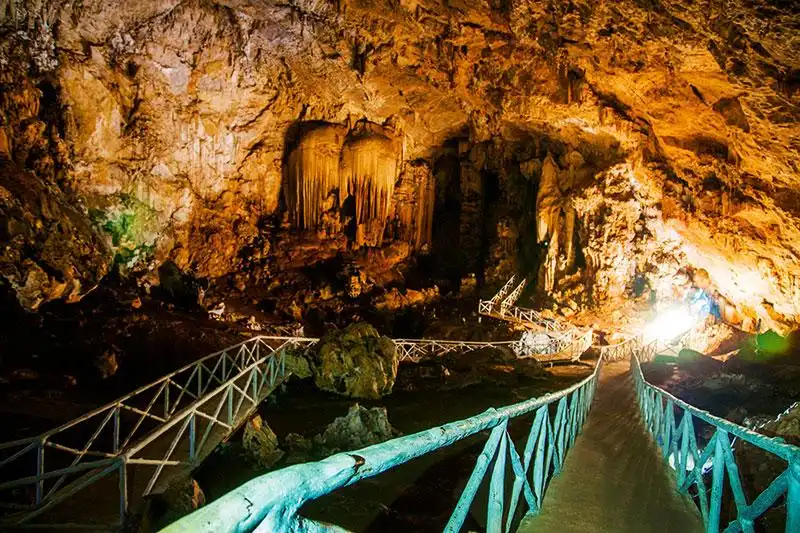
Phra That Cave in Kanchanaburi is one of those caves whose beauty feels like a hidden reward for true cave lovers. It is not only known for the intricate stalactites and stalagmites, but especially for the rock formations that many visitors describe as appearing “translucent” when light hits them, creating an atmosphere that feels distinctly different from many other tourist caves in the province. Phra That Cave is located in Tha Kradan Subdistrict, Si Sawat District, within Erawan National Park. Many travel sources and reviews note that the cave is about 12 kilometers from Erawan Waterfall, which makes it an excellent option for travelers who want an itinerary that includes both a waterfall and a cave in the same day, while enjoying two very different kinds of nature experiences.
The charm of Phra That Cave begins with the journey itself, because this is not a place where you simply drive up, park, and stroll in like a city check-in spot. Visitors must contact park officers at the headquarters located at the foot of the mountain so that an officer can lead the way for the visit. There is also an important recommendation that you should arrive at the cave before 15:00. This condition immediately adds a sense of seriousness in terms of planning, timing, and safety, and it also reflects a conservation-minded approach to managing the impact of tourism on a fragile natural environment. Entering a cave system requires careful supervision of routes, lighting, slippery areas, and visitor behavior, so that the delicate stalactites and stalagmites—formed over thousands to tens of thousands of years—are not harmed.
Many visitors describe the cave’s stalactites and stalagmites as “exquisitely detailed” and almost alive when illuminated, especially when light hits certain layers of rock and creates a faint glowing effect. This is why the phrase “translucent rock” appears so often in travel information about Phra That Cave. In simple, non-technical terms, the striking appearance of many cave formations often comes from calcite or carbonate minerals that accumulate in thin layers from water seeping through limestone. When some layers are particularly clear or finely textured, the way light reflects and scatters can make parts of the formation look as if light can partially pass through—especially when you shine a flashlight at an angle rather than straight on. This kind of detail is exactly what makes the cave so enjoyable for travelers who like to look closely, because the beauty here does not rely on bright colors, but on the way “structure and light” interact with your eyes throughout the visit.
In terms of size and structure, information about the cave’s length can differ between sources. However, widely repeated local travel information and Thai-language reviews often state that the cave is around 200 meters long and typically takes about 30 to 60 minutes to visit. Some English sources suggest the cave system may be significantly longer and include several large chambers. The most practical point for visitors is that the actual visit duration depends on the officer-led route and the readiness of each group, because natural caves often have uneven ground, damp sections, and areas that require careful footing. For that reason, it is best not to plan too tightly. If you truly want to appreciate the cave, allowing about one hour is a good baseline, and if you enjoy photography or detailed explanations about formations and chambers, it is wise to allow even more time so you do not feel rushed and miss the finer details.
Another reason Phra That Cave is compelling is the “local story and belief” connected to its name. In Thai cultural context, the term “Phra That” often relates to sacred relics or religious significance that people hold in deep respect. Some travel sources mention a local belief that there is a “Phra That” inside the cave, described as a white stone resembling a conch shell. Even though such interpretations belong to the realm of belief, they add an extra layer to the visit beyond natural beauty. They also reflect how cave landscapes in Thailand are often intertwined with faith and respect for place. Visitors are therefore encouraged to behave appropriately—keep voices low, avoid disruptive actions, and never touch the formations—so that the visit remains respectful to both nature and local cultural values.
Once you begin exploring the cave, many people notice the immediate difference in “temperature and humidity” compared to outside. The air inside is often slightly cooler, and the humidity can make certain rock surfaces appear glossy, which enhances the visual impact of stalactites and stalagmites. Travel information also mentions that the cave may be divided into several chambers, and some reviews describe it as having seven chambers, each with imaginative names such as a chamber compared to a planetarium-like sky, a bell-shaped formation chamber, a “Phra That” formation area, or sections that resemble stone curtains. Having these chamber names does not mean the cave is staged or artificially arranged; rather, it is a practical storytelling tool used by local guides to help visitors visualize what makes each section unique, and it helps travelers notice shapes more clearly without needing specialist knowledge.
From the very beginning, the best approach is to “walk slowly and watch your footing,” because natural caves often have slippery spots from moisture and algae, especially during the rainy season or after rainfall. If you enjoy photography, it helps to think ahead about how to use a flashlight or phone light to reveal details without disturbing others or creating harsh glare. Translucent-looking formations are often best seen when you shine light at an angle—especially from below or from the side rather than directly from the front. And if you want to preserve the natural atmosphere, avoiding strong flash photography is considerate for both other visitors and cave wildlife, since some caves may have bats deeper inside. Using light carefully is therefore both good etiquette and a responsible way to reduce disturbance to the ecosystem.
Because Phra That Cave is within Erawan National Park, the most satisfying way to visit is often to “pair” it with Erawan Waterfall. The distance is manageable, and you get two very different nature experiences in one day. In the morning, you might choose to visit the cave first while you have more energy for the uphill walk and careful cave exploration, then head to Erawan Waterfall later in the day for a more relaxed break. You can also reverse the order, but the key is to respect the timing guidance for the cave—especially the recommendation to arrive before 15:00. Starting too late increases the risk of lower visibility and less safe walking conditions, and it may also affect the park officers’ operating schedule, since they need to ensure visitors enter and exit safely within the available time window.
Getting There: Phra That Cave is located in Si Sawat District, Kanchanaburi, within Erawan National Park. Travel information commonly notes that it is about 12 kilometers from Erawan Waterfall. Many visitors drive along the main route toward the national park area, then contact park officers at the headquarters at the foot of the mountain to request entry and an officer-led visit. If you are coming from Kanchanaburi town, it is important to allow sufficient travel time because the distance to the national park zone is relatively far compared with attractions in the city area. Once you enter the natural zone, shops, gas stations, and mobile signal can be less frequent than in town. Bringing drinking water, non-slip walking shoes, and a small flashlight can significantly improve comfort and safety.
Overall, Phra That Cave suits travelers who enjoy nature with fine detail—people who like walking, observing, and quiet surroundings. The cave environment naturally encourages you to “slow down.” Low light demands attention, uneven ground requires careful movement, and the quiet allows you to notice sounds like wind or dripping water more clearly. Many people feel that visiting a cave is like stepping away from the screen-driven world, because you cannot casually scroll through your phone while walking. You have to stay present with the path, the light you use, and the beauty that gradually reveals itself around each corner. This is why Phra That Cave can feel like a place that does not need to be the most famous to become deeply memorable—especially if you want to experience Kanchanaburi beyond the usual images of bridges or mainstream historical attractions.
What completes the experience is visiting responsibly. A natural cave is a fragile environment, and formations grow extremely slowly. Even a single touch can leave skin oils that stain the surface and disrupt further mineral growth. For that reason, “do not touch” should be treated as a strict rule, along with not scratching surfaces, not littering, and not removing any stones or fragments from the cave. If you bring children, it helps to stay close and explain in advance that this is not a playground, but a natural site that deserves respect. If you visit as a group, agree to stay together, avoid separating, and follow the officers’ guidance carefully. These habits help ensure everyone leaves with a positive and safe memory, while the cave remains preserved for others in the future.
In the end, Phra That Cave offers a blend of natural beauty, the excitement of unique rock formations, and a cultural layer of belief that sits harmoniously within the landscape. If you have more time in Kanchanaburi than the standard top attractions, and you want to enrich your trip with a destination that has “depth” in both scenery and experience, adding Phra That Cave to a plan that also includes Erawan Waterfall or the Srinakarin Dam area can make your Si Sawat journey far more vivid. You may find that Kanchanaburi’s strongest impressions are not only in the places everyone talks about the most, but also in the destinations that make you want to walk slowly and look more carefully than usual.
| Place Name | Phra That Cave |
| Address | Tha Kradan Subdistrict, Si Sawat District, Kanchanaburi (within Erawan National Park) |
| Place Summary | A natural cave within Erawan National Park, known for intricate stalactites and stalagmites with sections that appear translucent. Entry is guided and requires contacting park officers. |
| Highlights | Exquisitely formed stalactites and stalagmites, translucent-looking formations in certain areas, a calm cave atmosphere, an average visit time of 30–60 minutes, and multiple chambers that help visitors observe a variety of rock shapes. |
| Entry Conditions | You must contact park officers at the headquarters (at the foot of the mountain) for a guided visit, and you should arrive at the cave trailhead before 15:00. |
| Fees | This site is within a national park (entrance fees follow the park’s official announcement). |
| Contact | Erawan National Park Headquarters: 034-574-222, 034-574-234 |
| Nearby Tourist Attractions (Approx. Distance) | 1) Erawan Waterfall – approx. 12 km 2) Erawan National Park Visitor Center – approx. 12 km 3) Srinakarin Dam – approx. 7 km 4) Sri Nakharin Dam Golf Course – approx. 16 km 5) Wat Tha Kradan – approx. 20 km |
| Popular Restaurants Nearby (Approx. Distance + Phone) | 1) Ban Ton Nam (Erawan Area) – approx. 13 km – 093-635-4198 2) Phi Jor Tam Lan Khuen – approx. 13 km – 080-632-3932 3) Sabai Nang Garden Restaurant & Cafe – approx. 20 km – 081-904-9111 4) Krua Wantanee (Wild Food) – approx. 20 km – 096-359-4792 5) Ruen Thara (Srinakarin Dam Area) – approx. 16 km – 081-7500-541 |
| Popular Accommodations Nearby (Approx. Distance + Phone) | 1) The Hub Erawan Resort – approx. 14 km – 084-599-4591 2) Hilltop Erawan Camp – approx. 19 km – 02-642-5497 3) Ruknam Resort – approx. 19 km – 088-635-5999 4) Rayaburi Resort – approx. 24 km – 034-696-165 5) Z9 Resort – approx. 31 km – 061-360-4959 |
Frequently Asked Questions (FAQ)
Q: Where is Phra That Cave located?
A: Phra That Cave is in Tha Kradan Subdistrict, Si Sawat District, Kanchanaburi, and it is within Erawan National Park.
Q: How far is Phra That Cave from Erawan Waterfall?
A: Travel information commonly states that it is about 12 kilometers from Erawan Waterfall, so it is often planned as a same-day trip together with the waterfall.
Q: Do I really need a park officer to visit Phra That Cave?
A: Yes. Visitors must contact park officers at the headquarters at the foot of the mountain and request an officer-led visit into the cave.
Q: What time should I arrive at Phra That Cave?
A: It is recommended to arrive at the cave trailhead before 15:00 so you have enough time to explore safely without rushing.
Q: How long does the visit take, and what should I prepare?
A: The visit typically takes about 30–60 minutes. Wear non-slip shoes, bring a flashlight or ensure your phone light is ready, and follow the park officer’s guidance carefully.
 Tham Phra That Cave Map
 Category:
  Group:
  Tag: ●Tham Phra That Cave●phra that cave ●phra that cave kanchanaburi ●erawan national park cave ●cave near erawan waterfall ●translucent stalactites thailand ●si sawat attractions ●tha kradan kanchanaburi ●kanchanaburi cave tour ●nature travel kanchanaburi ●erawan waterfall day trip
Last Update: 2 MonthAgo
Tag: ●Tham Phra That Cave●phra that cave ●phra that cave kanchanaburi ●erawan national park cave ●cave near erawan waterfall ●translucent stalactites thailand ●si sawat attractions ●tha kradan kanchanaburi ●kanchanaburi cave tour ●nature travel kanchanaburi ●erawan waterfall day trip
Last Update: 2 MonthAgo
Comment
 Nearby Attractions
| Keyword (Advance) |
 Facebook Fanpage
 Region
 Art, Culture and Heritage
 Historical Sites and Monuments(
 Landmarks and Memorials(
 Art, Craft Centres, Tradition(
 Museums(
 Art Gallery(
 University
 Places of Worship
 Temple(
 Church(
 Other religious and spiritural sites(
 Research and Development
 Royal Project(
 Suburban Living
 Village, Community(
 Local Market(
 National Parks and Marine Reserves(
 Mountain (Doi)(
 Dam, Reservoir, Lake(
 Waterfalls(
 Hot Springs(
 River, Canal(
 Other natural attractions(
 Entertainment and Agricultural
 Zoos and Aquariums(
 Animal camps and shows(
 Farm, Parks, Gardens and Ecotourism(
 Cinema(
 Outdoor and Adventure Activities(
 Travel Articles, Recipes
 Travel Review, Food Review(
 Copyright 2012,