
lovethailand home >North Travel Attractions >Chiang Mai Travel Attractions >Muang Chiang Mai >Tha Sala > Wat Buak Khrok Luang
TL;DR: Wat Buak Khrok Luang is located at Tha Sala Subdistrict, Mueang Chiang Mai District, Chiang Mai Province, open Daily, hours 08.00–17.00.

Wat Buak Khrok Luang
Open Days: Daily
Opening Hours: 08.00–17.00
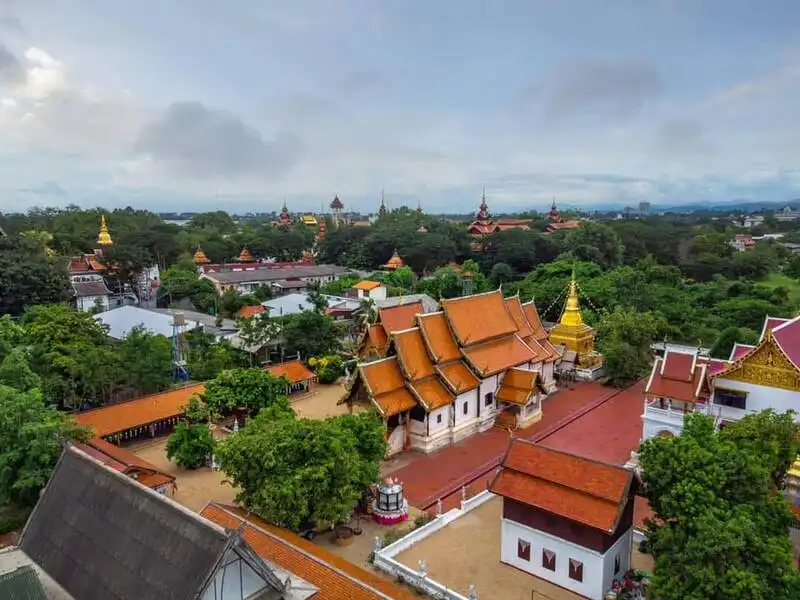
Wat Buak Krok Luang is a small yet culturally significant temple located in Tha Sala Subdistrict, Mueang Chiang Mai District, Chiang Mai Province. Situated to the east of the former Chiang Mai city wall, the temple lies within a historic community area formed between the floodplains of the Ping River and the Mae Kha Canal. This geographical setting played an important role in shaping local settlement patterns and continues to be reflected in the name of both the community and the temple.
According to local accounts and historical tradition, the temple was originally known as Wat Muang Kham. Over time, villagers began referring to it as Wat Buak Krok Luang, a name derived from the area’s natural landscape. In Northern Thai usage, the word “buak” refers to a low-lying basin or wetland, while “krok luang” is believed to describe a large depression resembling a giant mortar. The adoption of this name reflects the close relationship between the Lanna people and their surrounding environment.
There is no definitive historical record indicating the exact period when Wat Buak Krok Luang was founded. However, based on architectural characteristics and mural painting styles, scholars generally believe that the viharn was constructed during the reign of King Rama V. This was a transitional era for Lanna, when the region was increasingly integrated into the Siamese administrative system while still preserving strong local artistic traditions.
The temple underwent major restoration during the reign of Chao Kaew Nawarat, the ninth ruler of Chiang Mai, between 1911 and 1939. During this period, many important temples and historical sites in Chiang Mai were restored and preserved. These efforts helped ensure the survival of the viharn and its murals, allowing Wat Buak Krok Luang to remain an important cultural and educational site to this day.
The architectural highlight of Wat Buak Krok Luang is its Lanna-style viharn, a brick-and-mortar structure topped with a traditional wooden roof. The design is simple yet solid, reflecting the functional character of a community temple rather than a royal or state-sponsored monastery. The interior space emphasizes usability for religious ceremonies and Buddhist instruction, creating a calm and intimate atmosphere between monks and local residents.
Inside the viharn, the most valuable feature of Wat Buak Krok Luang is its mural paintings. These murals depict episodes from the life of the Buddha and selected Jataka tales, commonly referred to as the Ten Great Lives. The mural cycle is arranged across fourteen bays, painted on the walls between the supporting pillars. Each scene is framed with decorative borders in blue, red, and white, helping guide viewers through the narrative sequence.
The northern side of the viharn features scenes from the Mahosot Jataka, while the southern side illustrates selected episodes from the Ten Great Lives of the Bodhisattva. In keeping with Lanna tradition, not all ten Jataka stories are depicted. Instead, the murals focus on six popular tales: Temiya Jataka, Vidhura Pandita Jataka, Suvannasama Jataka, Nemi Raja Jataka, Mahosot Jataka, and Vessantara Jataka.
The murals are the work of Tai Yai (Shan) artisans, as evidenced by the refined line work, color usage, and compositional style. Beyond their religious narrative, the paintings provide valuable insight into historical lifestyles, clothing, architecture, and social customs of Tai Yai and Lanna communities during the period. As such, the murals serve not only as religious art but also as an important visual record of regional social history.
Getting There: Wat Buak Krok Luang can be reached easily from central Chiang Mai via Tha Sala Road or the Chiang Mai–Lamphun Road. From there, continue into Tha Sala Subdistrict and follow local signs to the Buak Krok Luang community. The temple is located within the village area and is accessible by private car, motorcycle, or local transport. Because it lies outside major tourist routes, the temple retains a peaceful atmosphere ideal for in-depth cultural exploration.
Although Wat Buak Krok Luang is not a large or widely known tourist attraction, its significance lies in the completeness of its murals, the authenticity of its Lanna viharn, and the strong connection to its surrounding community. A visit to this temple offers a deeper understanding of Chiang Mai’s cultural landscape, told through Tai Yai craftsmanship, local religious devotion, and the enduring relationship between people and their natural environment.
| Name | Wat Buak Krok Luang |
| Location | Tha Sala Subdistrict, Mueang Chiang Mai District, Chiang Mai Province |
| Key Characteristics | Lanna-style viharn, mural paintings of the Buddha’s life and selected Jataka tales, Tai Yai craftsmanship |
| Period | Unclear origin (viharn believed to date to the reign of King Rama V; restored during Chao Kaew Nawarat’s era) |
| Getting There | Via Tha Sala Road or Chiang Mai–Lamphun Road into Tha Sala Subdistrict; temple located within Buak Krok Luang community |
| Current Status | Open for worship and visitors |
| Popular Restaurants Nearby (distance / phone) | Krua Muang Lamphun (approx. 2.5 km) Tel. +66 53-276-236 Khao Soi Samer Jai (approx. 3.0 km) Tel. +66 53-240-000 Huen Muan Jai (approx. 3.2 km) Tel. +66 53-328-330 The Good View Village (approx. 4.0 km) Tel. +66 53-904-974 Rim Ping Restaurant Tha Sala (approx. 2.0 km) |
| Popular Accommodations Nearby (distance / phone) | The Empress Chiang Mai (approx. 3.5 km) Tel. +66 53-253-199 RarinJinda Wellness Spa Resort (approx. 4.2 km) Tel. +66 53-303-030 Sireeampan Boutique Resort (approx. 4.5 km) Tel. +66 53-888-888 Na Nirand Romantic Boutique Resort (approx. 4.0 km) Tel. +66 53-280-988 Shangri-La Chiang Mai (approx. 3.8 km) Tel. +66 53-253-888 |
Frequently Asked Questions (FAQ)
Q: What makes Wat Buak Krok Luang special?
A: The temple is renowned for its well-preserved mural paintings depicting Buddhist stories and selected Jataka tales, created by skilled Tai Yai artisans.
Q: When was Wat Buak Krok Luang built?
A: The exact construction date is unknown, but the viharn is believed to date back to the reign of King Rama V and was extensively restored during the era of Chao Kaew Nawarat.
Q: What type of visitor is Wat Buak Krok Luang suitable for?
A: It is ideal for visitors interested in Lanna mural art, Tai Yai craftsmanship, and community-based cultural heritage.
Q: How long should visitors plan to spend at the temple?
A: Around 1–2 hours is sufficient to explore the viharn and appreciate the murals in detail.
 Category: ●Places of Worship
 Group: ●Temple
Last Update : 6 MonthAgo
 Last Update : 6 MonthAgo
 Click to Access the Navigation Map GPS
Wat Buak Khrok Luang Map
Recommend

 Art, Culture and Heritage
 Historical Sites and Monuments(8)
 Landmarks and Memorials(5)
 Royal Palace(2)
 Art, Craft Centres, Tradition(43)
 Museums(24)
 Educational Places
 Museum for Study(2)
 Educational Gardens, Farm(5)
 Training Center(1)
Temple(79)
Training Center(1)
Temple(79)
 Mosque(2)
 Other religious and spiritural sites(17)
 Research and Development
 Royal Project(44)
 Suburban Living
 Village, Community(41)
 Local Market(14)
 Nature and Wildlife
 National Parks and Marine Reserves(16)
 Mountain (Doi)(21)
 Dam, Reservoir, Lake(26)
 Waterfalls(43)
 Hot Springs(12)
 Caves(11)
 River, Canal(6)
 Other natural attractions(14)
 Entertainment and Agricultural
 Zoos and Aquariums(2)
 Animal camps and shows(3)
 Stadium(1)
 Farm, Parks, Gardens and Ecotourism(19)
 Waterpark(2)
 Theater(1)
 Outdoor and Adventure Activities(10)
 Shopping
 Shopping and Night Market(6)
 Restaurant
 Michelin Star(1)
 Michelin Guide(23)
 Call Customer Service in Tourism
 Call Customer Service in Tourism(1)
 Travel Articles, Recipes
 Travel Review, Food Review(15)
 Food Menu, North Recipes(30)
 Thai Desserts, North Recipes(17)


