
lovethailand home >North Travel Attractions >Chiang Mai Travel Attractions >Hot >Bo Luang > Bo Kaeo Silvicultural Research Station (Bo Kaeo Pi..
TL;DR: Bo Kaeo Silvicultural Research Station (Bo Kaeo Pine Tree Garden) is located at Along Hod–Mae Sariang Road (Highway 108), km 36–37, Hod District, Chiang Mai Province, open Daily, hours 08.00–17.00.

Bo Kaeo Silvicultural Research Station (Bo Kaeo Pine Tree Garden)
Open Days: Daily
Opening Hours: 08.00–17.00
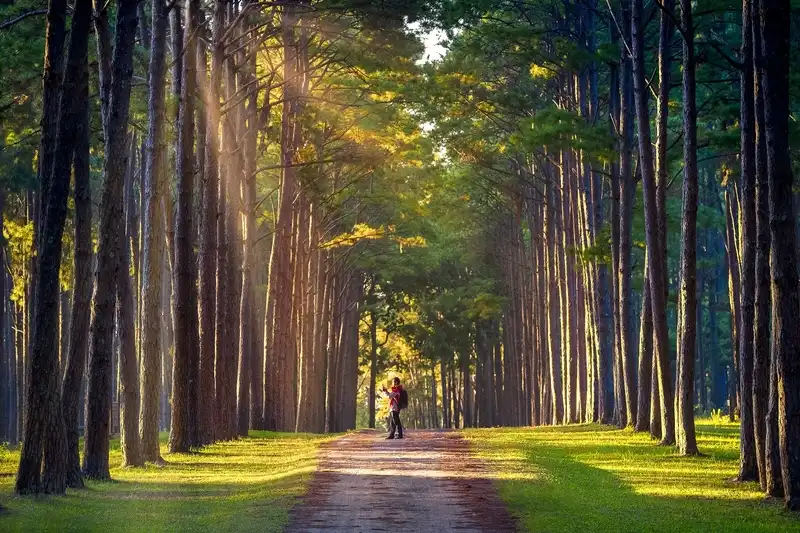
Bo Kaeo Silvicultural Research Station (Bo Kaeo Pine Tree Garden) in Chiang Mai Province is one of those places that many travelers intentionally stop at, even though on the map it appears to be just a pine garden along the Hod–Mae Sariang Road. Located around kilometer markers 36–37 in Hod District, this site quickly reveals that it is more than a simple roadside photo spot. Once you step out of your car, the atmosphere makes it clear that this is a place with purpose, history, and a distinctive sense of calm created through thoughtful planning.
Originally, Bo Kaeo Silvicultural Research Station was established as part of a project to survey raw materials for pulp and paper production. The area was developed as an experimental plantation focusing on pine trees and eucalyptus, covering a total area of approximately 2,072 rai. What sets this place apart from natural forests is the deliberate planting design. Trees are arranged in orderly rows with consistent spacing, creating a landscape that feels clean, open, and visually soothing. Walking through the plantation often feels like stepping into a carefully composed forest scene rather than a wild woodland.
One of the most talked-about features of Bo Kaeo Pine Tree Garden is its long, straight rows of pine trees, which give off a distinctly international feel when photographed. On days with cool air or higher humidity, the light becomes softer, shadows deepen, and the grass appears a richer green. Gentle breezes moving through the pine needles add subtle sound and motion, creating an atmosphere that is quiet without feeling empty. It is an ideal setting for slow walks, fresh air, and mental rest away from urban routines.
The overall climate of the area is generally cool and humid throughout the year due to its elevation and surrounding forest. This makes Bo Kaeo Pine Tree Garden suitable for visits in almost any season. For those who enjoy comfortable walking conditions and naturally beautiful light, early mornings and late afternoons are the best times to visit. During the late rainy season through winter, the atmosphere becomes especially pleasant, with cooler temperatures and a stronger “pine forest” character that many visitors find most appealing.
Beyond its visual appeal, Bo Kaeo Pine Tree Garden holds deeper value as an example of how research land can evolve into a space for public enjoyment without losing its original purpose. Visitors can gain insight into forest research, economic tree cultivation, and land-use planning simply by observing how the landscape is structured. In this way, the garden serves as a quiet educational space, demonstrating how scientific planning and natural beauty can coexist seamlessly.
As a stopover destination, this site is particularly well-suited for travelers driving along the Hod–Mae Sariang route, whether heading toward Mae Sariang or continuing on to Mae Hong Son. A short stop here provides an effective break from long drives without requiring a detour. Photography enthusiasts will appreciate the clean lines formed by the pine rows, which make composition simple and striking, especially when using the tree lines to guide the viewer’s eye.
To make the most of a visit, light preparation is recommended. Comfortable walking shoes are ideal, as the ground may be grassy or slightly damp on humid days. A hat and drinking water are useful during sunnier hours. For those focused on photography, visiting on weekdays or earlier in the day helps avoid crowds and allows for a more relaxed shooting experience.
Getting There The site is easily accessible via Highway 108 (Hod–Mae Sariang Road). When traveling toward Hod District, look for kilometer markers 36–37, where the entrance to Bo Kaeo Silvicultural Research Station is located directly along the roadside. The location makes it convenient both as a planned visit and as a spontaneous rest stop during a longer journey.
| Name | Bo Kaeo Silvicultural Research Station (Bo Kaeo Pine Tree Garden) |
| Location | Along Hod–Mae Sariang Road (Highway 108), km 36–37, Hod District, Chiang Mai Province |
| Open Days | Daily |
| Opening Hours | 08.00–17.00 |
| Contact Number | +66 53 248 604, +66 53 248 607 |
| Key Characteristics | Neatly arranged pine tree rows creating an open and scenic landscape Cool and humid atmosphere suitable for walking and photography Large-scale forestry research area focused on pine and eucalyptus |
| Background | Experimental plantation for economic trees supporting pulp and paper research, covering approximately 2,072 rai |
| Facilities | Open areas for parking (depending on site conditions) Walking and photography areas among the pine rows Visitors are advised to bring water and sun protection |
| Entrance Fee | No confirmed information — visitors are advised to check on site or call ahead |
| Nearby Attractions (Approx. Distance) | Ob Luang National Park (20 km) Doi Mae Tho (25 km) Mae Aep Waterfall (30 km) Hod Town (35–40 km) Mae Sariang District (70–80 km) |
| Nearby Dining Options | Local roadside eateries along Highway 108 (1–10 km) Restaurants in Hod District (35–40 km) Food outlets near Ob Luang National Park (20 km) Restaurants in Mae Sariang District (70–80 km) Local cafés scattered along the route |
| Nearby Accommodation | Guesthouses and homestays in Hod District (35–40 km) Accommodation in Mae Sariang District (70–80 km) Lodging near Ob Luang National Park (20 km) Small resorts and camps along the route (distance varies) Outer Chiang Mai accommodation before reaching Hod (distance varies) |
| Current Status | Open to visitors during official hours |
Frequently Asked Questions
Q: When is the best time to visit Bo Kaeo Pine Tree Garden?
A: It can be visited year-round, but late rainy season through winter offers the coolest weather and the most atmospheric pine forest scenery.
Q: Is this a quick stop or should more time be allocated?
A: It works well as a short stop, but allowing 45–90 minutes gives enough time to walk, relax, and take photographs without rushing.
Q: What time of day is best for photography?
A: Early morning or late afternoon provides softer light, longer shadows, and fewer visitors.
Q: Is it difficult to reach for first-time visitors?
A: Not at all. The site is located directly along Highway 108 at kilometer markers 36–37, making it easy to find and access.
 Category: ●Educational Places
 Group: ●Educational Gardens, Farm
Last Update : 9 MonthAgo
 Last Update : 9 MonthAgo
 Click to Access the Navigation Map GPS
Bo Kaeo Silvicultural Research Station (Bo Kaeo Pine Tree Garden) Map
Recommend

 Art, Culture and Heritage
 Historical Sites and Monuments(8)
 Landmarks and Memorials(5)
 Royal Palace(2)
 Art, Craft Centres, Tradition(43)
 Museums(24)
 Museum for Study(2)
Educational Gardens, Farm(5)
Museum for Study(2)
Educational Gardens, Farm(5)
 Training Center(1)
 Places of Worship
 Temple(79)
 Mosque(2)
 Other Sacred Sites(17)
 Research and Development
 Royal Project(44)
 Suburban Living
 Village, Community(41)
 Local Market(14)
 Nature and Wildlife
 National Parks and Marine Reserves(16)
 Mountain (Doi)(21)
 Dam, Reservoir, Lake(26)
 Waterfalls(43)
 Hot Springs(12)
 Caves(11)
 River, Canal(6)
 Other natural attractions(14)
 Entertainment and Agricultural
 Zoos and Aquariums(2)
 Animal camps and shows(3)
 Stadium(1)
 Farms, Parks and Ecotourism(19)
 Waterpark(2)
 Theater(1)
 Outdoor and Adventure Activities(10)
 Shopping
 Shopping and Night Market(6)
 Restaurant
 Michelin Star(1)
 Michelin Guide(23)
 Call Customer Service in Tourism
 Call Customer Service in Tourism(1)
 Travel Articles, Recipes
 Travel Review, Food Review(15)
 Food Menu, North Recipes(30)
 Thai Desserts, North Recipes(17)


