
TL;DR: Local Food of Thailand. Thai traditional food is delicious and mellow. Many different flavors And retains the identity of wisdom And the culture of Thai people in.

Local Food of Thailand
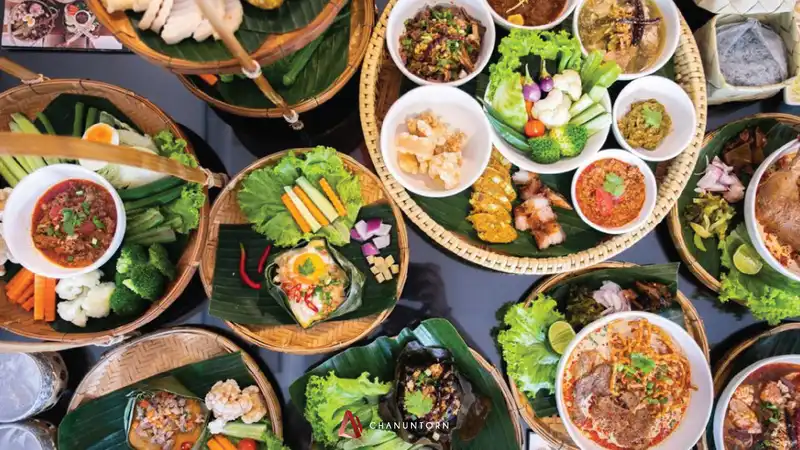
Local Food of Thailand Thai traditional food is delicious and mellow. Many different flavors And retains the identity of wisdom And the culture of Thai people in each locality that invented creatively to be healthy food It is a nutritionally balanced diet. That is the perfect combination between different types of food. And the amount of food Most Thai food has rice as the main ingredient. May be sticky rice or rice, depending on the local area, with nutritional rice And most vitamins Is brown rice.
Local Food of Thailand Most of the time, the cooking will be staple, curry, stew and yum, which has very simple cooking methods Does not take much time But with meticulousness Use relatively little cooking oil. Not much meat is used. The protrine source can be from fish, eggs, pigs and other animals. Some local Various seasonings will use natural herbs. Most importantly, a variety of local food that can be found Will bring it to cook Or used to make dips and chili foods Or different types of simmer, traditional Thai food is low-fat but high in dietary fiber It has nutritional value such as vitamins, minerals, enzymes, fatty acids. Which is safe from chemicals and also provide medicinal value.
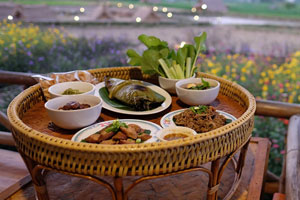
North Foods There is a way of life bound to the culture of rice cultivation. The main consumption of glutinous rice is popular. Northern food will be beautiful. Because with the habit of a northern person who has a modest verb Therefore affecting food such as Khao Soi is a local food in the north, formerly known as Ho noodle It looks like noodles. The soup is a spicy curry paste. In the traditional way Khao Soi is composed of pork or chicken, and is commonly eaten with side dishes such as pickled lettuce, red onion, with seasonings such as oil fried chili, lemon juice, fish sauce, and sugar, and nowadays it is added to seafood. Or tofu as an ingredient This dish is not sold abroad. But only in the northern part of Thailand.
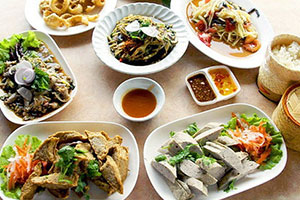
Northeast foods Differences in natural resources Make food pattern and food handling NortheastThe food of the community varies. Villagers often find food only from natural food sources. For use in daily consumption, such as for fishing from the river. By being transformed into fermented fish or dried fish for longer consumption As a result, most villagers rely very little on food from the market. In which northeastern food focuses on spicy taste.
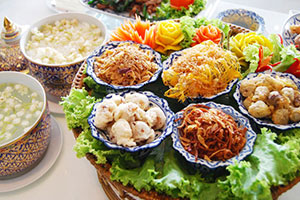
Central foods Most of them have been influenced by foreign countries such as curry paste, curry, Krathi, as well as the high-class food of the Royal people that have been released as well, such as Khao Chae, Chom Muang, Krabai, etc., is a sector with snacks and many desserts such as Krathong Thong, Khao Kraab Pak Mo And the set face rice, etc.
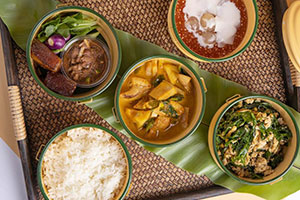
Southern foods It is well known that people in the South are fast talkers, walking fast, so the southern food has brightened up the taste of spicy, salty, sour, very popular Southern food such as fish tai pla, curry. Leung, Kung Chili Paste, Southern Yam, etc. Southern food is influenced by Malayu and India, it is commonly eaten with fresh vegetables.
| Category | Detailed Description |
| Overview of Thai Local Food | Thai local cuisine is known for its well-balanced flavors and diversity, reflecting local wisdom, culture, and creativity in each region. It combines nutrition effectively, offering carbohydrates, protein, fats, and dietary fiber in balanced proportions |
| Staple Food | Rice is the main staple, including both sticky rice and jasmine rice, depending on the region. Brown rice (unpolished rice) contains the highest nutritional value |
| Cooking Methods | Common methods include boiling, currying, pounding, mixing, grilling, and steaming. Cooking is simple but requires attention to detail, using minimal oil |
| Main Ingredients | Herbs, vegetables, fish, eggs, pork, and locally sourced natural ingredients |
| Nutritional Value | Low in fat, high in fiber, rich in vitamins, minerals, enzymes, and natural compounds beneficial to health |
| Unique Identity | Reflects local culture, traditions, and lifestyle of each region across Thailand |
| Northern Thai Food | Primarily based on sticky rice, with mild and well-balanced flavors. Popular dishes include Khao Soi, Sai Ua, Nam Prik Noom, and Gaeng Hang Lay |
| Northern Highlights | Gentle flavors, use of herbs, and traditional Khantoke dining culture |
| Northeastern (Isan) Food | Known for spicy, sour, and salty flavors, using natural ingredients such as papaya salad (Som Tam), Larb, and fermented fish |
| Isan Highlights | Relies heavily on natural food sources and preservation methods such as fermentation and drying |
| Central Thai Food | Influenced by foreign cuisines, featuring coconut milk curries and royal court dishes such as Khao Chae and Chor Muang |
| Central Highlights | Refined presentation, diverse snacks, and a wide range of desserts |
| Southern Thai Food | Known for bold flavors—very spicy, salty, and sour—such as Gaeng Tai Pla, Gaeng Som, and shrimp paste chili dip |
| Southern Highlights | Strong influence from Malay and Indian cuisine, often served with fresh vegetables |
Frequently Asked Questions (FAQ)
Q: What makes Thai local food unique?
A: Thai local food is unique due to its balance of flavors, use of natural ingredients, and strong cultural identity in each region.
Q: What is the main staple of Thai cuisine?
A: Rice is the main staple, either sticky rice or jasmine rice depending on the region.
Q: Why is Thai local food considered healthy?
A: It uses natural herbs, contains low fat, and provides high nutritional value including vitamins and minerals.
Q: What is Northern Thai food like?
A: It features mild flavors, sticky rice, and herbal ingredients, such as Khao Soi and Sai Ua.
Q: What is special about Isan food?
A: It is known for its spicy and tangy taste and heavy use of fermented fish.
Q: How is Central Thai food different?
A: It is more refined, influenced by royal cuisine and foreign culinary traditions.
Q: What defines Southern Thai food?
A: Strong, intense flavors with high spice levels and influences from Malay and Indian cuisine.
Q: What cooking methods are commonly used in Thai cuisine?
A: Boiling, currying, grilling, pounding, and mixing are the most common methods.
Q: What ingredients are commonly used in Thai local food?
A: Herbs, vegetables, fish, pork, eggs, and locally sourced natural ingredients.
Q: Why does Thai food vary by region?
A: Differences in geography, climate, and cultural influences result in unique flavors and ingredients in each region.
 Category: ●Travel Articles, Recipes
 Group: ●Travel Review, Food Review
Last Update : 5 MonthAgo
 Last Update : 5 MonthAgo
Recommend

 Art, Culture and Heritage
 Historical Sites and Monuments(8)
 Landmarks and Memorials(5)
 Royal Palace(2)
 Art, Craft Centres, Tradition(43)
 Museums(24)
 Educational Places
 Museum for Study(2)
 Educational Gardens, Farm(5)
 Training Center(1)
 Places of Worship
 Temple(79)
 Mosque(2)
 Other Sacred Sites(17)
 Research and Development
 Royal Project(44)
 Suburban Living
 Village, Community(41)
 Local Market(14)
 Nature and Wildlife
 National Parks and Marine Reserves(16)
 Mountain (Doi)(21)
 Dam, Reservoir, Lake(26)
 Waterfalls(43)
 Hot Springs(12)
 Caves(11)
 River, Canal(6)
 Other natural attractions(14)
 Entertainment and Agricultural
 Zoos and Aquariums(2)
 Animal camps and shows(3)
 Stadium(1)
 Farms, Parks and Ecotourism(19)
 Waterpark(2)
 Theater(1)
 Outdoor and Adventure Activities(10)
 Shopping
 Shopping and Night Market(6)
 Restaurant
 Michelin Star(1)
 Michelin Guide(23)
 Call Customer Service in Tourism
 Call Customer Service in Tourism(1)
Travel Review, Food Review(15)
Call Customer Service in Tourism(1)
Travel Review, Food Review(15)
 Food Menu, North Recipes(30)
 Thai Desserts, North Recipes(17)


