
TL;DR: North in Thailand.
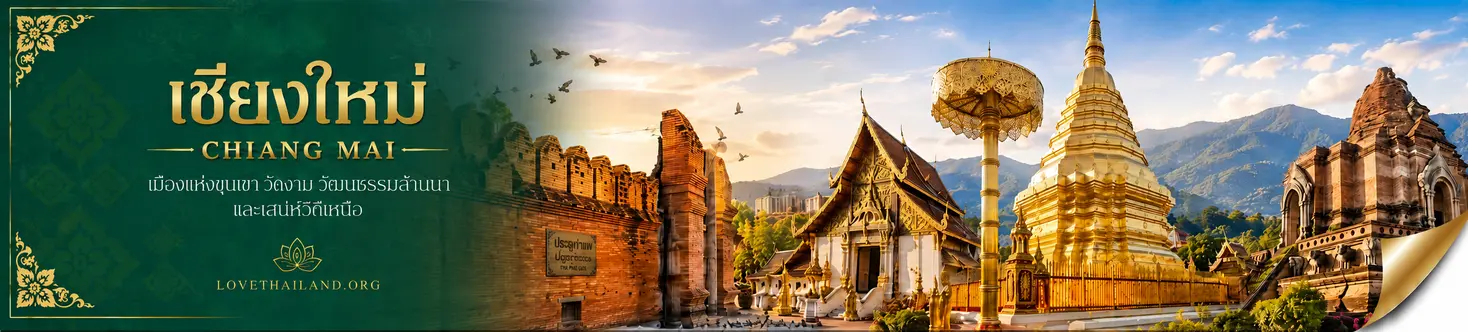
North in Thailand
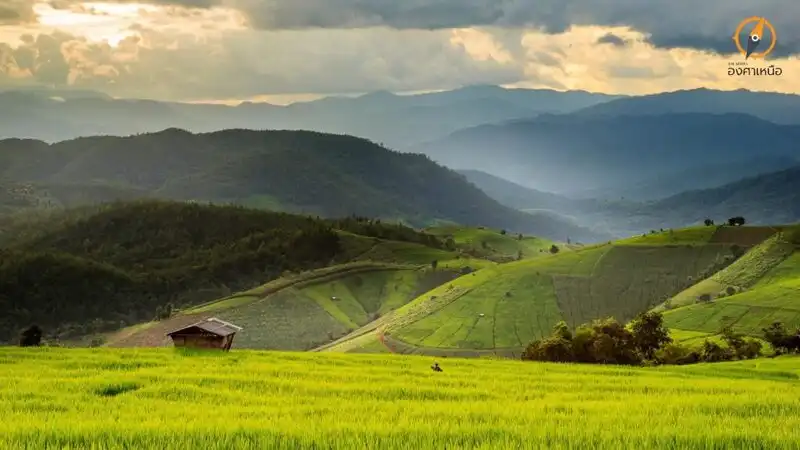
Northern Thailand is the northernmost region of Thailand. Its geographical characteristics consist of mountains and complex mountain ranges. The region has a savanna-type tropical climate similar to most parts of Thailand, but because it lies at a higher elevation and latitude, the weather changes clearly according to the seasons. For example, during the winter season, it becomes cooler than other regions. :contentReference[oaicite:0]{index=0}
In addition, Northern Thailand has strong cultural connections with the Lanna Kingdom. Historical evidence indicates that this region was once the center of the Lanna Kingdom, which was established in 1292 CE by King Mangrai. It was formed by the unification of two kingdoms, Hariphunchai and Ngoenyang Chiang Saen, and the capital was officially established in 1296 CE under the name Nopburi Si Nakhon Ping Chiang Mai.
Geography of Northern Thailand Apart from its complex mountain ranges, the region also contains several important national landmarks. The northernmost point of the country is located in Mae Sai District, Chiang Rai Province. The highest point of the country is Doi Inthanon in Chiang Mai Province. The westernmost point is Mae Sariang District in Mae Hong Son Province. Northern Thailand covers approximately 93,690 square kilometers and is the first region in Thailand through which the Mekong River flows, entering at the Golden Triangle in Chiang Saen District, Chiang Rai Province. The region shares borders with neighboring countries such as Myanmar and Laos.
Administrative Structure of Northern Thailand is divided based on geography, traditions, society, culture, and language into six subregions, comprising 17 provinces. The Upper North includes Chiang Rai, Chiang Mai, Nan, Phayao, Phrae, Mae Hong Son, Lampang, Lamphun, and Uttaradit. The Lower North includes Tak, Phitsanulok, Sukhothai, Phetchabun, Phichit, Kamphaeng Phet, Nakhon Sawan, and Uthai Thani. These divisions follow the natural characteristics of mountainous areas.
Transportation in Northern Thailand includes both air and land transport. Airports include Chiang Mai Airport, Mae Fah Luang Chiang Rai Airport, Nan Nakhon Airport, Lampang Airport, Phrae Airport, Mae Hong Son Airport, and Pai Airport. Land transportation includes major highways such as Highway 1 (Lampang–Ngao–Phayao–Chiang Rai–Mae Sai), Highway 11 (Uttaradit–Den Chai–Lampang–Lamphun–Chiang Mai), Highway 101 (Sukhothai–Den Chai–Phrae–Nan–border checkpoint), Highway 103 (Ngao–Rong Kwang), and Highway 105 (Mae Sot–Mae Sariang).
Location and Boundaries of Northern Thailand The northernmost area is Mae Sai District, Chiang Rai Province, bordering Myanmar and Laos, with the Daen Lao mountain range and the Sai and Ruak rivers forming natural boundaries. The southernmost area is Phichai District, Uttaradit Province. The easternmost area is Pua District, Nan Province, bordering Laos, with the Luang Prabang mountain range forming a natural boundary. The westernmost area is Mae Sariang District, Mae Hong Son Province, bordering Myanmar, with the Moei and Salween rivers forming natural boundaries.
Map of Northern Thailand shows a landscape where mountain ranges extend from north to south. The most important range is the Thanon Thong Chai Range, which is the largest and longest mountain range in Northern Thailand.
Main Rivers of Northern Thailand include three major groups: rivers flowing into the Mekong River such as Ruak, Kok, Sai, and Ing; rivers flowing into the Chao Phraya River such as Ping, Wang, Yom, and Nan; and rivers flowing into the Salween River such as Moei, Yuam, and Pai.
Natural Resources of Northern Thailand Soil resources are generally of moderate to low fertility due to the mountainous terrain and steep slopes, along with deforestation leading to soil erosion. Soils found along rivers are mostly alluvial soils, suitable for agriculture, including field crops and rice farming.
Regarding water resources, the largest freshwater lake is Kwan Phayao. The region also contains many short rivers and several dams built for irrigation and electricity generation, including Kiew Lom Dam on the Wang River in Lampang Province, Sirikit Dam on the Nan River in Uttaradit Province, Mae Ngat Somboon Chon Dam in Chiang Mai Province, and Kaeng Suea Ten Dam in Phrae Province.
Forest resources are abundant, consisting mainly of montane forests, pine forests, and mixed deciduous forests. Chiang Mai has the largest forest area, while Lamphun has the smallest. Mineral resources are diverse, including kaolin found in Lampang, gemstones in Phrae, petroleum in Chiang Mai, oil shale in Lamphun, coal in Lampang and Lamphun, tin in Chiang Mai, tungsten in Chiang Rai, manganese in Lamphun, Chiang Rai, and Chiang Mai, and fluorite in Lamphun.
Population of Northern Thailand ranks fourth in Thailand, following the Northeast, Central, and Southern regions. Chiang Mai has the largest population, while Mae Hong Son has the smallest. The population includes many hill tribe communities such as Karen, Hmong, Lisu, Lahu, and Yao.
Economy of Northern Thailand is mainly based on agriculture, including farming, plantations, and livestock. Major crops include rice, tobacco, garlic, and soybeans. Local industries include umbrella making, wood carving, basketry, pottery, weaving, and ceramics. Tourism is also strongly promoted by both the government and private sectors due to the region’s beautiful landscapes, pleasant climate, and rich cultural traditions. Chiang Mai is the most popular destination among both Thai and international tourists, with many unique attractions.
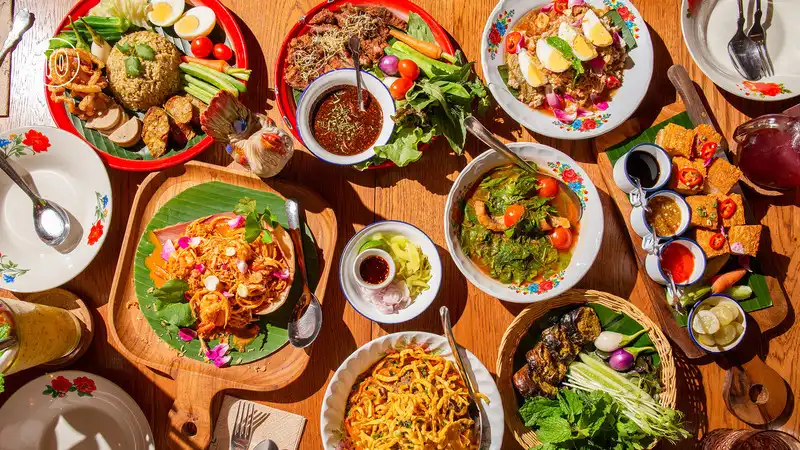
Northern Thai Food is based on sticky rice as the staple. It includes various chili dips such as Nam Prik Ong and Nam Prik Noom, as well as curry dishes like Gaeng Khae and Gaeng Ho. Other foods include Sai Ua (Northern sausage), Naem (fermented pork), crispy pork rind, and fresh vegetables. The cold climate plays an important role in shaping Northern cuisine, as many dishes are higher in fat to help maintain body warmth, such as Nam Prik Ong, Sai Ua, and Gaeng Hang Lay.
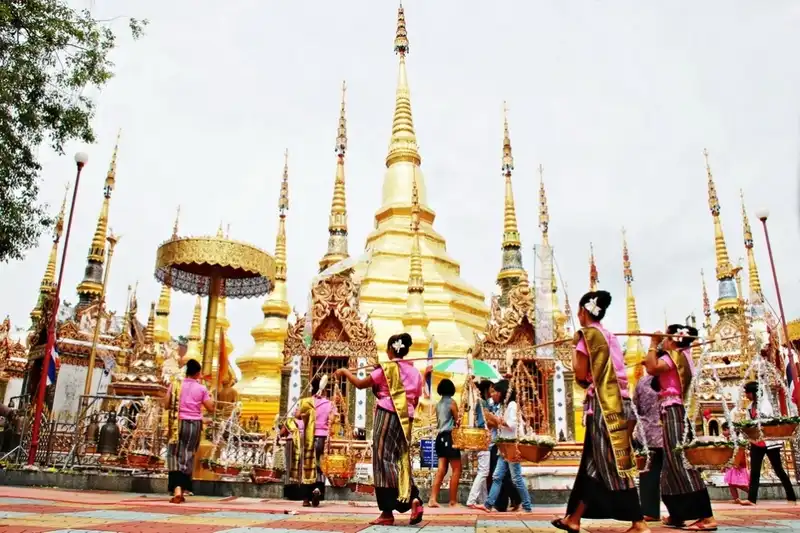
Northern Traditions reflect the traditional beliefs of various Tai ethnic groups such as Tai Yai, Tai Yuan, Tai Phuan, Tai Lue, Lua, and others. Examples include the Bun Kam Fa festival of the Tai Phuan (Tai Khoeng) and the Kin Wor festival of the Lisu hill tribe.
| Topic | Details |
| Region Overview | Northern Thailand is the northernmost region of the country, characterized by complex mountain ranges, highlands, and a strong cultural identity rooted in the Lanna Kingdom |
| Number of Provinces | 17 provinces including Chiang Mai, Chiang Rai, Lampang, Lamphun, Phayao, Nan, Phrae, Mae Hong Son, Uttaradit, Sukhothai, Phitsanulok, Phetchabun, Phichit, Kamphaeng Phet, Tak, Nakhon Sawan, and Uthai Thani |
| Total Area | Approximately 93,690 square kilometers, making it one of the largest regions in Thailand |
| Terrain | Mountain ranges running north to south, interspersed with valleys and river basins suitable for agriculture and settlement |
| Main Mountain Ranges | Thanon Thong Chai Range, Daen Lao Range, Khun Tan Range, Phi Pan Nam Range, and Luang Prabang Range |
| Highest Point | Doi Inthanon in Chiang Mai, approximately 2,565 meters above sea level |
| Main Rivers | Ping, Wang, Yom, Nan, Kok, Ing, and Mekong River systems |
| Climate | Tropical savanna climate with three seasons: hot, rainy, and cool, with colder temperatures during winter |
| Culture | Lanna culture with influences from Tai Yai, Burmese, and various hill tribes |
| History | Former center of the Lanna Kingdom established by King Mangrai in 1292 CE |
| Ethnic Groups | Hmong, Karen, Lisu, Lahu, Yao, Lua and other hill tribe communities |
| Economy | Primarily agriculture including rice, tobacco, garlic, and soybeans, along with tourism and handicraft industries |
| Local Cuisine | Khao Soi, Nam Prik Noom, Sai Ua, Gaeng Hang Lay, and sticky rice-based dishes |
| Natural Resources | Forests, minerals, rivers, and dams such as Sirikit Dam, Kiew Lom Dam, and Mae Ngat Dam |
| Transportation | Airports, highways, and railway networks connecting major provinces |
| Main Highways | Highway 1, Highway 11, Highway 101, and Highway 105 connecting major cities and border areas |
| Major Attractions | Doi Inthanon, Wat Phra That Doi Suthep, Wat Rong Khun, Sukhothai Historical Park, Pai, and Phu Chi Fa |
| Environmental Issues | Haze pollution, PM2.5, deforestation, soil erosion, and climate change impacts |
Frequently Asked Questions (FAQ)
Q: How many provinces are in Northern Thailand?
A: There are 17 provinces in Northern Thailand.
Q: What is the highest mountain in Thailand?
A: Doi Inthanon in Chiang Mai is the highest mountain at approximately 2,565 meters.
Q: What is the geography of Northern Thailand like?
A: It is mostly mountainous with valleys and river basins.
Q: What culture is prominent in Northern Thailand?
A: Lanna culture is the dominant cultural identity.
Q: What foods are popular in Northern Thailand?
A: Khao Soi, Sai Ua, Nam Prik Noom, and Gaeng Hang Lay are popular dishes.
Q: When is the best time to visit Northern Thailand?
A: The cool season from November to February is the best time to visit.
Q: What ethnic groups live in Northern Thailand?
A: Ethnic groups include Hmong, Karen, Lahu, Lisu, and Yao.
Q: How can I travel to Northern Thailand?
A: You can travel by plane, train, bus, or car.
 Category: ●Travel Articles, Recipes
 Group: ●Travel Review, Food Review
Last Update : 5 MonthAgo
 Last Update : 5 MonthAgo
Recommend

 Art, Culture and Heritage
 Historical Sites and Monuments(8)
 Landmarks and Memorials(5)
 Royal Palace(2)
 Art, Craft Centres, Tradition(43)
 Museums(24)
 Educational Places
 Museum for Study(2)
 Educational Gardens, Farm(5)
 Training Center(1)
 Places of Worship
 Temple(79)
 Mosque(2)
 Other Sacred Sites(17)
 Research and Development
 Royal Project(44)
 Suburban Living
 Village, Community(41)
 Local Market(14)
 Nature and Wildlife
 National Parks and Marine Reserves(16)
 Mountain (Doi)(21)
 Dam, Reservoir, Lake(26)
 Waterfalls(43)
 Hot Springs(12)
 Caves(11)
 River, Canal(6)
 Other natural attractions(14)
 Entertainment and Agricultural
 Zoos and Aquariums(2)
 Animal camps and shows(3)
 Stadium(1)
 Farms, Parks and Ecotourism(19)
 Waterpark(2)
 Theater(1)
 Outdoor and Adventure Activities(10)
 Shopping
 Shopping and Night Market(6)
 Restaurant
 Michelin Star(1)
 Michelin Guide(23)
 Call Customer Service in Tourism
 Call Customer Service in Tourism(1)
Travel Review, Food Review(15)
Call Customer Service in Tourism(1)
Travel Review, Food Review(15)
 Food Menu, North Recipes(30)
 Thai Desserts, North Recipes(17)


