
lovethailand home >North Travel Attractions >Chiang Mai Travel Attractions >Omkoi >Mon Chong > Wat Chom Mok
TL;DR: Wat Chom Mok is located at Moo 6, Ban Huai Mai Hok, Mon Chong Subdistrict, Omkoi District, Chiang Mai Province 50310, open Community temple; contact the temple or Mon Chong Subdistrict Administrative, hours Daytime travel is recommended.

Wat Chom Mok
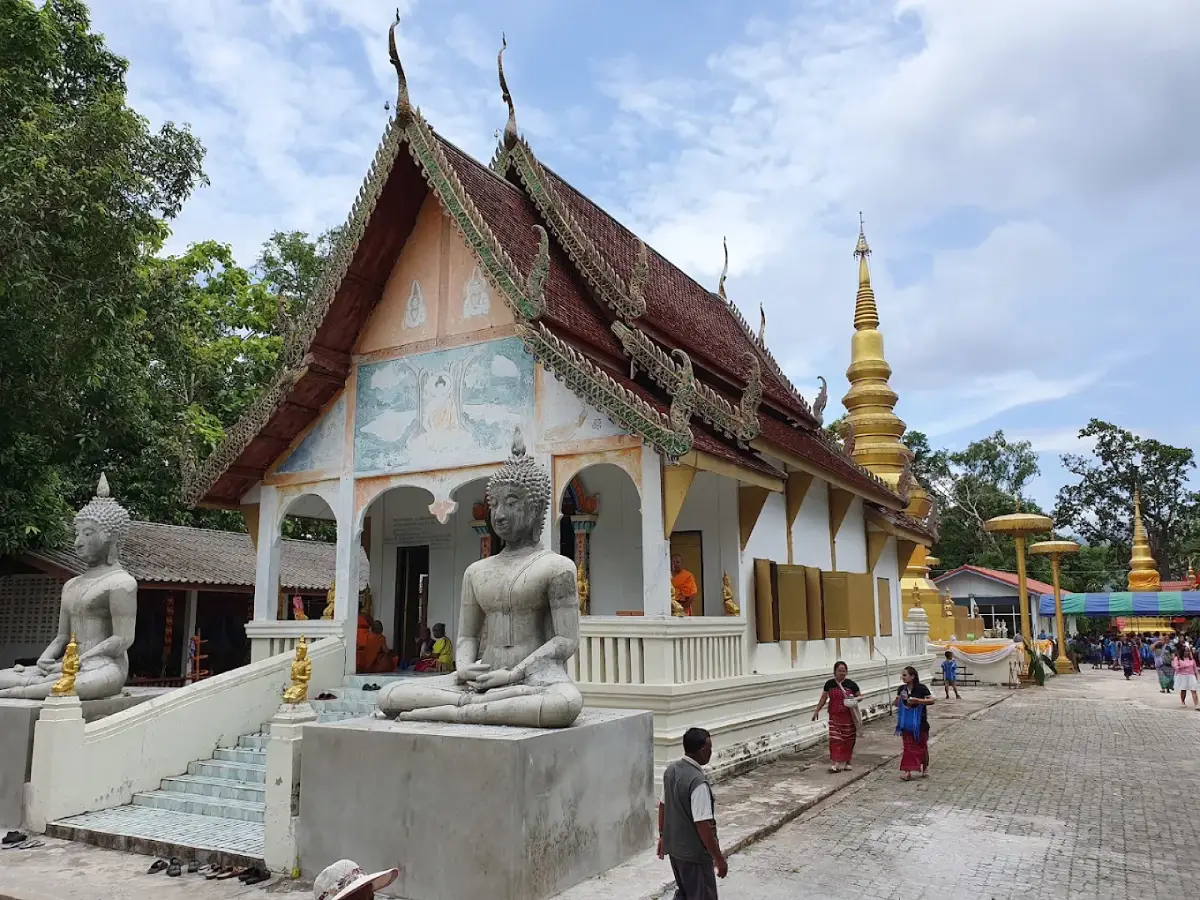
Open Days: Community temple; contact the temple or Mon Chong Subdistrict Administrative Organization before travelling
Opening Hours: Daytime travel is recommended
Wat Chom Mok is located in Moo 6, Ban Huai Mai Hok, Mon Chong Subdistrict, Omkoi District, Chiang Mai Province 50310. It is a local Buddhist temple under the Mahanikaya sect and was officially permitted to be established as a temple in 1899. This makes it one of the long-standing community temples in Mon Chong, a mountainous subdistrict in the southern part of Chiang Mai Province. The temple is important not because it is a large tourist attraction, but because it has served as a spiritual center for Ban Huai Mai Hok and nearby highland communities for more than a century.
Wat Chom Mok is best understood as a living village temple. It supports merit-making, Buddhist ceremonies, local gatherings, and the continuity of faith in a remote mountain community. For travelers, this temple offers a different view of Chiang Mai from the better-known city temples and major pilgrimage sites. It shows how Buddhism remains closely connected with village life in Omkoi, where temples continue to support the moral and social life of local residents.
Mon Chong Subdistrict separated from Mae Tuen Subdistrict in 1982. The area is mountainous, remote, and culturally diverse, with villages spread across the highlands. Ban Huai Mai Hok is Moo 6 of Mon Chong Subdistrict. The village setting, mountain roads, and cooler highland atmosphere shape the character of Wat Chom Mok. Visitors should approach the temple as part of a real community landscape rather than as a staged tourist site.
The key historical point of Wat Chom Mok is its official establishment in 1899. This date places the temple among the older religious sites in the Mon Chong area. In a remote highland community, a temple is more than a place of worship. It is a center for Buddhist observance, moral learning, village cooperation, and seasonal merit-making. Wat Chom Mok therefore represents the long continuity of Buddhist life in Ban Huai Mai Hok.
The name “Chom Mok” reflects the highland atmosphere of the area. “Chom” suggests a crest, summit, or elevated place, while “Mok” means mist or fog. Together, the name evokes the image of a mountain village wrapped in cool mist. This meaning matches the natural setting of Mon Chong, where highland weather, forested slopes, and morning fog are part of the local landscape.
Wat Chom Mok is a community temple rather than a monumental architectural attraction. Publicly confirmed details about specific structures such as a viharn, ubosot, stupa, principal Buddha image, bell tower, or sermon hall are limited. For that reason, the temple is best presented as an old village temple with social and spiritual value. Visitors who want specific architectural details should ask the temple or local residents directly when visiting.
The temple’s role in Ban Huai Mai Hok is significant. On Buddhist holy days and during merit-making occasions, villagers can gather at the temple to make offerings, listen to Dhamma teachings, and join religious activities. A temple in a mountain community also helps connect generations. Elderly residents, families, young people, and local leaders all share the temple as a place of faith, cooperation, and community memory.
Buddhist activities associated with a village temple like Wat Chom Mok usually follow the religious calendar, including Buddhist holy days, Buddhist Lent, the end of Buddhist Lent, Kathin, robe-offering ceremonies, and community merit-making. Specific annual festival details for Wat Chom Mok are not publicly confirmed, so visitors who want to join a ceremony should contact the local community or Mon Chong Subdistrict Administrative Organization before travelling.
The atmosphere of Wat Chom Mok is quiet and local. Visitors should dress modestly, speak respectfully, avoid disturbing monks or villagers, and ask permission before photographing people or community activities. This is not a commercial tourist attraction. It is an active place of worship that belongs to the community. Its value lies in simplicity, age, and its role in the everyday religious life of Ban Huai Mai Hok.
Getting There requires travelling from Omkoi District toward Mon Chong Subdistrict and Ban Huai Mai Hok. The route passes through highland terrain, so visitors should use a vehicle in good condition, check the weather, and confirm road conditions before departure. Mountain roads in this area can be more difficult during or after rain. Night driving is not recommended for travelers who are unfamiliar with the route.
Travelers coming from Chiang Mai city should allow plenty of time. Omkoi is far from the provincial city, and the onward journey into Mon Chong adds more travel time. A same-day trip from Chiang Mai city is not ideal for visitors who want to travel safely and comfortably. A better plan is to stay overnight in Omkoi or a nearby area, then continue to Ban Huai Mai Hok during daylight.
Wat Chom Mok can be combined with nearby community temples such as Wat Dong Din Daeng, Wat Pa Kha, Wat Sathit Bunwas, Wat Ku Phrueksa Ram, and Wat Sathan. These temples help visitors understand the Buddhist network of mountain villages in Mon Chong and surrounding Omkoi areas. Travelers interested in nature can also connect the route with the Doi Mon Chong tourism service area and Doi Mon Chong, but the seasonal opening period, access rules, and local service arrangements should be checked in advance.
Doi Mon Chong gives the wider route an important natural dimension. The mountain is known for golden grasslands, open ridgelines, dramatic views, and a trekking route that requires local coordination. Visitors who plan carefully can combine a cultural visit to Wat Chom Mok with a nature-based journey around Mon Chong. This creates a richer trip that includes both community faith and highland scenery.
Restaurants and accommodations are limited near Ban Huai Mai Hok compared with Chiang Mai city or Omkoi town. Travelers should carry drinking water, snacks, and basic supplies. Verified restaurants and accommodations are mostly found in Omkoi town, along the main route, or around the Doi Mon Chong service area. During the Doi Mon Chong travel season, advance contact is recommended for transport, accommodation, meals, and local services.
The main appeal of Wat Chom Mok is its authenticity. It is an old local temple established in 1899 and still connected with a real highland community. It does not offer the spectacle of a famous city temple, but it offers something equally meaningful: a direct view of how Buddhism continues to support village life in remote Chiang Mai. For travelers interested in local culture, Omkoi, and Mon Chong, Wat Chom Mok is a worthwhile stop.
Wat Chom Mok is suitable for visitors who appreciate quiet temples, local history, highland communities, and meaningful travel beyond mainstream attractions. A respectful visit helps reveal another side of Chiang Mai: one shaped by mountain villages, community temples, Buddhist practice, and the slower rhythm of rural life. With careful preparation and proper respect, this temple can become part of a thoughtful cultural route through Mon Chong and Omkoi.
In summary, Wat Chom Mok is a Mahanikaya community temple in Ban Huai Mai Hok, Mon Chong Subdistrict, Omkoi District, Chiang Mai Province. Established in 1899, it has been part of the local religious landscape for more than a century. It is best visited as a quiet community temple connected with the highland culture of Mon Chong and the wider travel route toward Doi Mon Chong.
| Name | Wat Chom Mok |
| Type | Local Buddhist temple under the Mahanikaya sect |
| Location | Moo 6, Ban Huai Mai Hok, Mon Chong Subdistrict, Omkoi District, Chiang Mai Province 50310 |
| Address | Ban Huai Mai Hok, Moo 6, Mon Chong Subdistrict, Omkoi District, Chiang Mai 50310, Thailand |
| Map Code | CFC9+XG8, Mon Chong, Omkoi District, Chiang Mai 50310 |
| Highlights | Old community temple in Ban Huai Mai Hok, established in 1899 and connected with the highland Buddhist life of Mon Chong |
| History | Officially permitted to be established as a temple in 1899, giving it more than 100 years of local history |
| Name Origin | The name “Chom Mok” suggests a high place associated with mist, matching the mountain setting of Mon Chong |
| Distinctive Features | A local mountain village temple suitable for merit-making, quiet worship, and learning about Buddhist community life in Omkoi |
| Travel Information | Travel from Omkoi District into Mon Chong Subdistrict and Ban Huai Mai Hok. Use a well-maintained vehicle, check local road conditions, and avoid heavy rain or night driving. |
| Current Status | Still listed as a temple in Mon Chong Subdistrict, Omkoi District, Chiang Mai Province |
| Facilities | As a highland community temple, visitors should bring drinking water, snacks, and basic personal supplies |
| Main Areas / Zones | Religious activity area, temple yard, and community-use temple grounds in Ban Huai Mai Hok |
| Local Contact | Mon Chong Subdistrict Administrative Organization, Tel. 0-520-00-573 |
| Nearby Tourist Attractions | 1. Wat Dong Din Daeng, about 3 km 2. Wat Pa Kha, about 4 km 3. Wat Sathit Bunwas, about 5 km 4. Wat Ku Phrueksa Ram, about 8 km 5. Wat Sathan, about 10 km 6. Doi Mon Chong Tourist Service Center, Ban Musoe, about 45 km, Tel. 092-559-7201, 093-731-0626 7. Doi Mon Chong, about 50 km, Tel. 092-559-7201, 093-731-0626 |
| Nearby Restaurants / Omkoi Route | 1. Khao Soi Mae Son Omkoi, about 60 km, Tel. 086-193-7155 2. Muan Kha Nat at Omkoi, about 60 km, Tel. 089-850-7182, 084-378-1567 3. Pat Bar Cafe Omkoi, about 60 km, Tel. 064-345-1059 4. OK Kitchen, about 60 km, Tel. 082-628-9822 5. Phu Fa Restaurant Omkoi, about 90 km, Tel. 053-114-334 |
| Nearby / Omkoi and Mon Chong Accommodations | 1. Mon Chong Homestay, about 45 km, Tel. 085-213-1991 2. Omkoi Phu View Resort, about 60 km, Tel. 081-993-9879, 084-364-6489 3. Omkoi Resort, about 60 km, Tel. 086-188-1910 4. Ban Bon Doi Omkoi The Resort, about 60 km, Tel. 098-651-8314 5. Mae Tuen Resort House, about 35 km, Tel. 093-276-6287 |
Frequently Asked Questions (FAQ)
Q: Where is Wat Chom Mok located?
A: Wat Chom Mok is located in Moo 6, Ban Huai Mai Hok, Mon Chong Subdistrict, Omkoi District, Chiang Mai Province 50310.
Q: What type of temple is Wat Chom Mok?
A: It is a local Buddhist temple under the Mahanikaya sect and serves the Ban Huai Mai Hok community.
Q: When was Wat Chom Mok established?
A: Wat Chom Mok was officially permitted to be established as a temple in 1899.
Q: Who should visit Wat Chom Mok?
A: It is suitable for travelers interested in local temples, highland communities, Omkoi culture, and a cultural route connected with Doi Mon Chong.
Q: How should visitors prepare for the trip?
A: Visitors should use a well-maintained vehicle, bring water and essential supplies, check the weather, and confirm road conditions before travelling into Ban Huai Mai Hok.
Q: What nearby places can be combined with this visit?
A: Nearby route options include Wat Dong Din Daeng, Wat Pa Kha, Wat Sathit Bunwas, Wat Ku Phrueksa Ram, Wat Sathan, the Doi Mon Chong Tourist Service Center, and Doi Mon Chong.
Q: Is there an admission fee for Wat Chom Mok?
A: No verified official admission fee is available. Visitors should mainly prepare for transport, food, and accommodation costs in the Omkoi area.
Q: Who should visitors contact before travelling?
A: Visitors can contact Mon Chong Subdistrict Administrative Organization to ask about local information and road conditions before travelling.
 Category: ●Places of Worship
 Group: ●Temple
Last Update : 2 MonthAgo
 Last Update : 2 MonthAgo
 Click to Access the Navigation Map GPS
Wat Chom Mok Map
Recommend

 Muang Chiang Mai(121)Chom Thong(47)Mae Chaem(25)Chiang Dao(33)Doi Saket(68)Mae Taeng(85)Mae Rim(69)Samoeng(29)Fang(71)Mae Ai(59)Phrao(70)San Pa Tong(103)San Kamphaeng(66)San Sai(73)Hang Dong(73)Hot(32)Doi Tao(22)Omkoi(11)Saraphi(74)Wiang Haeng(15)Chai Prakan(28)Mae Wang(32)Mae On(22)Doi Lo(33)Galyani Vadhana(1)


