
lovethailand home >North Travel Attractions >Chiang Mai Travel Attractions >Hang Dong >Han Kaeo > Wat Si Lom
TL;DR: Wat Si Lom is located at Ban Pa Ngae, Moo 4, Han Kaeo Subdistrict, Hang Dong District, Chiang Mai, open Please contact the temple before visiting, hours Please contact the temple before visiting.
Wat Si Lom
Open Days: Please contact the temple before visiting
Opening Hours: Please contact the temple before visiting
Wat Si Lom is a local Buddhist temple under the Maha Nikaya order, located at 138 Moo 4, Ban Pa Ngae, Han Kaeo Subdistrict, Hang Dong District, Chiang Mai 50230. The temple is an important spiritual center for Ban Pa Ngae, Moo 4, and Ban Pa Hiang, Moo 9. It serves as a place for Buddhist practice, sermons, merit-making, community gatherings, and moral education. Established in 1922 and formally recognized as a temple in 1930, Wat Si Lom reflects the way village temples in Lanna communities grow from local faith and gradually become the religious heart of surrounding communities.
Wat Si Lom is not a large temple in terms of land area. Its temple land covers 1 rai, 1 ngan, and 40 square wah. Its importance lies instead in its role as a community temple. For local residents, the temple is a place to make merit, listen to Dhamma teachings, practice Buddhism, support temple activities, and maintain moral discipline. The temple encourages people to avoid wrongdoing, do good, purify the mind, understand the law of karma, and hold faith with clarity rather than superstition.
Ban Pa Ngae, where Wat Si Lom is located, is part of Han Kaeo Subdistrict in Hang Dong District, Chiang Mai. Han Kaeo lies south of Hang Dong town and covers about 10.40 square kilometers, or 6,500 rai. The subdistrict consists of 9 villages: Ban San Pa Sak, Ban Han Kaeo, Ban Thung Or, Ban Pa Ngae, Ban Rai, Ban Kuan, Ban Wua Lai, Ban Ton Kae, and Ban Pa Hiang. In this cultural landscape, temples are not isolated religious buildings. They are part of village life, community identity, Buddhist learning, and local Lanna traditions.
The history of Wat Si Lom is closely tied to the faith of local villagers. Before the temple had resident monks on a regular basis, the site functioned as an old monastic place. During Buddhist Lent, local devotees would invite monks from nearby temples to stay for the rains retreat. After the retreat, some years there were monks living at the site, while in other years there were none. This continued for several years until 1922, when the local devotees invited Phra In Kham Khattiyo from Wat Mae Kung to reside at the temple. In 1930, he was appointed as the abbot of Wat Si Lom.
This early history shows how community temples often developed in rural Lanna society. Wat Si Lom did not begin as a large institution with full facilities. It grew from the religious needs of the villagers. The community needed a place for Buddhist Lent, merit-making, sermons, and local rituals. Through repeated acts of faith, the site gradually became more stable, received resident monks, and was formally recognized as a temple. This gives Wat Si Lom a strong local character rooted in village devotion.
The known abbots of Wat Si Lom include Phra Athikan In Kham Khattiyo, who was appointed in 1930, followed by Phra Athikan Ai Inthasaro, Phra Athikan Bun Chuen Chittajitto, and Phra Si Lai Kantaviro, who later served as acting abbot. Current local information from Han Kaeo Municipality lists Phra Athikan Thewin Thewayano as the abbot. This monastic continuity reflects the temple’s ongoing role as an active Buddhist institution rather than a site remembered only through old records.
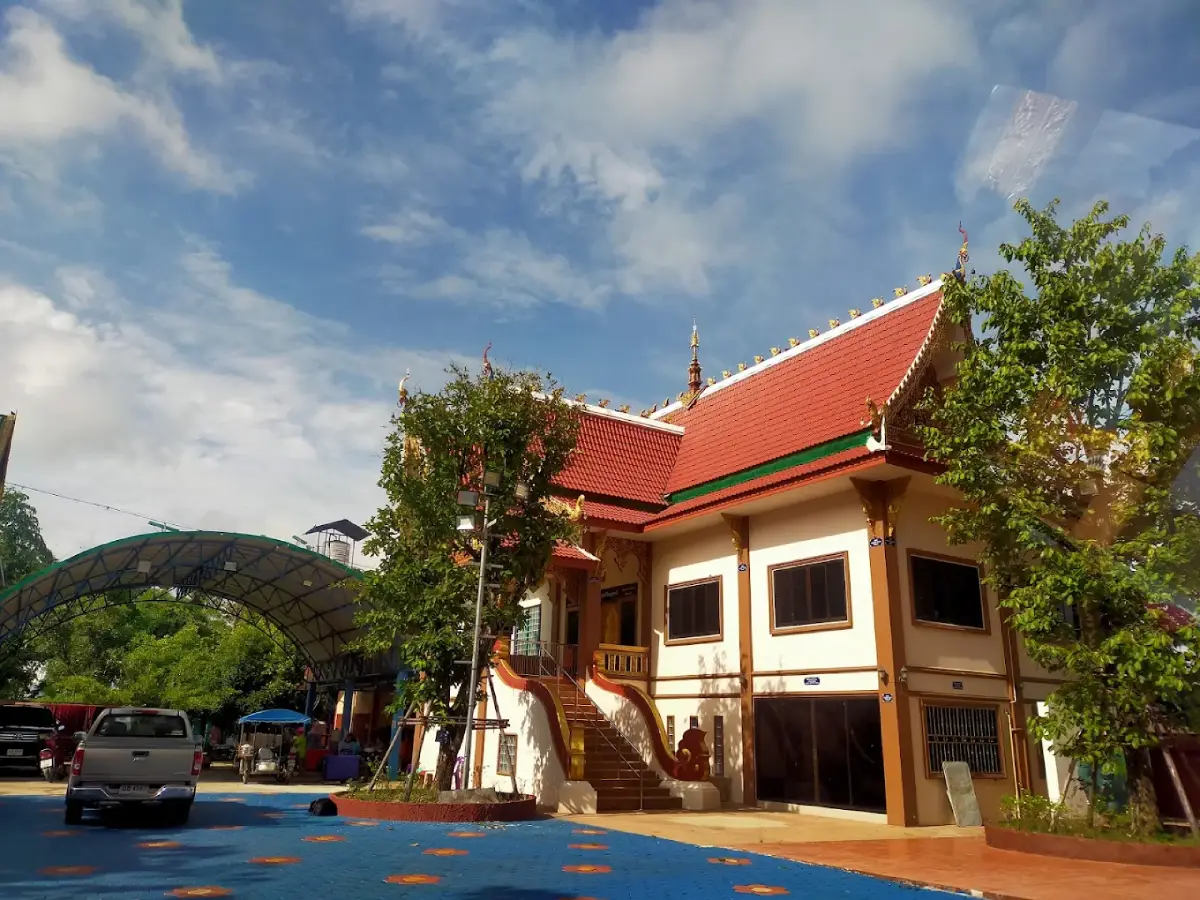
The main temple buildings include a viharn, a sermon hall, monks’ residences, and a dining pavilion. The temple also preserves Buddha images as sacred objects. The viharn is the main space for worship and religious ceremonies. The sermon hall supports Dhamma teachings and community activities. The monks’ residences provide space for resident monks, while the dining pavilion supports food offerings and daily monastic routines. These structures reflect the practical role of a community temple in supporting both religious practice and village life.
Wat Si Lom is a small community temple with a calm atmosphere. Visitors should not expect a large tourist complex. Its value lies in its connection with Ban Pa Ngae and Ban Pa Hiang, its history of local devotion, and its continuing function as a place for Buddhist practice. The best way to experience the temple is to pay respect to the Buddha images, observe the temple buildings respectfully, and understand its role as a village temple that still serves the people around it.
The temple plays an important role in teaching Dhamma and strengthening moral life in the community. It encourages Buddhist followers to attend sermons, practice Dhamma, make merit, support religious work, and live with discipline. The emphasis on moral conduct and understanding karma shows that Wat Si Lom is not merely a place for ritual. It is also a place where Buddhist values are transmitted to villagers and younger generations.
In Lanna village life, a temple often serves as the center of faith, culture, and social connection. Wat Si Lom reflects this role clearly. Its history is rooted in the old practice of inviting monks to stay during Buddhist Lent. Over time, the presence of resident monks made the temple more stable and deepened the relationship between the temple and the community. Today, Wat Si Lom continues to represent the bond between monks, laypeople, merit-making, and village identity.
Temple activities are connected with the wider Buddhist calendar. These include Buddhist holy days, Buddhist Lent, the end of Buddhist Lent, merit-making, robe offering ceremonies, and community-supported temple activities. Public information does not confirm a specific annual festival unique to Wat Si Lom in detail, but the temple’s history shows that Buddhist Lent has special importance for the site. Visitors who want to join temple events should contact the temple or local community before traveling.
Wat Si Lom is especially important to Ban Pa Ngae and Ban Pa Hiang. Ban Pa Ngae is Moo 4 of Han Kaeo Subdistrict, while Ban Pa Hiang is Moo 9. The temple serves both communities as a shared spiritual center. This makes it more than a temple for one village alone. It is a shared religious space where people from nearby communities gather to make merit, listen to teachings, and support Buddhist activities.
The story of Wat Si Lom is meaningful because it shows how a small monastic place can become a stable temple through local faith. Its development from an old religious site into a recognized temple in 1930 reflects the power of community devotion. Villagers saw the need for monks, Buddhist practice, and a sacred space in their community. By inviting monks and supporting the temple over time, they helped establish Wat Si Lom as a lasting Buddhist center.
Visitors should begin by paying respect to the Buddha images inside the temple, then observe the viharn, sermon hall, monks’ residences, dining pavilion, and temple grounds. The temple’s appeal lies in its simplicity and authenticity. It is not designed as a staged tourist attraction. Instead, it remains a functioning village temple where religious activities and community life continue naturally.
Wat Si Lom is suitable for travelers interested in local temples, village history, Lanna culture, Buddhist community life, and cultural routes around Hang Dong. It pairs well with nearby cultural sites in Han Kaeo Subdistrict. Wat Thung Or Luang is known for its ancient teak viharn. Wat Khan Kaeo is notable for its community museum. Wat Si Lom helps complete the picture by showing the role of a small village temple serving Ban Pa Ngae and Ban Pa Hiang.
A cultural route around Han Kaeo can begin at Wat Si Lom, then continue to Wat Thung Or Luang to see the old teak viharn, Wat Khan Kaeo to visit the community museum, Ban Roi An Phan Yang for Lanna woodcraft, and Baan Tawai Handicraft Center for local craft products. This route gives travelers a fuller view of Hang Dong through temples, village life, craftsmanship, and local Buddhist culture.
Getting There is most convenient by private car, rental car, or ride-hailing service. From Chiang Mai city, take the Chiang Mai–Hang Dong Road toward Hang Dong District, then continue into Han Kaeo Subdistrict and Ban Pa Ngae, Moo 4. The temple is located within a village area. Han Kaeo Municipality lists the temple coordinates as 18°39'19.6"N 98°54'18.6"E. First-time visitors should use a navigation app and allow extra time for local roads.
A visit to Wat Si Lom usually takes about 30 minutes to 1 hour. Visitors should dress modestly, speak quietly, respect monks’ residential areas, and avoid disturbing temple activities. If planning to join a merit-making event or photograph specific areas, it is best to ask temple staff or local caretakers first. Visiting a community temple respectfully allows travelers to understand the place as part of local life, not merely as a sightseeing stop.
Overall, Wat Si Lom is a valuable local temple because it preserves the history of community faith in Ban Pa Ngae and Ban Pa Hiang. It may not have the scale of major tourist temples, but its story is important: an old monastic place developed through the devotion of villagers, became a recognized temple in 1930, and continues to function as a center for Dhamma, merit-making, and community identity in Han Kaeo Subdistrict.
| Name | Wat Si Lom |
| Location | Ban Pa Ngae, Moo 4, Han Kaeo Subdistrict, Hang Dong District, Chiang Mai |
| Address | 138 Moo 4, Ban Pa Ngae, Han Kaeo Subdistrict, Hang Dong District, Chiang Mai 50230, Thailand |
| Coordinates | 18°39'19.6"N 98°54'18.6"E |
| Temple Type | Local Buddhist temple under the Maha Nikaya order |
| Temple Land Area | 1 rai, 1 ngan, 40 square wah |
| History | Established in 1922. It had long existed as a monastic place where villagers invited monks from nearby temples to stay during Buddhist Lent. It was formally recognized as a temple in 1930. |
| Highlights | A historic village temple serving Ban Pa Ngae and Ban Pa Hiang as a center for Dhamma teaching, Buddhist practice, merit-making, and community faith |
| Distinctive Features | A temple that developed from a local monastic site through the devotion of villagers who invited monks to stay during Buddhist Lent |
| Main Areas / Zones | Viharn, sermon hall, monks’ residences, dining pavilion, and temple grounds for community activities |
| Sacred Objects | Buddha images inside the temple |
| Abbot / Caretaker | Phra Athikan Thewin Thewayano |
| Community Role | A spiritual center for Ban Pa Ngae, Moo 4, and Ban Pa Hiang, Moo 9, promoting sermons, Buddhist practice, merit-making, and moral conduct |
| Current Status | An active community temple and local cultural attraction listed by Han Kaeo Municipality |
| Travel Information | From Chiang Mai city, take the Chiang Mai–Hang Dong Road toward Hang Dong District, then continue into Han Kaeo Subdistrict and Ban Pa Ngae, Moo 4. Private car, rental car, or ride-hailing service is recommended. |
| Publicly Listed Contact Number | 053-822-924 |
| Nearby Tourist Attractions | 1. Wat Thung Or Luang, about 3 km 2. Wat Khan Kaeo, about 4 km 3. Ban Roi An Phan Yang, about 4 km 4. Baan Tawai Handicraft Center, about 7 km 5. Grand Canyon Chiang Mai, about 12 km |
| Nearby Restaurants | 1. Lab Lang Wat - Wat Khan Kaeo, about 4 km, Tel. 093-292-3567, 089-757-9666, 095-191-8237 2. Bamee Kang Wat, about 4 km, Tel. 097-094-6111, 096-698-0094 3. Genesis Cafe Hang Dong, about 5 km, Tel. 081-355-2270, 098-263-4707, 063-481-0366 4. Khao Soi Hang Dong Mae Ui Noo Branch 1, about 8 km, Tel. 053-443-069, 098-750-6214, 080-629-2528 5. Little Glass House Cafe, about 9 km, Tel. 093-576-0267 |
| Nearby Accommodations | 1. Baan Suan Hill Lodge, about 5 km, Tel. 089-834-2329 2. Sunshine Garden Mansion, about 7 km, Tel. 062-951-4724 3. Hernlhin Natural Resort, about 8 km, Tel. 090-891-3056 4. Laan Mai Fai Chang Resort, about 9 km, Tel. 082-994-7888 5. Rommai Reunngam Resort, about 11 km, Tel. 093-464-2302 |
Frequently Asked Questions (FAQ)
Q: Where is Wat Si Lom located?
A: Wat Si Lom is located at 138 Moo 4, Ban Pa Ngae, Han Kaeo Subdistrict, Hang Dong District, Chiang Mai 50230, Thailand.
Q: When was Wat Si Lom established?
A: Wat Si Lom was established in 1922 and was formally recognized as a temple in 1930.
Q: Why is Wat Si Lom important?
A: Wat Si Lom is an important spiritual center for Ban Pa Ngae and Ban Pa Hiang, serving as a place for sermons, Buddhist practice, merit-making, and community faith.
Q: What important buildings are found at Wat Si Lom?
A: The temple includes a viharn, sermon hall, monks’ residences, dining pavilion, and temple grounds for community activities.
Q: How is Wat Si Lom connected to Buddhist Lent?
A: In the past, local devotees invited monks from nearby temples to stay during Buddhist Lent. In 1922, they invited Phra In Kham Khattiyo from Wat Mae Kung to reside at the temple, and he became abbot in 1930.
Q: Who should visit Wat Si Lom?
A: Wat Si Lom is suitable for travelers interested in local temples, village Buddhist history, Lanna community life, merit-making, and cultural routes around Han Kaeo and Hang Dong.
Q: How can travelers get to Wat Si Lom?
A: From Chiang Mai city, take the Chiang Mai–Hang Dong Road toward Hang Dong District, then continue into Han Kaeo Subdistrict and Ban Pa Ngae, Moo 4. Private car, rental car, or ride-hailing service is recommended.
 Category: ●Places of Worship
 Group: ●Temple
Last Update : 2 WeekAgo
 Last Update : 2 WeekAgo
 Click to Access the Navigation Map GPS
 Muang Chiang Mai(121)Chom Thong(47)Mae Chaem(25)Chiang Dao(33)Doi Saket(68)Mae Taeng(85)Mae Rim(69)Samoeng(29)Fang(71)Mae Ai(59)Phrao(70)San Pa Tong(103)San Kamphaeng(66)San Sai(73)Hang Dong(73)Hot(32)Doi Tao(22)Omkoi(11)Saraphi(74)Wiang Haeng(15)Chai Prakan(28)Mae Wang(32)Mae On(22)Doi Lo(33)Galyani Vadhana(1)


