
lovethailand home >North Travel Attractions >Chiang Mai Travel Attractions >Saraphi >Tha Wang Tan > Wat Buak Khrok Nuea
TL;DR: Wat Buak Khrok Nuea is located at Ban Buak Khrok Nuea, Village No. 8, Tha Wang Tan Subdistrict, Saraphi District, Chiang Mai Province, open Daily, hours 08.00 – 17.00.

Wat Buak Khrok Nuea
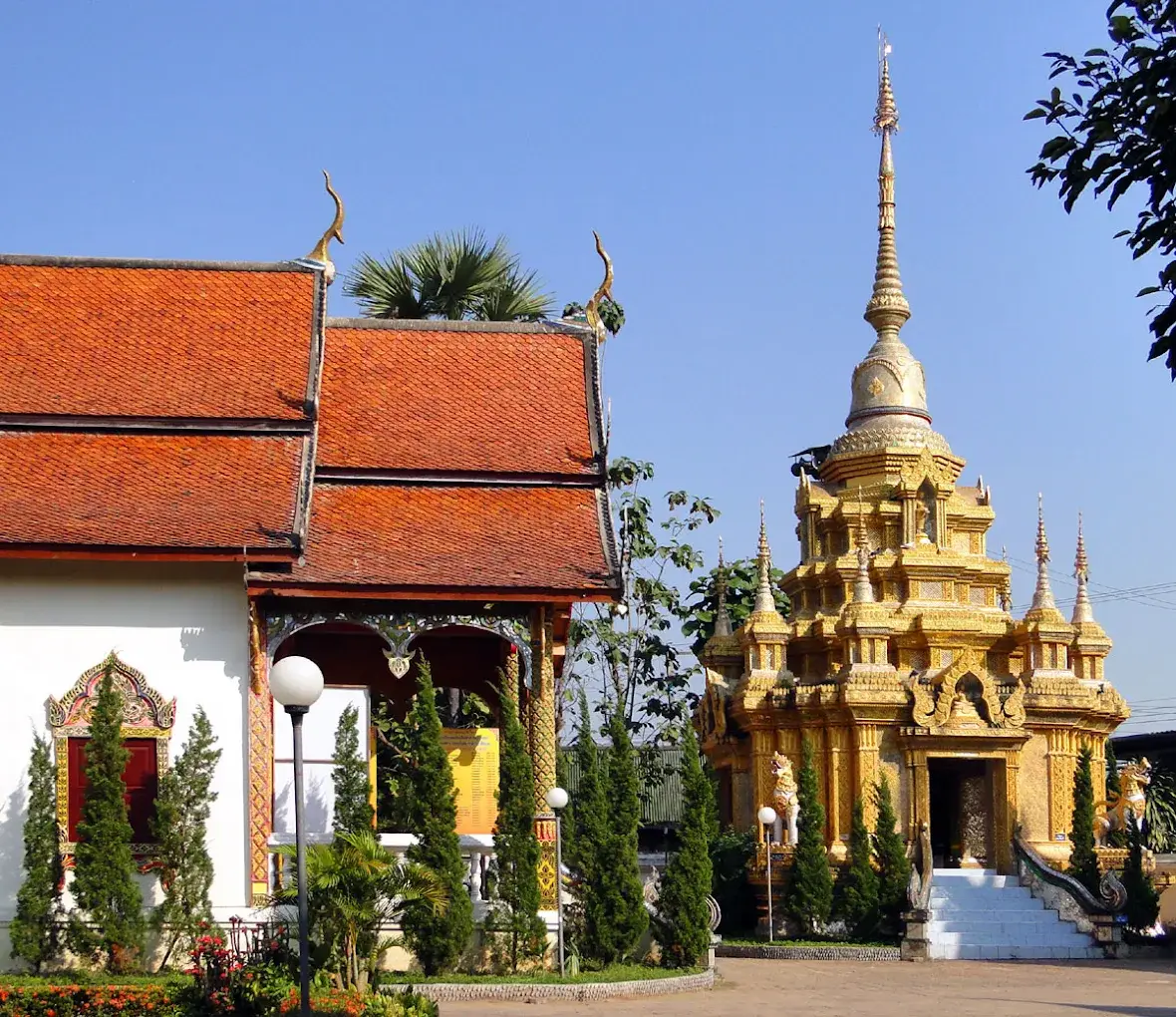
Open Days: Daily
Opening Hours: 08.00 – 17.00
Wat Buak Khrok Nuea is located at No. 63, Village No. 8, Sai Ko Klang Road, Ban Buak Khrok Nuea, Tha Wang Tan Subdistrict, Saraphi District, Chiang Mai Province 50140. It is a local Buddhist temple under the Mahanikaya sect. The temple was officially established in B.E. 2395 and received its royal consecrated boundary in B.E. 2518. Wat Buak Khrok Nuea remains an active community temple, serving as a place for merit-making, sermons, Buddhist ceremonies, Kathin, robe-offering events, and community activities for Ban Buak Khrok Nuea.
The most distinctive feature of Wat Buak Khrok Nuea is the origin of its name. In the northern Thai language, “buak” means a pond or water basin. The name “Buak Khrok” is connected with a local story about a pond located about 500 meters south of the temple, where villagers in the past placed or discarded old wooden mortars that had been used for pounding rice. Over time, the pond became known as Buak Khrok, and the name became attached to the community and the temple.
This origin makes Wat Buak Khrok Nuea a strong example of a Lanna village temple whose identity is rooted in local landscape and everyday life. The name does not come from an abstract official title. It comes from a remembered water source, old household tools, rice-pounding traditions, and shared village memory. In this sense, the name itself preserves local history.
As the Buak Khrok community expanded, a second temple was established to serve the growing settlement. The names Buak Khrok Nuea and Buak Khrok Tai were later used to distinguish the northern and southern parts of the community. These 2 temples therefore help explain the development of the Buak Khrok settlement in Tha Wang Tan Subdistrict and the way Buddhist temples supported community growth.
Tha Wang Tan Subdistrict is an important area of Saraphi District, located south of Chiang Mai city. The subdistrict consists of 13 villages: Ban Chedi Liam, Ban Pa Poe, Ban Klang, Ban Pong, Ban Pa Ngio, Ban Pa Sao, Ban Buak Hua Chang, Ban Buak Khrok Nuea, Ban Buak Khrok Tai, Ban San Pa Kwao, Ban Chang Kham, Ban Hang Khwae, and Ban Pa Kluai. Wat Buak Khrok Nuea is the temple of Village No. 8 and belongs to a wider local network of temples, villages, roads, irrigation features, and cultural sites.
The context of Tha Wang Tan gives Wat Buak Khrok Nuea wider cultural importance. The subdistrict is closely connected with Wiang Kum Kam, the ancient city associated with early Lanna history. At the same time, Ban Buak Khrok Nuea represents the living village side of Tha Wang Tan, where local temples continue to support everyday Buddhist practice. Wat Buak Khrok Nuea therefore adds another dimension to a cultural route that often focuses mainly on ancient monuments.
Wat Buak Khrok Nuea was officially established in B.E. 2395, giving it more than 170 years of history. Like many community temples in Saraphi, it grew from local faith, community cooperation, and the need for a shared place of worship. The temple reflects the development of a stable village community built around homes, water sources, roads, agriculture, and Buddhist practice.
The temple received its royal consecrated boundary in B.E. 2518. A consecrated boundary is important in Thai Buddhism because it designates the formal area for Sangha rites. This means Wat Buak Khrok Nuea functions not only as a place for lay worship but also as a fully established Buddhist temple within the Mahanikaya tradition.
Although publicly available architectural details of Wat Buak Khrok Nuea are not extensive, the temple is clearly active. Recent temple activity records show that it continues to host Kathin ceremonies and has resident monks. This confirms its ongoing role as a living religious site, not merely a historical name in local records.
The temple’s present abbot is Phra Khru Praphatsornkan Papassaro. In a village temple, the abbot’s role is central. He oversees religious practice, supports Buddhist ceremonies, cares for temple property, coordinates merit-making activities, and maintains the relationship between the temple and local residents. Wat Buak Khrok Nuea therefore remains an active community institution.
A visit to Wat Buak Khrok Nuea is best understood through its quiet community atmosphere. The temple is not a large commercial tourist attraction. Its value lies in its name, its link with Ban Buak Khrok Nuea, and its role in local life. Visitors should begin by paying respect in the temple’s worship area, then observe the connection between the temple, village roads, nearby school, homes, and the wider community setting.
The relationship between the temple and local education is also meaningful because Wat Buak Khrok Nuea is connected with the nearby Wat Buak Khrok Nuea School. In northern Thai communities, temples and schools often stand close to one another because temples historically served as centers of learning before modern schools expanded. This reflects the continuity between Buddhist education, community values, and formal schooling.
Important religious activities at Wat Buak Khrok Nuea include Kathin, robe-offering events, Buddhist Lent, the end of Lent, Buddhist holy days, memorial merit-making, and annual village merit-making. The temple is also associated with the Phra That bathing ceremony, a local tradition supported through Tha Wang Tan Subdistrict’s cultural conservation programs. These activities help preserve Lanna Buddhist practice and bring residents together across generations.
The Phra That bathing tradition is especially important because it reflects the relationship between Buddhist devotion and community cooperation. Villagers gather to honor the temple’s sacred space, prepare offerings, clean the temple grounds, listen to sermons, and participate in shared merit-making. Such traditions keep the temple active and ensure that local culture remains part of everyday community life.
Tha Wang Tan Subdistrict also preserves other local traditions, including Songkran, Yi Peng or Loy Krathong, Atthami Bucha, water-pouring ceremonies for elders, support-pole processions, and sand-carrying rituals at temples. Wat Buak Khrok Nuea is part of this wider cultural system in which Buddhist temples support annual traditions, local values, and community identity.
For Ban Buak Khrok Nuea, the temple remains a spiritual and social center. On ordinary days, it offers a calm place for worship and reflection. During festivals and merit-making events, the temple becomes a shared space where residents prepare food, arrange offerings, welcome visitors, support monks, and care for the temple grounds. This cooperative spirit is one of the defining qualities of a Lanna village temple.
Wat Buak Khrok Nuea is suitable for travelers who prefer quiet community temples and want to understand the living cultural side of Saraphi. It is especially meaningful for those interested in local place names, northern Thai village history, and temple routes connected with Tha Wang Tan and Wiang Kum Kam. The temple is best visited slowly, with attention to its community context rather than only to architecture.
A good route can combine Wat Buak Khrok Nuea with Wat Buak Khrok Tai, Wat Pa Ngio, the Wiang Kum Kam Information Center, Wat Chedi Liam, Wat Chang Kham, Wat That Khao, and the Chiang Mai–Lamphun rubber tree road. This connects local village temples with ancient-city heritage and gives visitors a fuller understanding of Tha Wang Tan and Saraphi.
A half-day itinerary can begin at Wat Buak Khrok Nuea, continue to Wat Buak Khrok Tai, and then move toward Wiang Kum Kam. A full-day itinerary can include Wat Chedi Liam, Wat Chang Kham, Wat That Khao, nearby cafés, community restaurants, and the Chiang Mai–Lamphun rubber tree road. This creates a balanced route of village Buddhism, local history, ancient monuments, and Saraphi’s cultural landscape.
Getting There is easiest by private car, rental car, motorbike, taxi, or ride-hailing service from Chiang Mai city. Travel south toward Saraphi District, enter Tha Wang Tan Subdistrict, and continue to Ban Buak Khrok Nuea, Village No. 8. The local roads connect with Ban Buak Khrok Tai, Ban Pa Ngio, Ban Chang Kham, and the Wiang Kum Kam route. Visitors planning to see several temples should arrange transport for several hours.
The best time to visit is in the morning or late afternoon when the weather is more comfortable and the temple atmosphere is calm. Visitors interested in community life may come during Buddhist holy days or annual merit-making events, while those seeking a quiet visit should choose a weekday outside major ceremonies.
Visitors should follow standard Thai temple etiquette: dress modestly, speak softly, remove shoes where required, do not enter private monastic areas, avoid disturbing ceremonies, and ask permission before photographing people closely. Wat Buak Khrok Nuea is an active community temple, so respectful behavior is essential.
In summary, Wat Buak Khrok Nuea is a historic community temple in Ban Buak Khrok Nuea, Tha Wang Tan Subdistrict, Saraphi District, Chiang Mai. Officially established in B.E. 2395 and granted its royal consecrated boundary in B.E. 2518, the temple preserves the story of the Buak Khrok community through its name, local traditions, and continuing religious role. It is a meaningful destination for travelers who want to understand local Lanna Buddhism, village history, and the quieter cultural side of Saraphi.
| Name | Wat Buak Khrok Nuea |
| Location | Ban Buak Khrok Nuea, Village No. 8, Tha Wang Tan Subdistrict, Saraphi District, Chiang Mai Province |
| Address | No. 63, Village No. 8, Sai Ko Klang Road, Tha Wang Tan Subdistrict, Saraphi District, Chiang Mai 50140, Thailand |
| Temple Type | Local Buddhist temple under the Mahanikaya sect |
| Temple Code | 350191004 |
| Highlights | Historic community temple of Ban Buak Khrok Nuea, named after a local pond associated with old wooden mortars used in traditional rice-pounding life |
| History | Officially established as a temple in B.E. 2395 and granted its royal consecrated boundary in B.E. 2518 |
| Name Origin | “Buak” means a pond in the northern Thai language, while “Buak Khrok” refers to a pond where old wooden mortars were placed or discarded; “Nuea” identifies the northern temple of the Buak Khrok community |
| Community Context | Located in Ban Buak Khrok Nuea, one of the 13 villages of Tha Wang Tan Subdistrict, a community area connected with local roads, village temples, agriculture, water sources, and the nearby Wiang Kum Kam cultural route |
| Distinctive Features | A Lanna village temple that preserves local memory through its name, community history, temple activities, and relationship with Ban Buak Khrok Nuea |
| Important Zones And Activity Areas | Worship Area And Buddhist Activity Space Temple Grounds For Merit-Making And Community Events Community Gathering Area For Buddhist Holy Days, Kathin, Robe-Offering Events, And Local Traditions Area Connected With Wat Buak Khrok Nuea School And Ban Buak Khrok Nuea Community |
| Important Ceremonies | Phra That bathing ceremony at Wat Buak Khrok Nuea, Kathin, robe-offering events, Buddhist Lent, the end of Lent, Buddhist holy days, memorial merit-making, and annual village ceremonies |
| Travel Information | Accessible from Chiang Mai city toward Saraphi District, then Tha Wang Tan Subdistrict and Ban Buak Khrok Nuea; best reached by private car, rental car, motorbike, taxi, or ride-hailing service |
| Current Status | Open as an active community temple used for Buddhist ceremonies, merit-making, Kathin, and local village activities |
| Open Days | Daily |
| Opening Hours | 08.00 – 17.00 |
| Abbot / Caretaker | Phra Khru Praphatsornkan Papassaro |
| Main Contact Number | 053-816-215 |
| Nearby Tourist Attractions | 1. Wat Buak Khrok Tai, about 1.5 km 2. Wat Pa Ngio, about 3 km 3. Wiang Kum Kam Information Center, about 5 km 4. Wat Chedi Liam, about 5 km 5. Wat Chang Kham, about 5.5 km 6. Wat That Khao, about 6 km 7. Chiang Mai–Lamphun Rubber Tree Road, about 7 km |
| Nearby Restaurants | 1. Angkrish Chicken Rice, about 0.5 km, Tel. 095-676-1466 2. Krua Sa Pa Tha Wang Tan, about 3 km 3. Aunt Ra Duck Noodles Tha Wang Tan Saraphi, about 4 km, Tel. 083-197-0230 4. Cho Cha Da Tea And Coffee Tha Wang Tan, about 4 km 5. Kaffeinecoffee Wiang Kum Kam, about 5 km, Tel. 080-724-5664 6. The Garage FOODS & COFFEE Don Kaew-Saraphi, about 6 km, Tel. 097-198-9968 |
| Nearby Accommodations | 1. De Wiangkumkam, about 5 km, Tel. 094-471-0117 2. Wiang Kum Kam Resort, about 5.5 km, Tel. 097-949-4227 3. Maraya Hotel & Resort, about 6 km, Tel. 053-812-121 4. Chiang Mai Garden Bungalows, about 6 km, Tel. 083-272-6681 5. The Adventure Hotel Chiang Mai, about 7 km 6. Patarada Boutique House, about 8 km |
Frequently Asked Questions (FAQ)
Q: Where is Wat Buak Khrok Nuea located?
A: Wat Buak Khrok Nuea is located at No. 63, Village No. 8, Sai Ko Klang Road, Ban Buak Khrok Nuea, Tha Wang Tan Subdistrict, Saraphi District, Chiang Mai Province 50140.
Q: What are the opening days and hours of Wat Buak Khrok Nuea?
A: The temple is open daily from 08.00 to 17.00.
Q: Why is Wat Buak Khrok Nuea historically important?
A: Wat Buak Khrok Nuea was officially established in B.E. 2395 and received its royal consecrated boundary in B.E. 2518. It has long served as a community temple of Ban Buak Khrok Nuea.
Q: What is the origin of the name Wat Buak Khrok Nuea?
A: “Buak” means a pond in the northern Thai language, while “Buak Khrok” refers to a pond where old wooden mortars were placed or discarded. “Nuea” identifies the northern temple of the Buak Khrok community.
Q: Who is the abbot of Wat Buak Khrok Nuea?
A: The abbot of Wat Buak Khrok Nuea is Phra Khru Praphatsornkan Papassaro.
Q: What important ceremonies are associated with Wat Buak Khrok Nuea?
A: Important ceremonies include the Phra That bathing ceremony, Kathin, robe-offering events, Buddhist Lent, the end of Lent, Buddhist holy days, memorial merit-making, and annual village ceremonies.
Q: What kind of travelers is Wat Buak Khrok Nuea suitable for?
A: The temple is suitable for travelers interested in quiet Lanna community temples, local place-name history, Tha Wang Tan village culture, and temple routes near Wiang Kum Kam.
Q: What nearby places can be visited with Wat Buak Khrok Nuea?
A: Nearby places include Wat Buak Khrok Tai, Wat Pa Ngio, the Wiang Kum Kam Information Center, Wat Chedi Liam, Wat Chang Kham, Wat That Khao, and the Chiang Mai–Lamphun rubber tree road.
 Category: ●Places of Worship
 Group: ●Temple
Last Update : 2 DayAgo
 Last Update : 2 DayAgo
 Click to Access the Navigation Map GPS
Wat Buak Khrok Nuea Map
Recommend

 Muang Chiang Mai(121)Chom Thong(47)Mae Chaem(25)Chiang Dao(33)Doi Saket(68)Mae Taeng(85)Mae Rim(69)Samoeng(29)Fang(71)Mae Ai(59)Phrao(70)San Pa Tong(103)San Kamphaeng(66)San Sai(73)Hang Dong(73)Hot(32)Doi Tao(22)Omkoi(11)Saraphi(74)Wiang Haeng(15)Chai Prakan(28)Mae Wang(32)Mae On(22)Doi Lo(34)Galyani Vadhana(1)


