
lovethailand home >North Travel Attractions >Chiang Mai Travel Attractions >San Sai >San Sai Noi > Wat Mae Yoi
TL;DR: Wat Mae Yoi is located at Ban Mae Yoi, Moo 1, San Sai Noi Subdistrict, San Sai District, Chiang Mai Province.

Wat Mae Yoi
Operating day: Daily
Operating time: 08.00 - 17.00
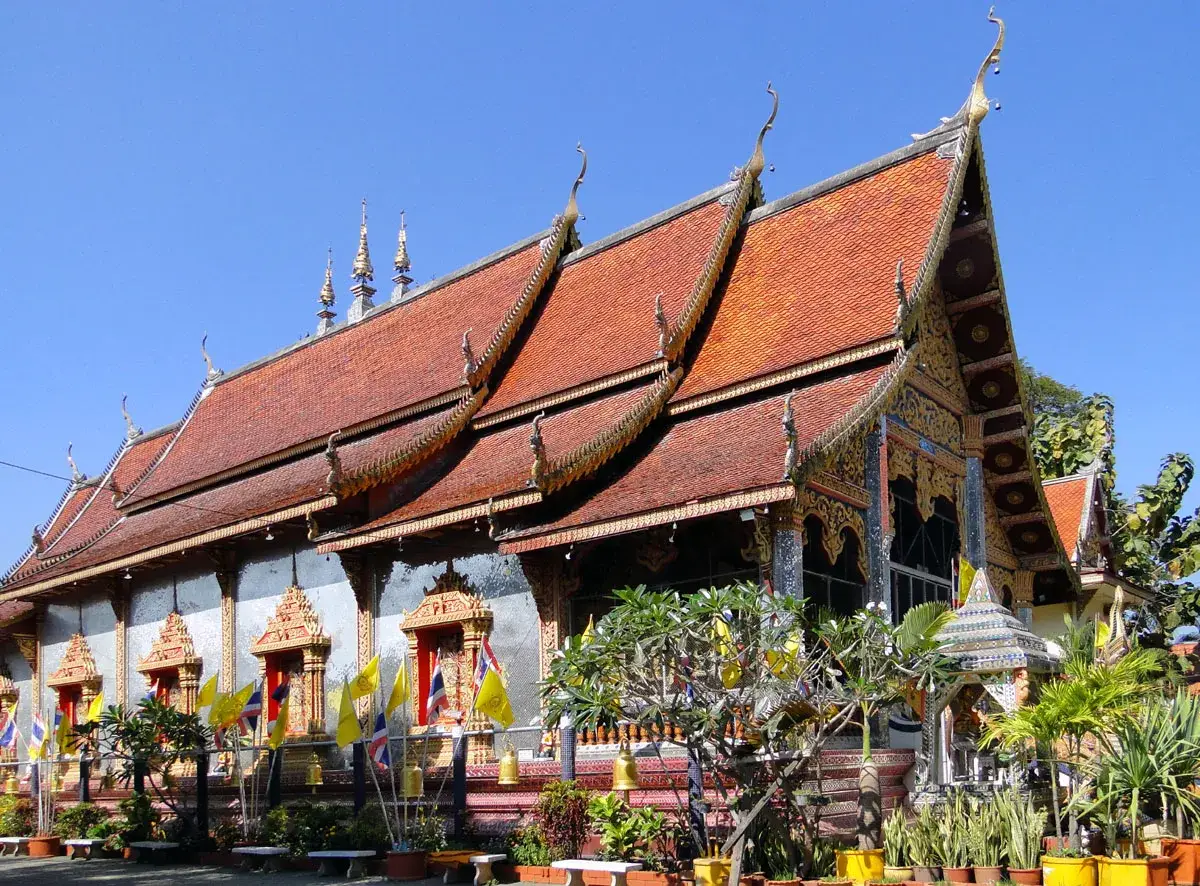
Wat Mae Yoi is a local Buddhist temple under the Mahanikaya order, located in Ban Mae Yoi, Moo 1, San Sai Noi Subdistrict, San Sai District, Chiang Mai Province. The temple was founded on February 5, 1732 and received its Wisungkham Sima on April 10, 1923. The consecrated boundary measures 5 meters wide and 8 meters long. Wat Mae Yoi is one of the old community temples of San Sai, preserving local Buddhist faith, Lanna village culture, old sacred objects, and the relationship between temple, village, irrigation landscape, and community life.
San Sai Noi is an old community area in San Sai District, located near Chiang Mai city and the Mae Jo area. The area includes village homes, local roads, irrigation canals, agricultural land, schools, markets, and community temples. Wat Mae Yoi therefore stands within a living cultural landscape rather than apart from the village. It is closely connected with everyday life, merit-making, Dhamma listening, family ceremonies, and the preservation of local tradition.
The name Mae Yoi is connected with Ban Mae Yoi and the local identity of San Sai Noi. In a Lanna village context, when the village name becomes the temple name, the temple also becomes a marker of community identity. Wat Mae Yoi is therefore both a religious site and a place-name memory, preserving the relationship between the village, its people, its land, and its Buddhist faith.
The temple’s founding in 1732 makes it more than 290 years old. Temples founded in this period often began through the combined faith of monks and villagers who needed a local sacred center for merit-making, sermons, ordination, funerals, Buddhist holy days, and village ceremonies. Wat Mae Yoi should therefore be understood as a long-standing village temple rooted in the social and religious development of San Sai Noi.
Wat Mae Yoi received Wisungkham Sima on April 10, 1923. A Wisungkham Sima is the consecrated boundary required for important monastic rites according to Buddhist discipline. This makes the ubosot especially significant, because it is not only a religious building but also the formal space that allows the temple to support key Sangha activities.
The temple grounds cover 2 rai, 2 ngan, and 98 square wah, with 3 plots of monastic land. The northern boundary reaches a public road for 72 meters, the eastern boundary reaches a public road for 52 meters, the southern boundary reaches a public road for 84 meters, and the western boundary adjoins an irrigation canal and a public road. This setting shows the character of a working village temple embedded in roads, waterways, homes, and community space.
The irrigation canal on the western side of the temple is important for understanding the temple’s landscape. In Lanna agricultural communities, irrigation canals and weirs were central to rice farming, water sharing, and village life. Because Wat Mae Yoi stands near such a water system, it is connected not only with religion but also with the agricultural and environmental life of the community.
The temple’s monastic structures include an ubosot, vihara, sermon hall, scripture hall, monks’ residences, library, kitchen, water tank, and restrooms. These structures show that Wat Mae Yoi supports both religious practice and community life. The ubosot is used for formal monastic rites, the vihara is the main worship area, the sermon hall supports Dhamma listening and gatherings, the scripture hall and library reflect Buddhist learning, and the kitchen supports temple festivals and community merit-making.
The vihara is one of the most important places to visit because it houses the principal Buddha image in the Subduing Mara posture. This posture represents the Buddha’s victory over Mara before enlightenment and symbolizes determination, inner stability, mindfulness, and the triumph of Dhamma over obstacles. For local villagers, the principal Buddha image is the spiritual center of the temple.
Wat Mae Yoi preserves several important sacred and historic objects: the principal Subduing Mara Buddha image in the vihara, Phra Chao Saen Chae, a golden teak Buddha image more than 100 years old, a wooden Dhamma chest, an old carved sermon seat, and a chedi. These objects give the temple deeper cultural value because they reflect Buddhist devotion, wood craftsmanship, scripture preservation, Dhamma teaching, and the continuity of Buddhist life in San Sai Noi.
Phra Chao Saen Chae is one of the most meaningful sacred objects at the temple. A golden teak Buddha image more than a century old reflects local craftsmanship and the importance of teakwood in northern Thai religious art. Teak has long been valued for its strength, durability, and suitability for sacred objects and religious architecture. This Buddha image therefore represents both faith and Lanna woodworking tradition.
The wooden Dhamma chest and old carved sermon seat reveal the temple’s role in preserving Buddhist teaching. A Dhamma chest is associated with the storage of Buddhist manuscripts or scriptures, while a carved sermon seat is connected with the preaching and listening of Dhamma. Together, these objects show that Wat Mae Yoi is not only a place for worship but also a place where Buddhist knowledge and oral teaching have been maintained within the community.
The chedi within the temple grounds serves as another important sacred focus. In a community temple, a chedi symbolizes Buddhist continuity and provides a place of respectful worship. When the vihara, principal Buddha image, Phra Chao Saen Chae, Dhamma chest, sermon seat, scripture hall, and chedi are considered together, Wat Mae Yoi clearly preserves the threefold relationship of Buddha, Dhamma, and Sangha in village religious life.
The scripture hall and library add an educational dimension to the temple. In Lanna temple culture, a scripture hall is associated with preserving palm-leaf manuscripts, Buddhist texts, and local religious knowledge. Although forms of education have changed over time, the presence of a scripture hall and library shows that Wat Mae Yoi has continued to support learning and moral cultivation in the community.
The sermon hall and kitchen reveal the social life of a village temple. Merit-making at Wat Mae Yoi depends on cooperation among villagers: preparing food, arranging ceremonial spaces, offering meals to monks, welcoming participants, and supporting the temple according to faith and ability. These spaces show how Buddhist faith becomes practical community work.
A local San Sai temple directory records Wat Mae Yoi with resident monks and novices and lists Phra Khru Phisan Thammakon, Kham Tan Siridhammo Waree, as an abbot and a monastic figure with subdistrict-level roles. This older directory information indicates that Wat Mae Yoi has long been an active temple within the San Sai Noi monastic network. Even though some administrative details may change over time, the temple’s role as a sacred community site remains clear.
Wat Mae Yoi serves the community on several levels. First, it is the spiritual center of Ban Mae Yoi and San Sai Noi, where villagers pay respect, make merit, and listen to Dhamma. Second, it is a social space for ordinations, funerals, Kathin, robe-offering activities, and local ceremonies. Third, it is a historical site that preserves the story of settlement, old sacred objects, wood craftsmanship, scripture tradition, and the relationship between community life and irrigation landscape.
Wat Mae Yoi also once served nearby communities before some of them established their own temples. The history of Wat Mae Kuang in San Na Meng records that villagers from Ban Mae Kuang Tai previously traveled to make merit at Wat Mae Yoi in San Sai Noi, which was far away and difficult to reach, before they established their own local monastic community. This reflects Wat Mae Yoi’s earlier role as a wider religious center for nearby communities.
Religious activities at Wat Mae Yoi follow the Buddhist calendar and local Lanna practice. Important occasions include Buddhist holy days, Makha Bucha, Visakha Bucha, Asalha Bucha, Buddhist Lent, the end of Buddhist Lent, Kathin, robe-offering activities, and Ban Mae Yoi community merit-making events. These activities keep the temple active throughout the year and maintain the relationship between temple and village.
Kathin is especially important for a local temple. During Kathin, villagers and supporters offer robes and donations to support monks, temple maintenance, and religious activities. Kathin is not only a Buddhist ceremony; it is also an annual gathering that renews the relationship between local residents, former residents, supporters, and the temple.
Visitors should pay attention to the principal Subduing Mara Buddha image in the vihara, Phra Chao Saen Chae, the golden teak Buddha image, the wooden Dhamma chest, the old carved sermon seat, the chedi, the scripture hall, the sermon hall, and the temple courtyard. A meaningful visit should begin with paying respect in the main sacred area, followed by a calm walk through the temple grounds.
San Sai Noi and nearby areas can be explored as a local cultural route. Nearby sites include Wat San Sai Mun, Wat San Khayom, Wat San Phra Net, Wat Mae Kuang, Wat Mae Jo, and community learning areas around Mae Jo. This route is suitable for visitors who want to understand San Sai through old temples, irrigation landscapes, village communities, and Lanna Buddhist culture close to Chiang Mai city.
Getting There is convenient by private car or motorcycle. From Chiang Mai city, travel toward San Sai through the San Sai or Mae Jo route, then continue into San Sai Noi Subdistrict and Ban Mae Yoi, Moo 1. The temple can be combined with nearby temples, local restaurants in San Sai Noi, and accommodations in the San Sai area.
Visitors should dress modestly, keep their voices low, avoid entering monks’ private areas without permission, and photograph sacred areas respectfully. Wat Mae Yoi remains an active community temple, so it should be treated first as a place of worship and village faith rather than a purely touristic site.
Overall, Wat Mae Yoi is an old and meaningful community temple of Ban Mae Yoi, San Sai Noi Subdistrict, San Sai District, Chiang Mai. Its strongest value lies in its founding on February 5, 1732, Wisungkham Sima granted on April 10, 1923, temple land of 2 rai 2 ngan and 98 square wah, 3 plots of monastic land, ubosot, vihara, sermon hall, scripture hall, monks’ residences, library, kitchen, water tank, restrooms, the principal Subduing Mara Buddha image, Phra Chao Saen Chae, wooden Dhamma chest, old carved sermon seat, and chedi. It is a worthwhile stop for travelers who want to understand a quieter and more authentic side of Chiang Mai’s Lanna village temple culture.
| Name | Wat Mae Yoi |
| Location | Ban Mae Yoi, Moo 1, San Sai Noi Subdistrict, San Sai District, Chiang Mai Province |
| Address | Moo 1, San Sai Noi Subdistrict, San Sai District, Chiang Mai 50210, Thailand |
| Type | Local Buddhist temple under the Mahanikaya order |
| Highlights | Old San Sai Noi community temple founded in 1732, with a principal Subduing Mara Buddha image, Phra Chao Saen Chae, wooden Dhamma chest, old carved sermon seat, chedi, scripture hall, and complete village-temple structures |
| History | Founded on February 5, 1732 as an old community temple of Ban Mae Yoi and San Sai Noi Subdistrict |
| Wisungkham Sima | Granted on April 10, 1923. The consecrated boundary measures 5 meters wide and 8 meters long. |
| Temple Land Area | 2 rai, 2 ngan, and 98 square wah |
| Monastic Land | 3 plots |
| Temple Boundary | North: public road, 72 meters; east: public road, 52 meters; south: public road, 84 meters; west: irrigation canal and public road |
| Name Origin | The name is connected with Ban Mae Yoi, Moo 1, San Sai Noi Subdistrict, and preserves the local identity of the community |
| Main Areas / Zones | Ubosot, vihara, sermon hall, scripture hall, monks’ residences, library, kitchen, water tank, restrooms, chedi, temple courtyard, and worship area |
| Important Structures | Ubosot, vihara, sermon hall, scripture hall, monks’ residences, library, kitchen, water tank, and restrooms |
| Important Sacred And Historic Objects | Principal Subduing Mara Buddha image in the vihara, Phra Chao Saen Chae golden teak Buddha image over 100 years old, wooden Dhamma chest, old carved sermon seat, and chedi |
| Area Context | The temple stands in San Sai Noi, a community area with village homes, local roads, irrigation canals, farmland, and several community temples |
| Community Role | Spiritual center of Ban Mae Yoi and San Sai Noi, used for merit-making, sermons, Kathin, robe-offering activities, ordinations, funerals, and Buddhist community ceremonies |
| Traditions / Merit-Making | Buddhist holy days, major Buddhist festivals, Buddhist Lent, the end of Buddhist Lent, Kathin, robe-offering activities, and Ban Mae Yoi community merit-making events |
| Travel Information | From Chiang Mai city, travel toward San Sai through the San Sai or Mae Jo route, then continue into San Sai Noi Subdistrict and Ban Mae Yoi, Moo 1. The route is suitable for private cars or motorcycles. |
| Current Status | Open as a local Buddhist temple and community sacred site of Ban Mae Yoi, San Sai Noi Subdistrict, San Sai District, Chiang Mai |
| Facilities | Worship area, temple courtyard, sermon hall, library, kitchen, water tank, restrooms, and community religious activity area |
| Nearby Tourist Attractions | 1. Wat San Sai Mun, San Sai Noi Subdistrict, about 2–3 km 2. Wat San Khayom, San Sai Noi Subdistrict, about 3–4 km 3. Wat San Phra Net, San Phra Net Subdistrict, about 4–5 km 4. Wat Mae Kuang, San Na Meng Subdistrict, about 5–6 km 5. Wat Mae Jo, Nong Han Subdistrict, about 6–8 km 6. Mae Jo area and nearby community learning sites, about 6–8 km |
| Nearby Restaurants | 1. Ban Khanom Mae Yoi Tai, about 1–2 km, Tel. 086-431-4250, 086-431-4681 2. Ran Pracham, about 2–3 km, Tel. 081-145-9899, 087-649-7445 3. Khrua Ban Noi, about 3–4 km, Tel. 064-156-2181 4. Salmonroom.mtm San Sai Branch, about 3–4 km, Tel. 092-839-7993 5. 9 P.M. Made-To-Order Food San Sai Noi, about 4–5 km, Tel. 082-554-5263, 063-445-5441 6. Joke Mama San Sai, about 4–5 km, Tel. 095-957-7189 |
| Nearby Accommodations | 1. C.K. Resort, San Sai Noi, about 3–5 km, Tel. 085-616-2635 2. Kin Bed & Coffee, about 4–6 km, Tel. 063-675-0307 3. Luisuan Homestay, about 4–6 km, Tel. 087-988-9688 4. The Y Boutique, about 6–8 km, Tel. 053-014-222 5. Hometown Hometale, about 5–7 km, Tel. 094-749-2424 |
Frequently Asked Questions (FAQ)
Q: Where is Wat Mae Yoi located?
A: Wat Mae Yoi is located in Ban Mae Yoi, Moo 1, San Sai Noi Subdistrict, San Sai District, Chiang Mai 50210, Thailand.
Q: When was Wat Mae Yoi founded?
A: Wat Mae Yoi was founded on February 5, 1732, making it one of the old community temples of San Sai Noi.
Q: When did Wat Mae Yoi receive Wisungkham Sima?
A: Wat Mae Yoi received Wisungkham Sima on April 10, 1923. The consecrated boundary measures 5 meters wide and 8 meters long.
Q: What important sacred objects are found at Wat Mae Yoi?
A: Important objects include the principal Subduing Mara Buddha image, Phra Chao Saen Chae golden teak Buddha image over 100 years old, a wooden Dhamma chest, an old carved sermon seat, and a chedi.
Q: What important structures does Wat Mae Yoi have?
A: The temple has an ubosot, vihara, sermon hall, scripture hall, monks’ residences, library, kitchen, water tank, and restrooms.
Q: What type of traveler is Wat Mae Yoi suitable for?
A: It is suitable for visitors interested in old Lanna community temples, local history, Buddhist sacred objects, wood craftsmanship, and the village culture of San Sai Noi.
Q: How do visitors get to Wat Mae Yoi?
A: From Chiang Mai city, travel toward San Sai through the San Sai or Mae Jo route, then continue into San Sai Noi Subdistrict and Ban Mae Yoi, Moo 1. Private car or motorcycle is convenient.
Q: What nearby places can be visited on the same trip?
A: Nearby places include Wat San Sai Mun, Wat San Khayom, Wat San Phra Net, Wat Mae Kuang, Wat Mae Jo, and the Mae Jo area.
 Category: ●Places of Worship
 Group: ●Temple
Last Update : 1 MonthAgo
 Last Update : 1 MonthAgo
 Click to Access the Navigation Map GPS

 Muang Chiang Mai(121)Chom Thong(47)Mae Chaem(25)Chiang Dao(33)Doi Saket(68)Mae Taeng(85)Mae Rim(69)Samoeng(29)Fang(71)Mae Ai(59)Phrao(70)San Pa Tong(103)San Kamphaeng(66)San Sai(73)Hang Dong(73)Hot(32)Doi Tao(22)Omkoi(11)Saraphi(74)Wiang Haeng(15)Chai Prakan(28)Mae Wang(32)Mae On(22)Doi Lo(33)Galyani Vadhana(1)


