
TL;DR: Jao Young Museum is located at Wat Pa Tan, Moo 4, Buak Khang Subdistrict, San Kamphaeng District, Chiang Mai 50130, open Daily, hours 09:00–18:00.

Jao Young Museum
Open Days: Daily
Opening Hours: 09:00–18:00
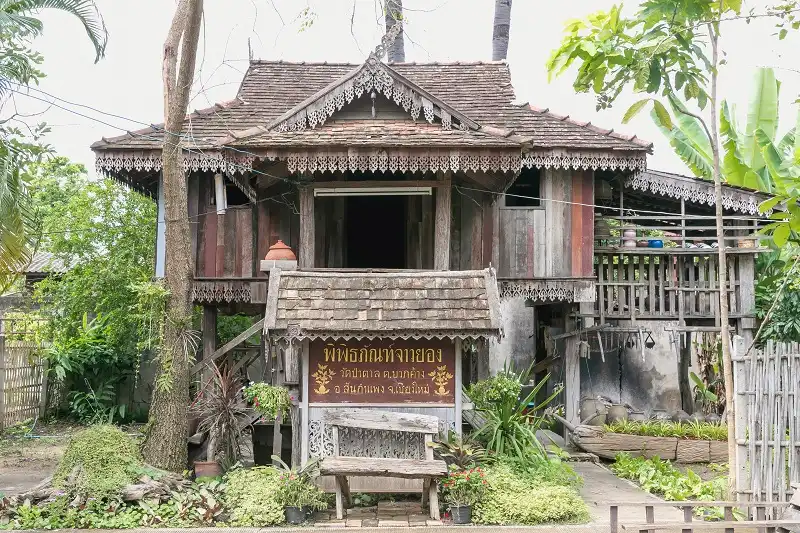
Jao Yong Museum and the Palm-leaf Manuscripts Museum at Wat Pa Tan, Buak Khang Subdistrict, San Kamphaeng District, Chiang Mai, are cultural learning spaces that preserve and present the heritage of the Yong people, an indigenous Tai ethnic group living mainly in the Mae On–San Kamphaeng area. Through artifacts, household tools, farming equipment, and ancient manuscripts, the museums offer visitors a deep insight into the traditional way of life, beliefs, and wisdom of the Yong community.
The Jao Yong Museum was established in 1999 to commemorate the 50th Anniversary of His Majesty the King’s Accession to the Throne. Its primary purpose is to collect, preserve, and display ancient artifacts of the Yong people, ensuring that their cultural heritage remains alive while fostering unity, pride, and a strong sense of respect for ancestral traditions among both community members and visitors.
Inside the Jao Yong Museum, visitors will find a wide range of traditional objects donated by local villagers. These include farming tools, handicraft equipment, household utensils, woven baskets, hunting and fishing tools, occupational implements, as well as traditional clothing and handwoven textiles that reflect the distinctive identity of the Yong people. Each object represents not only historical value but also everyday life as it was lived by the Yong community in the past.
One year after the establishment of the Jao Yong Museum, Wat Pa Tan founded the Palm-leaf Manuscripts Museum to safeguard palm-leaf scriptures and paper manuscripts (known locally as “pap sa”) that had previously been scattered, poorly preserved, and at risk of damage from insects, humidity, and time. The abbot and community members worked together to gather, classify, and store these manuscripts systematically before presenting them to the public.
Most of the palm-leaf manuscripts and pap sa books on display are at least 80 years old, with some exceeding a hundred years in age. Their contents include legends, local literature, Jataka tales, local history, Buddhist chants, sacred incantations, and traditional herbal medicine texts. Seeing these original manuscripts allows visitors to appreciate the dedication and craftsmanship of ancestors who recorded knowledge by hand on palm leaves and handmade paper.
The current abbot of Wat Pa Tan places great importance on presenting knowledge related to the Yong way of life, as the Yong people are one of the original ethnic groups settled in Buak Khang and surrounding areas. He has actively promoted the systematic collection and exhibition of artifacts and manuscripts, transforming the temple into both a spiritual center and a community learning hub that connects faith, culture, and local wisdom.
As visitors explore the museums section by section, they gain a holistic understanding of Yong life—from livelihoods and household practices to beliefs, religion, and traditional knowledge recorded in manuscripts. The Jao Yong Museum and the Palm-leaf Manuscripts Museum are therefore not merely places to store old objects, but living classrooms that invite students, researchers, and travelers to experience the cultural identity of the Yong people firsthand.
The atmosphere around Wat Pa Tan and the surrounding village retains a distinctly Lanna rural character, with traditional wooden houses, local handicrafts, and community activities held throughout the year. The museums are not isolated buildings but an integral part of daily community life, helping to bridge the past, present, and future of the Yong people.
Getting There to Wat Pa Tan and the Jao Yong Museum is easy from Chiang Mai city. Take the Chiang Mai–San Kamphaeng Road (Highway 1317) toward San Kamphaeng District. Upon reaching Buak Khang Subdistrict, follow the signs to Wat Pa Tan. The total distance from the city is approximately 18–25 kilometers. The site is best accessed by private car, taxi, or a chartered songthaew, and can be included in a cultural day trip around San Kamphaeng.
| Name | Jao Yong Museum & Palm-leaf Manuscripts Museum |
| Location | Wat Pa Tan, Moo 4, Buak Khang Subdistrict, San Kamphaeng District, Chiang Mai 50130 |
| Established | Jao Yong Museum established in 1999; the Palm-leaf Manuscripts Museum was founded approximately one year later |
| Key Features | An ethnic museum of the Yong people, showcasing artifacts, household items, farming tools, traditional clothing, and ancient palm-leaf manuscripts that reflect Yong lifestyle, beliefs, and local wisdom |
| Period of Artifacts | Most objects and manuscripts date back 80–100 years, representing Yong community life from the late Rattanakosin period to more recent times |
| Main Collections | Traditional Yong artifacts, household and agricultural tools, handicrafts, woven textiles, palm-leaf manuscripts, and pap sa books covering legends, literature, Buddhist teachings, chants, incantations, and herbal medicine |
| Name Origin | “Jao Yong” refers to the Yong people, an indigenous Tai ethnic group historically settled in Buak Khang and nearby areas |
| Open Days & Hours | Open daily, 09:00–18:00 (visitors are advised to confirm current information with the temple before visiting) |
| Admission | Free admission; donation boxes are available to support museum maintenance and community activities |
| Contact | 053-394192 (Wat Pa Tan), 080-1352589 (Museum caretaker / Phra Ajarn Mongkol) |
| Current Status | An active local museum within a temple, managed by Wat Pa Tan and the Buak Khang community, serving as an important cultural learning center in San Kamphaeng |
Frequently Asked Questions (FAQ)
Q: Who is the Jao Yong Museum suitable for?
A: It is ideal for visitors interested in ethnic culture, traditional lifestyles, history, students, researchers, and travelers seeking a deeper cultural experience beyond Chiang Mai’s main tourist attractions.
Q: What is displayed in the Palm-leaf Manuscripts Museum?
A: The museum displays palm-leaf manuscripts and pap sa books over 80–100 years old, covering legends, literature, Buddhist teachings, chants, incantations, local history, and traditional herbal medicine.
Q: Do visitors need to make an advance reservation?
A: Walk-in visits are generally welcome during opening hours. For large groups or educational visits requiring guided explanations, it is recommended to contact the temple in advance.
Q: How long should I plan for the visit?
A: A general visit to both museums takes about 1–1.5 hours. Visitors who wish to read details carefully and explore the community atmosphere may spend up to 2 hours.
Q: Is photography allowed inside the museums?
A: Photography is generally allowed, but visitors should avoid using flash, refrain from touching artifacts, and follow guidance from monks or caretakers to help preserve the collections.
 Category: ●Art, Culture and Heritage
 Group: ●Museums
 Last Update : 4 MonthAgo
 Click to Access the Navigation Map GPS
 Historical Sites and Monuments(
 Landmarks and Memorials(
 Royal Palace(
 Art, Craft Centres, Tradition(
 Educational Places
 Museum for Study(
 Educational Gardens, Farm(
 Training Center(
 University
 Places of Worship
 Temple(
 Mosque(
 Other religious and spiritural sites(
 Research and Development
 Royal Project(
 Suburban Living
 Village, Community(
 Local Market(
 Nature and Wildlife
 National Parks and Marine Reserves(
 Mountain (Doi)(
 Dam, Reservoir, Lake(
 Waterfalls(
 Hot Springs(
 Caves(
 River, Canal(
 Other natural attractions(
 Entertainment and Agricultural
 Zoos and Aquariums(
 Animal camps and shows(
 Stadium(
 Farm, Parks, Gardens and Ecotourism(
 Waterpark(
 Theater(
 Outdoor and Adventure Activities(
 Shopping
 Shopping and Night Market(
 Restaurant
 Michelin Star(
 Michelin Guide(
 Call Customer Service in Tourism
 Call Customer Service in Tourism(
 Travel Articles, Recipes
 Travel Review, Food Review(
 Food Menu, North Recipes(
 Thai Desserts, North Recipes(


