
lovethailand home >North Travel Attractions >Chiang Mai Travel Attractions >Samoeng >Samoeng Tai > Wat Mae Sap Neua
TL;DR: Wat Mae Sap Neua is located at 140 Moo 1, Ban Mae Sap, Samoeng Tai Subdistrict, Samoeng District, Chiang Mai Province, open Daily, hours 05.00 – 18.00.
Wat Mae Sap Neua
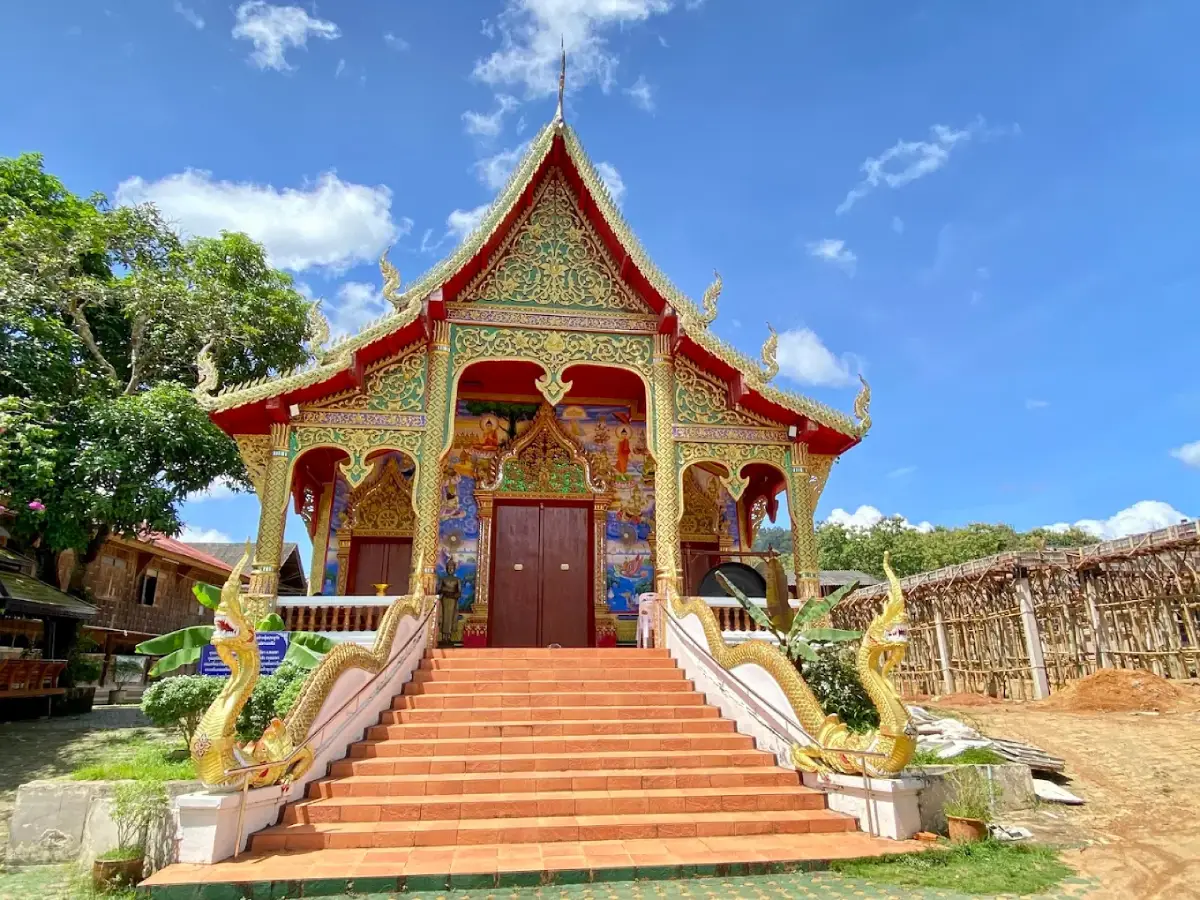
Open Days: Daily
Opening Hours: 05.00 – 18.00
Wat Mae Sap Nuea is a local Buddhist temple under the Maha Nikaya order, located at 140 Moo 1, Ban Mae Sap, Samoeng Tai Subdistrict, Samoeng District, Chiang Mai Province. The temple was established in B.E. 2431 and received its royal consecrated boundary on February 27, B.E. 2547. The consecrated boundary measures 20 meters wide and 40 meters long. The abbot is Phra Khru Khanti Khunathan, monastic name Khantitharo, who also serves as the Ecclesiastical Chief of Samoeng Tai Subdistrict Area 2. Wat Mae Sap Nuea is an important spiritual center of the Tai Lue community of Ban Mae Sap, a center for moral and ethical development in Samoeng Tai, and a temple that operates a Sunday Buddhist study center.
Wat Mae Sap Nuea has historical, religious, artistic, and ethnic-cultural value. Its importance is not limited to its age as a temple. It is closely tied to the Tai Lue community of Ban Mae Sap, whose ancestors migrated from Sipsongpanna and settled along the Mae Sap stream more than 200 years ago. The temple is therefore more than a place of worship. It is a space that preserves community memory, the identity of Ban Mae Sap, Buddhist faith, and the relationship between people, water, settlement, and Lanna-Tai Lue culture.
The history of Wat Mae Sap Nuea begins with the Tai Lue people who migrated from Sipsongpanna and settled along the Mae Sap stream. In the early period of settlement, the community had no temple or formal place for merit-making. Villagers therefore built a temple as their Buddhist center. That temple became Wat Mae Sap Nuea, named after the Mae Sap stream, the important waterway that has long shaped the life and identity of the local community.
The temple’s establishment in B.E. 2431 makes Wat Mae Sap Nuea one of the older community temples in Samoeng Tai. In connection with the settlement history of the Tai Lue community of Ban Mae Sap, the temple is both a religious institution and a cultural record of the community’s formation. It has served as a place for merit-making, sermons, ceremonies, and community gatherings since the time when local life depended strongly on waterways, farmland, and the mountain-valley environment.
Ban Mae Sap is an important Tai Lue community in Samoeng District. The community is divided into Mae Sap Nuea and Mae Sap Tai. Most local residents are of Tai Lue descent, and the community continues to preserve kinship ties, traditions, language, beliefs, and aspects of local cultural life. Wat Mae Sap Nuea is therefore not simply a village temple. It is a cultural center that helps maintain Tai Lue identity through Buddhist ceremonies, annual merit-making, and the transmission of local values across generations.
Ban Mae Sap is located in a landscape of lowland areas along the Mae Sap stream, foothills, and surrounding mountains. The Mae Sap stream is the main natural water source for the community, supporting household use, agriculture, and local water management. The name Wat Mae Sap Nuea directly reflects this relationship between temple and waterway. The stream is not only a geographical feature; it is a source of community identity, place names, and shared memory.
The temple land covers 2 rai, 3 ngan, and 5 square wah, with additional Sangha land totaling 3 rai, 1 ngan, and 10 square wah. The temple compound includes an ordination hall, viharn, sermon hall, multi-purpose pavilion, monk’s residence, temple grounds, and Buddhist community activity space. These structures allow the temple to support Buddhist ceremonies, Dhamma learning, community activities, and Lanna-Tai Lue merit-making traditions throughout the year.
Wat Mae Sap Nuea received its royal consecrated boundary on February 27, B.E. 2547. This is an important milestone because it provides an officially recognized area for formal Sangha ceremonies according to Buddhist discipline. The boundary measures 20 meters by 40 meters, confirming the temple’s complete role as a Buddhist institution serving both monks and laypeople in Ban Mae Sap.
The most important sacred object of Wat Mae Sap Nuea is Somdet Phra Phuttha Chai Mongkhon, the principal Buddha image. The image has a lap width of 5 sok and a height of 6 sok, is covered with gold leaf, and is approximately 200 years old. This principal Buddha image is a central focus of devotion for villagers and visitors, representing the continuity of Buddhist faith in the Tai Lue community of Ban Mae Sap.
Another important sacred object is Phra Sing Sariam. The image has a lap width of 2 sok and a height of 3 sok. It was carved from an old neem tree that was cut down when the temple built the ordination hall over the site. The wood was then carved into a Buddha image and enshrined inside the ordination hall. Phra Sing Sariam is meaningful because it connects the old tree, the ordination hall, local craftsmanship, and the transformation of a natural element into a sacred image for community worship.
The ordination hall of Wat Mae Sap Nuea measures 6 meters wide and 6 meters long. Built in B.E. 2550, it is a reinforced concrete and plastered brick structure. It is an important place for formal monastic ceremonies and the enshrinement of Phra Sing Sariam. The hall therefore contains both ritual significance and a distinctive temple story related to the old neem tree and the carved Buddha image.
The sermon hall measures 6 meters wide and 24 meters long. Built in B.E. 2533, it is a reinforced concrete and plastered brick structure used for Dhamma listening, merit-making, community gatherings, and religious events. In a village temple, the sermon hall is highly important because it is where laypeople gather comfortably during Buddhist holy days, annual merit-making ceremonies, and community religious activities.
The viharn measures 11 meters wide and 25 meters long and was built in B.E. 2521 as a reinforced concrete and plastered brick structure. It is one of the most important spaces for worship and devotional activities. In a northern Thai village temple, the viharn often serves as the spiritual heart of the temple, where villagers pay respect to Buddha images, chant, pray, and take part in ceremonies.
The multi-purpose pavilion measures 5 meters wide and 18 meters long and was built in B.E. 2538. It supports various temple and community activities, including merit-making preparations, meetings, ceremonial support, and public activities when needed. The monk’s residence is a wooden building used for the daily life of resident monks. These structures support the temple’s ongoing role in both religious and social life.
Phra Khru Khanti Khunathan, Khantitharo, is the abbot of Wat Mae Sap Nuea and also serves as Ecclesiastical Chief of Samoeng Tai Subdistrict Area 2. His role is important at both temple and local monastic levels. As a subdistrict ecclesiastical leader, he supports Buddhist affairs, guides laypeople, maintains temple activities, and helps connect the Sangha with the wider Samoeng Tai community.
Wat Mae Sap Nuea is important as a center for moral and ethical development in Samoeng Tai and as a Sunday Buddhist study center. This gives the temple a strong educational role, especially for children, youth, and local residents. Learning Buddhism at the temple helps cultivate gratitude, discipline, generosity, moral awareness, and community responsibility, all of which are essential values in village life.
Religious activities at Wat Mae Sap Nuea follow the rhythm of northern Thai and Tai Lue Buddhist communities. These include Buddhist holy day observances, Kathin ceremonies, forest robe offerings, Buddhist Lent activities, end-of-Lent merit-making, major Buddhist holy days, and Northern Thai New Year traditions. During these occasions, villagers gather to make offerings, listen to Dhamma teachings, prepare the temple grounds, and preserve community relationships.
In ethnic-cultural terms, Wat Mae Sap Nuea plays an important role in preserving Tai Lue identity in Ban Mae Sap. The community has a long history of migration, settlement, adaptation, and cultural continuity in Samoeng. The temple is where Buddhist practice and ethnic memory meet. Merit-making events allow villagers to gather, use local language, transmit customs, and reaffirm their shared community identity.
For visitors, the main highlights of Wat Mae Sap Nuea are Somdet Phra Phuttha Chai Mongkhon, the approximately 200-year-old principal Buddha image; Phra Sing Sariam, carved from an old neem tree; the viharn; the ordination hall; and the atmosphere of a Tai Lue community temple. Visitors should take time to pay respect, observe the temple’s sacred objects, and understand how the temple reflects the history of Ban Mae Sap and the Mae Sap stream.
The atmosphere of Wat Mae Sap Nuea is calm and local, with the character of a mountain village temple in Samoeng. It is suitable for travelers interested in old temples, Tai Lue culture, Buddhist art, village history, and cultural routes in Samoeng Tai. Visitors should dress modestly, speak quietly, and respect the viharn, ordination hall, monk’s residence, and areas where religious or educational activities are taking place.
Getting There is most convenient by private car or rental car. From Chiang Mai city, travelers can drive toward Samoeng District via the Mae Rim–Samoeng route or the Hang Dong–Samoeng route, then continue to Samoeng Tai Subdistrict and Ban Mae Sap, Moo 1. The route includes mountain roads and rural village roads, so careful driving is recommended, especially during the rainy season or late afternoon.
A visit to Wat Mae Sap Nuea can be combined with nearby cultural and nature-based places in Samoeng Tai, including Wat Mae Sap Tai, Wat Nam Rin, Wat Sai Mun, Wat Tha Sala, Wat Pa Kluai, Sop Samoeng, Samoeng Forest Viewpoint in Khun Khan National Park, and Phra That Doi Nok. This route is suitable for travelers who want to connect old temples, Tai Lue community history, the Mae Sap stream, local agriculture, cafés, restaurants, and mountain accommodation in western Chiang Mai.
| Name | Wat Mae Sap Nuea |
| Type | Local Buddhist temple under the Maha Nikaya order |
| Location | 140 Moo 1, Ban Mae Sap, Samoeng Tai Subdistrict, Samoeng District, Chiang Mai Province |
| Contact Number | 053-378-218 |
| Highlights | A Tai Lue community temple of Ban Mae Sap, established in B.E. 2431, with Somdet Phra Phuttha Chai Mongkhon, an approximately 200-year-old principal Buddha image, and Phra Sing Sariam carved from an old neem tree |
| History | Tai Lue people migrated from Sipsongpanna and settled along the Mae Sap stream. When the early community had no temple for merit-making, villagers built Wat Mae Sap Nuea and named it after the Mae Sap stream. |
| Temple Area | Temple land: 2 rai, 3 ngan, and 5 square wah; Sangha land: 3 rai, 1 ngan, and 10 square wah |
| Consecrated Boundary | Granted on February 27, B.E. 2547; 20 meters wide and 40 meters long |
| Name Origin | Named after the Mae Sap stream, an important waterway of Ban Mae Sap |
| Distinctive Features | A Tai Lue village temple connected with the Mae Sap stream, Tai Lue settlement history, Sunday Buddhist study, and the moral development role of Samoeng Tai |
| Main Areas / Zones | Ordination hall, viharn, sermon hall, multi-purpose pavilion, monk’s residence, temple grounds, and community Buddhist activity space |
| Important Sacred Objects | 1. Somdet Phra Phuttha Chai Mongkhon, the principal Buddha image, with a lap width of 5 sok and a height of 6 sok, covered with gold leaf and approximately 200 years old 2. Phra Sing Sariam, with a lap width of 2 sok and a height of 3 sok, carved from an old neem tree and enshrined in the ordination hall |
| Important Structures | Ordination hall: 6 by 6 meters, built in B.E. 2550 as a reinforced concrete and plastered brick structure Sermon hall: 6 by 24 meters, built in B.E. 2533 as a reinforced concrete and plastered brick structure Viharn: 11 by 25 meters, built in B.E. 2521 as a reinforced concrete and plastered brick structure Multi-purpose pavilion: 5 by 18 meters, built in B.E. 2538 as a reinforced concrete and plastered brick structure One wooden monk’s residence |
| Abbot / Caretaker | Phra Khru Khanti Khunathan, Khantitharo, Ecclesiastical Chief of Samoeng Tai Subdistrict Area 2 |
| Traditions / Religious Activities | Kathin ceremonies, forest robe offerings, Buddhist holy day observances, Buddhist Lent activities, end-of-Lent merit-making, major Buddhist holy days, and Northern Thai New Year traditions in the Tai Lue and Lanna community context |
| Community Role | A center for moral and ethical development in Samoeng Tai, a Sunday Buddhist study center, and a spiritual center of the Tai Lue community of Ban Mae Sap |
| Travel Information | Best reached by private car or rental car from Chiang Mai city to Samoeng District, then onward to Samoeng Tai Subdistrict and Ban Mae Sap, Moo 1. The route includes mountain and rural roads. |
| Current Status | A Maha Nikaya community temple of Ban Mae Sap, used for worship, merit-making, sermons, Buddhist education, and community Buddhist activities |
| Facilities | Ordination hall, viharn, sermon hall, multi-purpose pavilion, monk’s residence, temple grounds, and community Buddhist activity space |
| Nearby Tourist Attractions | 1. Wat Mae Sap Tai, about 1 km 2. Wat Nam Rin, about 3 km 3. Wat Sai Mun, about 4 km 4. Wat Tha Sala, about 6 km 5. Sop Samoeng, about 7 km 6. Samoeng Forest Viewpoint, Khun Khan National Park, about 18 km 7. Phra That Doi Nok, about 20 km |
| Nearby Restaurants | 1. Cafe De Mountain, about 1 km, Tel. 098-506-5306 2. Ice Cream Café At Samoeng, about 2 km, Tel. 081-751-2191 3. Baan Coffee Samoeng, about 3 km, Tel. 082-763-3400 4. Coffee By Aitsara, about 5 km, Tel. 084-378-0821 5. Khwamsukh Cafe, about 12 km, Tel. 064-339-2582 |
| Nearby Accommodations | 1. Forest Guesthouse, about 4 km, Tel. 084-371-5055 2. Lhongkhao Samoeng, about 6 km, Tel. 089-504-8108 3. Khum Samoeng - Samoeng Center, about 7 km 4. Wongwan Strawberry Farm, about 8 km 5. Rai Nap-Phupha, about 10 km, Tel. 088-404-2553, 081-603-9800, 053-378-414 |
Frequently Asked Questions (FAQ)
Q: Where is Wat Mae Sap Nuea located?
A: Wat Mae Sap Nuea is located at 140 Moo 1, Ban Mae Sap, Samoeng Tai Subdistrict, Samoeng District, Chiang Mai Province.
Q: What is the history of Wat Mae Sap Nuea?
A: Wat Mae Sap Nuea was built by Tai Lue villagers who migrated from Sipsongpanna and settled along the Mae Sap stream. Because the early community had no temple for merit-making, they established the temple and named it after the stream.
Q: When did Wat Mae Sap Nuea receive its royal consecrated boundary?
A: Wat Mae Sap Nuea received its royal consecrated boundary on February 27, B.E. 2547. The boundary measures 20 meters wide and 40 meters long.
Q: What important sacred objects are found at Wat Mae Sap Nuea?
A: The important sacred objects are Somdet Phra Phuttha Chai Mongkhon, the approximately 200-year-old principal Buddha image, and Phra Sing Sariam, a Buddha image carved from an old neem tree and enshrined in the ordination hall.
Q: Who is the abbot of Wat Mae Sap Nuea?
A: The abbot is Phra Khru Khanti Khunathan, Khantitharo, who also serves as the Ecclesiastical Chief of Samoeng Tai Subdistrict Area 2.
Q: Why is Wat Mae Sap Nuea important to the local community?
A: Wat Mae Sap Nuea is a spiritual center of the Tai Lue community of Ban Mae Sap, a center for moral and ethical development in Samoeng Tai, and a Sunday Buddhist study center.
Q: What kind of travelers is Wat Mae Sap Nuea suitable for?
A: It is suitable for travelers interested in old temples, Tai Lue culture, local settlement history along the Mae Sap stream, important Buddha images, and cultural travel routes in Samoeng.
Q: What nearby places can travelers visit with Wat Mae Sap Nuea?
A: Travelers can combine the visit with Wat Mae Sap Tai, Wat Nam Rin, Wat Sai Mun, Wat Tha Sala, Sop Samoeng, Samoeng Forest Viewpoint, and Phra That Doi Nok.
 Category: ●Places of Worship
 Group: ●Temple
Last Update : 13 HourAgo
 Last Update : 13 HourAgo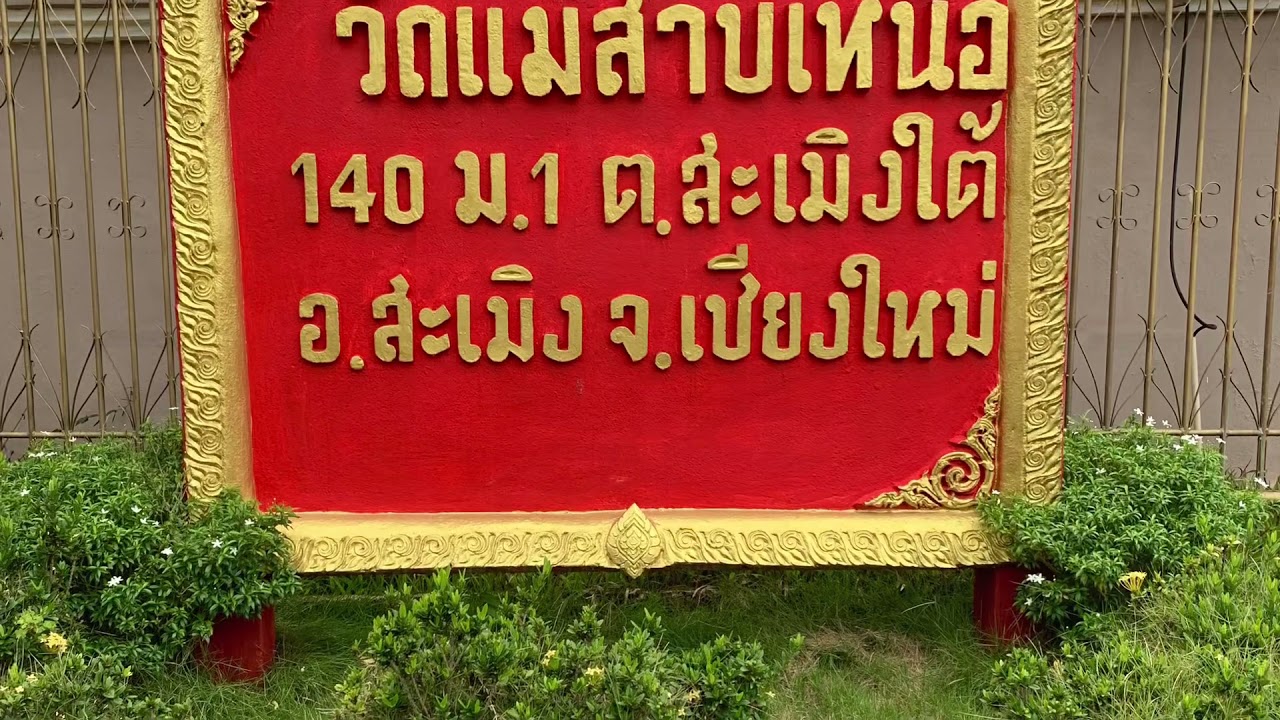
 Click to Access the Navigation Map GPS
Wat Mae Sap Neua Map
Recommend

 Muang Chiang Mai(121)Chom Thong(47)Mae Chaem(25)Chiang Dao(33)Doi Saket(68)Mae Taeng(85)Mae Rim(69)Samoeng(29)Fang(71)Mae Ai(62)Phrao(70)San Pa Tong(105)San Kamphaeng(66)San Sai(73)Hang Dong(74)Hot(32)Doi Tao(22)Omkoi(11)Saraphi(74)Wiang Haeng(15)Chai Prakan(28)Mae Wang(32)Mae On(22)Doi Lo(34)Galyani Vadhana(1)


