
lovethailand home >North Travel Attractions >Chiang Mai Travel Attractions >Samoeng >Samoeng Tai > Wat Mae Sap Tai
TL;DR: Wat Mae Sap Tai is located at 185 Moo 1, Ban Mae Sap, Samoeng Tai Subdistrict, Samoeng District, Chiang Mai Province.

Wat Mae Sap Tai
Operating day: Daily
Operating time: 08.00 - 17.00
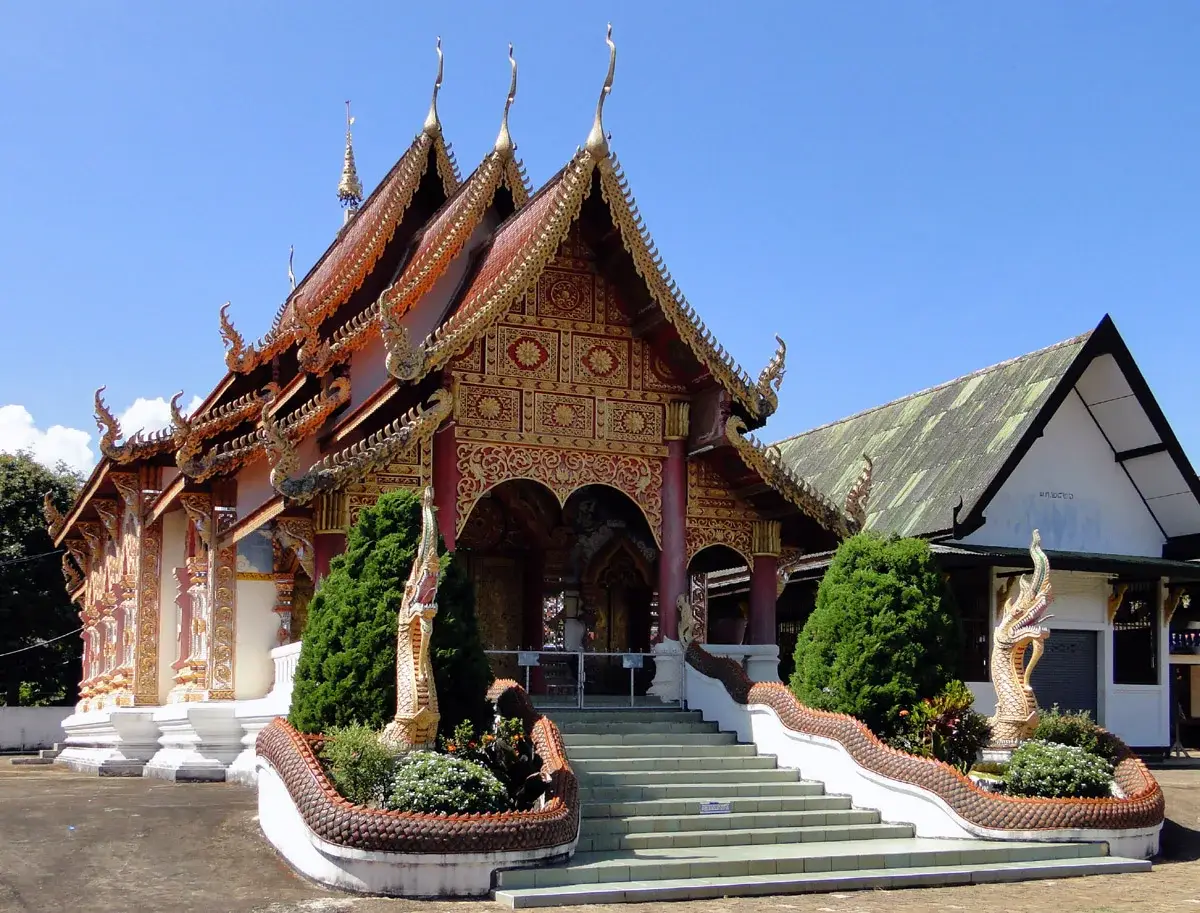
Wat Mae Sap Tai is a local Buddhist temple under the Maha Nikaya order, located at 185 Moo 1, Ban Mae Sap, Samoeng Tai Subdistrict, Samoeng District, Chiang Mai Province. The temple was established in B.E. 2452 and received its royal consecrated boundary on June 23, B.E. 2514. The consecrated boundary measures 7.5 meters wide and 12.50 meters long. The abbot is Phra Athikan Phichai, monastic name Aphiyano. Wat Mae Sap Tai is an important community temple of Ban Mae Sap, a center for moral and ethical development in Samoeng Tai, and a religious place closely connected with the Mae Sap stream, local settlement, and Lanna community life.
Wat Mae Sap Tai has historical, religious, artistic, and social value. It is not a large commercial tourist attraction, but a functioning village temple where local residents make merit, worship, listen to Dhamma teachings, join Kathin and forest robe offerings, observe Buddhist holy days, and participate in annual community activities. The temple remains a shared spiritual and social space for the people of Ban Mae Sap.
The history of Wat Mae Sap Tai is closely connected with relocation after a fire. In the past, the temple was located near Sop Huai Kong Ngong. After a fire damaged the old temple, local devotees and villagers moved the temple and rebuilt it at the present site in B.E. 2452. This history gives Wat Mae Sap Tai a strong meaning as a temple rebuilt through community faith, cooperation, and resilience.
The relocation of the temple after the fire shows how important the temple was to the community. When the old religious place was damaged, villagers did not allow the spiritual center to disappear. Instead, they worked together to rebuild the temple in a new location. Wat Mae Sap Tai therefore represents recovery, continuity, and the ongoing role of Buddhism in Ban Mae Sap.
The name “Mae Sap Tai” comes from the Mae Sap stream, an important waterway of the local area. Naming the temple after the stream reflects the relationship between community life and geography. Waterways in northern Thai mountain communities often shape settlement patterns, agriculture, local identity, and place names. In Ban Mae Sap, both Wat Mae Sap Tai and Wat Mae Sap Nuea are connected with the Mae Sap name, showing the importance of this stream to the identity of the village.
The temple land covers 7 rai, 1 ngan, and 47 square wah, with additional Sangha land totaling 1 rai, 1 ngan, and 16 square wah. The compound includes an ordination hall, sermon hall, viharn, stupa, multi-purpose pavilion, monk’s residence, storage building, temple grounds, and community Buddhist activity space. These structures allow the temple to support worship, ceremonies, sermons, merit-making, and village activities throughout the year.
The ordination hall measures 9.80 meters wide and 18 meters long. Built in B.E. 2515, it is a masonry structure and an important place for formal monastic ceremonies. Because Wat Mae Sap Tai received its royal consecrated boundary in B.E. 2514, the ordination hall is a key structure that reflects the temple’s complete religious role within the Thai Buddhist monastic system.
The sermon hall measures 7 meters wide and 15 meters long. Built in B.E. 2550, it is a masonry building decorated with patterns and mural paintings around the interior. The upper section depicts the Ten Great Birth Stories of the Buddha, while the lower section shows local traditions and village ways of life. This makes the sermon hall more than a gathering building. It is also a visual learning space where Buddhist teachings and community culture are presented together.
The Ten Great Birth Stories in the sermon hall communicate the virtues and perfections cultivated by the Bodhisattva before attaining Buddhahood. The paintings of local traditions and village life show the cultural world of the community. Together, these images connect Buddhist moral teaching with everyday life, making the hall a meaningful educational and cultural space within Wat Mae Sap Tai.
The viharn measures 9 meters wide and 20.5 meters long and was built in B.E. 2545. It is a main place for worship, chanting, sermons, and devotional activities by laypeople. In a northern Thai village temple, the viharn is often the heart of community worship. Visitors should treat it as a sacred space that remains important to local residents.
The temple stupa was built in B.E. 2552 in Lanna architectural style. The stupa adds spiritual and artistic value to the temple compound. In Lanna Buddhist tradition, stupas often serve as sacred focal points and symbols of Buddhist continuity. The Lanna-style stupa at Wat Mae Sap Tai helps connect the temple with the wider artistic and religious heritage of northern Thailand.
The multi-purpose pavilion measures 6 meters wide and 15 meters long and was built in B.E. 2526. It supports religious activities, community gatherings, and preparation for merit-making events. The temple also has one half-masonry and half-wooden monk’s residence, used for the daily life of resident monks, as well as a storage building that supports temple activities.
Phra Athikan Phichai, Aphiyano, is the abbot of Wat Mae Sap Tai. His role includes caring for the temple, leading Buddhist activities, guiding lay devotees, and maintaining the relationship between monks and the local community. In a village temple, the abbot is both a religious leader and a spiritual figure who helps preserve Buddhist practice and community cohesion.
Wat Mae Sap Tai is important as a center for moral and ethical development in Samoeng Tai. The temple provides a place where villagers can cultivate the mind, observe precepts, listen to Dhamma teachings, make merit, and join Buddhist activities. It is both a spiritual space and a community learning space where people of different generations share Buddhist values and local traditions.
Ban Mae Sap is part of Samoeng Tai Subdistrict in Samoeng District, Chiang Mai. The area is shaped by mountain terrain, valleys, agricultural life, local temples, and waterways. Wat Mae Sap Tai belongs to this landscape of village life, temple culture, natural resources, and seasonal farming. The temple helps maintain the connection between community identity, Buddhist faith, and the Mae Sap stream.
Religious activities at Wat Mae Sap Tai follow the rhythm of northern Thai village temples. These include Buddhist holy day observances, Kathin ceremonies, forest robe offerings, Buddhist Lent activities, end-of-Lent merit-making, major Buddhist holy days, and Northern Thai New Year traditions. These occasions bring villagers together to make offerings, listen to Dhamma teachings, prepare the temple grounds, and strengthen community relationships.
For visitors, the main highlights of Wat Mae Sap Tai are its complete set of temple structures and its layered community history. The temple has an ordination hall, viharn, sermon hall, stupa, multi-purpose pavilion, monk’s residence, and temple grounds. The sermon hall is especially interesting because of its murals showing the Ten Great Birth Stories and local community life. The Lanna-style stupa built in B.E. 2552 adds another important visual and spiritual feature to the temple compound.
The atmosphere of Wat Mae Sap Tai is calm and local. It is suitable for travelers interested in old community temples, Lanna temple art, village history, and cultural routes in Samoeng. Visitors can make merit, pay respect, observe the temple’s architecture, and learn about the connection between the temple, Ban Mae Sap, and the Mae Sap stream.
Visitors should dress modestly, speak quietly, and respect the ordination hall, viharn, sermon hall, stupa, monk’s residence, and temple grounds. During merit-making events, the temple’s community role becomes especially visible as villagers gather to make offerings, prepare ceremonies, and preserve local Buddhist traditions.
Getting There is most convenient by private car or rental car. From Chiang Mai city, travelers can drive toward Samoeng District via the Mae Rim–Samoeng route or the Hang Dong–Samoeng route, then continue to Samoeng Tai Subdistrict and Ban Mae Sap, Moo 1. The route includes mountain roads and rural village roads, so careful driving is recommended, especially during the rainy season or late afternoon.
A visit to Wat Mae Sap Tai can be combined with nearby places in Samoeng Tai, including Wat Mae Sap Nuea, Wat Nam Rin, Wat Sai Mun, Wat Tha Sala, Wat Pa Kluai, Sop Samoeng, Samoeng Forest Viewpoint in Khun Khan National Park, and Phra That Doi Nok. This route is suitable for travelers who want to connect old temples, Lanna art, village history, the Mae Sap stream, farming communities, cafés, restaurants, and mountain accommodation in western Chiang Mai.
| Name | Wat Mae Sap Tai |
| Type | Local Buddhist temple under the Maha Nikaya order |
| Location | 185 Moo 1, Ban Mae Sap, Samoeng Tai Subdistrict, Samoeng District, Chiang Mai Province |
| Highlights | An old community temple of Ban Mae Sap, established in B.E. 2452, with a sermon hall decorated with murals of the Ten Great Birth Stories and local village life, plus a Lanna-style stupa |
| History | Originally located near Sop Huai Kong Ngong; after a fire damaged the former temple, local devotees rebuilt the temple at the current site in B.E. 2452 |
| Temple Area | Temple land: 7 rai, 1 ngan, and 47 square wah; Sangha land: 1 rai, 1 ngan, and 16 square wah |
| Consecrated Boundary | Granted on June 23, B.E. 2514; 7.5 meters wide and 12.50 meters long |
| Name Origin | Named after the Mae Sap stream, an important waterway connected with Ban Mae Sap and the local community identity |
| Distinctive Features | A Lanna village temple connected with the Mae Sap stream, relocation after a temple fire, complete temple structures, and the moral development role of Samoeng Tai |
| Main Areas / Zones | Ordination hall, viharn, sermon hall, stupa, multi-purpose pavilion, monk’s residence, storage building, temple grounds, and community Buddhist activity space |
| Important Structures | Ordination hall: 9.80 by 18 meters, built in B.E. 2515 as a masonry structure Sermon hall: 7 by 15 meters, built in B.E. 2550 as a masonry structure with decorative patterns and murals; the upper section depicts the Ten Great Birth Stories and the lower section depicts local traditions and village life Viharn: 9 by 20.5 meters, built in B.E. 2545 Lanna-style stupa: built in B.E. 2552 Multi-purpose pavilion: 6 by 15 meters, built in B.E. 2526 One half-masonry and half-wooden monk’s residence, plus a storage building |
| Abbot / Caretaker | Phra Athikan Phichai, Aphiyano |
| Traditions / Religious Activities | Kathin ceremonies, forest robe offerings, Buddhist holy day observances, Buddhist Lent activities, end-of-Lent merit-making, major Buddhist holy days, and Northern Thai New Year traditions |
| Community Role | A center for moral and ethical development in Samoeng Tai, a spiritual center for Ban Mae Sap, and a community space for merit-making, sermons, Buddhist activities, and local cultural continuity |
| Travel Information | Best reached by private car or rental car from Chiang Mai city to Samoeng District, then onward to Samoeng Tai Subdistrict and Ban Mae Sap, Moo 1. The route includes mountain and rural roads. |
| Current Status | A Maha Nikaya community temple of Ban Mae Sap, used for worship, merit-making, sermons, and Buddhist community activities |
| Facilities | Ordination hall, viharn, sermon hall, multi-purpose pavilion, monk’s residence, stupa, temple grounds, and community Buddhist activity space |
| Nearby Tourist Attractions | 1. Wat Mae Sap Nuea, about 1 km 2. Wat Nam Rin, about 3 km 3. Wat Sai Mun, about 4 km 4. Wat Tha Sala, about 6 km 5. Sop Samoeng, about 7 km 6. Samoeng Forest Viewpoint, Khun Khan National Park, about 18 km 7. Phra That Doi Nok, about 20 km |
| Nearby Restaurants | 1. Cafe De Mountain, about 1 km, Tel. 098-506-5306 2. Ice Cream Café At Samoeng, about 2 km, Tel. 081-751-2191 3. Baan Coffee Samoeng, about 3 km, Tel. 082-763-3400 4. Coffee By Aitsara, about 5 km, Tel. 084-378-0821 5. Khwamsukh Cafe, about 12 km, Tel. 064-339-2582 |
| Nearby Accommodations | 1. Forest Guesthouse, about 4 km, Tel. 084-371-5055 2. Lhongkhao Samoeng, about 6 km, Tel. 089-504-8108 3. Khum Samoeng - Samoeng Center, about 7 km 4. Wongwan Strawberry Farm, about 8 km, Tel. 096-354-0602 5. Rai Nap-Phupha, about 10 km, Tel. 088-404-2553, 081-603-9800, 053-378-414 |
Frequently Asked Questions (FAQ)
Q: Where is Wat Mae Sap Tai located?
A: Wat Mae Sap Tai is located at 185 Moo 1, Ban Mae Sap, Samoeng Tai Subdistrict, Samoeng District, Chiang Mai Province.
Q: What is the history of Wat Mae Sap Tai?
A: The temple was originally located near Sop Huai Kong Ngong. After a fire damaged the old temple, local devotees rebuilt it at the current site in B.E. 2452.
Q: When did Wat Mae Sap Tai receive its royal consecrated boundary?
A: Wat Mae Sap Tai received its royal consecrated boundary on June 23, B.E. 2514. The boundary measures 7.5 meters wide and 12.50 meters long.
Q: What is the origin of the name Wat Mae Sap Tai?
A: The temple is named after the Mae Sap stream, an important waterway connected with Ban Mae Sap and local community identity.
Q: What important structures are inside Wat Mae Sap Tai?
A: The temple has an ordination hall, sermon hall, viharn, Lanna-style stupa, multi-purpose pavilion, monk’s residence, storage building, and temple grounds.
Q: Who is the abbot of Wat Mae Sap Tai?
A: The abbot is Phra Athikan Phichai, Aphiyano.
Q: Why is Wat Mae Sap Tai important to the local community?
A: Wat Mae Sap Tai is a center for moral and ethical development in Samoeng Tai, a spiritual center for Ban Mae Sap, and a place for merit-making, sermons, Buddhist activities, and local cultural continuity.
Q: What nearby places can travelers visit with Wat Mae Sap Tai?
A: Travelers can combine the visit with Wat Mae Sap Nuea, Wat Nam Rin, Wat Sai Mun, Wat Tha Sala, Sop Samoeng, Samoeng Forest Viewpoint, and Phra That Doi Nok.
 Category: ●Places of Worship
 Group: ●Temple
Last Update : 1 WeekAgo
 Last Update : 1 WeekAgo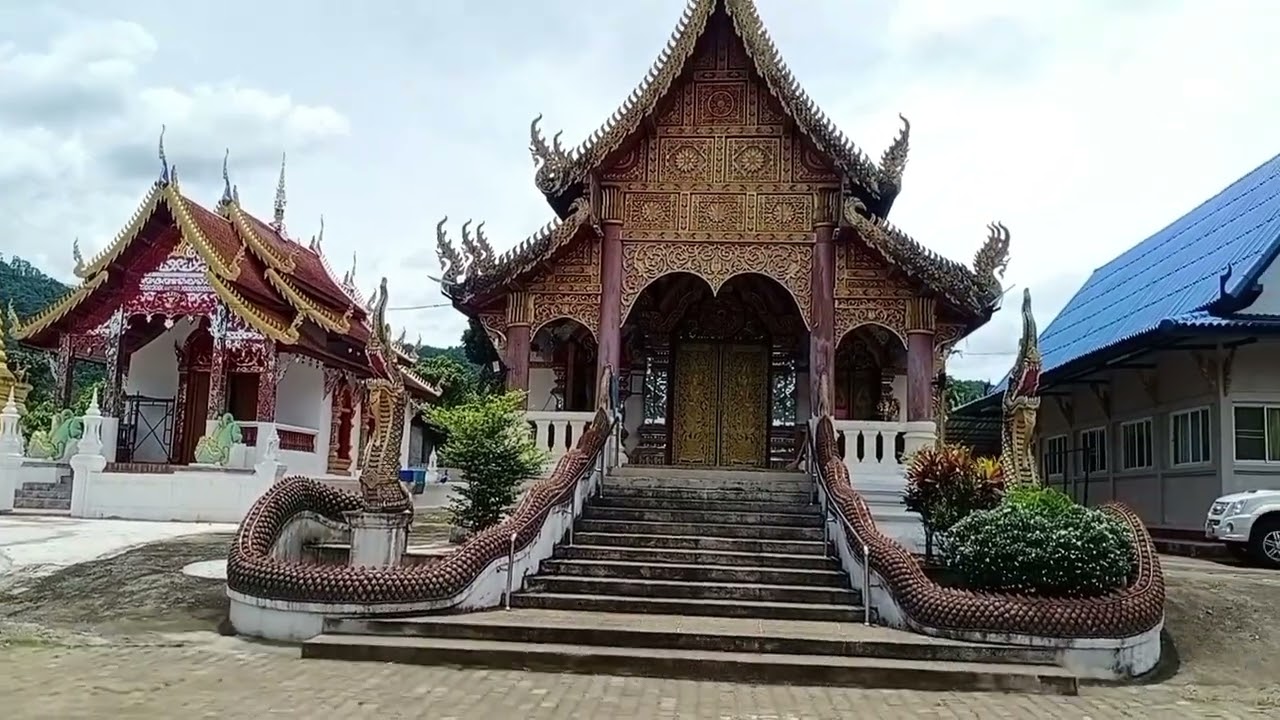
 Click to Access the Navigation Map GPS
Wat Mae Sap Tai Map
Recommend

 Muang Chiang Mai(121)Chom Thong(47)Mae Chaem(25)Chiang Dao(33)Doi Saket(68)Mae Taeng(85)Mae Rim(69)Samoeng(29)Fang(71)Mae Ai(59)Phrao(70)San Pa Tong(103)San Kamphaeng(66)San Sai(73)Hang Dong(73)Hot(32)Doi Tao(22)Omkoi(11)Saraphi(74)Wiang Haeng(15)Chai Prakan(28)Mae Wang(32)Mae On(22)Doi Lo(34)Galyani Vadhana(1)


