
lovethailand home >North Travel Attractions >Chiang Mai Travel Attractions >Muang Chiang Mai >Phra Sing > Wat Fon Soi
TL;DR: Wat Fon Soi is located at Phra Sing Subdistrict, Mueang Chiang Mai District, Chiang Mai Province, open Daily. Highlights include Lanna-style main viharn, castle-shaped Lanna chedi, two-storey scripture hall, Buddha life murals, principal Buddha image in the.

Wat Fon Soi
Open Days: Daily
General Visiting Hours: 08.00 – 17.00
Wat Fon Soi is an old Buddhist temple in Chiang Mai’s historic old city. It is located on Phra Pok Klao Road, Phra Sing Subdistrict, Mueang Chiang Mai District, Chiang Mai Province, close to Chiang Mai Gate, Chiang Mai Gate Market, Bumrung Buri Road, Wat Phan Waen, Wat Muen Tum, Wat Chedi Luang, Wat Phan Tao, and the southern temple-walking route of the old city. The temple is a local Buddhist monastery under the Mahanikaya order. It is currently under the care of Phra Khru Methatham Prayut and is significant for its Lanna architecture, historical memory, archaeological links, main viharn, castle-shaped chedi, two-storey scripture hall, and its connection with the earlier abandoned Wat Fon Soi site slightly to the south.
The appeal of Wat Fon Soi lies in its calm old-city atmosphere and its layered history. Although it is close to Chiang Mai Gate and the busy market area, the temple compound still preserves the feeling of a local Lanna monastery. Visitors can come here for worship, quiet observation, photography, or a short cultural walk. The temple is especially interesting because its present compound is connected with an earlier temple site nearby. This makes Wat Fon Soi more than a single temple compound. It is a living religious site linked with an archaeological remnant and with the historical landscape of Chiang Mai’s southern old city.
Wat Fon Soi is recorded as having been built in 2031 B.E., during a period when Buddhism and Lanna religious art were highly active in Chiang Mai. The temple name is also connected with old Lanna textual traditions, including Khlong Nirat Hariphunchai, composed around 2060 B.E., and references in Lanna chronicles from around 2105–2144 B.E. These references show that Wat Fon Soi is not a recent temple. It belongs to the deeper religious geography of Chiang Mai, especially the old-city area near Chiang Mai Gate, where temples, communities, markets, and important routes developed together.
The present location of Wat Fon Soi is not exactly the original temple site. The earlier Wat Fon Soi site, now abandoned, lies slightly to the south near the back of Chiang Mai Gate Market and Phra Pok Klao Road Soi 2. The surviving evidence at the former site is an abandoned chedi, which is an important archaeological remnant. The present active temple continues the name and religious identity of Wat Fon Soi slightly to the north of that earlier site. This relationship between a living temple and an older archaeological remain is one of the strongest reasons to include Wat Fon Soi in a serious old-city temple itinerary.
The name “Fon Soi” is culturally meaningful. One explanation links it with an old military or local noble title, such as Muen Soi or Phan Soi, which later shifted in pronunciation into Fon Soi. This kind of naming fits the pattern of many old Chiang Mai temples whose names preserve traces of social rank, personal names, local leaders, or community groups. Examples include Wat Phan Waen, Wat Phan On, Wat Puak Taem, and Wat Puak Hong. The name Wat Fon Soi therefore functions as a linguistic trace of Lanna social history as well as a temple name.
The appearance of the temple name in old documents gives Wat Fon Soi unusual historical depth for a small local temple. Khlong Nirat Hariphunchai describes the temple in connection with the area near the city gate and presents it as a beautiful religious site within the city landscape. This suggests that the area near Chiang Mai Gate was not only a passageway into the city, but also a meaningful religious and cultural zone. Wat Fon Soi should therefore be understood as part of the old city’s ceremonial, devotional, and urban memory.
The abandoned chedi of the earlier Wat Fon Soi site is highly important. Archaeological work shows that the chedi was a Lanna-style brick structure with a base measuring about 8 x 8 meters and a height of about 8.7 meters. Its architectural form included a lotus base with decorative moldings, a high central structure with niches on 4 sides, tiers above the main body, and a small bell-shaped element on top. The uppermost section has collapsed. This evidence shows that the earlier Wat Fon Soi site once had a developed religious structure and should be read as part of Chiang Mai’s old-city archaeology.
Excavation around the old chedi also found evidence of a building base to the east, interpreted as the base of the former viharn. Although parts of the old site are now affected by modern buildings and dense urban settlement, archaeological work found important remains such as bronze Buddha images, clay votive tablets, sandstone Buddha image fragments, stucco Buddha heads, hair-curl fragments, stucco decorative fragments, and pieces of gilded metal. These finds show that the original temple area once contained significant Buddhist art and architectural elements.
The relationship between the present temple and the older abandoned chedi is essential to understanding Wat Fon Soi. If visitors look only at the present temple compound, they may see a peaceful and beautiful Lanna temple. But once they understand the old site to the south, the temple becomes part of a broader story about relocation, abandonment, restoration, and continuity. Wat Fon Soi is therefore a place where living religious practice and archaeological memory stand close together inside the old city.
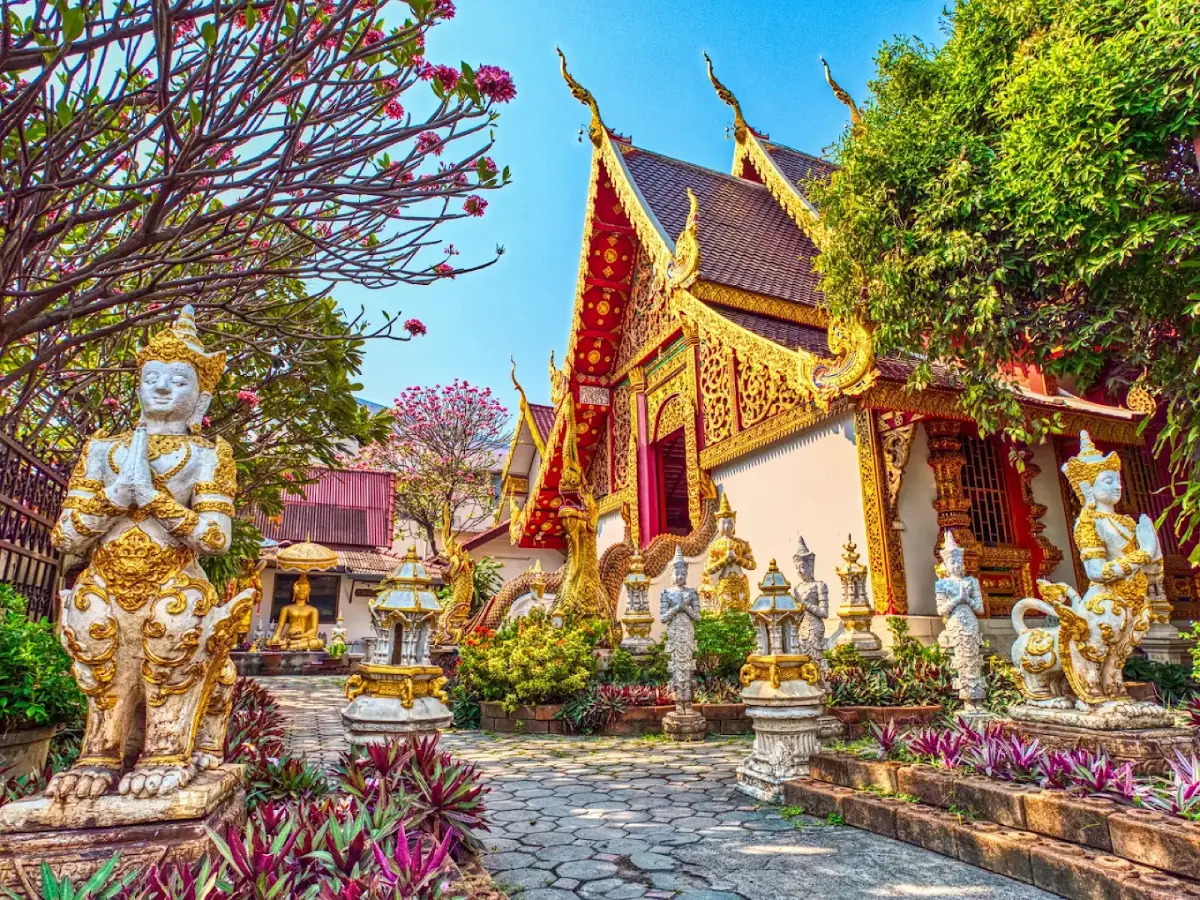
The main viharn is one of the most important structures in the present temple. It is a brick-and-plaster building combined with timber elements. The upper structure is made of wood, while the lower part is brick and plaster. The front roof is layered in 2 tiers, showing the elegant roof profile associated with Lanna architecture. The staircase leading to the viharn is flanked by naga sculptures, a common and meaningful feature in northern Thai temples. The naga figures symbolize protection and mark the transition from ordinary space into a sacred interior.
The viharn gable is decorated with gilded scrollwork against a green background. The gold emphasizes sacredness and religious radiance, while the green background gives the ornamentation a distinctive visual softness. On the side of the viharn is another entrance used by monks for religious ceremonies. This practical side entrance shows that the building was designed not only for visual beauty, but also for the ritual movement and daily use of the monastic community.
The doors of the viharn are decorated with gilded standing celestial figures. These figures turn the doorway into a symbolic threshold. They act visually as guardians and spiritually as welcoming figures for worshippers entering the sacred hall. Together with the naga staircase, roof finials, gable ornamentation, and gilded wooden doors, the viharn of Wat Fon Soi is a fine example of Lanna religious architecture in which woodwork, stucco, gilding, color, and Buddhist symbolism are integrated into one devotional space.
Inside the viharn are murals depicting scenes from the life of the Buddha, and the principal Buddha image is seated in the Mara-vijaya posture. This posture represents the Buddha’s victory over inner defilements and obstacles before enlightenment. The murals deepen the devotional atmosphere by allowing visitors to read the Buddha’s life through painted narrative. The viharn is therefore both a place of worship and a place of visual teaching.
The main chedi of Wat Fon Soi is a Lanna castle-shaped chedi with balanced proportions. It has niches on all 4 sides containing standing Buddha images. Above the main body rises a golden bell-shaped section and a decorated upper finial. A castle-shaped chedi expresses the idea of a sacred vertical axis, with the lower body functioning as a devotional space and the upper part representing elevated religious meaning. The 4 directional niches make the chedi visually and ritually accessible from multiple sides.
The relationship between the chedi and the viharn is important in Lanna temple planning. The viharn is the space where worshippers approach Buddha images and teachings, while the chedi marks sacred presence and religious memory. Visitors should therefore view the viharn and chedi together rather than separately. Their arrangement helps reveal the structure of the temple as a complete Buddhist compound.
The scripture hall, or ho trai, is another valuable structure. It is a two-storey Lanna-style building. The lower level is brick and plaster, while the upper level is built of timber. The building has a surrounding balcony, a layered roof, carved scrollwork, naga-related roof decoration, and ornamental elements in the Lanna tradition. A scripture hall was traditionally used to preserve Buddhist scriptures, palm-leaf manuscripts, and religious texts. Its presence shows that Wat Fon Soi was not only a worship site, but also a place connected with the preservation of Buddhist knowledge.
Lanna scripture halls deserve close attention because they combine function and symbolism. The upper timber level and surrounding balcony create a refined architectural form, while the elevated storage area historically helped protect manuscripts from dampness and insects. The carved woodwork and roof ornaments reveal local craftsmanship, while the building’s function reflects the temple’s role as a repository of religious learning for the community.
Wat Fon Soi has 3 major layers of value. The first is historical value, shown by its early foundation date and references in old Lanna documents. The second is architectural value, shown by the Lanna viharn, castle-shaped chedi, and two-storey scripture hall. The third is archaeological value, shown by the abandoned chedi of the earlier temple site and the objects found during excavation. These 3 layers make Wat Fon Soi a compact but content-rich temple within Chiang Mai’s old city.
Wat Fon Soi remains open to worshippers and visitors today. The general visiting period is 08.00 to 17.00 daily. The temple appears in contemporary travel, heritage, and map databases, and its location on Phra Pok Klao Road makes it easy to include in a walking route around Chiang Mai Gate. Visitors who want to worship, see Lanna architecture, view the chedi and scripture hall, and understand the earlier temple site can comfortably spend around 30–60 minutes here before continuing to nearby temples and old-city attractions.
Getting There is straightforward. From Chiang Mai Gate, visitors can walk north along Phra Pok Klao Road. From Wat Chedi Luang or Wat Phan Tao, the temple can be reached by walking south through the old city. Travelers staying near Bumrung Buri Road, Ratchamankha Road, Samlan Road, Wua Lai Road, or the southern old-city area can reach Wat Fon Soi on foot or by red songthaew, tuk-tuk, motorcycle taxi, or private car.
Visitors driving to Wat Fon Soi should plan for limited parking. The temple stands in an old-city neighborhood with narrow streets, markets, restaurants, residences, temples, and small accommodations close together. Chiang Mai Gate and the market area can be busy at certain times of day. Walking from nearby accommodation or using local transport is often more convenient, especially for visitors planning to combine several temples in one route.
The best time to visit Wat Fon Soi is in the morning or late afternoon. These periods are more comfortable for walking and provide better natural light for observing the viharn, chedi, scripture hall, naga staircase, gilded doors, and decorative gable. Photography should be done respectfully, without disturbing monks or worshippers and without entering restricted areas.
Wat Fon Soi can be included in several old-city routes. A short southern old-city route can include Chiang Mai Gate, Chiang Mai Gate Market, Wat Fon Soi, Wat Phan Waen, and Wat Muen Tum. A historic temple route can continue to Wat Phra Chao Mengrai, Wat Puak Taem, Wat Puak Hong, and Wat Chang Taem. A wider old-city route can connect Wat Fon Soi with Wat Chedi Luang, Wat Phan Tao, Wat Phra Singh Woramahawihan, and the Sunday Walking Street area. This makes the temple useful for travelers who want to understand both major monuments and quieter neighborhood temples.
Visitors should follow normal Thai temple etiquette. Dress respectfully, speak quietly, remove shoes before entering designated sacred spaces, avoid disturbing monks and worshippers, and do not touch Buddha images, murals, gilded doors, stucco decoration, the chedi, the scripture hall, or ancient objects without permission. If visiting the abandoned chedi site of the earlier Wat Fon Soi area near Chiang Mai Gate Market, visitors should be careful and respectful toward the surrounding local community.
In summary, Wat Fon Soi is a Chiang Mai old-city temple whose importance is greater than its compact size. It was built in 2031 B.E., appears in old Lanna textual traditions, and continues the memory of an earlier temple site slightly to the south. Its main highlights include the Lanna-style viharn, Buddha life murals, seated Buddha image in the Mara-vijaya posture, Lanna castle-shaped chedi with 4 directional Buddha niches, two-storey scripture hall, and the archaeological evidence of the abandoned chedi at the former temple site. For travelers interested in old Chiang Mai temples, Lanna architecture, archaeological traces, and walkable cultural routes near Chiang Mai Gate, Wat Fon Soi is a meaningful stop.
| Name | Wat Fon Soi |
| Temple Type | Local Buddhist temple under the Mahanikaya order |
| Location | Phra Sing Subdistrict, Mueang Chiang Mai District, Chiang Mai Province |
| Address | Phra Pok Klao Road, Phra Sing Subdistrict, Mueang Chiang Mai District, Chiang Mai Province 50200 |
| Coordinates | Latitude 18.7825660066, Longitude 98.9886290231 |
| Highlights | Lanna-style main viharn, castle-shaped Lanna chedi, two-storey scripture hall, Buddha life murals, principal Buddha image in the Mara-vijaya posture, and the abandoned chedi of the earlier Wat Fon Soi site near Chiang Mai Gate Market |
| History | Built in 2031 B.E. and connected with old Lanna textual traditions such as Khlong Nirat Hariphunchai and Lanna chronicle references |
| Name Origin | The name is connected with an old military or local noble title such as Muen Soi or Phan Soi, which later shifted in pronunciation into Fon Soi |
| Abbot / Caretaker | Phra Khru Methatham Prayut Mahapanyo |
| Viharn | Main viharn built of brick, plaster, and timber, with a 2-tiered front roof, naga stairway, gilded scrollwork on a green gable, and gilded standing celestial figures on the doors |
| Principal Buddha Image / Murals | The principal Buddha image is seated in the Mara-vijaya posture, and the viharn contains murals depicting scenes from the life of the Buddha |
| Main Chedi | Lanna castle-shaped chedi with niches on all 4 sides containing standing Buddha images, a golden bell-shaped section, and a decorated upper finial |
| Scripture Hall | Two-storey Lanna-style ho trai with a brick-and-plaster lower level, timber upper level, surrounding balcony, layered roof, carved scrollwork, and Lanna roof decoration |
| Key Evidence | The abandoned chedi of the earlier Wat Fon Soi site lies south of the present temple near Chiang Mai Gate Market, with archaeological evidence including the chedi, viharn base, and several Buddhist art fragments |
| Important Areas | Main viharn, principal Buddha image, murals, main chedi, scripture hall, courtyard, worship area, and religious activity areas |
| Current Status | Open to worshippers and visitors; it remains an active old-city temple with religious and cultural value in Phra Sing Subdistrict |
| Open Days | Daily |
| General Visiting Hours | 08.00 – 17.00 |
| Travel Information | Accessible from Chiang Mai Gate, Chiang Mai Gate Market, Phra Pok Klao Road, Bumrung Buri Road, Ratchamankha Road, Wat Chedi Luang, and Wat Phan Tao by walking, red songthaew, tuk-tuk, motorcycle taxi, or private car |
| Facilities | Viharn, worship area, courtyard, scripture hall, religious activity spaces, and limited parking depending on old-city conditions |
| Main Areas / Zones | Entrance area, main viharn, main chedi, scripture hall, courtyard, worship area, religious activity area, and the nearby abandoned chedi site of the earlier Wat Fon Soi to the south |
| Nearby Tourist Attractions | 1. Chiang Mai Gate, about 0.1 km 2. Chiang Mai Gate Market, about 0.1 km 3. Abandoned Chedi of The Earlier Wat Fon Soi Site, about 0.1 km 4. Wat Phan Waen, about 0.3 km 5. Wat Muen Tum, about 0.4 km 6. Wat Chedi Luang, about 0.6 km 7. Wat Phan Tao, about 0.7 km 8. Sunday Walking Street, about 0.7 km |
| Nearby Restaurants | 1. Jay Chiang Mai Gate, about 0.1 km 2. Lert Ros Chiang Mai Egg Pan, about 0.2 km 3. Coconut Shell, about 0.6 km, Tel. 086-654-2746 4. Huen Phen, about 0.6 km, Tel. 053-814-548 5. See You Soon Cafe, about 0.7 km, Tel. 081-880-8380 6. Rachamankha Restaurant, about 0.9 km, Tel. 053-904-111 7. Dash Teak House, about 1 km, Tel. 053-279-230 |
| Nearby Accommodations | 1. Kodchasri Thani Hotel Chiangmai, about 0.3 km, Tel. 053-281-950 2. Chala Number 6, about 0.4 km, Tel. 052-010-466 3. El Barrio Lanna Hotel, about 0.4 km, Tel. 095-450-3792 4. Jomkitti Boutique Hotel, about 0.5 km, Tel. 098-831-2015 5. Makka Hotel, about 0.6 km, Tel. 053-281-636 6. Rachamankha Boutique Hotel, about 0.9 km, Tel. 053-904-111 |
Frequently Asked Questions (FAQ)
Q: Where is Wat Fon Soi located?
A: Wat Fon Soi is located on Phra Pok Klao Road, Phra Sing Subdistrict, Mueang Chiang Mai District, Chiang Mai Province, close to Chiang Mai Gate, Chiang Mai Gate Market, Wat Phan Waen, Wat Muen Tum, Wat Chedi Luang, and Wat Phan Tao.
Q: What are the opening days and visiting hours of Wat Fon Soi?
A: Wat Fon Soi is open daily. The general visiting period is 08.00 to 17.00, suitable for worship, viewing the Lanna viharn, chedi, scripture hall, and walking through the southern old-city temple route.
Q: When was Wat Fon Soi built?
A: Wat Fon Soi is recorded as having been built in 2031 B.E. Its name is also connected with old Lanna textual traditions such as Khlong Nirat Hariphunchai and Lanna chronicle references.
Q: What is the origin of the name Wat Fon Soi?
A: The name Fon Soi is connected with an old military or local noble title such as Muen Soi or Phan Soi, which later shifted in pronunciation into Fon Soi.
Q: What are the main highlights of Wat Fon Soi?
A: The main highlights include the Lanna-style viharn, castle-shaped Lanna chedi, two-storey scripture hall, Buddha life murals, principal Buddha image in the Mara-vijaya posture, and the nearby abandoned chedi of the earlier Wat Fon Soi site.
Q: Why is the abandoned chedi of the earlier Wat Fon Soi site important?
A: The abandoned chedi lies south of the present temple near Chiang Mai Gate Market. Archaeological work found evidence of a chedi, viharn base, bronze Buddha images, clay votive tablets, Buddha image fragments, stucco decoration, and gilded metal fragments, confirming the historical depth of the earlier temple area.
Q: Who is the abbot of Wat Fon Soi?
A: The abbot of Wat Fon Soi is Phra Khru Methatham Prayut Mahapanyo, who oversees the temple and its religious activities in Chiang Mai’s old city.
Q: What nearby places can be included in the same route?
A: Nearby places include Chiang Mai Gate, Chiang Mai Gate Market, the abandoned chedi of the earlier Wat Fon Soi site, Wat Phan Waen, Wat Muen Tum, Wat Chedi Luang, Wat Phan Tao, and the Sunday Walking Street route.
 Category: ●Places of Worship
 Group: ●Temple
Last Update : 2 WeekAgo
 Last Update : 2 WeekAgo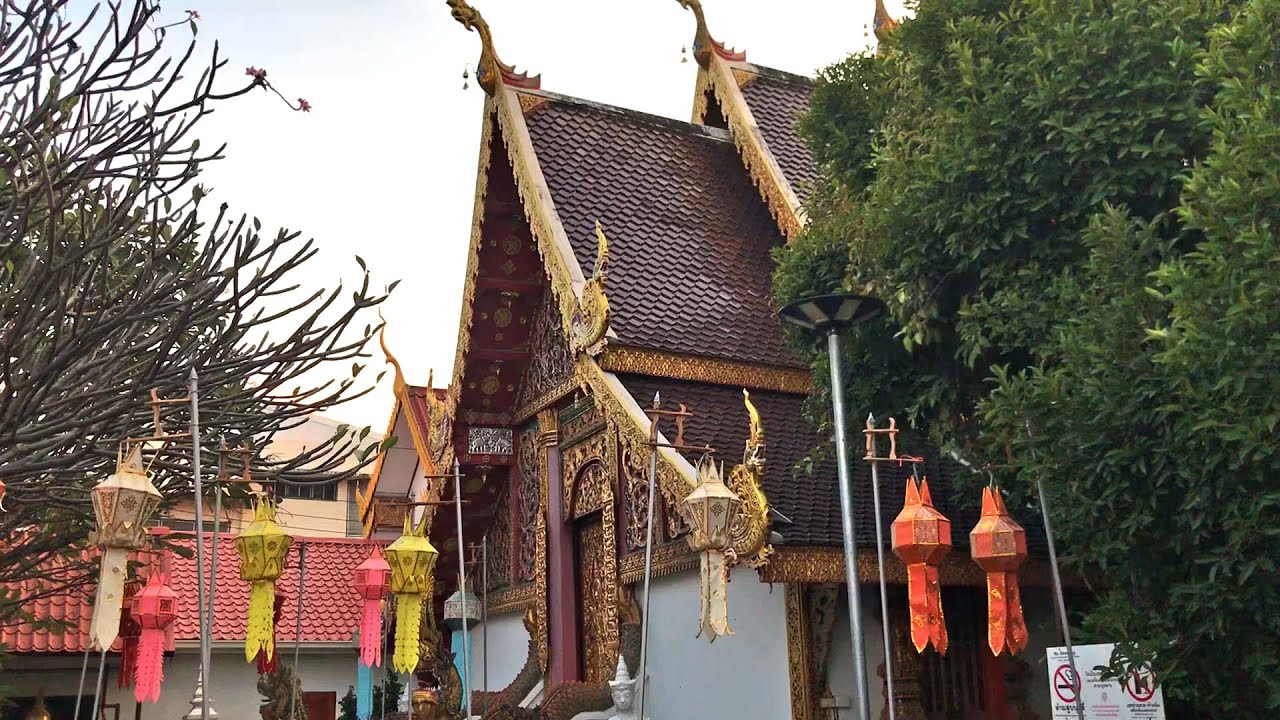
 Click to Access the Navigation Map GPS
Wat Fon Soi Map
Recommend

 Muang Chiang Mai(121)Chom Thong(47)Mae Chaem(25)Chiang Dao(33)Doi Saket(68)Mae Taeng(85)Mae Rim(69)Samoeng(29)Fang(71)Mae Ai(59)Phrao(70)San Pa Tong(103)San Kamphaeng(66)San Sai(73)Hang Dong(74)Hot(32)Doi Tao(22)Omkoi(11)Saraphi(74)Wiang Haeng(15)Chai Prakan(28)Mae Wang(32)Mae On(22)Doi Lo(34)Galyani Vadhana(1)


