

 Home
Home Chiang Mai(










Ban Dong Reservoir
Rating: 4.3/5 (4 votes)
 Search By
  Map
Map 
 Have Map
  No Map
Chiang Mai attractions
Attractions in Thailand
Open Days: Generally open daily (this reservoir supports agriculture and serves as a community public space; please visit without disturbing local use and avoid periods of heavy rain)
Opening Hours: Recommended 06:00 – 18:00 (mornings and late afternoons are cooler, the light is beautiful, and it’s ideal for a relaxed walk)
Ban Dong Reservoir is a mid-sized reservoir in Omkoi Subdistrict, Chiang Mai. It was built with funding from the Royal Irrigation Department under the Ministry of Agriculture and Cooperatives in 1998 (B.E. 2541). Its primary purpose is to support local residents during the dry season and strengthen water security in a mountainous area where access to water can be inconsistent. Because of that, the reservoir has never been “only” about farming—over time it has also become a calm community recreation spot and a natural viewpoint.
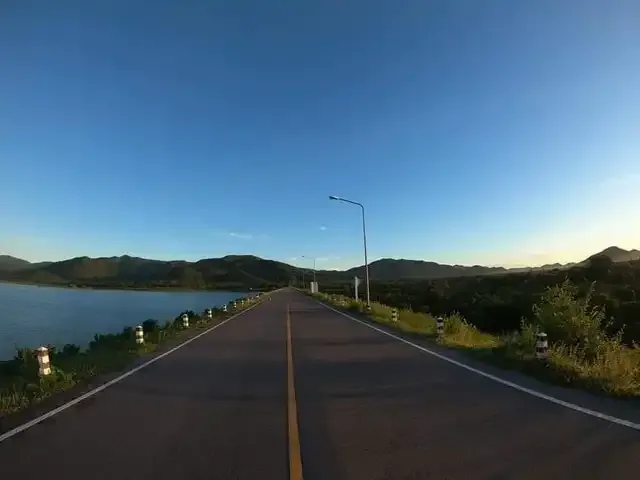
The landscape around the reservoir is shaped by valleys and forested slopes that wrap around the water, creating a quiet atmosphere and wide, open views across the reservoir toward the mountain ridges. Ban Dong Reservoir is not the image of a huge concrete dam; it’s a natural-looking waterscape that reflects how water, forest, and local agricultural life can sit together in a balanced way.
For travelers, Ban Dong Reservoir suits slow and simple visits—strolling, resting your eyes, taking scenic photos, and soaking up the quiet rather than doing strenuous activities. The highlight is the still water surface and the openness around the shoreline, especially in the early morning or near sunset when the sunlight is softer and the breeze is gentle. It’s an easy place to slow down after city life.
The reservoir’s role also connects with the broader development approach associated with Royal Project initiatives and royal development principles: practical water management, agriculture that fits the terrain, and stronger community self-reliance. Water from the reservoir supports local farmland and everyday livelihoods, which makes Ban Dong Reservoir both essential infrastructure and, in a real sense, a living learning space.
From a development-history perspective, Ban Dong Reservoir reflects irrigation policy aimed at solving water scarcity in mountainous and remote areas. Omkoi District has steep terrain, with natural water sources often behaving like seasonal streams, and it has faced recurring dry-season impacts. Constructing the reservoir in 1998 (B.E. 2541) strengthened local water storage so the community could maintain water use across the year, rather than relying only on rainfall.
This type of water-source development aligns with royal development principles on natural resource and water management: distribute water appropriately to local terrain, build storage at an appropriate scale, and ensure communities can genuinely benefit from the water in daily life. Ban Dong Reservoir is therefore not a mega-project on a national scale, but a “right-sized” project designed to serve local people directly.
In agricultural-system terms, water from Ban Dong Reservoir supports food crops, field crops, and mixed seasonal planting, reducing drought risk and improving income stability for households in Omkoi Subdistrict. It can also ease pressure on headwater forests because when water access is more secure, communities are less likely to expand farmland into forest areas.
Over time, Ban Dong Reservoir has not only served agriculture, but has gradually become a shared public space—a place for local people to relax, meet, and do light activities. That shift shows how infrastructure, when designed to match local context, can create social value and environmental value at the same time.
Seasons noticeably change the atmosphere. In the dry season, you can clearly see water levels and how the community relies on the reservoir. In the rainy season, the area turns greener and feels fresher, but roads can be slippery and fog can be thick at times. If you want both beauty and easier travel, late rainy season into early winter is usually the most comfortable window.
Getting There: From Chiang Mai city, take the route toward Hot District, then continue into Omkoi District before heading onward within Omkoi Subdistrict. The roads are mountainous with continuous curves. Use a well-maintained vehicle, drive carefully, and avoid night travel if you are not familiar with mountain routes.
When visiting Ban Dong Reservoir, keep in mind that this is primarily a community space and an agricultural water source. Do not swim, do not litter, and do not interfere with local use, so the reservoir can continue to serve as both a water resource and a calm community retreat in Omkoi for the long term.
| Place Name | Ban Dong Reservoir |
| Location | Omkoi Subdistrict, Omkoi District, Chiang Mai |
| Highlights | An agricultural reservoir surrounded by mountains and headwater forest; peaceful atmosphere and scenic views |
| Year Built | 1998 (B.E. 2541) – funded by the Royal Irrigation Department |
| Key Role | Agricultural water storage supporting residents during the dry season and serving as a community public space |
| Nearby Attractions | Mae Tuen Reservoir (≈30 km) Omkoi Wildlife Sanctuary (≈55 km) Tel. 083-482-1983 Doi Mon Chong (≈85 km) Tel. 092-5597201, 093-731-0626 Ob Luang National Park (≈120 km) Tel. 081-602-1290 |
| Nearby Restaurants | Local restaurants in Omkoi town (≈45 km) Good Morning Omkoi (≈45 km) Tel. 098-950-4091 Dong Coffee De Omkoi (≈45 km) Tel. 086-191-2119 |
| Nearby Accommodations | Ban Saengchan Resort (≈20 km) Tel. 064-994-4977 Omkoi Resort (≈45 km) Tel. 086-188-1910 SaliSa Place (≈45 km) Tel. 086-113-9436 |
Frequently Asked Questions (FAQ)
Q: Why is Ban Dong Reservoir important to the local community?
A: It stores water for agriculture, reduces dry-season impacts, and strengthens household water security in Omkoi Subdistrict.
Q: Is Ban Dong Reservoir related to the Royal Project?
A: While it is a Royal Irrigation Department project, its approach aligns with royal development principles on water management and community self-reliance.
Q: When is the best time to visit?
A: Late rainy season to early winter is usually best, offering greenery and easier travel conditions.
Q: Can I do water activities here?
A: Not recommended. This is an operational agricultural reservoir and there is no dedicated safety management for water activities.
Q: How should visitors behave on-site?
A: Visit respectfully: do not litter, do not swim, and do not interfere with local use so the reservoir remains sustainable for the community.
 Ban Dong Reservoir Map
 Category:
  Group:
  Tag: ●Ban Dong Reservoir●ban dong reservoir ●ban dong dam ●omkoi reservoir ●omkoi chiang mai travel ●chiang mai irrigation project ●royal development water project ●northern thailand nature attractions Last Update: 2 MonthAgo
Comment
 Nearby Attractions
| Keyword (Advance) |
 Region
|
 Muang Chiang Mai(
 Copyright 2012,