
lovethailand home >North Travel Attractions >Chiang Mai Travel Attractions >Muang Chiang Mai >Chang Moi > Wat Chomphu
TL;DR: Wat Chomphu is located at Chang Moi Kao Road Soi 1, Chang Moi Subdistrict, Mueang Chiang Mai District, Chiang Mai Province, open Daily, hours 08.00 – 17.00.
Wat Chomphu
Open Days: Daily
Opening Hours: 08.00 – 17.00
Wat Chomphu in Chiang Mai is a historic Buddhist temple on Chang Moi Kao Road Soi 1, Chang Moi Subdistrict, Mueang Chiang Mai District. It is a community temple under the Mahanikaya order and is best known for its gilded metal-covered chedi, commonly associated with Wat Phra That Doi Suthep. The temple remains open daily for worship, merit-making, and cultural visits. Its location near Tha Phae Gate, Somphet Market, Warorot Market, Wat Chiang Man, and the old Chang Moi neighborhood makes it one of the most convenient historic temples to visit on foot in central Chiang Mai.
Wat Chomphu is suitable for travelers who want to explore Chiang Mai beyond the most famous temples inside the old city wall. Although the temple is close to busy roads, markets, cafés, guesthouses, and walking routes, the compound still preserves the atmosphere of an old neighborhood temple. Visitors can come for a short merit-making visit, observe Lanna Buddhist art, photograph the golden chedi respectfully, and continue easily to nearby old-town attractions. The temple is especially meaningful for travelers interested in temple history, community memory, and the relationship between Chiang Mai city and Doi Suthep.
The temple was formerly known as Wat Mai Pimpha. This older name is connected with local stories about Wat Phra That Doi Suthep and Queen Mother Pimpha Thewi. In earlier times, the journey up Doi Suthep was difficult because there were no modern roads or vehicles. The chedi at Wat Mai Pimpha was therefore remembered as a place where people who could not travel up the mountain could still pay respect to a sacred relic in the city. This background gives Wat Chomphu a distinctive role: it brought mountain devotion closer to everyday urban life.
Wat Chomphu was officially permitted as a temple in 1782 and received its consecrated boundary for Buddhist ordination purposes in 1902. These details confirm its formal religious status and its long role in the Chang Moi community. Wat Chomphu is not only a site for viewing a chedi. It has served as a working temple where local residents come to make merit, listen to teachings, participate in ceremonies, and maintain the connection between the temple and the surrounding neighborhood.
The change from Wat Mai Pimpha to Wat Chomphu is associated with the time of King Kawila, after Chiang Mai had driven out Burmese forces and entered a period of restoration. A learned monk known as Khruba Chomphu was invited to accompany the ruler, but he chose not to stay inside the city. Instead, he stayed at Wat Mai Pimpha to help protect the city spiritually. Because of his association with the temple, people began calling it Wat Khruba Chomphu, which was later shortened to Wat Chomphu.
This story gives the temple strong historical depth. Wat Chomphu is connected not only with Buddhist devotion but also with the recovery of Chiang Mai after conflict. The temple area is also remembered as a former command post of Burmese military leaders. After the city was restored, the presence of Khruba Chomphu transformed the meaning of the site from a place associated with war into a place of protection, worship, and community faith.
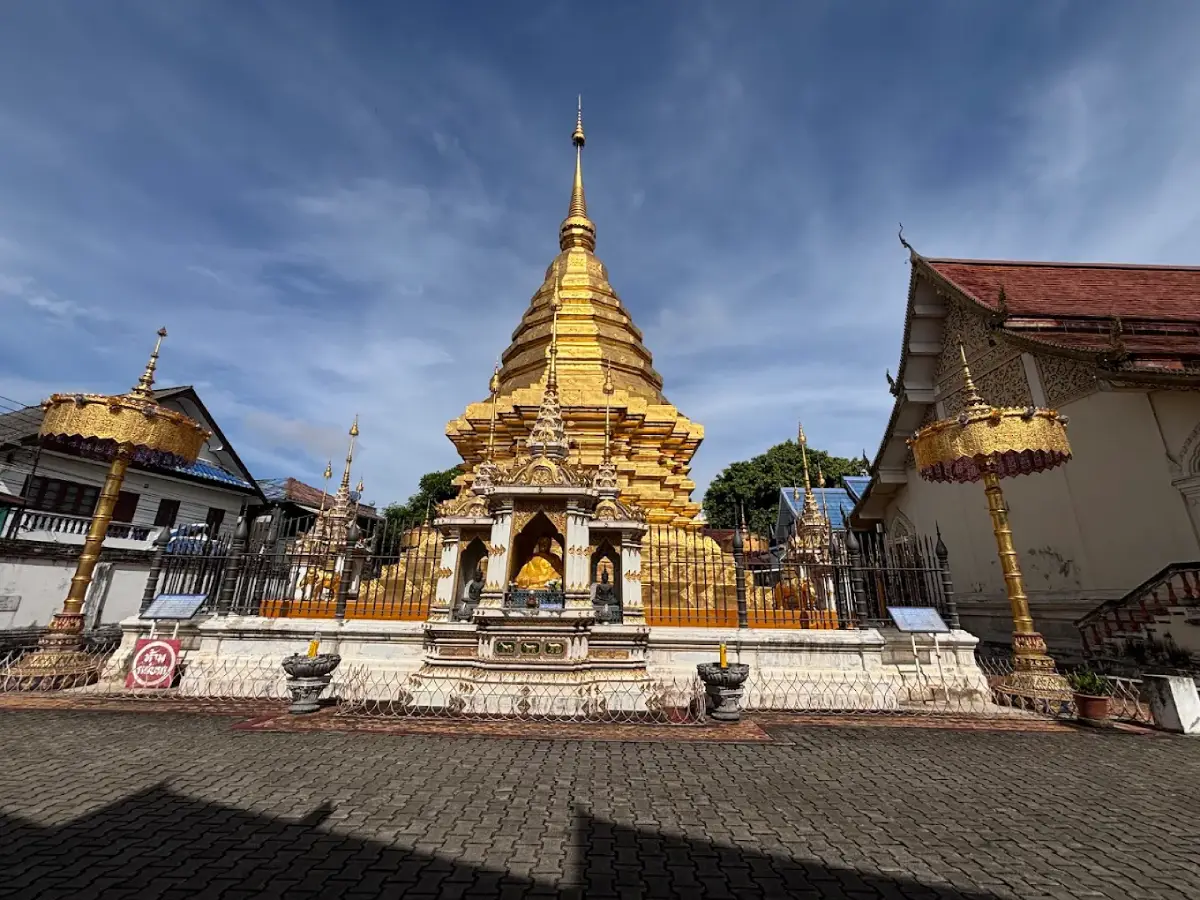
The main highlight of Wat Chomphu is the Phra That Chedi Thong Changko. The chedi is about 30 meters high and about 11.30 meters wide on each side. Its top is crowned with a 7-tiered umbrella. The body of the chedi is covered with metal sheets known as changko sheets, decorated with repoussé designs, including leafy kanok patterns, scrolling vine motifs, and sections featuring the twelve zodiac animals. These details make the chedi one of the most important artistic features of the temple.
The changko decoration is important because it shows a specific form of Lanna religious craftsmanship. “Thong changko” does not mean that the whole chedi is made of solid gold. It refers to decorative metal sheeting applied to the structure and finished to create a bright, sacred, and auspicious appearance. When sunlight touches the chedi, the surface reflects light strongly, giving the monument the golden presence associated with northern Thai Buddhist relic architecture.
Local residents often describe the chedi of Wat Chomphu as a sibling or twin of the chedi at Wat Phra That Doi Suthep. The connection comes from both visual form and local legend. For people who could not climb the mountain in earlier times, worshipping at Wat Chomphu offered a practical and meaningful alternative. The temple therefore served ordinary people, elderly residents, and local devotees by making the merit of relic worship more accessible within the city.
The chedi underwent an important restoration that was completed in 1999. The restoration was led by the temple community under Phra Khru Phiphat Samachan and the temple committee. It involved specialist input in Thai art and the work of local Lanna craftsmen. The restoration aimed to repair damaged elements, rebuild missing details, and preserve the original artistic form as carefully as possible. This long effort helped keep the chedi as a living symbol of Chang Moi community faith.
Another important feature at Wat Chomphu is the old northern gateway. This entrance reflects the former layout of the temple and the surrounding neighborhood, where the gate acted as a visual and ceremonial axis. In the past, local houses and walking lanes were arranged in relation to the temple. The gateway is therefore not only an entrance; it is evidence of how old Chiang Mai communities placed temples at the center of everyday spatial life.
The old northern gateway is also remembered as a “princely gate,” used by rulers or noble figures when entering the temple. Today, traffic patterns and road development have changed how people approach the temple, and the old walking-axis is less visible than before. Visitors who take time to observe this gateway will understand that older temple layouts in Chiang Mai were designed for walking communities, not for modern traffic. This makes the gateway an important cultural detail.
The temple also has a 2-storey scripture hall, or ho trai. A ho trai is an important structure in Thai and Lanna Buddhist temples because it is associated with the preservation of scripture and religious knowledge. At Wat Chomphu, the ho trai has a spiral staircase to the upper floor, plain white walls, Chinese characters on one of the pillars, tiger reliefs on the gable, and naga elements along the roofline. This building adds an educational and architectural layer to the temple compound.
Another interesting object is a standing Buddha image in the Abhaya mudra, made from a single block of marble. The Abhaya mudra represents reassurance, protection, and the removal of fear. This sculpture is worth seeing because it differs from the larger chedi and gives visitors another point of artistic interest inside the temple. Together with the chedi, viharn, gateway, and ho trai, it shows that Wat Chomphu has more to offer than a single landmark.
The principal Buddha image in the viharn is lacquered and gilded. It serves as the main devotional focus for worshippers. Visitors should remove shoes before entering the hall, dress modestly, keep voices low, and allow space for local residents who come to make merit. The viharn is where travelers can experience Wat Chomphu as a living temple rather than only a heritage site.
The Chang Moi Kao neighborhood is essential for understanding Wat Chomphu. This old area has long been associated with traders, markets, craftspeople, and temples. Local sources connect Wat Chomphu with blacksmiths and merchants around Sithiwong Road and Chang Moi Kao Road. The temple’s identity is therefore tied to the commercial and craft life of the neighborhood. A visit to Wat Chomphu is best understood together with the lanes, markets, guesthouses, and local shops around it.
Wat Chomphu also serves as a learning site for religion and culture in the Chang Moi area. Its chedi, old name, story of Khruba Chomphu, connection with Doi Suthep, old gateway, ho trai, and community setting make it useful for understanding Chiang Mai’s eastern old-town district. The temple is compact, but its story is layered. It brings together royal-era history, local devotion, urban change, and Lanna craftsmanship in a single accessible compound.
Getting to Wat Chomphu is easy from central Chiang Mai. From Tha Phae Gate, visitors can walk north toward the Chang Moi Kao area. From Warorot Market or the Ping River area, the temple is also reachable by a short walk or a short local ride. Red songthaews, tuk-tuks, taxi apps, and private cars can all reach the area. When giving directions, use “Wat Chomphu, Chang Moi Kao Road Soi 1” to avoid confusion with similarly named temples elsewhere.
The area around Wat Chomphu is best explored on foot. Visitors can combine the temple with Somphet Market, Wat Ou Sai Kham, Tha Phae Gate, Wat Chiang Man, Warorot Market, Wat Buppharam, Chiang Mai Night Bazaar, and the Ping River area. This route suits travelers who want a compact walking itinerary that includes temples, markets, old lanes, food stops, and the atmosphere of an old trading neighborhood.
The best time to visit Wat Chomphu is in the morning or late afternoon. Morning is suitable for worship and quiet observation. Late afternoon is good for walking through Chang Moi and continuing to markets or riverside areas. Visitors who want to photograph the chedi should come when natural light reaches the golden surface. The metal and gilded decoration are especially attractive when the light is soft.
Visitors should follow normal Buddhist temple etiquette. Dress modestly, remove shoes before entering the viharn, keep voices low, do not climb the chedi base, and do not touch the changko metalwork. Avoid disturbing monks, worshippers, or ceremonies. Photography is generally best done respectfully from a suitable distance, without flash near sacred objects or old artworks.
Wat Chomphu is also suitable for cultural photography. The most interesting subjects include the golden chedi, the old northern gateway, the ho trai, the viharn, Buddha images, and the narrow lanes of the Chang Moi neighborhood. Unlike large showcase temples, Wat Chomphu offers the atmosphere of a working local temple embedded in the city. Good photographs should capture both the temple details and the surrounding community context.
Historically, Wat Chomphu helps explain the eastern side of Chiang Mai’s old city. Chang Moi is close to Tha Phae Gate and the route toward the Ping River, so the area has long been connected with trade, movement, and urban life. Wat Chomphu stands inside this setting as a spiritual anchor for the neighborhood. It shows that Chiang Mai’s heritage is not limited to the large temples inside the moat; smaller community temples also carry important local history.
For Buddhist devotees, the chedi at Wat Chomphu is the main point of worship. Its link with Doi Suthep gives it a special place in local religious imagination. Visitors can begin at the viharn, pay respect to the principal Buddha image, then walk around the chedi quietly and observe the zodiac patterns, scrolling motifs, and gilded metalwork. This slow approach helps visitors appreciate the chedi as both a sacred object and a piece of Lanna craftsmanship.
The temple is also useful for learning about accessible devotion in Lanna culture. The story of building or preserving a city chedi for those unable to climb Doi Suthep shows how religious practice was adapted to real human needs. Elderly people, residents with limited mobility, and ordinary city dwellers could connect with sacred relic worship without making the difficult mountain journey. Wat Chomphu therefore represents both faith and compassion in practical form.
The abbot associated with the temple in current public sources is Phra Khru Phiphat Samachan Thammawuttho. His role is linked with temple care, community connection, and the restoration history of the chedi. Like many old community temples in Chiang Mai, Wat Chomphu continues through the cooperation of monks, temple committees, local residents, and devotees who help maintain its buildings, rituals, and cultural memory.
A typical visit to Wat Chomphu takes around 30–60 minutes. Begin at the viharn, pay respect to the principal Buddha image, then continue to the Phra That Chedi Thong Changko. After that, look for the old northern gateway, the ho trai, and the marble standing Buddha image. Travelers with more time can continue walking to Somphet Market, Wat Chiang Man, Tha Phae Gate, or Warorot Market.
Compared with more famous temples in Chiang Mai, Wat Chomphu stands out because of its specific story. It combines the former name Wat Mai Pimpha, the memory of Khruba Chomphu, the King Kawila period, the former Burmese military association, the Doi Suthep twin-chedi legend, changko metalwork, the old gateway, and the Chang Moi community. These elements make it a small temple with a dense cultural narrative.
Overall, Wat Chomphu is a worthwhile stop for travelers exploring Chang Moi, Tha Phae Gate, and the eastern side of Chiang Mai’s old city. The temple brings together Lanna history, relic devotion, golden chedi art, neighborhood memory, and living Buddhist practice in one compact place. Visitors who spend time reading the details will leave with a deeper understanding of Chiang Mai as a city of temples, markets, old lanes, and community faith.
| Name | Wat Chomphu |
| Location | Chang Moi Kao Road Soi 1, Chang Moi Subdistrict, Mueang Chiang Mai District, Chiang Mai Province |
| Address | 39 Chang Moi Kao Road, Chang Moi Subdistrict, Mueang Chiang Mai District, Chiang Mai 50300, Thailand |
| Coordinates | 18.79121, 98.99455 |
| Temple Type | Community Buddhist Temple Under The Mahanikaya Order |
| Highlights | Phra That Chedi Thong Changko, the Doi Suthep twin-chedi tradition, old northern gateway, ho trai, and the story of Khruba Chomphu |
| History | Formerly known as Wat Mai Pimpha, officially permitted as a temple in 1782, renamed during the King Kawila period, and granted its consecrated boundary in 1902 |
| Name Origin | The name Wat Chomphu comes from Khruba Chomphu, a learned monk who stayed at Wat Mai Pimpha to spiritually protect Chiang Mai. The name Wat Khruba Chomphu was later shortened to Wat Chomphu. |
| Chedi Features | About 30 meters high, about 11.30 meters wide on each side, crowned with a 7-tiered umbrella, covered with changko metal sheets, and decorated with repoussé Lanna patterns and twelve zodiac motifs |
| Major Restoration | The chedi underwent an important restoration completed in 1999, preserving the original artistic form and rebuilding missing decorative details. |
| Travel Information | Accessible on foot from Tha Phae Gate, Somphet Market, Warorot Market, and the old Chang Moi area. Visitors can also use red songthaews, tuk-tuks, taxi apps, or private cars. |
| Current Status | Open for worship, merit-making, and temple sightseeing during operating hours |
| Open Days | Daily |
| Opening Hours | 08.00 – 17.00 |
| Fees | Free Entry |
| Facilities | Viharn, chedi, ho trai, pavilion, merit-making area, walking areas, and nearby local shops |
| Main Areas / Zones | Phra That Chedi Thong Changko, viharn, gilded principal Buddha image, old northern gateway, ho trai, marble standing Buddha pavilion, and merit-making area |
| Abbot / Caretaker | Phra Khru Phiphat Samachan Thammawuttho |
| Main Contact Number | 053-874-268 |
| Visitor Guidelines | Dress modestly, remove shoes before entering the viharn, do not climb the chedi base, do not touch the changko metalwork, and respect worshippers inside the temple. |
| Nearby Tourist Attractions | 1. Somphet Market, About 0.2 km 2. Wat Ou Sai Kham, About 0.2 km 3. Tha Phae Gate, About 0.4 km 4. Wat Chiang Man, About 0.6 km 5. Warorot Market, About 0.9 km 6. Wat Buppharam, About 1 km 7. Chiang Mai Night Bazaar, About 1 km 8. Ping River Area, About 1 km |
| Nearby Restaurants | 1. Green Tiger Vegetarian House, About 0.1 km, Tel. 092-778-8594 2. Trok Chang Moi Noodles, About 0.1 km, Tel. 063-114-1442 3. Pulcinella da Stefano, About 0.2 km, Tel. 053-874-189 4. Changcafe Chang Moi Kao, About 0.3 km, Tel. 099-293-4220 5. Under the House, About 0.5 km, Tel. 086-407-5460 6. Cat House Chiang Mai, About 0.4 km |
| Nearby Accommodations | 1. Changmoi House Little Village, About 0.2 km, Tel. 086-428-1424 2. The Guest Chang Moi Hotel, About 0.2 km, Tel. 081-150-4424 3. Naptel Chang Moi, About 0.2 km, Tel. 062-753-7888 4. Kamala’s Guesthouse, About 0.4 km, Tel. 053-874-009 5. Hotel M Chiang Mai, About 0.7 km, Tel. 053-211-069 6. De Chai The Deco Chiang Mai, About 0.8 km, Tel. 053-273-700 |
Frequently Asked Questions (FAQ)
Q: Where is Wat Chomphu located?
A: Wat Chomphu is located on Chang Moi Kao Road Soi 1, Chang Moi Subdistrict, Mueang Chiang Mai District, Chiang Mai Province, near Tha Phae Gate, Somphet Market, Wat Chiang Man, and Warorot Market.
Q: What are the opening hours of Wat Chomphu?
A: Wat Chomphu is open daily from 08.00 to 17.00.
Q: Is there an entrance fee at Wat Chomphu?
A: No. General entry to Wat Chomphu is free.
Q: What was the former name of Wat Chomphu?
A: Wat Chomphu was formerly known as Wat Mai Pimpha. The current name is linked with Khruba Chomphu, a learned monk associated with the temple during the King Kawila period.
Q: Why is the chedi at Wat Chomphu important?
A: The Phra That Chedi Thong Changko is the temple’s main highlight. It is associated with the Doi Suthep twin-chedi tradition, stands about 30 meters high, and is decorated with changko metal sheets, Lanna repoussé patterns, and twelve zodiac motifs.
Q: How can travelers get to Wat Chomphu?
A: Travelers can walk from Tha Phae Gate, Somphet Market, or the Chang Moi area, or arrive by red songthaew, tuk-tuk, taxi app, or private car. Use “Wat Chomphu, Chang Moi Kao Road Soi 1” as the destination.
Q: Who is Wat Chomphu best suited for?
A: Wat Chomphu is suitable for travelers interested in old Chiang Mai temples, Lanna chedi art, changko metalwork, the story of Khruba Chomphu, and walking routes through the historic Chang Moi neighborhood.
Q: What nearby places can be visited with Wat Chomphu?
A: Nearby places include Somphet Market, Wat Ou Sai Kham, Tha Phae Gate, Wat Chiang Man, Warorot Market, Wat Buppharam, Chiang Mai Night Bazaar, and the Ping River area.
 Category: ●Places of Worship
 Group: ●Temple
Last Update : 4 DayAgo
 Last Update : 4 DayAgo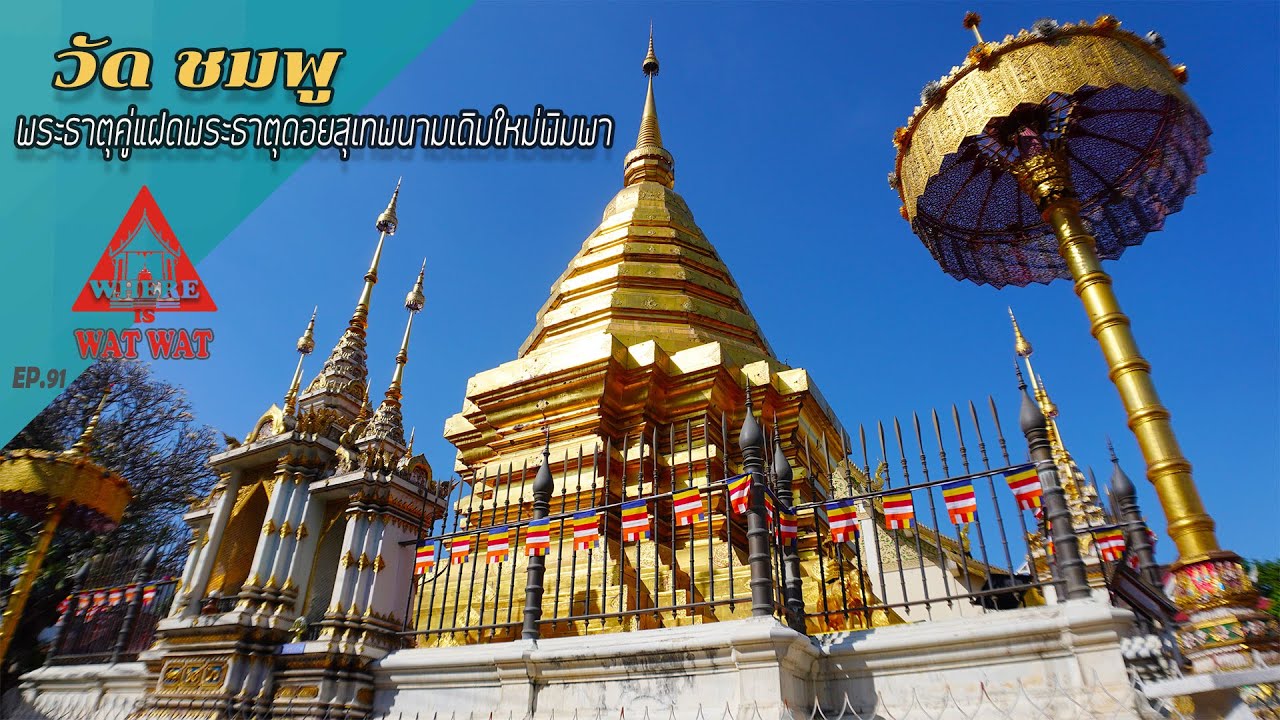
 Click to Access the Navigation Map GPS
Wat Chomphu Map
Recommend

 Muang Chiang Mai(121)Chom Thong(47)Mae Chaem(25)Chiang Dao(33)Doi Saket(68)Mae Taeng(85)Mae Rim(69)Samoeng(29)Fang(71)Mae Ai(62)Phrao(70)San Pa Tong(105)San Kamphaeng(66)San Sai(73)Hang Dong(74)Hot(32)Doi Tao(22)Omkoi(11)Saraphi(74)Wiang Haeng(15)Chai Prakan(28)Mae Wang(32)Mae On(22)Doi Lo(34)Galyani Vadhana(1)


